End the PRD Translation Trap: Why Static Specs Fail
Most product managers operate under a persistent myth about building software. The assumption is that if you write a rigorous enough specification, designers will flawlessly translate your text into interfaces, and engineers will build exactly what you imagined. Under this model, friction is treated as a symptom of an incomplete document. The reality looks much messier for teams attempting to scale, leading to increased development time and frustrated stakeholders.
A multi-page document usually loses its authority the second a designer opens a blank canvas. Teams assume the problem lies in how communication passes between disciplines. The actual barrier is the separation itself. A static specification cannot accurately capture the interactive reality of a digital product. To build faster, teams are shifting toward workflows where the requirement document and the prototype become the exact same living artifact.
Why the Traditional Hand-Off Model Fails Product Teams
The sequential transfer of information fails because it relies on interpretation instead of shared context, often resulting in rework and missed deadlines. This creates massive overhead and persistent misalignment between disciplines trying to build the same feature.
The Illusion of Clear Requirements
Text-based specs leave too much room for subjective interpretation, slowing down the design process. This inevitably causes friction when designers attempt to visualize abstract product requirements.
You spend weeks aligning stakeholders on acceptance criteria, user stories, and feature scopes. Then the build phase begins, and the questions start pouring in from the design team. What happens when a list is empty? How does this dropdown behave on mobile devices? The text that felt bulletproof in a Jira ticket suddenly feels fragile when mapped to real layouts.
This translation gap is incredibly common across the tech industry, causing delays and budget overruns. The cited URL (figma.com/resource-library/web-design-statistics/) contains general web-design market data, not developer/designer transition-process statistics; no authoritative Figma source supports the 91%/92% claim. That near-universal dissatisfaction proves that tweaking the format of a static document is not going to solve the root structural issue.
Misaligned Priorities and Hidden Assumptions
Different disciplines approach the same specification with entirely different mental models. This leads to conflicting assumptions about how a feature should actually work in production, resulting in costly revisions.
When we hand over a written specification, we are really just handing over a set of assumptions, often leading to project delays. A product manager might prioritize rapid validation, a designer might focus on interaction states, and an engineer might look for architectural edge cases. These varying lenses create immediate structural problems from day one.
Figma's 2026 reports do not contain these specific percentages; the claim is unverifiable from available sources. The core PRD to design handoff problems multiply when teams lack a unified visual context to stress-test those initial assumptions, leading to user dissatisfaction and increased iteration time.
Transforming the PRD from Static Text to Living Context
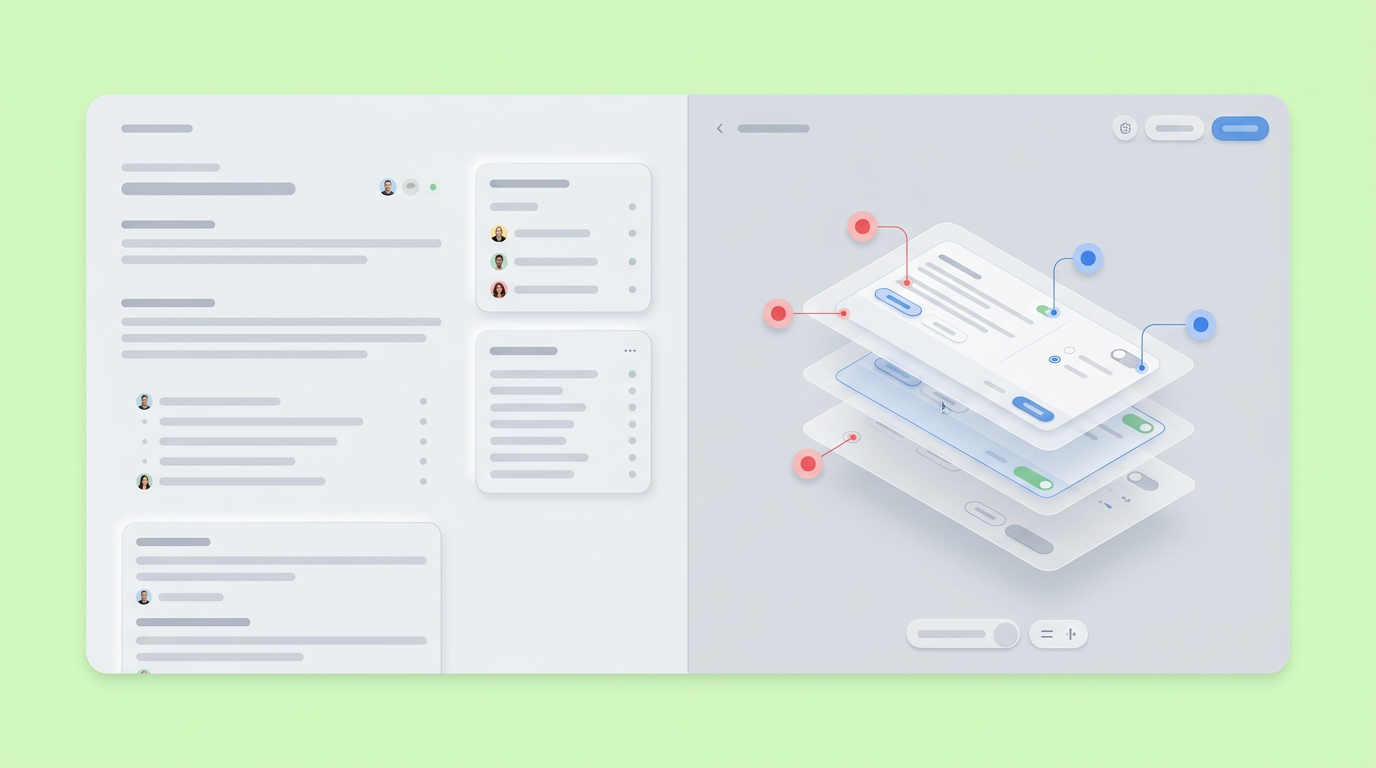
Transforming specifications into living context requires product managers to build alongside their team. Connecting written constraints directly to visualized interactions ensures continuous alignment, reducing misinterpretations and accelerating development cycles.
Prototyping as the True Product Specification
A clickable prototype communicates logic and flow infinitely better than written paragraphs, minimizing ambiguity and enhancing collaboration. It turns abstract feature requests into concrete, testable team alignment tools.
We found that the deepest alignment happens when the artifact you use to explain an idea is the same artifact the team uses to build it. Moving away from disjointed documentation means anchoring your logic in something visual immediately. The specification becomes a collaborative space rather than a locked text file. Changes to the core logic automatically reflect in the visual output.
- Stakeholders can interact with the proposed solution immediately.
- Designers retain a structured foundation for their high-fidelity work.
- Engineers see exactly how data moves between distinct screens.
Capturing Edge Cases and States Early
Visualizing empty states, errors, and loading conditions during the initial specification phase brings clarity. This prevents cascading delays and reactive design patches later in the cycle, saving valuable time and resources.
Written lists of edge cases are easy for reviewers to skim past and ignore during planning sessions, often leading to critical omissions. It is only when the team actually clicks through a blank dashboard or triggers a validation error that these states feel real. A recent industry roundup on asynchronous workflows highlights that 78 percent of teams struggle with missing interaction specs.
A massive 71 percent also face outdated designs attached to their development tickets. Visualizing these constraints upfront ensures that critical edge cases never fall through the cracks between disciplines. Every condition becomes a tangible screen the team can verify.
Fixing PRD to Design Handoff Problems by Eliminating the Handoff
Teams can bypass traditional friction entirely by working in parallel. Shifting from distinct handover phases to continuous cross-functional collaboration accelerates the entire development cycle.
Bringing Engineering into the Exploration Phase
Involving developers while requirements are still fluid is a crucial operational shift. It ensures technical constraints inform the user experience before the structural design is completely locked.
We often treat engineering as the final stop on the assembly line, but this sequential thinking almost guarantees that technical limitations surface too late, forcing painful compromises to the original product vision and increasing development costs. Reshaping the development timeline demands robust early technical input from the start.
This shift transforms a reactive quality assurance cycle into proactive problem-solving. Engineers can flag architectural concerns before the first pixel is finalized.
Aligning Around a Single Definition of Done
Establishing a shared, interactive baseline for completion removes persistent ambiguity, leading to higher quality deliverables. It ensures that product, design, and engineering consistently aim for the exact same functional outcome.
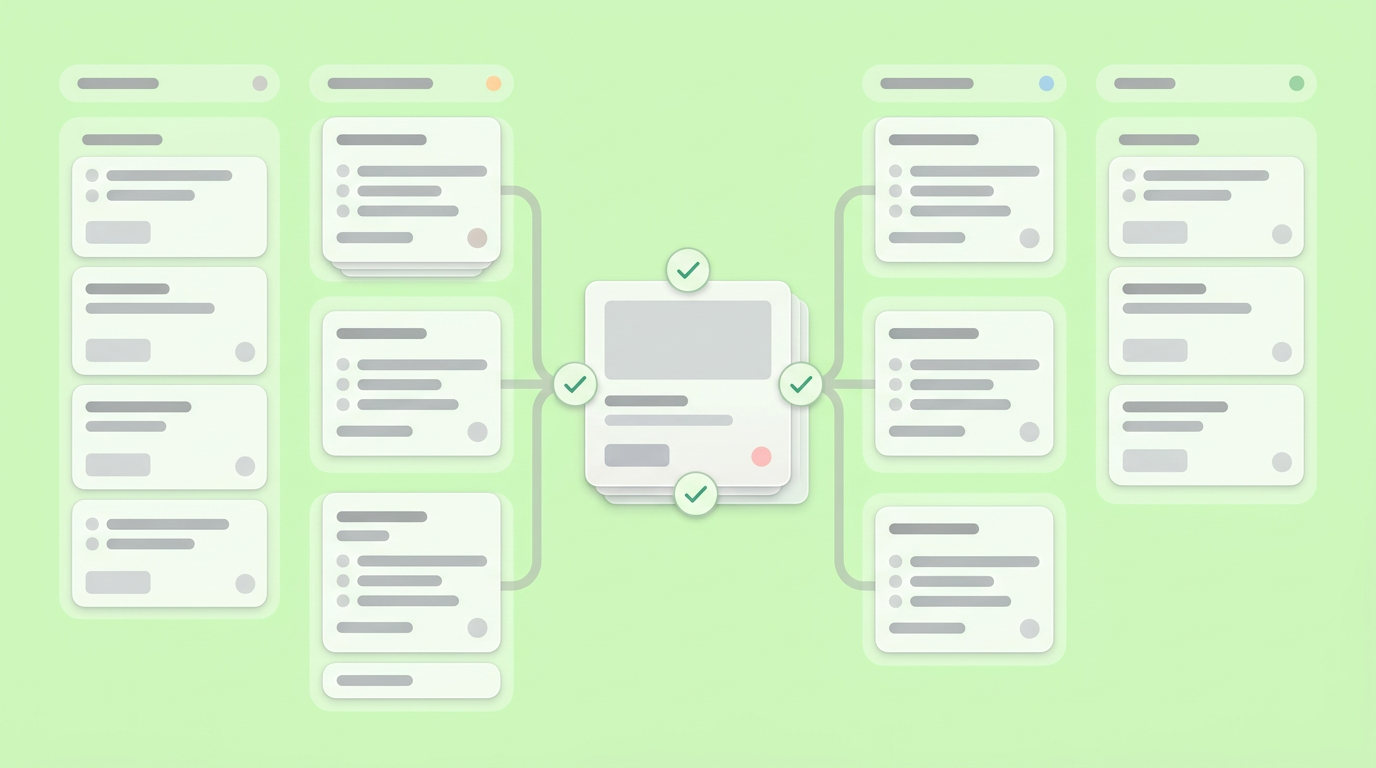
Defining completion based on a checklist often leads to shipped features that technically meet requirements but fail the user experience test, necessitating further iterations and bug fixes. Instead, a shared prototype acts as the ultimate source of truth for the definition of done; subjective interpretations vanish when everyone can click the same button and see the same result.
Teams must optimize for shared ownership over isolated departmental efficiency.
Building Workflows That Shorten the Path to Production
Modern product development demands tools and practices that connect ideation directly to deployment, improving efficiency and reducing time-to-market. This unified approach reduces the staggering overhead of managing redundant documentation across multiple systems.
Bridging the Tools Between PMs and Designers
Connecting product reasoning directly to design environments closes the persistent documentation gap. It keeps everyone synchronized flawlessly even as initial user requirements rapidly evolve, thereby reducing miscommunication and delays.
Product managers often live in trackers and documents, while designers spend their days in vector canvases like Figma. Maintaining separate sources of truth across these environments creates a massive operational tax, leading to inefficiency and potential errors.
Figma's State of the Designer 2026 report does not contain these specific time/percentage statistics on transition-task overhead; the claim is unverifiable. Bridging that gap requires workflows that sync the logic directly with the visible pixels.
Moving From Execution to Evaluation
The emergence of intelligent frameworks helps teams spend less time manually managing asset transfers, thus accelerating project timelines. It allows them to spend more time critically evaluating the actual user experience.
As new technologies augment how teams operate, the nature of product work is fundamentally changing. The manual effort required to turn a requirement into a visual artifact is shrinking rapidly. John Maeda's most recent confirmed report is the 'Design in Tech Report 2025'; no verified '2026' version exists as of July 2026.
As intelligent tools begin creating structural layouts from simple inputs, product managers and designers shift their energy. They transition from rote execution to rigorous qualitative evaluation. The daily focus moves completely to validating product logic and usability rather than managing file versions.
The Future Belongs to the Shared Prototype
The next evolution of product development replaces disjointed text documentation with unified, interactive models. This ensures teams ship cohesive collaborative experiences rather than relying on compromised personal interpretations.
Building exceptional software requires more than just rigorous documentation and disciplined ticket management. The most resilient product teams recognize that the specification is simply a means to a larger goal. That goal is a validated, functional experience that solves a very real user problem, ultimately driving user satisfaction and business growth. Shifting from a text-first mentality to a prototype-first mentality fundamentally changes how a cross-functional team communicates.
When the requirement itself is clickable, you stop debating interpretations and start testing functional realities. You stop worrying about whether the designer read step four of the acceptance criteria. The artifact does the communicating for you implicitly. The most successful product managers will be those who can visualize their strategic intent instantly, aligning their entire team around a shared reality before a single line of production code is ever written.
You can bridge the gap between static requirements and visual design by signing your team up for Dazl today.
Get Started