How Hybrid Work is Reshaping Product Team Alignment
Nine in the morning in New York means two in the afternoon in London and evening in Bangalore. Coordinating a complex feature release across these time zones relies entirely on digital infrastructure rather than physical presence. Remote collaboration for product managers rapidly evolved from an emergency measure into the foundational operating model for how software gets built. This shift has reshaped how product managers lead and collaborate. Managing a product today requires orchestrating strategy, code, and design through screens, forcing teams to adopt highly structured communication routines.
The Data Behind Distributed Product Work in 2026
Current market data demonstrates the dominance of distributed product work in the tech industry. Nearly eighty percent of remote-capable employees now work in hybrid or fully remote arrangements. This sweeping shift drives massive ongoing investments in collaboration software and fundamentally alters how distributed teams maintain strategic alignment.
Remote and hybrid models represent the baseline standard for product organizations. A recent demographic review by Neat aggregating Gallup data highlights that 52 percent of remote-capable workers operate in a hybrid model, while another 27 percent remain fully remote. For product managers, who fall firmly into the knowledge worker category, this means nearly eight in ten spend at least part of their week outside a traditional physical office.
The infrastructure required to support this structural shift is expanding rapidly. The Vena Solutions remote work report projects that the remote workplace services market will grow from $20.1 billion in 2022 to a staggering $58.5 billion by 2027. This growth reflects deep enterprise commitment to maintaining team alignment through software interfaces rather than physical proximity.
Redefining the Product Manager's Office
The concept of a product management office has evolved into a digital environment spanning multiple integrated applications and platforms. Product teams rely heavily on these digital spaces to maintain velocity, hold strategic discussions, and secure stakeholder buy-in without the need for physical colocation.
We notice across our partner teams that treating a digital workspace as the primary "office" yields significantly higher engagement. A comprehensive collaboration software study by Market.us reveals that 79 percent of workers globally utilize digital collaboration tools daily. For product organizations, the centralized digital hub functions as the single source of truth for planning, scoping, and roadmapping.
The Tool Sprawl Dilemma
Product managers currently balance an average of 4.8 different conferencing and collaboration applications daily. Managing this sheer volume of software creates widespread workflow fragmentation and forces teams to constantly switch contexts during critical planning phases.
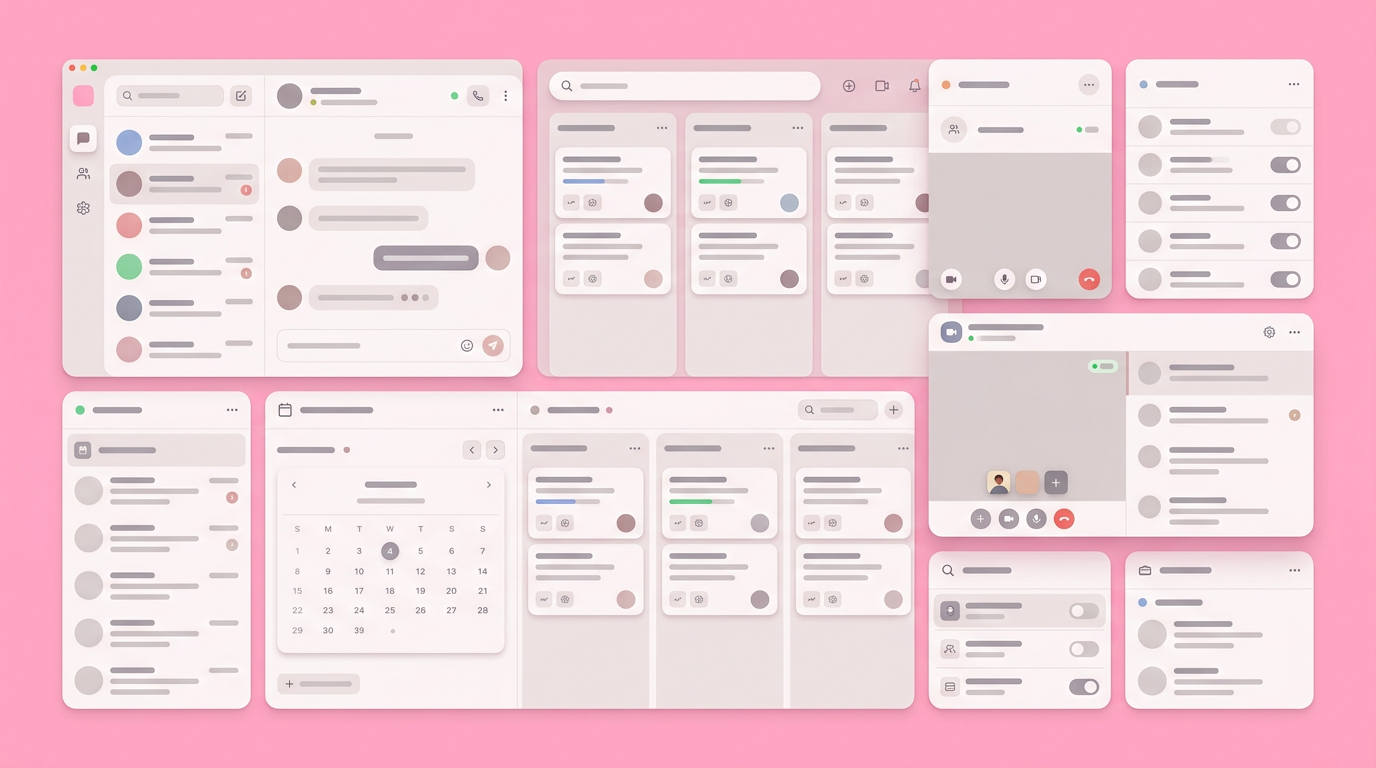
The same Market.us research verified that 99 percent of teleworkers engage with nearly five different communication platforms. A single release cycle might require tracking technical debt in Linear, sketching user flows in Figma, and maintaining core documentation in a standard wiki. This fragmentation taxes working memory and often stalls decision-making when key attachments get lost in chat threads. Consolidating these varied processes remains a top priority for distributed product leaders.
Structural Changes to Cross-Functional Alignment
Achieving true alignment across scattered teams requires embedding product managers directly into adjacent workflows like frontline sales and customer experience. This structural realignment ensures product strategy remains closely tied to business outcomes and direct customer feedback.
Physical distance amplifies the risk of working in silos. To prevent developers from building features disconnected from commercial reality, organizational structures are actively shifting.
Leaders increasingly encourage cross-functional collaboration by formally embedding product managers into marketing, sales, and customer success workflows, as noted in a recent Airtable trends analysis.
Managing Asynchronous Discovery Paths
Asynchronous product discovery allows distributed teams to conduct user research, analyze metrics, and document insights without scheduling real-time meetings. Teams codify findings into shared online workspaces to keep developers and designers actively aligned across different time zones.
Whiteboard sessions no longer serve as the default method for mapping user pain points. When half the development team sleeps while the other half codes, discovery artifacts must be robust, self-explanatory, and accessible on demand. Teams that execute agile methodology for product managers well rely on strong asynchronous documentation to maintain rolling sprint cadences without constant synchronization calls.
Embedding Product Across Revenue Teams
Linking product initiatives directly to go-to-market strategies means product managers must maintain clear, uninterrupted visibility into revenue operations. Collaboration tools actively bridge this gap by syncing product roadmaps with immediate commercial goals and user demands.
Data-driven visibility ensures the product team impacts the business effectively. An impactful working paper on the future of product management emphasizes how real-time behavioral data and growing accountability for revenue are drastically reshaping how product managers collaborate. Digital channels allow teams to pipe revenue metrics directly into the product prioritization queue.
AI as the New Orchestration Layer
Artificial intelligence now serves as the primary coordination layer for distributed product development. Teams use machine learning models and intelligent workspaces to synthesize scattered user feedback, draft rigorous specifications, and build interactive prototypes significantly faster.
Understanding machine learning for product managers is no longer a technical niche. AI-powered platforms parse vast amounts of distributed communication and distill it into clear directives. A public discussion from product leader Ant Murphy points out that 94 percent of product managers currently use AI tools daily or very often. This heavy reliance suggests machine learning is the invisible backbone keeping remote teams synchronized.
Moving From Status Updates to Actionable Data
Machine learning for product managers eliminates the need for manual, time-consuming status reporting. Automated systems analyze project data streams in real time, surfacing hidden bottlenecks and generating actionable insights before major timeline adjustments become necessary.
Status meetings historically consumed hours of productive time, particularly in remote settings. Generative logic now handles the tedious summarization of daily check-ins, ticket movements, and design adjustments. In our testing of modern workflow structures, we found that teams utilizing automated data extraction spend far more time discussing strategy rather than recounting what they accomplished the day before.
The Shift Toward Hand-Off Ready Prototypes
Intelligent workspaces allow product managers to move from raw text descriptions straight into high-fidelity, interactive prototypes. This emerging approach reduces misinterpretation during developer hand-off and ensures the entire distributed team visualizes the exact same user experience.
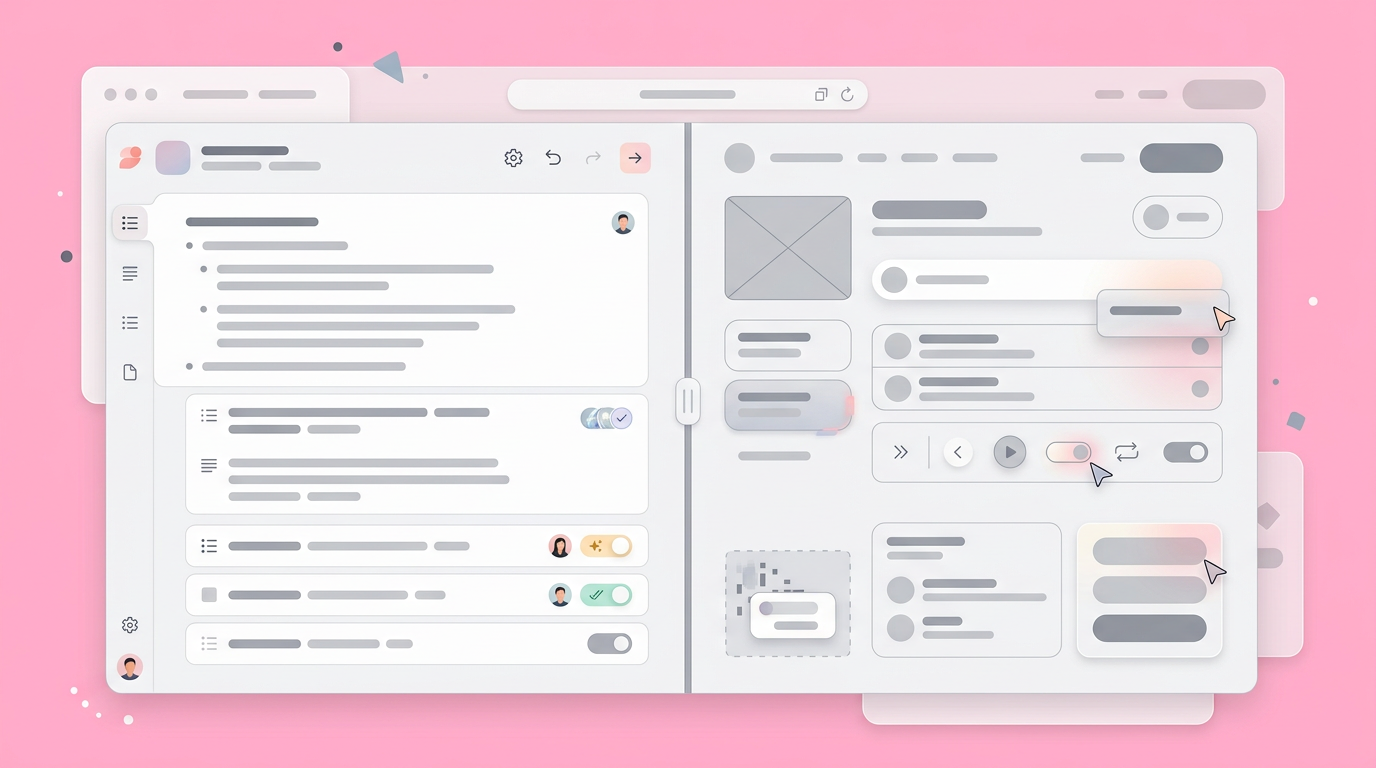
Describing complex user pathways via text blocks inevitably leads to confusion. A workspace like Dazl serves as the product manager's closest teammate, moving ideas directly from spec documents to shareable, hand-off ready prototypes. When every stakeholder clicks through a working model together, structuring the AI deployment handoff process becomes highly efficient, completely eliminating the wait time for initial wireframes.
Fixing the Feedback Loop in Distributed Environments
Gathering clear feedback in a remote setting demands carefully structured communication channels and precise visual artifacts. Distributed organizations must intentionally replace ambiguous text conversations with clear, localized comments attached directly to interactive product models.
Despite the complexities of distance, digital methods prove surprisingly popular. Approximately 65 percent of teleworkers view video conferencing and instant messaging as highly effective alternatives to face-to-face interactions. However, real-time messaging handles basic alignment, whereas complex product feedback requires deeper contextual layers. We regularly observe product teams struggling when they attempt to provide structural design feedback in a continuous scrolling text chat.
Why Tolerance for Ambiguity is Shrinking
Remote execution relies heavily on absolute clarity, making poorly defined product requirements a major operational liability. Distributed product teams have significantly less patience for vague user stories when every requested clarification costs twenty-four hours in cross-globe communication delays.
A single ambiguous requirement forces a remote engineer to either guess the product intent or pause work entirely until the product manager wakes up. Clear, hyper-specific documentation resolves this friction. Reducing ambiguity ensures that engineering operations flow efficiently regardless of who is actively online.
Consolidating the Communication Stack
High-performing distributed organizations actively reduce the sheer number of applications they use for daily operations. Bringing feature ideation, technical planning, and design approval into a centralized digital hub dramatically lowers the cognitive load for the entire product team.
Consolidation naturally reduces errors. In our deployment of unified digital workflows, we noted that minimizing tab-switching directly improves context retention. When the written specification and the visual prototype exist in the exact same environment, product managers spend less time tracing decisions across fragmented platforms.
Where Distributed Product Strategy Goes Next
Product management relies increasingly on advanced asynchronous tools that maintain deep context across vastly distributed geographies. The primary focus shifts progressively away from simply tracking development tasks toward executing broad strategy through continuous, data-informed structural alignment.
Looking ahead, the role of a product manager in a remote setting centers on creating tangible shared reality for teams that rarely share physical space. Interactive mockups, automated insights, and consolidated tooling form a robust digital environment. The priority remains clear: empowering builders to validate concepts rapidly, align stakeholders immediately, and secure approval on shareable prototypes that accelerate the entire engineering pipeline.
Your team can unify these workflows and sharpen your product alignment by creating a shared workspace when you join Dazl.
Get Started