Prototyping AI Apps: Workflows That Validate Logic Fast
By late 2025, weekly active users for primary conversational interfaces reached 800 million. Product managers find themselves facing massive pressure to ship intelligent features that handle non-deterministic outputs accurately. Attempting to outline these variable experiences using static PDF screens creates immediate friction with engineering teams. Teams need validation loops that actually test complex logic. Learning how to build AI app prototypes requires moving beyond traditional wireframing methodologies.
Learning how to build ai app prototypes requires moving beyond traditional wireframing methodologies. Teams need validation loops that actually test complex logic. We are comparing the foundational methods product teams use to map out feature behaviors before committing to severe engineering sprints.
The Core Challenge of Prototyping AI Applications
Prototyping AI applications challenges teams because deterministic static screens cannot handle non-deterministic outputs. Product managers must find ways to demonstrate variable responses, unpredictable edge cases, and changing user intent without blocking engineering resources for weeks just to prove a concept works.
Relying on old processes for modern interfaces results in misaligned expectations. When product logic shifts based on user language input, basic click-through models fail to communicate the required backend constraints.
Bridging the Prototype-to-Code Trust Gap
The trust gap between design abstractions and functional code requires strict human validation protocols. Teams must use prototyping phases to test application logic and catch errors before full implementation. This creates a necessary buffer, protecting the product roadmap from poorly scoped generative outputs.
Current usage metrics reveal a significant reality about raw code generation. According to recent app development data, 46% of developers still distrust AI-generated code without rigorous manual verification. Prototyping approaches must account for this confidence deficit by giving engineering clear, verified references.
The Speed of Low-Code vs. Custom Validation
Balancing rapid validation against custom architectural requirements heavily influences prototyping success. Standard low-code environments accelerate early visual iterations, but product managers run into severe constraints when testing proprietary machine learning models that demand highly specific interaction patterns.
Despite these hurdles, platform-driven creation dominates the current early-stage landscape. The same industry data reveals that 62% of new app projects launch via low-code or no-code solutions. Teams use these environments to secure directional feedback before migrating to custom codebases.
Maintaining Alignment Across Disciplines
Cross-functional alignment relies on shared artifacts that both designers and engineers clearly understand. Product prototypes must translate abstract mathematical model behaviors into concrete interface states. Teams fail when the design file expects one data structure while the engineering constraint dictates another.
We found that running frequent, smaller prototype reviews prevents massive refactoring phases later. Validating the prompt structure alongside the interface design keeps expectations realistic.
Comparing Approaches to AI Application Design Workflow
Structuring how we build ai app mockups requires picking the correct methodological path for the team. Product managers generally compare static wireframing, direct-to-code generation, and intelligent workspace orchestration to see which yields the highest fidelity alignment before technical handoff.
Each approach offers distinct advantages depending on team size and technical fluency. Selecting the right method dictates team's iteration speed on early user feedback.
The Static Wireframe Approach
Static wireframes provide rapid visual layout maps without requiring any technical configuration or prompt engineering. Teams produce static flows to approve basic interface placement, color hierarchy, and structural navigation before introducing variable logic. This approach keeps initial conversations focused entirely on user experience fundamentals.
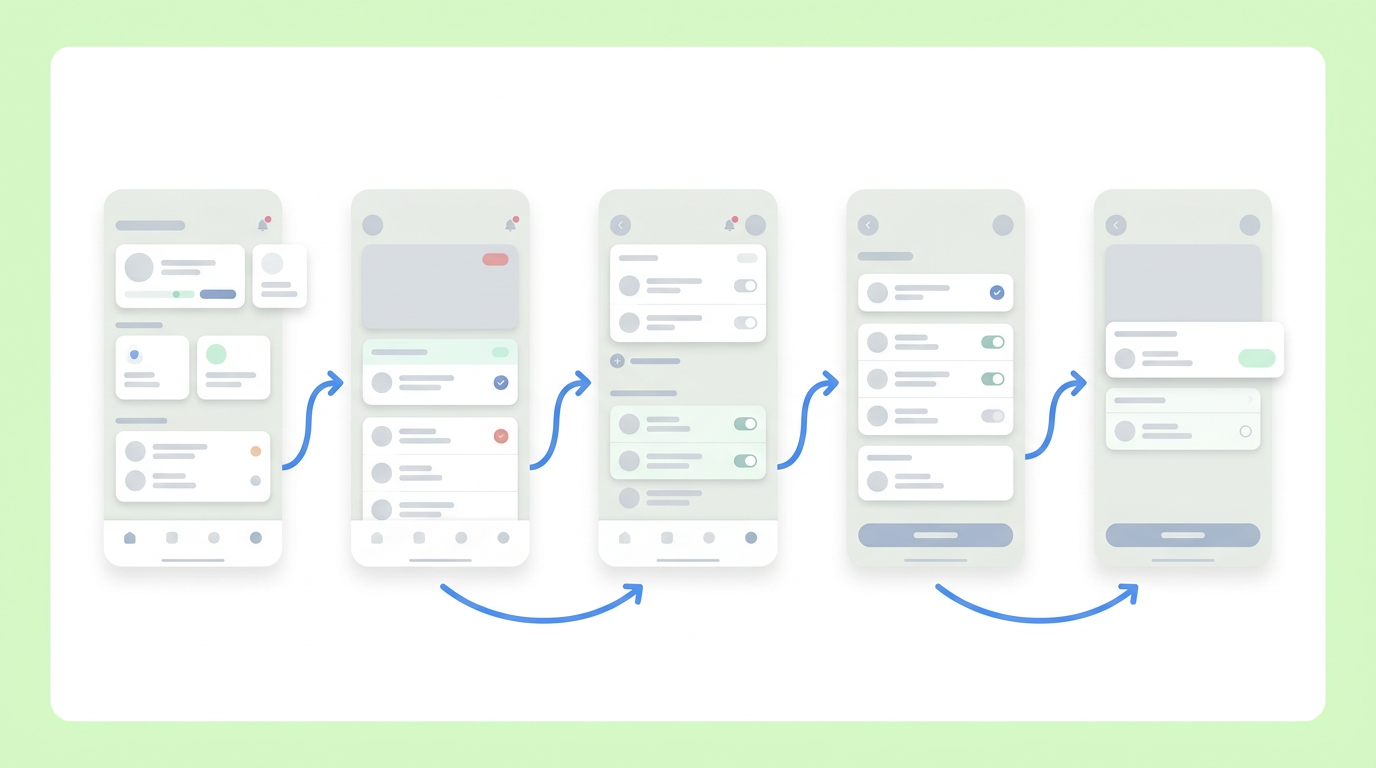
The limitation surfaces immediately when testing conversational elements. You cannot validate a chat interface with a static image. While excellent for layout planning, static boards force product managers to write separate, lengthy specification documents just to explain the variable states.
The AI-Native Workspace Strategy
Intent-based workspaces allow teams to map out behaviors using natural language while maintaining control over the final interface structure. This method blends the speed of visual layout tools with the depth of logic definition, creating a functional middle ground. Teams validate ideas quickly while retaining precise specification details.
Using a dedicated environment like Dazl bridges this gap perfectly. Dazl is the PM's teammate from ideation and spec writing through a hand-off ready prototype, keeping the whole team aligned. Engineers receive interactive requirements rather than vague design files.
The Direct-to-Code Generative Route
Direct code generation skips visual abstraction entirely by turning text prompts straight into deployable interface elements. Product managers describe the desired application state, and the system produces raw component code. This method provides aggressive speed for technical users who understand architectural consequences.
Relying entirely on generated code heavily tests a team's review processes. You save days on interface drawing, though time is often spent untangling brittle components. Finding Top AI Development Tools for Startups Shipping Fast in 2026 means identifying systems that keep this generated code clean.
Evaluating AI Software Prototype Creation by Phase
Breaking down the prototype ai application development process into distinct phases ensures teams test the right assumptions at the correct times. Moving from rough ideation to strict technical handoff requires changing the fidelity of the prototype to match answering specific operational questions.
Teams try to answer different questions at each phase. Early prototypes test if a problem exists, while late prototypes test if the proposed solution actually functions.
Ideation and Initial Prompts
Early ideation focuses on testing broad concepts using highly disposable interface sketches. Product managers map out user journeys, identify primary system inputs, and define what data the application needs to operate. Scrutiny targets the core value proposition rather than pixel perfection.
This early experimentation phase no longer belongs exclusively to dedicated designers. A recent survey study found that 59.1% of designers have already built their own tools or utilities using basic AI interfaces in just the last six months.
Mid-Fidelity Alignment Steps
Mid-fidelity steps require mapping the realistic variable outputs back into the proposed interface. Product teams draft realistic data sets, test them against the layout, and confirm the interface handles unexpected text lengths or formatting. This phase catches the majority of structural design errors.
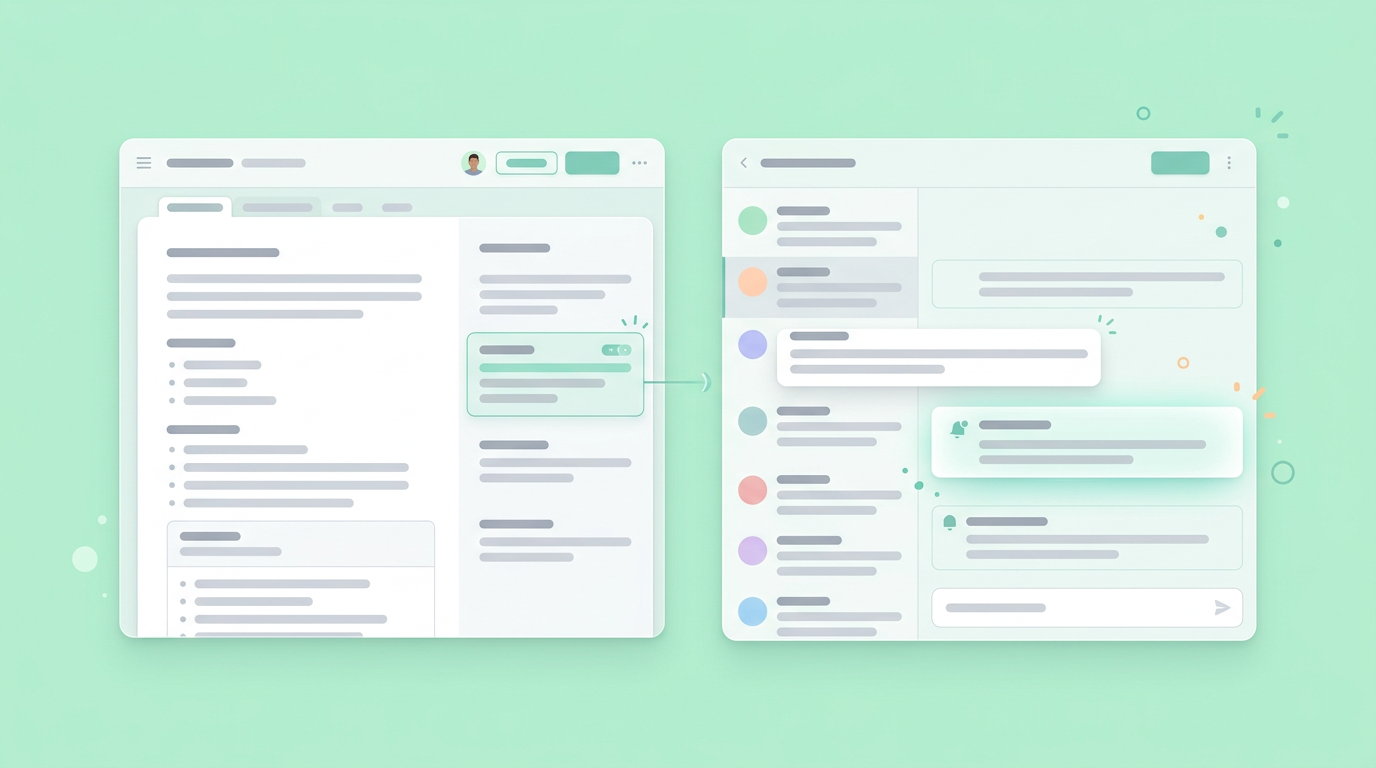
Cross-functional reviews feature heavily in this stage. Engineering provides crucial feedback regarding API limitations, while design ensures the loading states communicate processing delays accurately.
Handoff and Technical Validation
Technical validation converts approved prototypes into strict specifications for engineering sprints. Product managers ensure interaction rules, data schemas, and error states are documented alongside the visual reference. The goal consists of eliminating ambiguity before sprint planning begins.
This phase relies on clear documentation protocols. Mastering the Prototype to Production Process for Modern Product Teams requires moving from a mocked interface entirely into clear build instructions.
Metrics That Defend Your Prototype AI Application Development
Shipping successful prototypes requires measuring the right operational signals to defend continued investment. Tracking iteration speed, user context accuracy, and stakeholder approval rates provides quantitative backing for product decisions. Measurement turns subjective design debates into objective business discussions.
Teams establish specific metrics prioritizing learning velocity over visual polish. The faster a product team invalidates a bad idea, the more engineering time they save.
Measuring Iteration Cycles
Cycle time measures the hours elapsed between receiving user feedback and presenting an updated prototype state. Shortening this window directly correlates with higher product success rates, as teams can run more experiments within a single development phase. High-performing teams track this metric weekly.
According to wide-scale analysis of development habits, 84% of developers currently use or plan to use assisted workflows to shrink these exact cycle times. Speeding up the visual iteration phase keeps the entire software lifecycle lean.
Verifying User Context
Context verification tracks how accurately the prototype handles test user inputs during guided research sessions. Product managers measure the percentage of user interactions that the prototype logic correctly anticipates versus those that break the experience flow.
When creating these metrics, teams look for these key experience signals:
- Frequency of blank states triggered by unexpected prompts.
- Accuracy of error messages when user input fails validation.
- Time required for users to recover from broken interactions.
- Clarity of loading states during simulated backend processing.
Securing Stakeholder Buy-In
Stakeholder approval metrics evaluate the clarity of the product vision presented to leadership. Product teams track how quickly executives approve resource allocation based on the prototype demonstration. A high-fidelity, logic-tested interactive model secures budget far faster than a dense spreadsheet.
Financial backing for these initiatives continues scaling rapidly across all sectors. Strategic forecasting in an industry market report predicts total worldwide AI spending will reach $1.5 trillion soon, with projections exceeding $3.3 trillion by 2029.
Moving Beyond the Mockup Phase
Validating an interface concept represents the initial hurdle in complex software delivery. Product teams transition from proving an idea works visually to ensuring it functions at scale under real user limitations. Focus shifts from mapping out ideal pathways toward handling systemic failures gracefully, encompassing scenarios like network outages, unexpected user inputs, and integration issues with third-party services. This expanded focus ensures that the proposed solution is robust enough for real-world deployment, rather than just effective in a controlled environment.
Future validation cycles will incorporate real API responses earlier in the product sequence, moving beyond simulated or mock data. Evaluating live data against your prototype surface prevents late-stage surprises and misalignment, ensuring the product behaves identically in the browser as it did in the planning session. This proactive integration of actual system dependencies allows teams to uncover and address performance bottlenecks, latency issues, and data inconsistencies much earlier in the development lifecycle, significantly reducing rework and accelerating time to market. Incorporating real-world constraints from the outset builds greater confidence in the prototype's accuracy and viability among all stakeholders.
Your team can streamline this iterative process and bring your concepts to life by joining Dazl to build your prototype.
Get Started