7 Generative AI Workflows for Modern Product Managers
Most product teams hitting a bottleneck in 2026 aren't stuck on the logic of their features; they're stuck translating that logic into a format the wider organization can actually see and debate. Today, mapping out generative AI use cases in business for PMs centers precisely on shortening this distance between a raw concept and a tangible prototype.
What Are Some Valid Business Use Cases for Generative AI in Product?
The most valid business cases for generative AI include:
- Creating customer support copilots
- Accelerating software development routines
- Co-creating retail shopping experiences
- Turning text requirements into clickable product prototypes
- Automating routine project management tasks
These specific applications create immediate, lasting structural efficiency across modern business operations globally.
Identifying where artificial intelligence adds real value means looking closely at where daily operations slow down. Product managers face distinct friction points when moving ideas from a text editor to the design team, and then ultimately to developers.
In our testing, bridging these gaps visually before anyone writes production code prevents the endless cycle of revision tickets. Modern AI capabilities target these administrative and conceptual delays directly.
1. Visualizing Requirements Before Writing Code
Visualizing requirements via AI allows product managers to instantly generate tangible interfaces from text specifications. Teams can see a mock application architecture immediately, allowing stakeholders to debate design elements rather than abstract concepts hidden inside a traditional Jira ticket.
A written breakdown of a checkout flow leaves too much room for interpretation. When a PM hands a standard text document to design, the resulting interface often misses the core structural intent established during user research. AI tools solve this by taking that exact document and converting it into a visual framework instantly.
Seeing a prototype on day one means the cross-functional group argues about the right things. They debate user flow friction instead of questioning what a specific button is supposed to do. This rapid visual feedback loop keeps the product vision intact while drastically cutting down meeting times.
2. Generating Customer Support and HR Content
Generative AI streamlines non-technical business functions by drafting personalized support responses and structuring onboarding programs. Specifically, utilizing these models for talent acquisition workflows systematically removes repetitive drafting tasks from human operators across the enterprise.
While product managers focus heavily on software interfaces, business operations expand far beyond the core application. Organizations use large language models to maintain a consistent brand voice across hundreds of daily customer interactions without expanding their headcount.
Integrating automated documentation systems ensures that technical onboarding manuals stay updated alongside the changing software base. Additionally, a study by Gartner highlighted that generative AI's ability to create synthetic data accelerates model training and testing, significantly reducing development cycles.
Breaking Down AI in Product Development Workflows
Product development workflows utilize AI to:
- Map structural user journeys
- Write technical specifications
- Generate rapid interactive prototypes
- Automate stakeholder communication summaries
These integrations turn generative AI for project management from a basic text assistant into a collaborative partner that keeps cross-functional teams completely aligned.
Building software safely requires alignment at every stage of the journey. The typical product management cycle breaks when the tools used to ideate do not communicate effectively with the tools used to prototype.
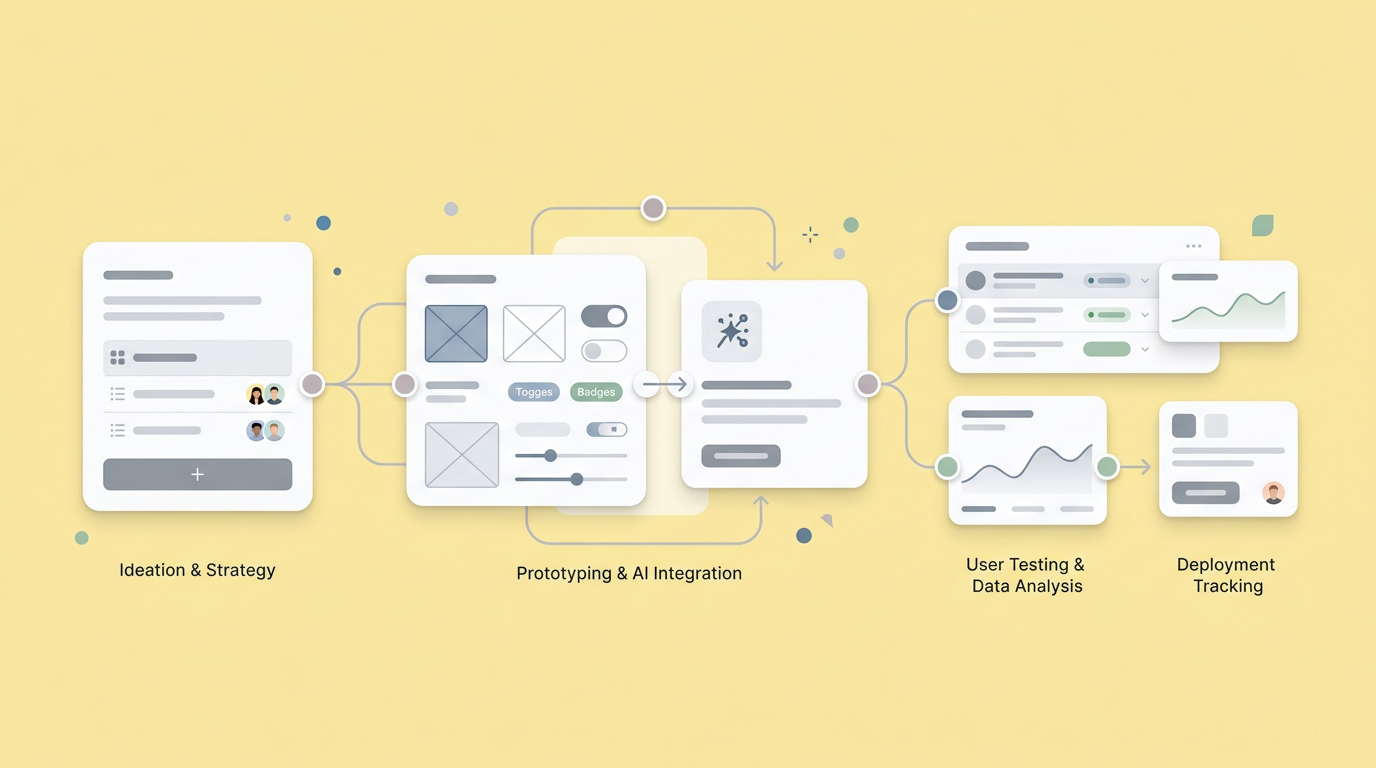
Our teams report that treating AI as a continuous workspace partner, rather than a single-use prompt box, changes how quickly an organization ships validated features.
3. Evolving from Static Text to Live Prototypes
Modern PMs use AI workspaces to move past static PDF documents and instantly create hand-off ready prototypes. Tools bridging this gap generate responsive interface elements that behave like the final software, ensuring developers understand the exact intended interaction models effortlessly.
This transition marks a distinct upgrade for modern product routines. With products like Dazl, which announced a $10 million seed round and was founded by Wix co-founder Nadav Abrahami, the focus remains on helping PMs move from requirements to interactive prototypes. Dazl reads your product requirements and helps you shape them into real, clickable prototypes that your engineers can actually use.
Industry leaders recognize this shift in momentum. As noted by product growth expert Aakash Gupta, AI prototyping completely changes PM workflows by allowing teams to explore broad concepts rapidly. They bring their product spec into the workspace, refine the visual interactions, and immediately share it for stakeholder reactions.
4. Co-Creating the Interactive User Experience
AI enables marketers and product managers to co-create user experiences dynamically based on real-time consumer inputs. Instead of guessing what users want, teams conversational AI agents to test different user flows before committing them to final code repositories.
Retail environments offer a strong blueprint for this methodology. According to a 2026 trend analysis by Insider One, generative AI marks a definitive shift toward the collaborative co-creation of interactive experiences between brands and shoppers.
Product teams adopt this exact mindset internally. By using interactive AI builders, they test complex logic trees early in the cycle. To understand how to structure this technically, many teams review strategies for Building an AI App Prototype That Validates Logic Early.
Project Management with Large Language Models
Project management with large language models involves using AI to parse complex product specs, align sprint priorities in tools like Linear, and track stakeholder communications. It systematically reduces the administrative load on PMs overseeing large scope deployments across distributed teams.
Scaling a product vision requires heavy negotiation. Product managers spend an outsized portion of their week formatting updates, summarizing feedback for engineers, and rewriting scope documents when the timeline shifts.
Using AI to manage the connective tissue of a project frees the manager to focus on strategy. The technology handles the administrative routing, ensuring every contributor has the context they need to execute their tasks.
5. Aligning Cross-Functional Engineering Teams
AI tools align diverse teams by acting as an unbiased interpreter between product logic and design language. Teams report fewer misunderstandings during the hand-off phase because the AI generates documentation that speaks clearly to both engineers and visual interface designers.
We rely on these systems to bridge the communication gap between backend architects and frontend styling experts. Whenever a specification changes, a generative model can update the associated prototype and flag the exact technical dependencies for the engineering lead.
This ensures everyone works from a single source of truth. We found that deploying AI in product design meetings to act as a subagent keeps the entire group focused on the user problem, reducing the internal friction typical of a complex rollout.
6. Managing the 10 20 70 Rule for AI Implementation
Integrating AI into business workflows requires massive focus on changing human behavior effectively.
Buying a new software subscription rarely fixes a broken company culture. If product managers introduce AI tools without modifying how the team conducts sprint planning, the new technology simply becomes another ignored application on the company dashboard.
The heavy lifting happens in the 70 percent devoted to change management. Training your team on How AI is Transforming Project Management Workflows in 2026 establishes clear expectations on when to use AI for ideation versus human judgment for final user sign-off.
Navigating AI Adoption Risks in 2026
AI adoption risks stem from poor change management, misaligned expectations, and trying to automate tasks that require nuanced human empathy. Product managers mitigate these risks by focusing AI on structural acceleration rather than replacing critical human decision frameworks within the business.
Failing to respect the limits of current machine learning models leads to disrupted schedules and frustrated personnel. AI excels at structuring data, visualizing standard components, and generating variations of known concepts.
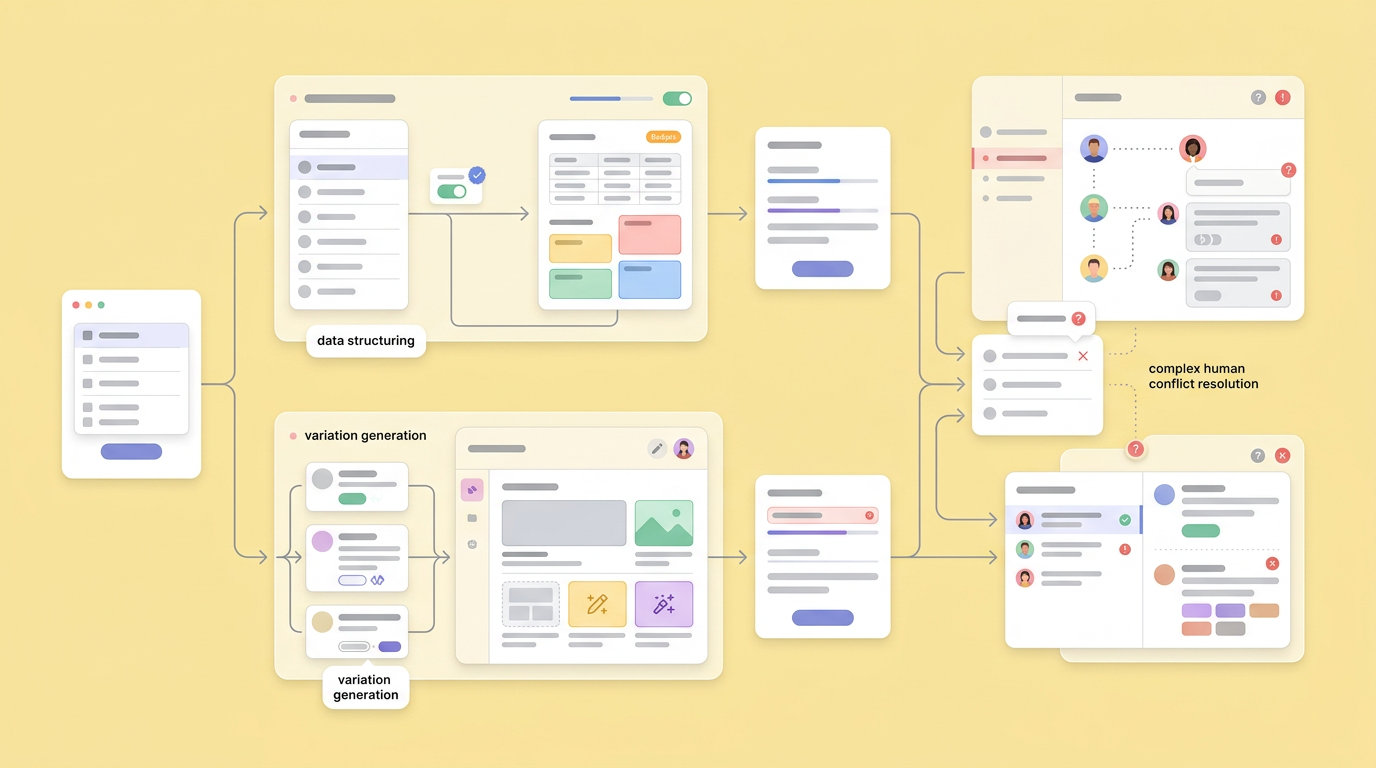
It struggles immensely when tasked with resolving a highly emotional dispute between two department heads. Recognizing these boundaries ensures PMs apply the technology where it actually drives results.
7. Understanding Why 85% of AI Projects Fail
Success requires mapping AI tools to existing product manager routines rather than forcing specialized teams to adopt entirely isolated procedural systems overnight.
A common misstep involves implementing generative AI solely to cut costs, rather than to expand capability. When an enterprise attempts to entirely remove human oversight from a user-facing tool, the resulting product often feels generic or tone-deaf to the customer base.
The most successful rollouts occur when AI operates as an intelligent workspace companion. It should draft the blueprint, compile the metrics, and stand up the initial prototype so the product manager can spend their time refining the core user value proposition.
8. Knowing Which 3 Jobs Will Survive AI
Jobs requiring complex empathy, strategic negotiation, and abstract creative management will strictly survive AI automation. Product managers, empathetic human resources leaders, and high-level behavioral strategists remain necessary to interpret human needs that software algorithms cannot effectively measure or feel.
We found that artificial intelligence thrives on established structural patterns but falters on nuance. The role of the product manager evolves from a spec-writer into an editor and strategist. They curate the outputs generated by the machine and align them with the emotional reality of the target market.
Any role heavily focused on understanding the psychological motivation of a user base becomes more valuable as coding and drafting become heavily automated. The skill lies in pointing the AI at the right problem, a distinctly human capability.
Taking Concepts from Rough Idea to Production Handoff
Pushing ideas from raw text to production ready handoff requires AI workspaces that support continuous visual iteration. When the product team collaborates around a shared, interactive prototype rather than segmented documents, the entire organization ships features significantly faster and with better alignment.
Generating immense value from AI depends entirely on how effectively it integrates into your daily routine. Product managers do not need more detached chat windows generating walls of text. They need an environment where an idea easily transforms into an interactive format that engineers can inspect and understand.
When your workspace acts as a dedicated partner throughout the entire product journey, you stop wasting weeks waiting for initial design explorations. For teams focused on eliminating the gap between ideation and a hand-off ready state, moving your workflow into Dazl keeps everyone aligned from the first spec to the final prototype.
You and your team can accelerate your development cycle by joining Dazl to turn your product requirements into interactive prototypes.
Get Started