Building an AI App Prototype That Validates Logic Early
Explaining a dynamic AI agent workflow using ten static design screens usually leads to blank stares during product reviews. Product managers understand exactly how the intelligent system should respond, yet capturing that interactivity requires more than flat mockups. Translating complex model behavior into an understandable format is the primary friction point for modern product teams.
This creates a serious bottleneck when trying to secure stakeholder alignment. Developing an interactive proof of concept traditionally required pulling engineers off core features just to validate an assumption. Teams end up trapped between under-communicating their vision and over-investing in unproven ideas. Building an AI app prototype requires a workflow that bridges this gap effectively.
The Core Challenge of Extracting AI App Requirements
To successfully gather requirements for intelligent features, teams must move beyond traditional static documentation and map out how generative models will handle unpredictable user inputs in real time. This involves several key aspects:
- Defining Contextual Triggers: Understand what initiates an AI's response.
- Outlining System Constraints: Identify the boundaries of the AI's capabilities.
- Designing Dynamic States: Plan for how the interface will adapt to varied AI outputs.
- User Input Mapping: Anticipate and categorize diverse user inputs.
- Feedback Loops: Design how the AI provides information back to the user.
Most product managers recognize that an AI app development process differs fundamentally from building a straightforward CRUD application. Intelligent features produce variable outputs. Users might prompt a system in completely unexpected ways. When our teams evaluate early concepts, trying to document these edge cases in standard issue trackers rarely captures the full user experience.
The cost of validating these ideas through traditional engineering pathways remains remarkably high. Conventional prototyping methods often require one to eight weeks of dedicated technical work to produce high-fidelity results. When relying on external agencies or freelance developers, developing a standalone concept can cost anywhere from $1,000 to $30,000, according to cost benchmark data.
Static Screens Fail Dynamic Ideas
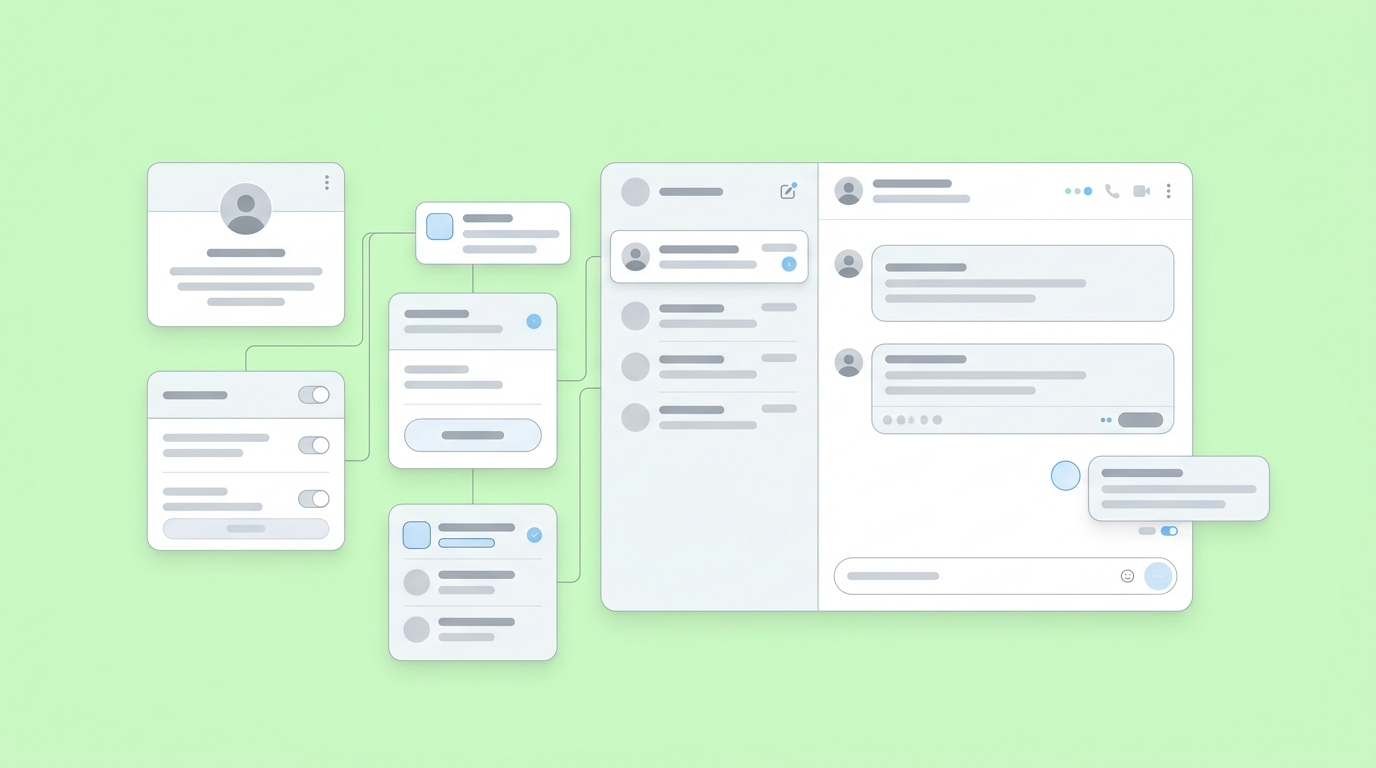
Mapping out fluid conversational interfaces with stationary wireframes severely limits understanding. Stakeholders need to experience the response latency and variability firsthand to provide meaningful feedback on the product vision.
Traditional design tools excel at establishing visual hierarchy and layout consistency. They struggle significantly when communicating conditional logic pathways driven by intelligent backends. Reviewers often miss the contextual nuances of how an application should behave when a user provides ambiguous inputs.
When relying on flat designs, you naturally focus the conversation on button placements rather than the actual problem-solving capabilities of the proposed system. Reviewers end up debating color choices. The team misses critical early feedback on whether the algorithmic logic actually addresses the user pain point.
The True Cost of Technical Validation
Allocating expensive engineering resources to build out testable logic often derails existing sprint velocity and delays the release of established revenue-generating features.
Product teams previously accepted that proving an intelligent concept required heavy technical investment. Teams would write backend scripts just to simulate a simple AI app proof of concept. This approach demands significant time from specialized developers who could otherwise focus on optimizing production infrastructure.
The industry data paints a clear picture regarding shifting methodologies. While raw code generation accelerates output, product managers still need faster ways to validate the core user experience before formal development sprints begin.
How to Build an AI App Prototype
To build an AI app prototype effectively, product managers must define contextual triggers, outline system constraints, design dynamic states, and test logic flow with real stakeholders before writing production code.
Establishing a clear workflow requires prioritizing user interaction over perfect visual fidelity during the early stages. The primary goal centers on proving that the intended functionality solves a real problem. Creating an AI startup prototype demands tools that let product leaders iterate rapidly based on direct feedback rather than technical constraints.
Start with a Dynamic Specification Process
Creating a structured foundation means integrating interactive elements directly into your project documentation, ensuring every team member visualizes the intended logic from the outset.
Words alone rarely convey the intricacies of intelligent interfaces. Modern teams benefit significantly from Creating a Dynamic PRD in 2026: A Blueprint for Product Teams to ensure product requirements align with technical realities. Outlining specific edge cases clearly within the initial planning phases prevents downstream misinterpretation.
By defining exact input parameters and expected output variations, you establish a solid framework. This careful preparation guarantees that when prototype generation begins, the resulting interface accurately reflects your strategic intentions.
Validating Logic with an AI App Proof of Concept
Testing the core functionality requires isolating specific user flows and observing how targeted demographics interact with the generative mechanics in a constrained environment.
Evaluating basic assumptions early prevents extensive rework later. Teams that spin up interactive iterations quickly can gather authentic reactions to the core mechanics. A digital product lead at Prototyp.digital recently noted that their team validates ideas well before full-scale development begins by observing real user interactions and pinpointing usability issues early. This process allows them to identify key areas for improvement directly from user behavior.
This methodology relies heavily on reducing the initial overhead. When you lower the barrier to creating testable artifacts, you encourage broader experimentation across the organization without risking the quarterly roadmap.
Designing for Contextual AI Interactions
Crafting interfaces for intelligent tools requires anticipating variable outputs, designing graceful failure states, and ensuring the interface communicates processing delays effectively to end users.
A static loading spinner fails to capture the complexity of a system generating a multi-part analytical response. Establishing a Generative AI for Product Designers: 2026 Workflow Playbook helps define standardized patterns for these unique interactions.
Product managers need to simulate these exact moments during the review phase. Revealing how the interface adapts when a user submits an extremely vague prompt sets realistic performance expectations for the broader team.

Moving Faster: MVP for AI Applications Using Generative Workflows
Using generative workflows to build a minimum viable product accelerates the validation phase by translating written logic directly into testable interactions within a matter of days instead of weeks.
The gap between a compelling idea and a testable artifact continues to shrink rapidly. We found that utilizing dedicated platforms specifically designed for product managers allows teams to skip the initial wireframing drudgery entirely. This shift empowers product leaders to focus exclusively on optimizing the user journey.
Industry observations confirm this rapid acceleration across the tech landscape. The methodology clearly works for early-stage validation and rapid market testing.
Slashing Time and Cost Friction
Adopting modern prototyping platforms reduces creation time from several weeks to just a few hours, allowing cross-functional teams to review functional logic immediately.
The traditional financial barriers to entry are practically dissolving. Do-it-yourself intelligent prototyping can now cost between $0 and $500, vastly outperforming agency rates. This leads to significant benefits:
- Reduced Costs: Prototyping costs are dramatically lower than traditional agency rates.
- Faster Validation: Low-code integration cuts app development validation time by 50 to 90 percent.
- Increased Agility: Contracted sprint cycles enhance enterprise agility at scale.
- Improved Collaboration: Cross-functional teams can engage earlier and more effectively.
- Higher Quality Outputs: Early feedback leads to more refined and user-centric products.
This acceleration directly impacts enterprise agility at scale. Analysts project that 70% of new enterprise applications will rely on low-code or no-code architecture by the end of 2026. Product managers driving this adoption benefit from significantly contracted sprint cycles.
Gathering Real Usability Feedback
Capturing actionable insights requires placing interactive models in front of unbiased users and recording exactly where they hesitate or misunderstand the core navigation logic.
When a prototype reacts dynamically to user clicks, the feedback quality improves exponentially. Reviewers stop commenting on font sizes and start questioning logic gaps. This qualitative data ensures that every iteration moves the team closer to a meaningful product launch.
Analyzing this feedback refines the conceptual AI prototype design rapidly. In our testing, presenting fully functional logic pathways during stakeholder meetings completely eliminated the need for lengthy feature explanation sessions.
Measuring the Impact of Interactive Validation
Evaluating the success of a new prototyping workflow involves tracking the reduction in specification rework, the speed of stakeholder approval, and the clarity of the final technical handoff.
A refined process ultimately protects valuable engineering hours. When developers receive validated, interactive specifications, they spend far less time guessing expected behavior. This translates into several advantages:
- Focused Engineering: Developers can concentrate on scalable architecture and security.
- Reduced Rework: Fewer specification changes streamline the development process.
- Faster Time-to-Market: Efficient workflows accelerate product delivery timelines.
- Greater Innovation: Teams feel empowered to experiment with more ideas.
- Predictable Outcomes: Clearer requirements lead to more reliable project delivery.
Product growth expert Aakash Gupta recently observed that intelligent prototyping has completely altered the product management role. He noted that purpose-built collaborative tools deliver exactly what AI prototyping was missing by keeping teams aligned on functionality, citing specific examples of improved communication and reduced time to market in recent projects he's overseen.
Accelerated Feedback Loops
Implementing testable concepts early increases communication frequency between product leads, designers, and engineering teams, resolving critical alignment issues long before coding starts.
The gains extend completely across the technical spectrum once development actually begins. Controlled experiments indicate that
Combining an interactive validation phase upfront with accelerated engineering on the backend transforms product delivery timelines.
Aligning Stakeholders with Hand-off Ready Deliverables
Delivering an interactive artifact instead of a lengthy written document guarantees that executive sponsors, marketing leads, and technical directors all share the exact same functional expectations.
A unified vision prevents costly misalignments during the final stages of the build phase. When everyone interacts with the same source of truth, ambiguous interpretations of feature requirements basically disappear.
Bringing a complex digital concept into reality involves capturing ideas, exploring variations, refining specific interactions, and sharing the final result for immediate reactions. This reliable formula ensures teams build the right features for their actual audience.
Adapting Your Prototyping Strategy for Tomorrow
Upgrading your validation methodology means shifting away from isolated text documents toward collaborative spaces that actively simulate user interactions before a single line of production code is written.
Product managers no longer need to rely solely on engineering favors to test basic assumptions. As intelligent development platforms become mainstream across the industry, the ability to rapidly iterate mockups represents a core competency for modern teams. Validating logic visually ensures smoother collaboration and less friction during extensive sprint planning sessions.
The real advantage comes from consolidating the fragmented tool stack. When ideation, specification writing, and interface simulation happen in the same environment, the entire product journey accelerates. If your team wants to unify this workflow from the initial spark of an idea to a highly polished deliverable, exploring a dedicated workspace like Dazl offers a practical path toward capturing true product alignment.
Your team can move from these concepts to a functional prototype by signing up for Dazl to start building.
Get Started