How AI is Transforming Project Management Workflows in 2026
According to a recent 2025 industry report, most teams remain stuck in the pilot phase while grappling with traditional bottlenecks. Product managers are spending hours updating tracking tickets and tracking down status reports when they need to be focused on feature validation.
Let us look at how AI is transforming project management by shifting the focus from manual task administration to strategic product execution. We will explore the concrete ways technology is accelerating the path from initial ideation to visual hand-offs.
1. Predictive Analytics in Project Management Workflows
Predictive analytics uses historical data and real-time inputs to forecast project timelines, budget overruns, and resource constraints before they happen. Product teams apply these insights to build proactive schedules, shifting team focus from reactive firefighting to preventative planning.
Catching Risks Before They Derail Projects
Machine learning models analyze past sprint data to flag high-risk tasks weeks ahead of standard reporting cycles. This early warning system allows managers to adjust scopes or reassign work based on actual data rather than gut feelings.
In our testing of forecasting tools, we found that surfacing issues proactively changes the tone of standup meetings entirely. Teams report project success rates jumping sharply when using early risk detection, showcasing a tangible improvement in project outcomes and overall team morale. One analysis of the project management software market noted a 25% increase in project success rates linked to better risk management and resource allocation.
Organizations are using artificial intelligence to handle several risk management steps automatically, including continuously reviewing historical sprint completions to calculate true velocity and highlighting dependencies that historically cause delays across specific functions. AI also sends alerts directly to managers when a critical path task begins to drift, and automatically identifies potential bottlenecks in resource allocation based on predictive models.
Optimizing Resource and Skill Allocation
AI recommends optimal assignment of tasks by analyzing team members' skills, current bandwidth, and historical velocity. Product leaders use these recommendations to balance workloads equitably and prevent bottlenecks in the development pipeline.
Balancing workloads manually is notoriously difficult, especially for distributed teams. The market for these types of tools is expanding quickly. The global AI in project management market is valued at USD 4.14 billion in 2026 and is projected to reach USD 14.45 billion by 2034. This rapid growth correlates directly with the increasing demand for intelligent resource allocation.
Managers can rely on smart software to parse the complex matrix of who is available and who possesses the exact technical competency required for a blocking issue.
2. Automating the Administrative Burden Away
Intelligent automation handles routine updates, meeting summaries, and status reporting to free up hours of manual entry. By offloading these repetitive tasks, product teams consolidate their energy around strategy, user research, and complex problem-solving.
Shifting from Reporting to Strategy
Organizations are rapidly moving away from static spreadsheets in favor of generative tools that draft reports automatically. This shift allows managers to spend less time formatting documents and more time analyzing the underlying product metrics.
By 2030, analysts project that 80% of project management tasks will be run by automated intelligence. This transition requires individuals to step away from administrative oversight. In our own transition to these systems, we noticed immediate relief from the friction of weekly status roll-ups, allowing our team to reallocate significant time to more strategic tasks.
Administrators are using artificial intelligence extensions to generate documentation directly from chat interfaces. These tools draft updates, distill meeting transcripts into actionable cards, and automatically notify stakeholders.
AI Tools for Project Planning and Scoping
Modern planning tools ingest brief user stories and output comprehensive technical requirements, risk logs, and testing scenarios. Structuring projects this way accelerates the initial phases of development while keeping stakeholders aligned on expected outcomes.
Writing product requirements documents manually can delay the start of actual product framing by weeks. Exploring how to build a modern PRD in project management shows that dynamic, machine-assisted requirement gathering creates better alignment. Planners input core business logic, and the tools flesh out the edge cases automatically.
Teams benefit from this approach by generating more comprehensive problem statements. They review AI-drafted acceptance criteria, refine the logic, and push requirements directly to design teams in a fraction of traditional cycle times.
3. AI Applications for Project Managers During Ideation
Artificial intelligence during the ideation phase helps teams translate abstract requirements into tangible artifacts quickly. Product managers use these applications to simulate user flows, build wireframes, and secure stakeholder buy-in before writing any production code.
Validating Logic Early in the Cycle
AI prototyping allows teams to test the logic of a feature visually rather than debating written specifications. Validating concepts in high fidelity ensures that fatal flaws surface weeks earlier in the product lifecycle.
When product managers build prototypes to validate logic, they close the communication gap with engineering.

A visual representation of a user flow removes ambiguity that text-based documentation often creates. Managers can prompt a tool with a user story and immediately critique the resulting interface component.
The most common applications for early validation include creating clickable components to verify expected user behavior, generating multiple layout variations to test information hierarchy quickly, and drafting real-world sample data to populate wireframes contextually. Furthermore, these tools validate complex user flows with dynamic, interactive prototypes.
Bridging the Gap Between Ideas and Prototypes
Bringing an idea to a hand-off ready state requires tools that act as active teammates rather than passive canvases. Using AI workspaces helps product managers iterate on visuals and interactions rapidly based on continuous team feedback.
Product growth educator Aakash Gupta recently observed that AI prototyping has completely changed the product manager role, providing exactly what the prototyping phase previously lacked. We rely heavily on platforms that understand the full context of the product requirement and generate artifacts that engineers can actually use. Dazl functions as a co-creator during this critical window, taking text specs and helping managers refine interactions visually.
Christopher Nguyen notes a similar workflow pattern. By bringing the product context into an intelligent workspace, teams can explore ideas broadly, dial in specific visual states, and share links for immediate reactions.
4. The Future of Project Management with AI Workflows
Project management is evolving toward agentic AI, where systems act as co-managers capable of executing multi-step workflows autonomously. These agents handle cross-functional coordination, dynamically update roadmaps, and surface insights without requiring direct human prompts.
Deploying Agentic AI as Co-Managers
Autonomous agents integrate with existing tools to manage communication, schedule reviews, and update task statuses dynamically. Product teams treat these agents as active participants in the development lifecycle, delegating routine oversight to software.
Researchers and educators like Tal Raviv are already documenting workflows where specialized subagents handle targeted roles in design and engineering meetings.
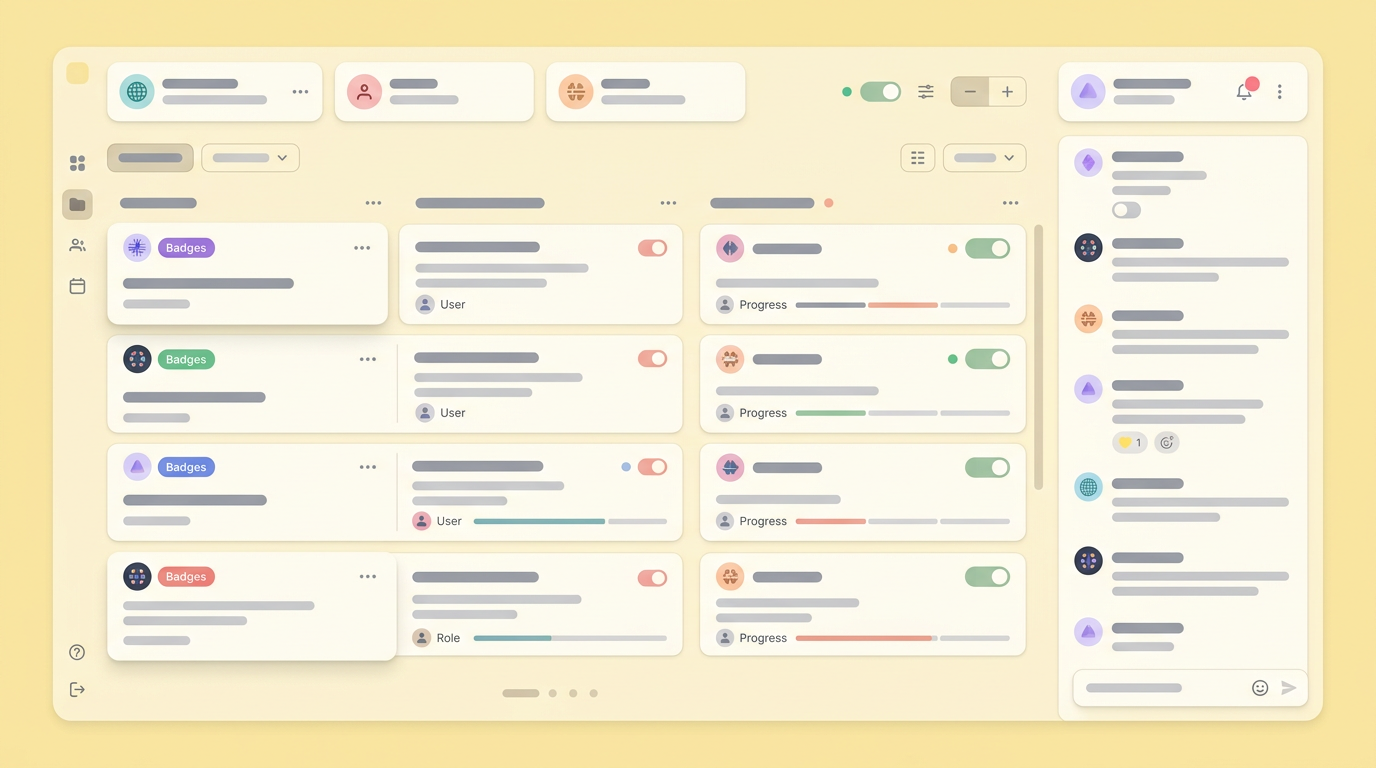
Instead of a single model doing everything, small autonomous programs handle specific logic checks or deployment verifications.
These agents act as silent observers in the background until an anomaly appears. Once they detect a blocked issue or a completed pull request, they update the project tracking board and notify the relevant designer for a final visual review.
Closing the Technology Literacy Gap
As artificial intelligence handles more tactical execution, project managers must develop stronger skills in prompting, data interpretation, and systems thinking. Continuous on-the-job training is becoming standard practice for teams adapting to these structural changes.
There is widespread acknowledgment that the fundamental nature of the job is shifting rapidly. To prepare for this future, product builders need to adjust their daily habits.
To bridge the growing skills gap, teams are adopting practices such as structured prompting techniques to generate better initial requirements and auditing existing manual processes to identify which steps to hand over to software. They are also shifting communication styles away from long text documents toward visual prototypes and quick interactive models, and engaging in continuous learning to stay updated on new AI tools and methodologies.
Moving from Trend to Practical Application
Integrating these project management advancements requires starting small with specific bottlenecks in your team workflow. Early adoption of these tools shortens the path from initial concept to a validated product, building immediate momentum.
The push toward automated administration and intelligent prototyping is a structural operational change. The most successful teams are those that view these platforms as collaborative teammates.
Tools like Dazl perfectly illustrate this new paradigm. By acting as the PM's teammate at every step, from writing the initial specification to generating a hand-off ready prototype, it ensures the team remains aligned throughout the entire creative cycle. Transforming abstract tickets into shareable, visual deliverables gets your product in front of users faster.
You can explore how these predictive tools and automated workflows empower your team to lead more strategically by signing up for Dazl.
Get Started