7 Product Discovery Process Best Practices Moving Teams Forward
Aligning a team around what to build next is an inherent industry challenge that often leads to shipping workflows users bypass entirely. Effective product discovery methods provide the rigorous validation necessary to clear that hurdle. Addressing this friction upfront saves both time and internal alignment capital.
The most common trap product managers fall into is treating discovery as a requirements-gathering exercise rather than a risk-mitigation phase. Modern software teams are moving past single-phase kickoff documents. Instead, they embrace systematic cadences that continually test the waters before writing heavy production code. Structuring these validation cycles prevents complex feature builds from derailing the overall roadmap completely. Here are some of the core frameworks defining highly capable product organizations today:
- Continuous problem validation: Systematically mapping user needs before evaluating models.
- Testable assumptions: Breaking complex AI capabilities into isolated data, interaction, and value risks.
- Rapid prototyping feedback loops: Validating assumptions early through quick iteration and testing.
- Cross-functional alignment: Ensuring all teams understand realistic capabilities and limitations.
Best practices for AI product development and discovery
The core best practices for AI product development start with continuous problem validation, where teams systematically map user needs before evaluating models. Successful teams break complex AI capabilities into testable assumptions by isolating data risks, interaction risks, and value risks early through rapid prototyping feedback loops.
Building AI tooling introduces unpredictable interaction patterns and high variance in technical feasibility. We found in our testing that attempting to write comprehensive, rigid specifications for AI-driven features frequently causes severe misalignment between product managers and engineers. The ambiguity of model outputs demands strict adherence to rigorous product discovery frameworks that heavily index on rapid iteration rather than fixed upfront planning. Defining the specific product discovery techniques suited for non-deterministic software shields the entire pod from over-investing in wrong directions.
Frame the user problem before selecting the model
Framing the user problem before selecting the model involves separating the desired customer outcome from the technical implementation completely. Product managers must ensure the discovery process identifies genuine workflow friction rather than merely seeking a convenient use case for the latest language model update.
When product managers work backward from a technical capability, they often invent theoretical pain points that do not reflect actual user behavior on the ground. Teams must conduct targeted interviews to understand the primary objective the user is trying to accomplish. Once the specific outcome is firmly established, teams can then evaluate if generative tools are the optimal mechanism for solving it.
Establish continuous data feedback loops
Establishing continuous data feedback loops requires instrumenting prototypes early to capture qualitative user sentiment alongside quantitative success rates. High-performing modern AI product teams actively synthesize these dual data streams to recalibrate model prompts and interface flows based on actual daily user interactions.
Integrating these loops into the core product architecture prevents organizations from operating in a vacuum. Observing actual users attempt to navigate generative text interfaces provides critical insights that backend testing simply cannot replicate. Maintaining a close pulse on error rates and manual fallbacks ensures the finalized product functions smoothly under realistic pressures.
Align cross-functional teams around realistic capabilities
Aligning cross-functional teams around realistic capabilities means setting clear boundaries regarding what the technology can and cannot reliably accomplish during the current sprint. Providing stakeholders with functional examples of edge cases prevents unreasonable expectations from driving erratic roadmap changes.
When engineering, design, and product management operate with differing views of feasibility, the validation cycle grinds to an uncomfortable halt. Presenting interactive examples rather than theoretical charts allows the team to negotiate trade-offs based on objective evidence. This alignment phase reduces friction during the final engineering hand-off sequence.
7 Tactics to Improve the Product Discovery Process
Teams learning how to improve product discovery shift to:
- Continuous weekly customer interviews: Engaging regularly with users.
- Isolate testable assumptions: Breaking down ideas into smaller risks.
- Utilize structured mapping frameworks: Connecting user problems to proposed features.
They also implement AI tools to synthesize thousands of qualitative data points rapidly, validate concepts using functional prototypes, and kill backlog items based on concrete evidence.
Major integration risks surface well before the engineering build begins, preserving technical resources for proven concepts. Companies that invest dedicated time upfront consistently see a smoother transition into their agile deployment sequences.
1. Adopt continuous product discovery rhythms
Adopting continuous product discovery rhythms means scheduling regular touchpoints with actual users rather than treating research as a one-off project phase. High-performing product teams run discovery activities on a weekly or bi-weekly cadence to maintain complete alignment with constantly changing market demands.
Engaging in regular interviews loads your brain with highly relevant details regarding daily workflows. PMs who maintain constant contact with customers navigate edge cases more effectively and make confident product decisions much faster.
2. Evaluate underlying assumptions, not full ideas
Evaluating underlying assumptions involves deconstructing a holistic feature concept into smaller, specific risks related to value, usability, feasibility, and business viability. Testing these isolated assumptions individually requires far less effort than mocking up an entire application flow.
Product discovery experts frequently advocate for isolating risks incredibly early in the validation phase. Teams should break their ideas into underlying assumptions and test those individually rather than building full prototypes upfront. This targeted testing strategy accelerates learning loops while consuming minimal design and engineering resources overall.
3. Employ AI for research synthesis
Employing AI for research synthesis allows teams to process hours of recorded user interviews, extract recurring product themes, and categorize feedback at an unprecedented scale. AI tooling transforms raw, unstructured conversational scripts into organized opportunity areas ready for immediate evaluation.
Reviewing interview transcripts manually consumes critical hours that PMs could spend mapping high-impact solutions. Delegating the heavy lifting of pattern recognition to software frees product leaders to focus squarely on interpreting nuanced, differentiated insights. To expand on this capability, review our guide covering 7 Generative AI Workflows for Modern Product Managers.
4. Utilize structured product discovery frameworks
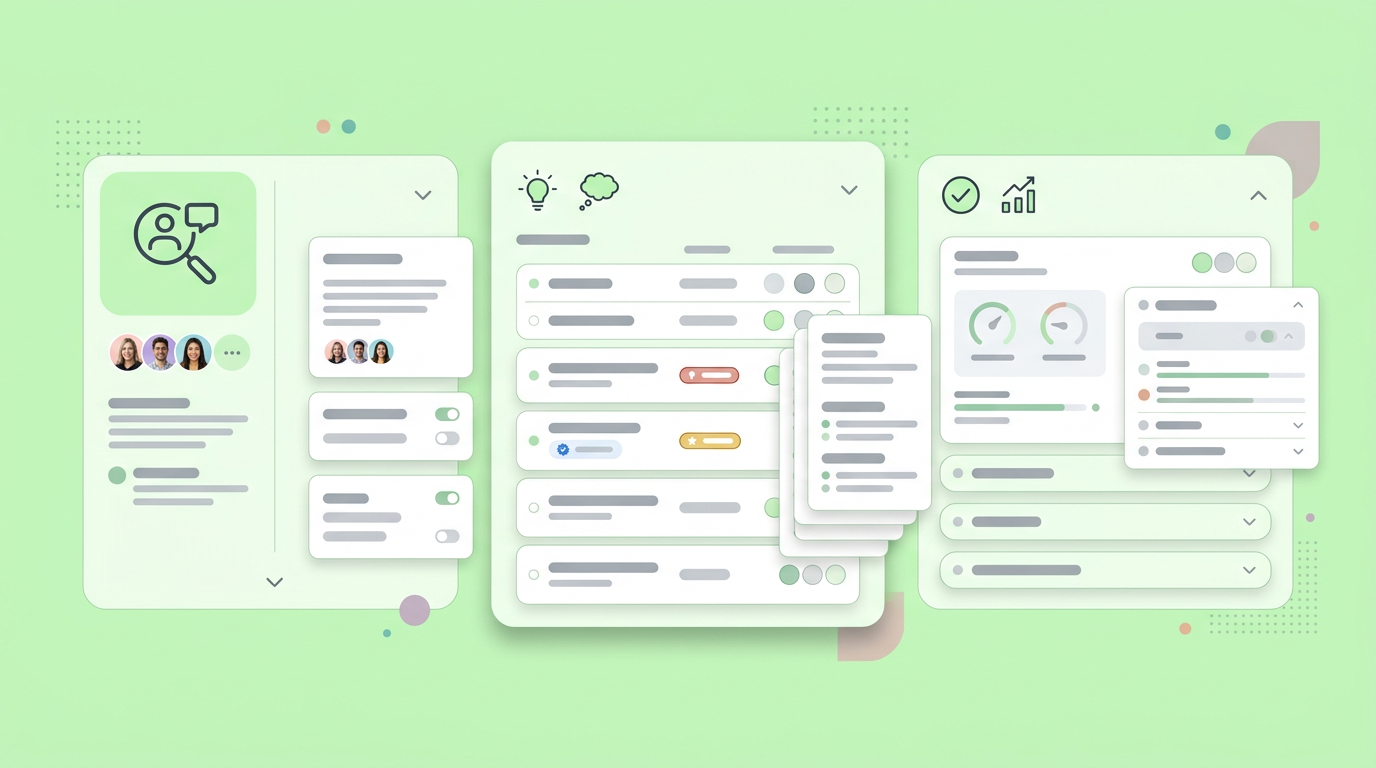
Utilizing structured product discovery frameworks provides cross-functional teams with a shared visual vocabulary for connecting user problems to proposed features. Frameworks like the Opportunity Solution Tree ensure that every item considered for the roadmap traces back to a validated customer need.
Mapping out these connections prevents teams from adopting pet features based purely on internal biases. By plotting out paths from desired outcomes to specific interaction opportunities, product managers build consensus cleanly. Visualizing the reasoning enables all internal stakeholders to easily comprehend why certain features are prioritized over others.
5. Rely on data over stakeholder opinions
Relying on data over stakeholder opinions involves grounding every roadmap discussion in synthesized user feedback, behavioral analytics, and direct market signals. Transitioning from subjective debates to evidence-based decision-making minimizes organizational politics while maximizing overall product fit.
Establishing a strict data-first culture protects the engineering team's capacity from unverified executive requests. Guidance on continuous discovery practices explicitly warns that persisting with unvalidated feature ideas is futile if customers lack a genuine need. Every major prioritization decision must connect directly back to robust, objective information.
6. Run focused discovery phases to reduce rework
Running focused discovery phases involves dedicating structured two-to-six-week blocks specifically to problem framing and solution testing before any production code is written. This dedicated space clarifies technical requirements, identifies missing dependencies, and significantly reduces costly mid-build pivots.
Teams that honor this dedicated time dramatically compress their overall shipment cycles. Surfacing friction points early prevents developers from stalling out when requirements shift unexpectedly mid-sprint.
7. Validate through functional prototypes early
Validating through functional prototypes early means placing interactive components in front of users to gauge actual behavioral responses rather than relying on theoretical survey feedback. Clickable experiences expose usability flaws and conceptual misunderstandings that static outlines simply cannot reveal.
Moving from raw customer insights to a validated prototype often creates organizational friction among designers, PMs, and engineering leads. Bringing teams together inside Dazl keeps everyone aligned from that first spark of ideation straight through to a hand-off ready prototype. For detailed methods on running these rapid experiments, explore How to Test and Validate Product Concepts Fast in 2026.
Moving from Fake Discovery to Disciplined Execution
Disciplined execution requires product managers to consistently update their opportunity maps and actively remove invalidated ideas from the backlog based on new data. This includes:
- Removing invalidated ideas: When experiments or interviews show insufficient user pain.
- Defining explicit success criteria: Setting quantitative targets before testing begins.
- Shortening the path to engineering hand-off: Providing detailed visual and functional specifications early.
- Continuous learning: Adapting strategies based on ongoing user feedback and market changes.
If your roadmap never changes after customer interviews, teams risk performing fake discovery that merely confirms existing assumptions rather than uncovering market truths.
Transitioning from theoretical research to actionable roadmaps separates capable product organizations from those caught in analysis paralysis. After deploying new synthesis techniques, we found that teams often struggle to convert perfectly mapped user pain points into tangible engineering tasks. Applying disciplined filters ensures only the most validated, high-conviction concepts survive the journey toward implementation. This strict curation is a fundamental best practice in product discovery for startups operating with limited runway.
When to remove an idea from the backlog
Removing an idea from the backlog should happen the moment quantitative experiments or qualitative interviews indicate the assumed user pain point lacks sufficient intensity. Archiving these unvalidated concepts aggressively maintains roadmap focus and prevents feature bloat from consuming team bandwidth.
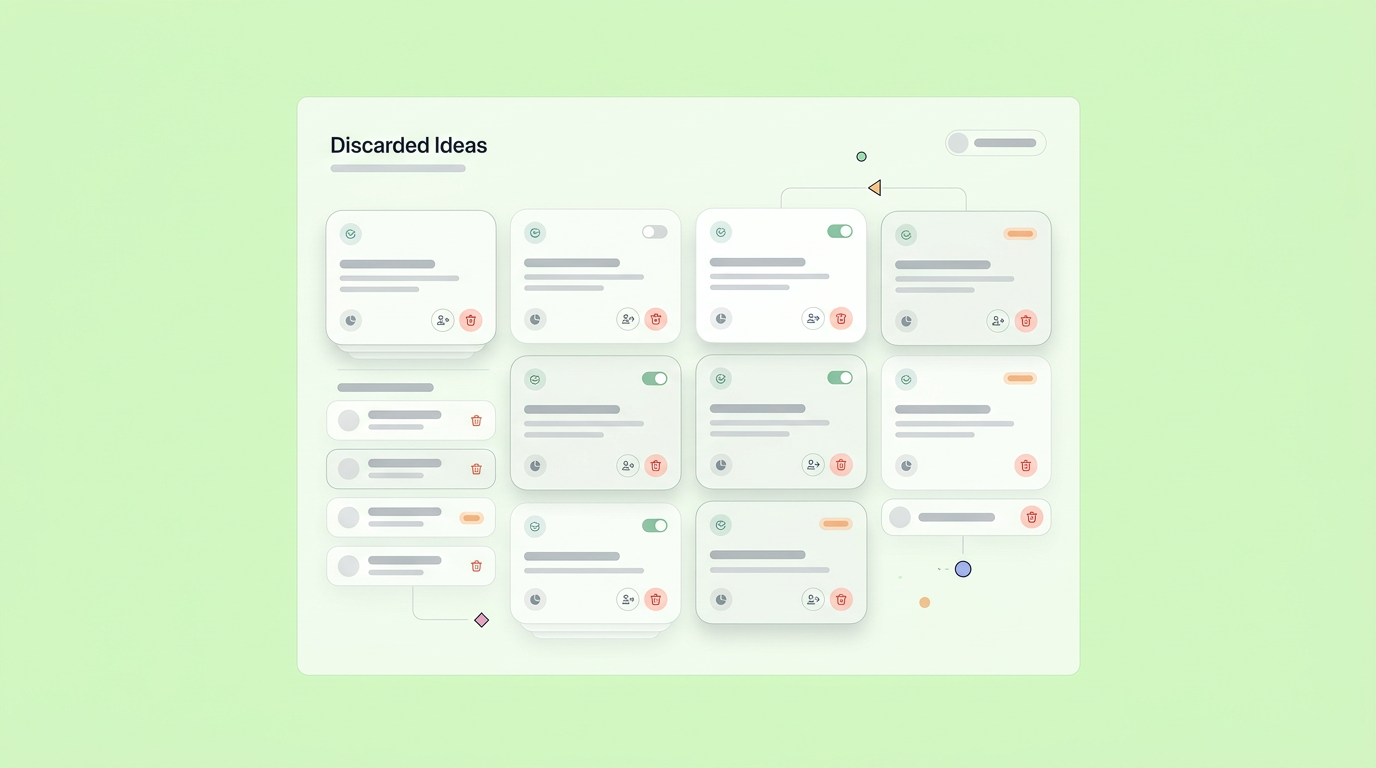
In recent discussions surrounding the future of PM ops, experts highlighted a crucial operational reality: if you never kill ideas based on user feedback, you are doing fake discovery. Real product discovery demands the courage to discard weeks of strategic thinking when the market data clearly points elsewhere. Keeping zombie items alive merely dilutes the focus required to execute winning concepts.
Define explicit success criteria early
Defining explicit success criteria early involves establishing the specific quantitative targets required to judge an experiment successful before the test actually begins. Documenting these thresholds ahead of time prevents teams from moving the goalposts backward to justify launching a mediocre experience.
Evaluating performance against predetermined adoption metrics or completion rates strips away the emotional attachment to the proposed solution. Teams remain objective when the numbers determine the verdict. Establishing these metrics clearly creates a shared contract among stakeholders regarding what constitutes a validated release.
Shorten the path to engineering hand-off
Shortening the path to engineering hand-off involves tightly coupling the discovery validation phase with the creation of highly detailed visual and functional specifications. Providing developers with a tactile representation of the requested user flow eliminates the frustrating ambiguity often found in written documentation.
When teams provide thorough interactive artifacts, developers spend significantly less time interpreting requirements and far more time iterating on architecture. Clear visual communication drastically reduces the endless clarification cycles that typify standard agile development workflows. Incorporating clear constraints from the discovery phase directly into the deliverables sets up the entire pod for higher baseline velocity.
Shrinking the Gap Between Insight and Reality
Shrinking the gap between insight and reality means translating qualitative customer signals into testable interactions faster than ever before. As tooling accelerates how rapidly we process feedback, the real differentiator shifts toward how swiftly teams can convert those synthesized insights into interactive product experiences.
Future successful product launches rely heavily on tightening this operational feedback loop. The teams shipping impactful software today continuously pull their core users closer to the center of the ideation process. Maintaining a disciplined rhythm ensures your product always evolves in lockstep with the shifting demands of the specific market.
Organizations embedding these methods do not guess what to build next. They observe, prototype, and refine based on clear signals. Cultivating this process requires ongoing commitment to testing, but the alignment and clarity it produces makes the effort universally worthwhile.
Your team can implement these continuous discovery habits and automate your research synthesis by joining Dazl to start your trial.
Get Started