How to Test and Validate Product Concepts Fast in 2026
A typical product alignment meeting often involves three different disciplines looking at the exact same PRD and imagining completely different user experiences. This misalignment costs weeks of redundant cycles. In 2026, product managers need better ways to test concepts and validate product ideas quickly, moving beyond static documents. Staring at a text document simply does not generate the actionable feedback required to assess early stage product market fit.
The Friction of Traditional Early Stage Validation
Traditional early stage validation creates friction when teams rely solely on static documents and isolated design files. This slows down feedback loops and makes it difficult to secure alignment before engineering resources are committed.
Identifying the Shared Bottleneck
The primary bottleneck in product validation is translating abstract requirements into testable artifacts. Teams often wait weeks for initial designs just to gather qualitative user feedback.
Product managers routinely spend hours detailing complex user journeys in tracking tools like Jira or Linear. Meanwhile, designers must wait for finalized text requirements before starting any visual work in Figma. This rigid, sequential handoff creates a shared industry friction that actively delays genuine user feedback.
We found that breaking this linear chain of dependencies is the first critical step toward building better internal alignment. When teams can visualize concepts earlier, they have a better chance of solving actual user problems.
The Cost of Building Too Early
Building functional code too early often leads to expensive engineering rework and misaligned feature sets. Validating concepts through rapid prototyping prevents teams from investing development time into unproven assumptions.
Product leaders universally understand the continuous pressure to ship software quickly. Pushing unvalidated concepts directly to development often results in difficult rollback conversations with stakeholders later.
Teams absolutely need a workflow to test product concepts fast without expecting software engineers to build features that will eventually be scrapped. True validation requires proving the utility of an idea before a single line of production code is written. Interactive prototypes bridge this exact gap by making abstract logic tangible.
A Modern Framework to Validate Product Ideas Quickly
To validate product ideas quickly in 2026, modern teams combine demand signaling, rapid prototyping workspaces, and early user testing. This framework replaces rigid specification phases with interactive validation loops tailored for quick feedback. Key components of this modern framework include:
- Demand Signaling: Identifying early interest and market needs.
- Rapid Prototyping: Quickly creating interactive models of product concepts.
- Early User Testing: Gathering feedback from target users with interactive prototypes.
Finding Demand Signals Before Prototyping
Identifying early demand signals involves analyzing search trends, conducting qualitative interviews, and leaning on market data. These initial data points confirm user interest before any prototyping efforts begin.
Searching for validation starts long before you generate your initial prototype. You need tangible, data-backed evidence that the problem is genuinely worth solving for your specific audience. Following recent 2026 product design trends, modern product teams use demand signals like aggregate search volume data and customer support logs.
We observed that setting up early qualitative interviews grounds this initial research in reality. Speaking directly to a handful of target users highlights pain points that aggregate data often obscures. If the market demand clearly exists, you have a solid foundation for evaluating early stage product market fit.
Creating Aligning Artifacts Over Static Screens
Aligning artifacts are interactive prototypes that serve as a shared source of truth for the entire product team. Unlike static screens, these functional models allow stakeholders to experience the proposed logic directly.
Transitioning from a written spec to an interactive format clarifies technical and design assumptions almost instantly. Christopher Nguyen from UX Playbook highlights a specific routine for this process. His teams bring product context in, explore varied ideas, refine the visual components, and then share the interactive model for immediate reactions.
Using an AI workspace supports this exact operational motion by acting as a PM teammate during the core ideation phase. Founded by Wix co-founder Nadav Abrahami after securing a $10M seed round, Dazl specifically prioritizes generating hand-off ready prototypes that keep the entire team aligned. Generating a clear interactive model drastically shortens the communication gap between product strategists and developers.
Synthetic Research and Human Refinement
Synthetic research involves using AI agents to simulate early user interactions based on established market data. Human refinement then grounds these simulated insights through focused, real-world user testing.
Proving product demand in 2026 frequently involves testing initial concepts against simulated audience personas first. According to strategies discussed by Presta on validating ideas in the agentic era, running synthetic user testing significantly accelerates initial concept screening. Tal Raviv frequently explores similar modern workflows where PMs pull AI subagents directly into early product design meetings.
By the time human testing begins, your interactive concepts are already highly refined and ready for critical feedback. Pairing AI-driven early screening with concise human interviews is highly effective for pre-launch product testing methods.
Case Study Results: Testing Concepts Fast in Practice
Implementing rapid idea validation workflows results in faster stakeholder alignment, reduced development risk, and a clearer path to production. Teams utilizing these methods routinely validate complex concepts in a matter of days.
Shortening the Path from Concept to Hand-Off
Compressing the time between initial ideation and engineering hand-off relies on replacing abstract documents with interactive, functional prototypes. This strategy clarifies user flows and finalizes requirements early in the project lifecycle.
In our testing with various agile product teams, replacing lengthy spec documents with interactive prototypes transformed the entire sprint planning phase. Product growth expert Aakash Gupta recently noted in his analysis that AI prototyping has completely changed how product managers organize their work. He explicitly described Dazl as what the AI prototyping space was historically missing.
Presenting a working model rather than a bulleted text list helps engineers understand exactly what needs to be built immediately. This visual approach eliminates the traditional ambiguity that often plagues early specification documents. By showing rather than just telling, product teams save significant alignment time.
Securing Buy-In With Less Friction
Stakeholder buy-in becomes much easier when leaders can click through a realistic prototype rather than reading technical specifications. Interactive models demonstrate business value clearly and definitively to non-technical audiences.
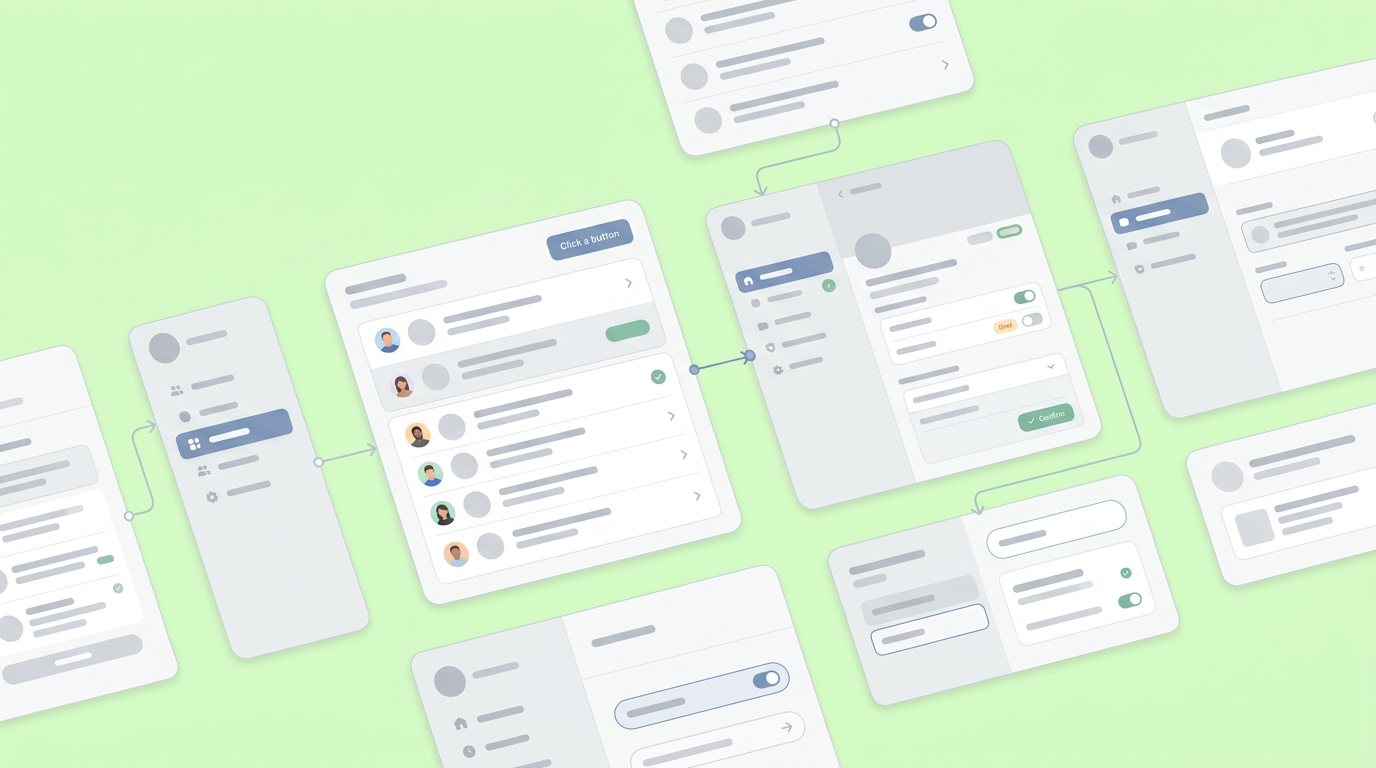
Discussing abstract product concepts in a boardroom often leads to immediate miscommunications and scope creep. When external stakeholders can click a button and navigate the exact user journey, their questions are answered in real time.
Applying modern prototyping tools effectively transitions strategy meetings from hypothetical debates into highly focused feedback sessions. Gaining early alignment ensures that everyone agrees on the product direction before budget is allocated for software engineering.
Scaling Rapid Idea Validation Techniques Across Teams
Scaling validation techniques requires embedding interactive prototyping steps into standard product ceremonies. Teams achieve consistency when they define specific milestones for idea screening and early testing.
Standardizing Pre-Launch Product Testing Methods
Standardizing how a team tests concepts ensures that every new initiative undergoes rigorous screening before development begins. This involves setting reliable data benchmarks for user feedback and market demand.
You cannot rely on ad-hoc or poorly documented methods if you want consistent product growth over time. Product organizations should document their specific validation milestones clearly in their internal wikis.
Creating standard templates for initial user interviews and survey data structures establishes a reliable baseline for evaluating future projects. Teams report that applying a standardized rubric removes subjective bias when deciding which early stage concepts deserve further engineering investment.
Embedding AI Workflows into Core Product Ceremonies
Embedding AI tools into sprint planning and discovery meetings helps product managers continuously validate core assumptions. Integrating these targeted workflows early makes rapid validation a standard habit rather than an exception.
Modern product discovery is a continuous analytical process rather than a one-time project phase. Including a dedicated prototype review phase during early sprint planning helps product managers secure cross-functional input immediately. Learning how AI is transforming project management workflows provides a practical blueprint for integrating these new models into daily team routines.
Maintaining these standard checkpoints dramatically reduces late-stage surprises during final product delivery. A culture that prioritizes rapid validation ensures that the team only codes features backed by solid user evidence.
Frequently Asked Questions
Early product validation involves several practical considerations regarding speed, testing methodologies, and resource allocation. Review these frequently asked questions to refine your approach to early stage product market fit.
How to quickly validate a business idea?
To validate a business idea rapidly, start by analyzing search trends and gathering qualitative demand signals from potential users. Next, create a functional prototype to simulate the core value proposition. Share this interactive model with a small segment of your target audience to gauge real interest before committing to full development.
How to validate a business idea in 24 hours with $0 no website required?
You can validate concepts without a website by engaging directly with target communities on social platforms or industry forums. Ask specific questions about their current workflows and present a verbal or lightly sketched concept of your solution. If people consistently articulate the same pain points and express genuine interest in your proposed fix, you have initial validation.
How do I validate a product?
Validating a product requires testing your core assumptions against real user behavior and market data. Generate an interactive prototype to represent the user flow and conduct concise usability testing sessions. Measure how quickly users understand the value and track whether the proposed solution actually solves their stated problems.
How to test product ideas?
Testing product ideas involves moving past static documentation into interactive feedback loops. Utilize early AI synthetic screening to test baseline logic, followed by qualitative human interviews to gather nuanced behavioral insights. Creating highly refined prototypes allows teams to test multiple iterations of an idea rapidly without touching actual production code.
What are the most effective rapid idea validation techniques?
The most effective techniques include synthetic user testing, interactive prototype reviews, and early demand signaling through search data. Combining these methods ensures that teams validate both technical functionality and market desire simultaneously.
- Synthetic User Testing: Utilizing AI to simulate user interactions and gather initial feedback.
- Interactive Prototype Reviews: Allowing stakeholders to experience proposed logic directly through functional models.
- Early Demand Signaling: Analyzing search trends, conducting qualitative interviews, and leveraging market data to confirm user interest.
Securing cross-functional alignment early ensures you are testing a unified vision.
The Prototypes Shaping the Next Product Cycle
The future of modern product management relies on moving from static documentation to interactive, visual collaboration. Teams that adapt these fast validation workflows will continue to ship more impactful software products with significantly less friction.
Taking a product concept from an early notebook sketch to a shared, unified team vision requires highly actionable steps. In 2026, successful agile teams show their ideas through functional models instead of just explaining them verbally. This involves:
- Interactive Prototypes: Creating functional models that allow stakeholders to experience proposed logic directly.
- Early User Feedback: Gathering insights through synthetic research and human testing sessions.
- Cross-functional Alignment: Ensuring all product strategists, designers, and engineers are focused on a unified vision.
Whether you are conducting focused user interviews or mapping highly complex user flows, the fundamental goal remains early alignment, transforming abstract ideas into concrete user experiences. Using Dazl to generate interactive, hand-off ready prototypes keeps every product strategist, designer, and engineer entirely focused on building exactly what the user actually needs. True product discovery is about shortening the distance between an initial spark and actionable user feedback.
You and your team can implement these high-speed testing workflows today by joining Dazl to begin validating your next product concepts.
Get Started