Validating Ideas Faster: Prototyping Tools for Modern PMs
Writing a detailed product requirement document takes days, yet the first design review often reveals a complete misalignment between your written text and the visual output. Product managers constantly seek better ways to show an idea rather than just describing it in a static document. Translating functional logic into an interactive experience before engineering starts remains the hardest part of the role. In our testing of modern cross-functional workflows, moving from static specifications to interactive formats radically changes how entire teams evaluate risk. This guide examines how modern prototyping platforms help teams iterate early, test sequential logic, and ship with greater confidence.
Navigating Machine Learning for Product Managers in Prototyping
Machine learning for product managers transforms how teams approach early-stage validation and usability testing. Modern AI tools translate natural language directly into functional components, allowing product leaders to prioritize logic over pixel-pushing. This shift significantly reduces the time spent explaining abstract concepts to design and engineering teams.
For project leaders, this represents a fundamental change in how requirements become coded realities. Instead of waiting weeks for a visual translation of a specification, automated models can assemble functional layouts based on defined user intents and behavioral parameters.
When evaluating these intelligent product development prototyping options, we found that focusing on orchestration yields better results than simply evaluating raw code generation. Generative systems excel at creating individual interfaces, but they often struggle to maintain systemic logic across a multi-step user flow. Deploying intent-based AI workflows helps align stakeholders much earlier in the product lifecycle, preventing costly architectural mistakes downstream.
Evaluating the Core Approaches to Product Development Prototyping Options
Selecting the right prototyping software for PMs depends heavily on your team structure, technical fluency, and immediate validation requirements. Product leaders typically choose between several core approaches:
- Traditional wireframing for early layout planning.
- High-fidelity environments for precise visual design.
- Interactive AI workspaces for rapid logical validation.
Traditional Wireframing and Layout Planning
Low-fidelity wireframing tools product managers should use focus entirely on structural alignment and information architecture. These tools strip away color and typography distractions, forcing stakeholders to evaluate the core user journey before offering highly subjective design feedback.
Creating skeletal frameworks serves as the critical first step in translating a PRD into a visual artifact. Systems aimed at this stage are built for rapid diagramming, utilizing simple bounding boxes and text areas to represent complex interface systems.
Keeping the visual fidelity low prevents executives from debating button gradients when they should be reviewing the inherent logic of a multifaceted checkout flow. However, static diagrams inherently lack the interactive friction required to truly validate a complex user path.
High-Fidelity UX Design Tools for Product Managers
High-fidelity UX design tools for product managers require a steeper learning curve but provide an exact visual representation of the final application. They simulate the real interface accurately, giving engineering partners a highly precise target for front-end implementation tasks.
When a digital prototype must look exactly like the finished software, cross-functional teams naturally turn to professional vector environments. These platforms offer robust component libraries, variable instances, and sophisticated auto-layout features that mirror modern CSS capabilities. Industry analysis exploring the landscape of real product design work observes teams evaluating environments like UXPin and Moonchild AI for very specific visualization rendering tasks.
While rendering engines are incredibly powerful, traditional design suites are often poorly suited for product managers who need to orchestrate logic rapidly. The sheer complexity of managing nested layers and auto-layout constraints can drastically slow down iteration cycles if you lack formal structural design training.
The Rise of Intent-Based AI Workspaces
Intent-based workspaces use artificial intelligence to orchestrate the journey from ideation directly to interactive validation. These systems act as a collaborative partner, generating functional prototypes based on detailed product parameters and allowing immediate experiential feedback from early testers.
The most significant operational shift in 2026 involves interactive prototyping platforms that genuinely understand systemic product logic. Instead of mechanically drawing shapes on a blank canvas, you describe the overarching goal and functional constraints. These continuous platforms assemble the required interactive components, wire functional states together, and produce an environment ready for user testing.
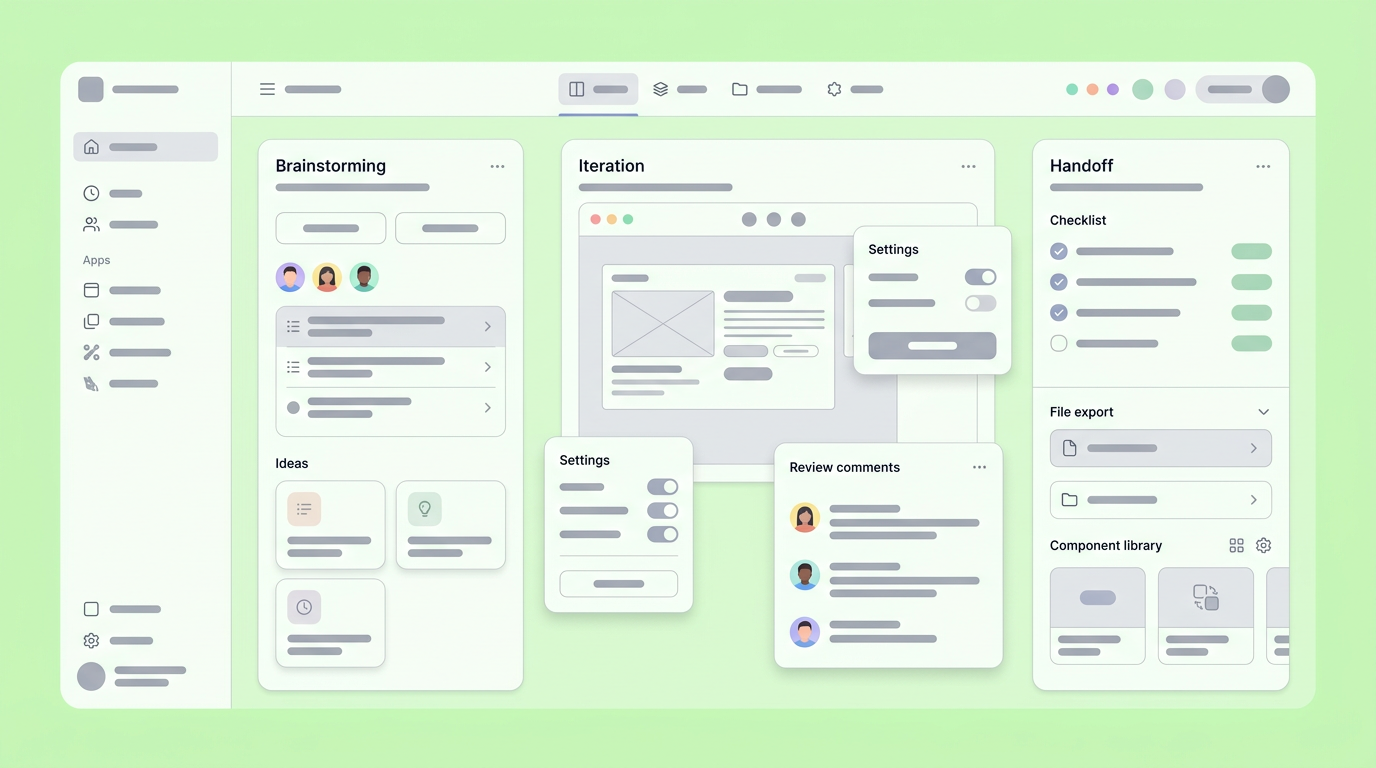
In our workflow reviews regarding AI tools for product managers, this collaborative approach drastically reduces the friction between a raw concept and a compelling demonstration. An effective, intelligent workspace keeps the entire team tightly aligned from the initial brainstorming session all the way to the final technical handoff phase.
Essential Capabilities in Prototyping Software for PMs
Effective prototyping platforms must:
- Support rapid iteration cycles.
- Clarify technical handoff documentation.
- Maintain persistent alignment with initial strategic goals.
Leaders should prioritize platforms that allow continuous automated adjustments based on stakeholder input without requiring extensive manual redesign work.
Bridging the Text to Visual Gap
Translating a heavily written document into a highly functional prototype is the most vulnerable point in any product timeline. Prototyping platforms that ingest text specifications and autonomously output visual frameworks eliminate the inherent ambiguity that typically causes severe development bottlenecks.
A detailed specification only goes so far when explaining interactive mechanics and variable user states. Incorporating visual validation early clarifies assumptions that dense text documents frequently obscure.
Dazl, founded by Wix co-founder Nadav Abrahami and launched following a $10 million seed round, specifically targets this complex translation gap. It helps software PMs show the functional logic before committing massive engineering resources. Teams transitioning to these modern top product management trends report significantly fewer misunderstandings during crucial kickoff meetings.
Shortening the Stakeholder Feedback Loop
Faster feedback loops directly correlate with higher overall product success rates and significantly reduced unnecessary development costs. Prototyping tools that allow precise live commenting and instant functional updates keep cross-functional teams highly engaged and moving forward simultaneously.
Sending a static URL and waiting three days for asynchronous comments severely slows down operational momentum. Real-time experiential feedback allows diverse teams to test multiple pathways in a single concentrated collaborative session.
By generating responsive interactive elements instantly, PMs can ask highly specific questions about actual user behaviors rather than general visual formatting preferences. This targeted interaction model consistently leads to highly actionable refinement and helps master the Product Managers' Guide to Securing Stakeholder Buy In.
Ensuring Hand-Off Ready Specifications
The initial prototype must eventually become an exact technical blueprint for engineering teams to build the actual functional application. Successful prototyping software ensures that the validated interactive design includes clear application states, component logic rules, and structured assets.
A brilliant prototype that cannot be accurately interpreted by front-end developers creates far more procedural problems than it solves. The final exported output must articulate exact interactive behaviors, dynamic error states, and strict responsive constraints.
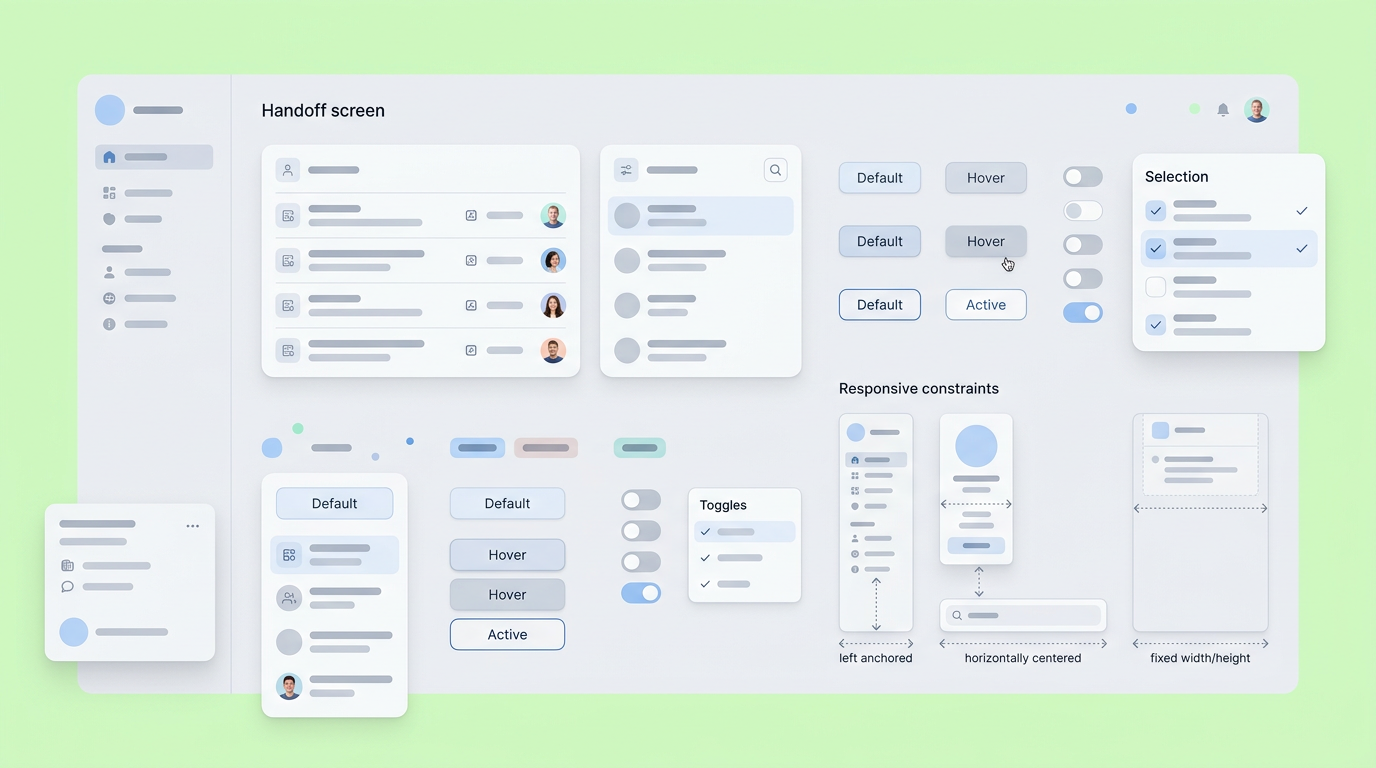
This structured transition is exactly where Fixing the Design Handoff: A Workflow for Product Teams becomes deeply critical. You want an intelligent tool that precisely captures the initial intent and outputs remarkably clean specifications, completely removing the guesswork from the heavily burdened engineering queue.
Structuring Rapid Iteration for Product Teams
Rapid iteration requires a highly structured cadence of building, sharing, testing, and collectively refining software ideas. Product managers should deliberately implement workflows that treat early prototypes as disposable learning instruments designed to uncover structural flaws before committing to rigid production timelines.
Moving Beyond Static Assets
Interactive validation consistently uncovers hidden usability issues that static diagrams completely mask from stakeholders. By clicking through a simulated interactive flow, testers can quickly identify logical dead-ends, missing friction points, or overly complicated navigation paths requiring immediate simplification.
Reading carefully about a user journey feels very different from actively clicking through the intended experience. We frequently see corporate teams enthusiastically approve written specifications, only to completely reject the implementation once they experience the actual interactive friction.
To aggressively avoid late-stage technical revisions, PMs are actively turning to automated resources that support Building an AI App Prototype That Validates Logic Early. When a prototype dynamically behaves like true software, you receive critical feedback on the user function rather than the surface formatting.
Orchestrating the Entire Journey
True product orchestration effortlessly connects initial rough ideation directly to final exact handoff specifications within a truly single environment. This systemic continuity ensures that valuable insights gained during the early wireframing phase are never actually lost during the technical transition to higher fidelity outputs.
Experienced product educators like Tal Raviv frequently explore how integrating AI generation workflows directly into design meetings changes the entire team dynamic. Rather than assigning delayed action items to manually update a mockup later, product teams can forcefully adjust the operating parameters live in the room. UX Playbook creator Christopher Nguyen emphasizes a very similar continuous process, advising teams to:
- Bring the product problem in.
- Explore varied ideas rapidly.
- Refine visual logic interactively.
- Share for immediate critical reactions.
This agile approach naturally requires deep persistent context from the supporting platform. The orchestration tool must clearly remember the initial business requirements even as the detailed visual representation aggressively evolves through multiple rigorous critique rounds.
Shaping the Next Era of Product Validation
The evolving future of software validation heavily relies on intelligent tools that function as active proactive teammates rather than passive empty canvasses. By fully embracing environments that deeply understand fundamental product logic, software leaders can focus entirely on solving critical user problems and directly validating broader market assumptions.
Moving smoothly from an abstract idea to a fully deployed feature requires distinct alignment at absolutely every step of the professional journey. The tools we deliberately choose highly dictate how easily we can build that necessary operational consensus. When you rely exclusively on layered static documents, you openly invite varying interpretation errors that massively slow down the entire complex organization.
By aggressively adopting interactive, intent-driven creative platforms, you fundamentally transform the dense specification process into an active living demonstration. You effectively stop writing repeatedly about what you intend to build and immediately start showing exactly how it will actually work. For modern teams prioritizing operational speed and technical clarity, exploring comprehensive workflow orchestration through Dazl offers a highly practical path toward confidently shipping validated, hand-off-ready digital experiences.
You and your team can accelerate your development cycle by joining Dazl to transform your product requirements into interactive prototypes.
Get Started