7 Ways to Tighten the Product Design Handoff in 2026
You just spent three weeks gathering user feedback on a complex workflow, mapping the user journey, and aligning stakeholders around a specific solution. The engineering team opens the project files on Monday morning, only to find a grid of static screens that leaves the actual interaction model entirely up to interpretation. Menus lack hover states, API latency states are missing, and no documentation exists to explain how the layout responds to different screen sizes. Engineering kicks off a long thread of clarifying questions, delaying the sprint before writing a single line of code.
These miscommunications account for significant friction in modern tech companies. Unclear specifications force developers to guess how a feature should behave in the browser. Product managers need systems that show the engineering team how the application works rather than writing endless paragraphs describing it. Effective communication tools are essential for this.
Establishing Best Practices for AI Product Development
Best practices for AI product development require integrating responsible data strategy, MLOps, and transparent user interfaces. Teams must establish clear AI data boundaries before designers pass interactive flows to developers, ensuring the interaction model matches the strict technical capabilities of the underlying model.
Starting with Data Strategy and MLOps
A strong data strategy and MLOps foundation ensures engineers understand the underlying model constraints. Documenting data pipelines visually helps prevent backend confusion. Designers need to know exactly what model outputs are possible before creating the user interface components.
AI applications rely on probabilistic outputs rather than deterministic logic. If a model takes five seconds to generate a response, the user interface must reflect that specific hardware constraint. Teams building these features must document the latency expectations, data processing boundaries, and token limits explicitly in their technical specs. Passing complex AI architecture patterns to a frontend developer without defining how the data flows creates immediate blockers.
Keeping the UX Focused on Transparency
Transparent user interfaces explain AI decisions directly to the user in plain language. Defining these explanation patterns during the design phase gives developers specific error states and loading sequences to implement on the frontend.
Users expect applications to explain why an algorithm made a specific recommendation. Product teams need to design specific UI elements that explain model confidence levels and allow users to provide corrections. Developers require exact guidance on how to style these feedback loops. In our testing, teams that clearly specify these transparent interaction states during the initial planning phase encounter far fewer roadblocks when connecting the interface to the actual inference engine.
7 Ways to Structure an Effective Developer Handoff
An effective developer handoff involves clear documentation, interactive prototypes, and early engineering involvement. Implementing structured checkpoints reduces cognitive load for the entire team and provides developers with the direct context they need to build accurately.
1. Treat Prototyping as the Source of Truth
Interactive prototypes communicate complex user flows far better than static images. Providing a clickable model demonstrates exact page transitions and conditional states, leaving very little room for misinterpretation once the sprint actually begins.
When product managers rely on static PDF diagrams, engineers have to fill in the blanks regarding animation timing and state changes. By transitioning to high-fidelity, interactive prototypes, you show the development team exactly how a feature behaves under specific conditions. Real interaction removes the ambiguity from written tickets.
2. Adopt a Shared Vocabulary Across Teams
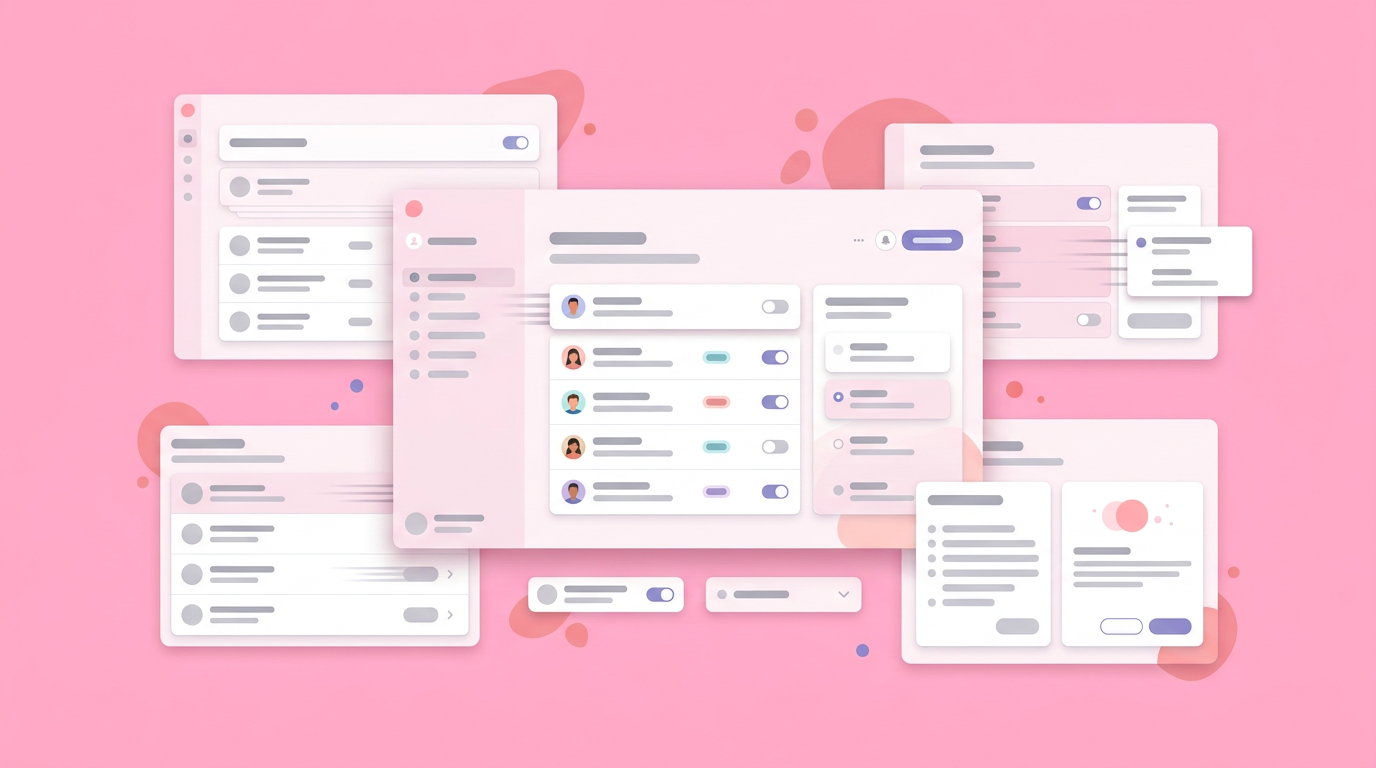
Using consistent naming conventions for interactive components spans the gap between design software and code repositories. Shared vocabulary minimizes translation errors during implementation and prevents developers from duplicating existing code blocks.
If your design files label a component as a "Primary-Action-Button" but the React repository calls it "Core-Submit-BTN", developers waste time searching for assets that already exist. Aligning on exact token names, variable structures, and component hierarchies establishes a common language. Modern AI product managers facilitate this alignment by ensuring that every feature spec uses the identical terminology found in the engineering documentation.
3. Audit the Design System Handoff Early
Auditing your design system handoff prevents legacy components from blocking new feature development. Teams should review token structures, icon libraries, and layout assets during the initial planning phase to verify the repository matches the design environment.
Features often stall because a designer uses a new text style that the engineering team has not yet added to their codebase. Conducting a brief audit of available tokens prior to locking in the design prevents these mid-sprint surprises. The design system acts as the underlying infrastructure for the entire product. Keeping it rigorously synchronized means developers spend less time writing custom CSS overrides and more time building the actual feature logic.
Standardizing Your UI/UX Handoff Process
Standardizing the UI/UX handoff process creates predictable and repeatable release cycles. Teams benefit from specific formatting guidelines that clarify layout rules, component constraints, and how interactive features behave under different device conditions.
4. Clarify Edge Cases with Interactive States
Visualizing hover transitions, loading animations, and error messages prevents unhandled exceptions in the compiled build. Documenting these specific micro-interactions eliminates ambiguity for front-end developers tasked with implementing state logic.
A standard screen design only shows the application working perfectly. Developers need to know what happens when an API call times out, when a user enters an invalid email address, or when a network connection drops completely. We found that maintaining a running list of these technical constraints directly alongside the visual prototype prevents designers from ignoring edge cases. If a button triggers a background process, the prototype needs to show the exact disabled state that users will encounter.
5. Implement a Product Design Handoff Checklist
A product design handoff checklist ensures no graphical asset or accessibility requirement slips between the cracks. Checklists create clear accountability and outline exact quantitative deliverables expected by the engineering team before they start typing out code.
Relying on memory to gather all the necessary files usually results in missing fonts or incorrect SVG exports. Establishing a formal list provides a hard boundary that signifies a feature is actually ready for development. A standard UI/UX handoff process checklist should require a few key items:
- Defined hover, focus, and disabled states for all interactive elements.
- Exported SVG assets compressed for production use.
- Responsive spacing and typography variables.
- Accessibility annotations for screen readers.
- Clear instructions for dynamic content and data integration.
Teams that enforce these specific requirements dramatically reduce the number of direct messages sent asking for missing logo files.
Securing the Design to Development Handoff in 2026
Modern design to development handoff relies heavily on context-aware tools and centralized collaboration resources. Integrating AI workflows keeps project documentation updated automatically as requirements evolve during fast-moving agile sprints.
6. Embrace AI-Assisted Design Context
AI-assisted design connects user intent with technical constraints highly effectively. Incorporating AI into your workflow accelerates component generation and clarifies specifications, allowing product managers to mock up complex ideas rapidly.
According to a report from Cambridge DT, AI-assisted design has moved from an expectation to an outright obligation for modern product organizations. The ability to generate functional code frameworks directly from spatial layouts bridges the communication divide. CodeWave highlights that 2026 design trends focus heavily on spatial depth and tactile textures, concepts that are incredibly difficult to describe in a written text document. Interactive AI models help visualize these advanced concepts so engineers can inspect the properties directly.
7. Centralize Assets and Technical Documentation
Centralizing assets gives developers a single, searchable destination for all necessary files and tokens. Storing documentation in a unified workspace reduces the constant back-and-forth pinging between cross-functional departments.
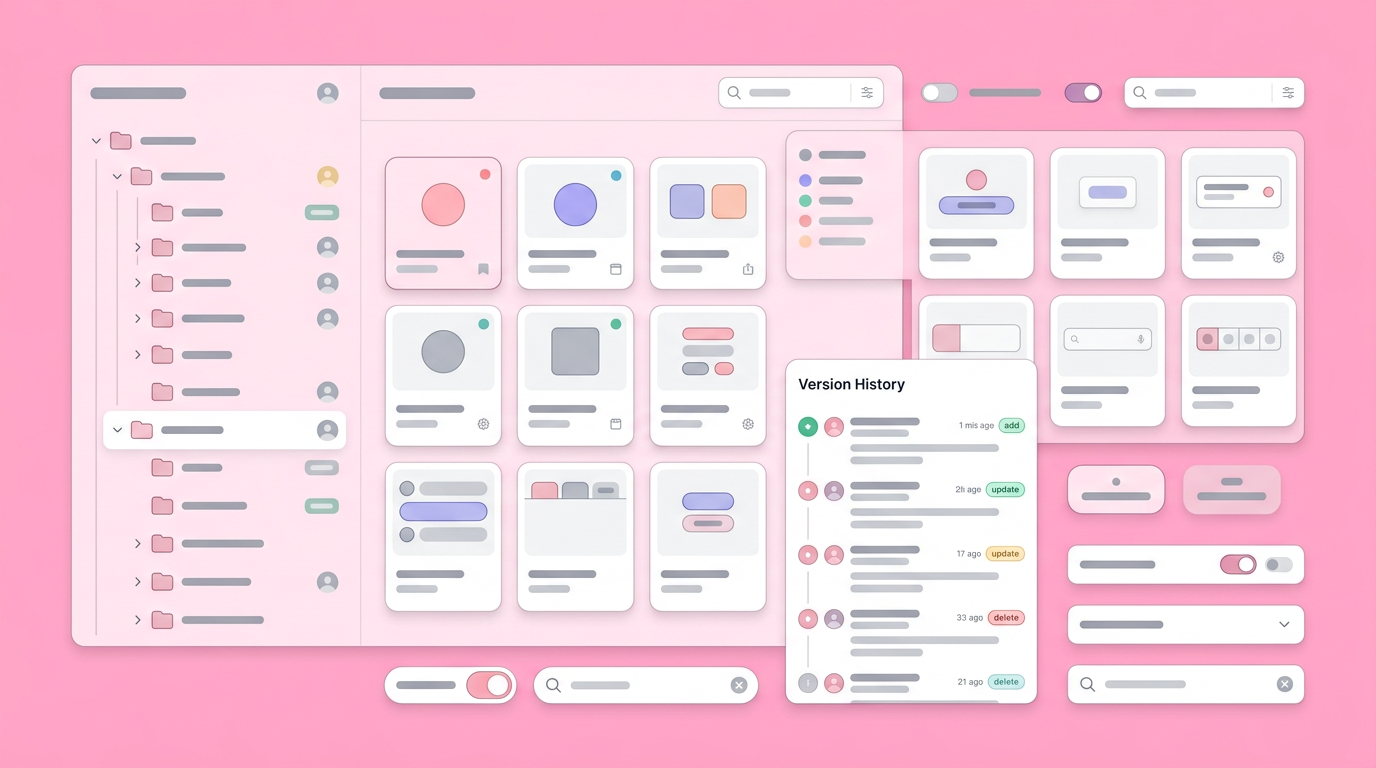
When files live across four different cloud storage providers, developers inevitably use outdated versions of icons or layout guidelines. Having one single source of truth aligns the whole project. Using Dazl to serve as the PM's teammate from ideation and spec writing through a hand-off ready prototype keeps the whole team aligned on the exact same vision. Once the prototype is approved, engineers can pull the specific parameters they need without tracking down the original designer for clarification. This centralization offers several benefits:
- Version control: Ensures everyone works with the most current assets.
- Reduced search time: Developers quickly find what they need.
- Improved consistency: Maintains uniformity across the product.
Continuous Iteration Beyond the Handoff
The collaboration does not end the moment engineers open their text editors. Continuous iteration involves establishing permanent feedback loops where developers can quickly flag technical constraints back to the product team for rapid adjustments.
The handoff should function as an ongoing conversation rather than a rigid contract. As engineers uncover system limitations that the design team did not anticipate, product managers must adjust the specifications immediately. This continuous feedback loop helps in several ways:
- Rapid adjustments: Ensures design adapts to technical realities.
- Prevents future confusion: Keeps prototypes aligned with live builds.
- Fosters collaboration: Encourages dialogue between design and development.
After deploying new features, teams report that keeping the prototype updated alongside the live build prevents future confusion. The goal is building better digital experiences for the user, a reality that requires both design and development disciplines operating smoothly from the exact same playbook.
You and your team can streamline your next handoff and bridge the gap between design and development by joining Dazl.
Get Started