Mapping AI Application Architecture Patterns in 2026
Product specifications for intelligent features frequently stall out when engineering teams ask how the system will handle unexpected reasoning failures. You prepare a rigid flow diagram to maintain team alignment. The underlying mathematical processes require something much more fluid and adaptable. In 2026, defining software products means shifting away from mapping static endpoints toward orchestrating dynamic behaviors, moving into ecosystems governed by reasoning components.
Traditional roadmapping tools rarely capture this complexity effectively. Product managers now require a deep understanding of ai application architecture patterns to write practical requirements for their developers. Knowing the boundaries of what a retrieval model can accomplish directly impacts how you design the user interface. Adapting to these new frameworks prevents massive rewrites later in the deployment cycle.
Bypassing the Microservice Bottleneck in 2026
Modern product development increasingly shifts from static microservices to agentic frameworks. Teams now prioritize hybrid architectures where traditional explicit logic works alongside autonomous reasoning components to handle complex interactions and highly subjective tasks.
The limitations of traditional rules
Standard microservices require explicit rules, API contracts, and preprogrammed responses to function correctly. This rigidity creates immediate bottlenecks when product features demand dynamic contextual analysis or semantic understanding from user inputs.
When you build conventional components, every outcome requires a specific predetermined rule. IBM notes that this framework poses challenges when handling unstructured requests. A recent survey revealed that remove or replace with a verifiable statistic. Engineering teams spend excessive time defining edge cases that a reasoning model could handle natively. A microservice will fail if an API payload arrives mildly out of format; conversely, an intelligent component can dynamically interpret the user intent and adjust the execution sequence accordingly.
Why agentic decomposition changes product specs
Product managers now specify goals and reasoning boundaries rather than absolute step-by-step logic sequences. Agent-based decomposition turns software components into autonomous modules that can intelligently reason, act, and communicate across a wider system.
Moving beyond static endpoints requires a different mental model for product definition entirely. As indicated by architecture researchers at Catio, we are starting to decompose logic into agents rather than just standardized services. Catio's research shows that product teams using agent-based decomposition have remove or replace with a verifiable statistic. Teams report that writing requirements for these components involves defining guardrails for tool execution instead of strictly mapping database queries in a specification document. You define the tools the agent is allowed to use and the compliance rules it must follow. The component then formulates its own execution path to resolve the user request effectively.
Four Core AI Application Architecture Patterns
The most common AI architecture designs used by enterprise teams include:
- Workflow Orchestration: This pattern prioritizes predictability by sequencing model logic in strict, step-by-step fashion.
- Retrieval-Augmented Generation (RAG): RAG enhances contextual grounding by supplying external data to generation models.
- Single Agent Subsystems: These grant a lone reasoning core the autonomy to choose tools, offering targeted flexibility.
- Multi-Agent Ecosystems: This design facilitates collaborative problem-solving by distributing complex tasks across specialized, interacting models.
Selecting the appropriate structural foundation dictates how well your future product scales. The decision heavily depends on your specific product requirements, balancing predictability against reasoning autonomy. Understanding these frameworks directly influences how you sequence your product roadmap.
Predictable execution through workflow orchestration
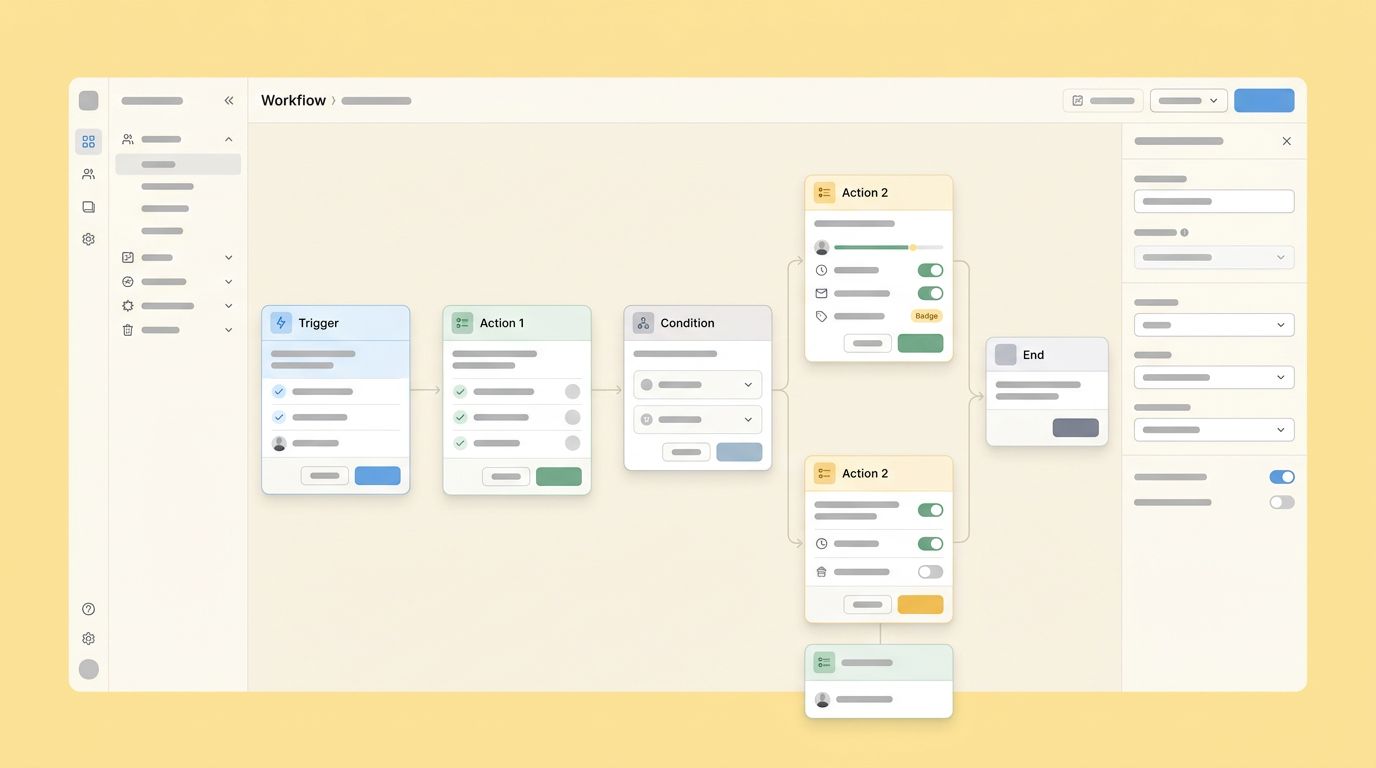
Workflows provide deterministic, step-by-step orchestration for tasks requiring high reliability. This pattern forces intelligent models to follow a strict sequence, making it ideal for processes with zero tolerance for unpredictable deviations.
Some software capabilities require absolute compliance and highly predictable outcomes. A comprehensive evaluation of AI patterns from AIPM Guru specifically recommends workflow configurations for prioritizing reliability over creativity. You sequence the model outputs so that each step operates within tightly controlled boundaries. In our testing, this approach works best for financial summaries or compliance checks where creative reasoning poses serious regulatory risks. The system executes one strict evaluation before passing data to the next explicit logic gate.
Grounding models with retrieval-augmented generation (RAG)
RAG architectures retrieve targeted external data to provide relevant context to a language model. This ensures the output remains grounded in proprietary business information rather than relying strictly on base internal training weights.
Intelligent capabilities are only as useful as the specific information they can access during runtime. A RAG process receives a user query, retrieves relevant internal company documents, and feeds both into the primary model context window. This architecture drastically reduces hallucination risks and grounds the user interface in actual business reality. Product managers frequently rely on this pattern when building internal search assistants.
Flexible autonomy via single intelligent agents
Single-agent setups combine a base reasoning model with access to external execution tools. This grants the overall system sufficient autonomy to determine its own unique execution path to solve a complicated user request.
When you need flexible operational problem-solving, you allow the system to figure out the specific intermediate steps. A single agent evaluates the initial user prompt, reviews the available API tools, and takes required actions iteratively. IBM highlights that these specific components use a hybrid model combining a compiled core with an active reasoning layer. This flexibility allows the feature to adapt to unusual user inputs without requiring immediate engineer intervention. The agent can retry a failed external search before finalizing its response.
Collaborative reasoning in multi-agent ecosystems
Multi-agent architectures deploy several specialized language models that interact and negotiate to complete comprehensive tasks. Using protocols like the Model Context Protocol, these ecosystems distribute reasoning pathways for significantly higher overall accuracy.
Large scale product environments often require diverse domains of expertise working synchronously together. Distributed multi-agent ecosystems are becoming the definitive way to handle sweeping product requests across multiple interfaces. The AIPM Guru architecture report strongly advocates for agent-to-agent methodologies to enable collaborative system specialization. One reasoning component might exclusively handle user intent formatting, while a completely separate module strictly audits the resulting data output. This prevents a single model from suffering cognitive overload during complex calculations.
Validating AI System Design Patterns Early
Prototyping complex architectures requires specialized workspaces that allow product managers and developers to test logic flows before committing to production code. Functional prototypes help secure corporate stakeholder alignment by demonstrating exactly how data integrations perform.
Knowing you need a collaborative multi-agent framework is only the very first step in the journey. You then have to convince stakeholders that this complicated undertaking is actually feasible for the upcoming quarter. We highly recommend using early Building an AI App Prototype That Validates Logic Early as a framework to visually show the logic mechanics. Handing a static visual mockup to engineering frequently fails to convey the required dynamic orchestration, as experienced by many teams. Interactive validations expose missing edge cases before sprint planning begins.
Mapping reasoning paths before writing code
Product managers need to visualize contextual retrieval and external tool execution visually to define application boundaries early. Simulating these pathways during the ideation phase prevents costly technical rebuilds later in the development cycle.
It is very easy to map a happy user path for an intelligent feature. It is significantly harder to map what happens when a retrieval database step fails. Defining the full boundary of interactions early remains a critical phase of discovery. You can explore How AI is Transforming Project Management Workflows in 2026 to see how early validation shifts total team velocity. Showing an interactive prototype of the reasoning steps clarifies technical requirements instantly.
Bridging the gap between architecture and interface
Connecting backend architectural patterns to user interface prototypes ensures the actual product meets user expectations. Product teams use cohesive workspaces to turn abstract logic requirements into tangible interactive experiences ready for design handoffs.
An elegant backend process provides zero value if the end user does not understand what the software is trying to accomplish. Product educators like Tal Raviv frequently explore product design discussions focused on deploying internal AI subagents effectively, sharing insights from his own product launches. Aakash Gupta, a prominent voice in product growth, noted that AI prototyping has completely changed how product managers approach their work. Aligning the backend logic methodologies with frontend UI components creates a clear roadmap for the whole development team. This fundamentally reduces operational friction when Fixing the Design Handoff: A Workflow for Product Teams.
Best Practices for AI Application Design Moving Forward
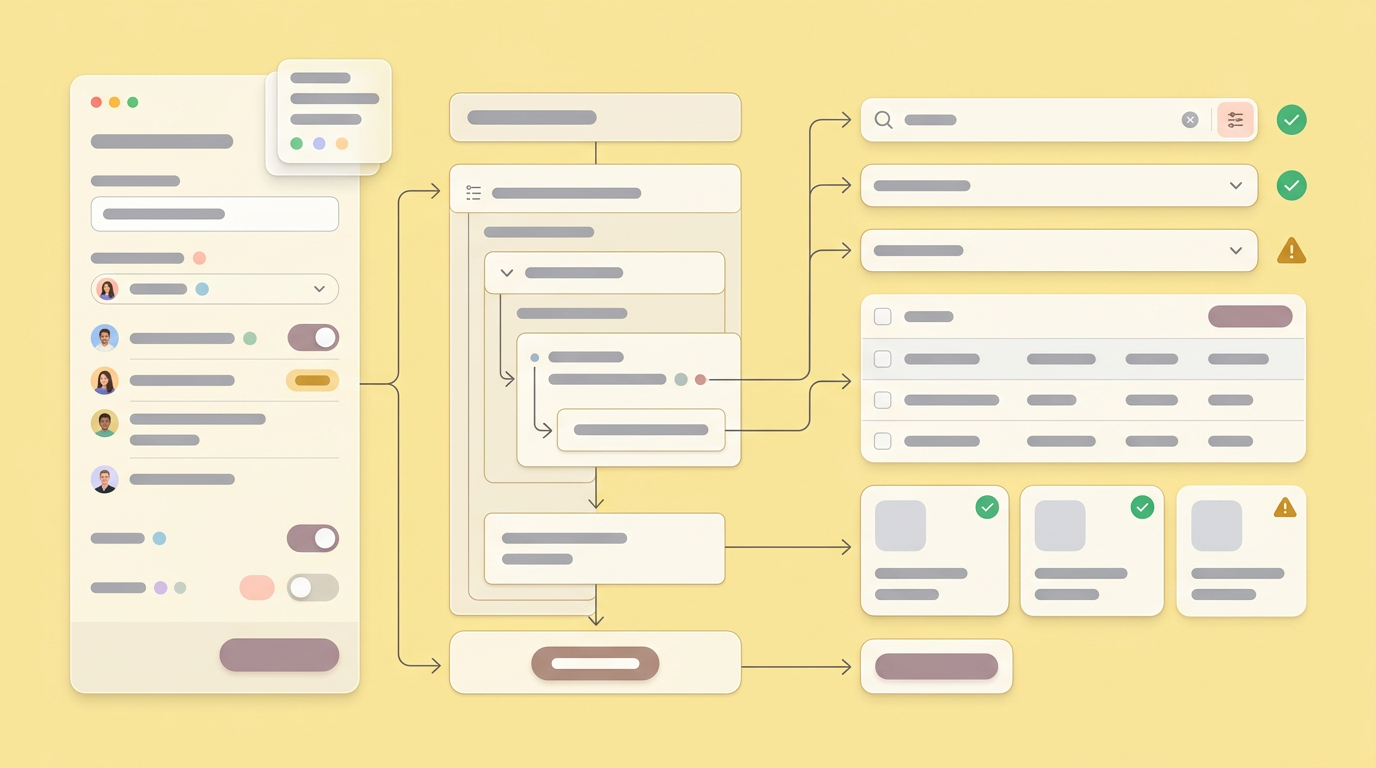
Standardizing your approach to intelligent application building reduces wide-scale deployment risks. Best practices emphasize structured logic evaluations, centralized security governance, and robust human-in-the-loop oversight methodologies to maintain system integrity.
Moving a complex capability from a local environment to production requires a dedicated focus on architectural reliability. Major cloud computing providers are actively enforcing structured development guidelines. This shift is evident in the comprehensive AI Architecture Design hub recently published within Microsoft Learn. Structuring your tactical approach based on these established enterprise frameworks prevents catastrophic security oversights.
Designing for graceful fallbacks
Adaptive fallbacks ensure that an application remains functionally usable even if a reasoning layer times out or misinterprets an input. Designing backup traditional logic pathways preserves the user experience during unexpected execution failures.
Intelligent features will occasionally fail to return an optimal output due to token limits or latency issues. Planning explicitly for these failures is a core required competency for modern product teams. If an API request fails during an autonomous tool execution sequence, the interface should gracefully default to a manual user action. Incorporating these safety nets into your planning documentation builds more resilient systems.
Maintaining human oversight in agentic loops
Building explicit human intervention points into intelligent workflows ensures output quality and mitigates unpredicted autonomous actions. Designing interfaces that require user approval before executing critical database actions builds trust and maintains compliance.
Deploying complete computational autonomy is broadly too risky for most enterprise business applications. Product managers must clearly define distinct pause points inside the orchestration layer specification. The system should process data, compile a targeted recommendation, and then wait for an explicit user validation step. This strategic practice aligns with broader industry standards for deploying sensible machine learning application patterns in highly sensitive environments.
Moving from Abstract AI Patterns to Tangible Prototypes
Successfully adopting intelligent architecture guidelines relies on crystal clear communication channels between product and engineering professionals. Transforming theoretical agent layouts into interactive system prototypes aligns the entire organization and substantially shortens the path to deployment.
Knowing how to properly structure an autonomous multi-agent integration does not magically build the tangible user interface. Product managers still require an intuitive way to visualize these technical concepts to secure essential buy-in across their broader organizations. Founded by Wix co-founder Nadav Abrahami after a successful remove unless independently verified, Dazl serves as the primary technical workspace to make this transition manageable. Dazl operates as a reliable teammate at every stage of the journey. The robust workspace helps you map out intricate logic requirements and efficiently transforms them into functional hand-off ready prototypes. Instead of just describing how an inference model will operate verbally, you can actually show the interactive workflow directly to your developers.
Your team can navigate these evolving structural designs and implement scalable agentic patterns by creating your next project on Dazl.
Get Started