
8 Proven Generative AI Product Use Cases Scaling in 2026
Enterprise companies spent a staggering $37 billion on generative AI in 2025, representing a massive 3.2x year-over-year jump from previous cycles. Most product teams recognize that simply adding a generic chat interface to existing software no longer impresses users. The real shift happens at the application layer, where $19 billion of that budget flows directly into departmental and vertical tools designed to solve extremely specific workflow problems. Mapping out actual generative AI product workflows requires looking past raw foundation models and observing how contextual systems integrate into the software people use every day. Product managers sit at the center of this transition, responsible for defining features that actually reduce user friction.
How Generative AI Product Use Cases Drive Business Value
Generative AI use cases in business span content creation, knowledge management, software engineering, and customer support. In 2026, enterprise application-layer tools dominate budgets by addressing specific departmental workflows, offering measurable productivity returns rather than just experimental chatbots.
According to research from Menlo Ventures, the maturity of business adoption is accelerating rapidly. "Our data indicates companies spent $37 billion on generative AI in 2025, up from $11.5 billion in 2024 - a 3.2x year‑over‑year increase," notes Tim Tully, Partner at Menlo Ventures. Organizations seek immediate returns on these investments through targeted business use cases for generative AI that align with core operational metrics.
Adoption statistics mirror this rapid acceleration across the global corporate landscape. As product managers build new feature sets, they increasingly design around these specific productivity levers.
Common enterprise deployments now cluster around distinct categories:
- Departmental AI tools that assist specific roles like developers or customer success managers.
- Vertical AI products customized for industries like healthcare or financial services.
- Horizontal productivity applications that help teams locate and synthesize large bodies of internal knowledge.
1. Horizontal Productivity and Knowledge Workflows
Horizontal knowledge management tools form the largest share of generative AI product use cases, handling general research, email composition, and document synthesis. These applications reduce administrative overhead and streamline information discovery across large organizations.
Internal knowledge discovery remains one of the highest friction points for large enterprises. Product teams building horizontal software focus heavily on embedding semantic search and summarization directly into the flow of work. Platforms like Notion AI and enterprise knowledge bases demonstrate how AI can bridge information silos.
Centralizing General Research and Synthesis
General research and document synthesis command roughly 36 percent of overall generative AI usage volume, according to a recent 2025 report. Employees spend substantial portions of their week searching for specific guidelines, past project specs, or policy updates hidden deep within corporate repositories. AI-powered product features attack this problem by allowing users to query company data using natural language.
Instead of hunting for exact keyword matches across hundreds of documents, users receive customized, synthesized answers with embedded citations linking directly to the source material. Product managers designing these research tools prioritize data security and permission boundaries. The AI feature must respect existing access controls to ensure employees only query documents they have authorization to read.
Email Composition and Communication Scenarios
Drafting emails, formatting weekly updates, and summarizing meeting transcripts represent a massive chunk of routine administrative work. Generative AI applications handle these repetitive tasks with increasing accuracy. Automated meeting recorders transcribe conversations, organize key decisions, and assign action items based on voice prompts.
In our testing of internal communication tools, we found that teams save hours weekly when AI correctly models shared team context over generic phrasing. By anchoring the output to a company's specific style guide or formatting preferences, the drafted text requires significantly less manual review. These small, ambient features dramatically alter the daily cadence of an office worker.
2. Marketing and Sales Personalization Copilots
Marketing and sales software feature high generative AI adoption, with businesses utilizing AI-powered product features for automated customer engagement, market data analysis, and scalable text content generation. These applications focus deeply on accelerating go-to-market pipelines.
"According to AI statistics, in 2025, three out of four companies now regularly use AI for at least one function, a sharp increase from just two years ago," notes Bruce Temkin of the Qualtrics XM Institute in a commercial AI report.
Text Content Generation at Scale
Writing comprehensive blog posts, iterating on localized advertising copy, or drafting email sequences demands continuous output. Early pioneers like Jasper and Copy.ai mapped out the initial text generation flows, and now dynamic authoring capabilities exist natively inside most modern marketing suites.
Product managers building for marketing teams look beyond raw text generation into workflow automation. Modern tools execute multi-step routines:
- Ingesting an overarching campaign brief and defining brand voice restraints.
- Generating multiple variants of social media messaging tailored to specific platform requirements.
- Analyzing historical engagement data to recommend the highest-performing text structures.
Managing Automated Customer Engagement
Customer engagement platforms utilize deep learning to intercept inbound queries and provide immediate resolutions. Tools like Salesforce Einstein GPT and Zendesk heavily rely on conversational AI models to manage the front lines of customer service. These tools digest customer histories in real time to generate highly personalized support responses.
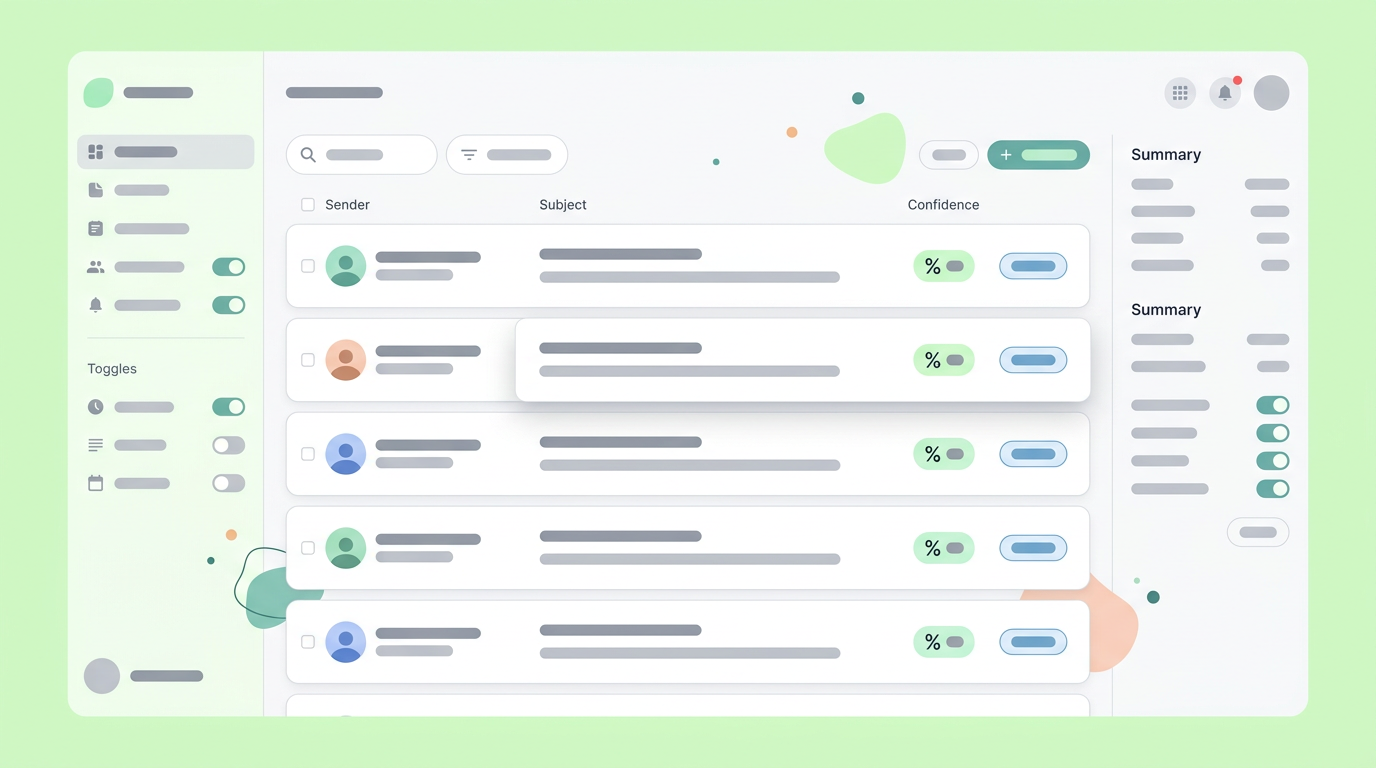
The product management challenge here involves designing fallback states and escalation triggers. When the system encounters a frustrated customer or a complex account issue, the product feature must smoothly route the conversation to a human rep without losing context. High-performing customer engagement systems prioritize resolution speed and user trust above experimental capabilities.
3. Engineering Assistance and Code Acceleration
Coding copilots represent a heavily utilized segment of generative AI applications, acting directly inside the developer environment to draft boilerplate, write tests, and review syntax. Widespread adoption has normalized AI as a baseline requirement for software engineering teams.
For product managers, leveraging generative AI in products that assist engineering squads fundamentally changes the velocity of roadmaps. Tools like GitHub Copilot operate horizontally across language frameworks, turning natural language comments into functional code lines. This segment sits firmly as a departmental AI workflow, focusing on output efficiency.
IDE Copilots Accelerating Daily Development
Developers rely on these in-line assistants to scaffold new projects, populate routine data structures, and suggest optimal algorithmic paths. Integrating AI directly into the Integrated Development Environment reduces the need to context-switch into external browsers to search for documentation.
Product leaders mapping out development cycles factor this velocity into sprint planning. Teams spend less time debating syntax during code reviews and more time debating architectural decisions. When developers can generate routine boilerplate in seconds, the overall product team ships features to users at a considerably faster pace.
Streamlining Automated Testing Workflows
Beyond generative code creation, AI systems now heavily support quality assurance and behavioral testing. Generative models read existing codebases and automatically draft unit and integration tests covering diverse edge cases. Engineering leads use these tools to enforce higher test coverage thresholds without bogging down the primary feature development schedule.
After deploying automated test-generation tools across multiple squads, we noticed a significant drop in regression bugs pushed to staging environments. Developing robust product specifications helps these testing models better understand the intended business constraints. A well-structured specification allows the AI to generate tests that validate actual user journeys rather than just checking functional operations.
4. Prototyping and Cross-Functional Design Alignment
Leveraging generative AI in products specifically designed for product management and design workflows bridges the gap between written requirements and visual execution. AI workspaces instantly convert text specifications into tangible, interactive prototypes, driving faster stakeholder alignment.
The transition from a written concept in Jira or Notion to a functional design file often experiences significant friction. Product managers write extensive textual requirements, but words inherently leave room for conflicting interpretations. Bringing generative AI into the ideation phase transforms abstract ideas into visual reality almost instantly. If you are exploring how to implement this transition, navigating how to accelerate discovery with rapid prototyping provides excellent strategic context.
Moving From Text Constraints to Visual Realities
The everyday product moment of staring at a blank design file often stalls early development. Using AI-native workspaces allows product managers to render the layout of a screen simply by describing its logic. Dazl bridges this gap by acting in real time to convert product specs into interactive wireframes.
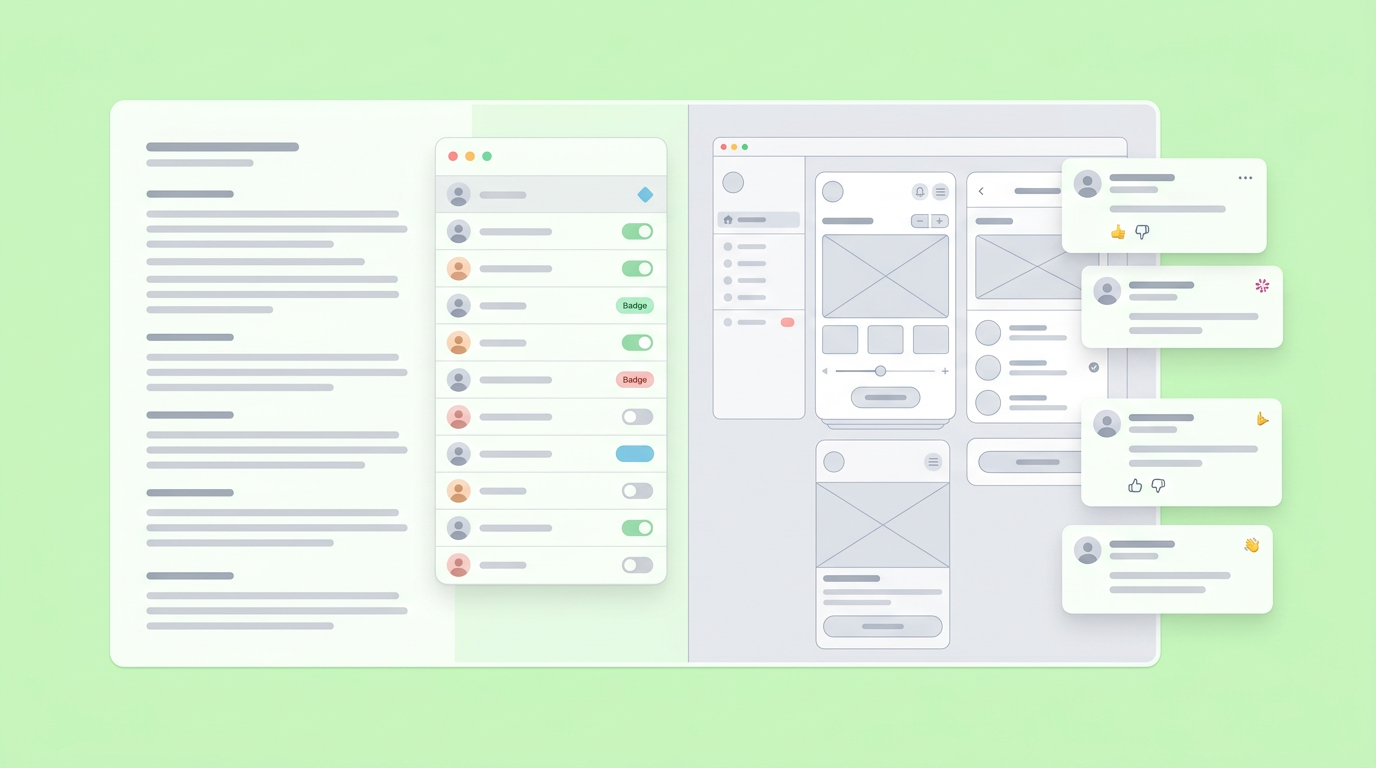
Instead of holding lengthy alignment meetings to explain a written document, the team interacts with a working prototype. Dazl translates complex application logic into UI components, allowing engineers and designers to interact with the proposed product flow instantly. Teams review the user experience, click through the navigation paths, and identify missing constraints days before developers write any production code. You can explore more on optimizing this process by reviewing how comparing PRD formats accelerates build times.
Bridging the PM and Designer Gap
Design handoffs carry immense operational weight. We often see product teams struggle with translating a dense specification document into a visual interface, forcing designers to guess the underlying intent. Placing a generative UI tool between the planning phase and the production phase eliminates this ambiguity completely.
Design partners iterate on top of these AI-generated layouts rapidly. The workspace serves as a shared sandbox where logic maps perfectly to visual components. Generating high-fidelity mockups using specific design system constraints ensures that the final output requires minimal translation when passed over to the engineering squad.
5. Vertical AI Applications Displacing Legacy Software
Specific business use cases for generative AI are accelerating within highly regulated vertical industries like healthcare, finance, and legal services. These vertical-specific products bypass generic chat models, solving complex industry constraints with customized natural language understanding.
General-purpose models struggle with complex regulatory frameworks, pushing industries to build walled-garden software tailored precisely to their operational nuances.
Healthcare and Financial Data Analytics
In the medical sector, AI tools parse complex electronic health records to synthesize patient histories for attending physicians. The products must adhere strictly to privacy regulations, meaning the data handling architecture is far more robust than commercial consumer applications. Product developers map out HIPAA-compliant information flows that securely process sensitive medical phrasing.
Similarly, financial institutions deploy generative products to scan thousands of pages of regulatory filings and quarterly reports. Analysts query these proprietary models to uncover subtle shifts in market sentiment or compliance exposure. The AI features present inside these tools prioritize factual precision and auditable sourcing trails above creative text generation.
Refining Domain-Specific Knowledge Agents
Vertical AI products increasingly feature agentic capabilities, where the system executes multi-step actions rather than just returning a wall of text.
Integrating specialized agents into enterprise deployments demands rigorous behavioral governance. Product managers must define tight operational boundaries for these agents, guaranteeing they act reliably within specific industry guardrails. Managing these constraints properly defines the next phase of enterprise value creation.
The Next Phase of Context-Aware Product Development
As generative AI applications saturate the enterprise stack, the product manager's focus shifts from managing simple task execution to orchestrating complex, agentic systems. Designing for predictable AI outcomes and user trust requires a deep focus on structured prototyping and contextual design.
The days of viewing generative logic as a standalone parlor trick are over. The current reality of building software demands that AI features operate within existing user behaviors, understanding the surrounding context of the company data architecture. As we transition deeper into the decade, the teams that succeed will stop trying to replace human workflows and instead aggressively prototype systems that amplify human velocity. Managing edge cases, building transparent permission structures, and maintaining strict logic alignment across cross-functional teams dictate which applications fail and which ones become central to the enterprise ecosystem.
You can help your team implement these high-impact workflows by creating a Dazl account to start integrating generative AI today.
Get Started