How to Accelerate Discovery With Rapid Prototyping and Usability Testing
You sit behind the glass - or stare at a shared screen over Zoom - watching a participant navigate your team's newest flow. The prompt is simple: "Export the weekly summary report." The participant hovers their cursor over the navigation bar, ignores the brightly colored primary button your designer spent two days refining, and aggressively double-clicks on an unlinked header text. They pause. They sigh. This familiar scene highlights a common disconnect in product development that many seasoned product managers have encountered repeatedly.
This specific gap between how a team imagines a product works and how a human being actually uses it defines the modern product management journey. Bridging that gap efficiently requires uniting rapid prototyping and usability testing into a single, continuous feedback loop. Product organizations cannot afford to wait until a feature is fully coded and discover it confuses their target audience.
By testing interactive mocks early, PMs catch fatal structural flaws before engineering writes a single line of production code. The industry is moving heavily toward this model. According to a recent UX metrics summary by UXtweak, 19% of all research studies created on their platform in the last year focused on prototype user testing. Teams are pulling validation earlier into the process, turning rough assumptions into tested interaction models.
The New Standard for Fast Iteration User Experience
Building for a fast iteration user experience requires merging modular prototyping tools with automated validation. Product teams use this combination to test concepts early, validating interactions long before engineers tackle the backend logic.
What is rapid prototype testing?
Rapid prototype testing is the practice of evaluating early, interactive versions of a product with real users to uncover behavioral friction points. It prioritizes functional clarity over visual perfection to inform strict product direction early in the process.
This method asks users to perform specific tasks within a bounded, clickable model. The goal is gathering behavioral evidence. Does the user understand the navigation structure? Are the labels clear? Do they expect the settings menu to slide out from the right or appear as a modal? Testing these specific mechanics provides hard numbers and clear directional signals.
A mature tooling ecosystem now supports this shift. Research from Optimal Workshop outlining the 2025 landscape points to specialized platforms like UserTesting and Maze handling unmoderated testing at scale. Teams plug their links into these platforms and receive recorded sessions showing exactly where users hesitated.
Moving from static screens to interactive models
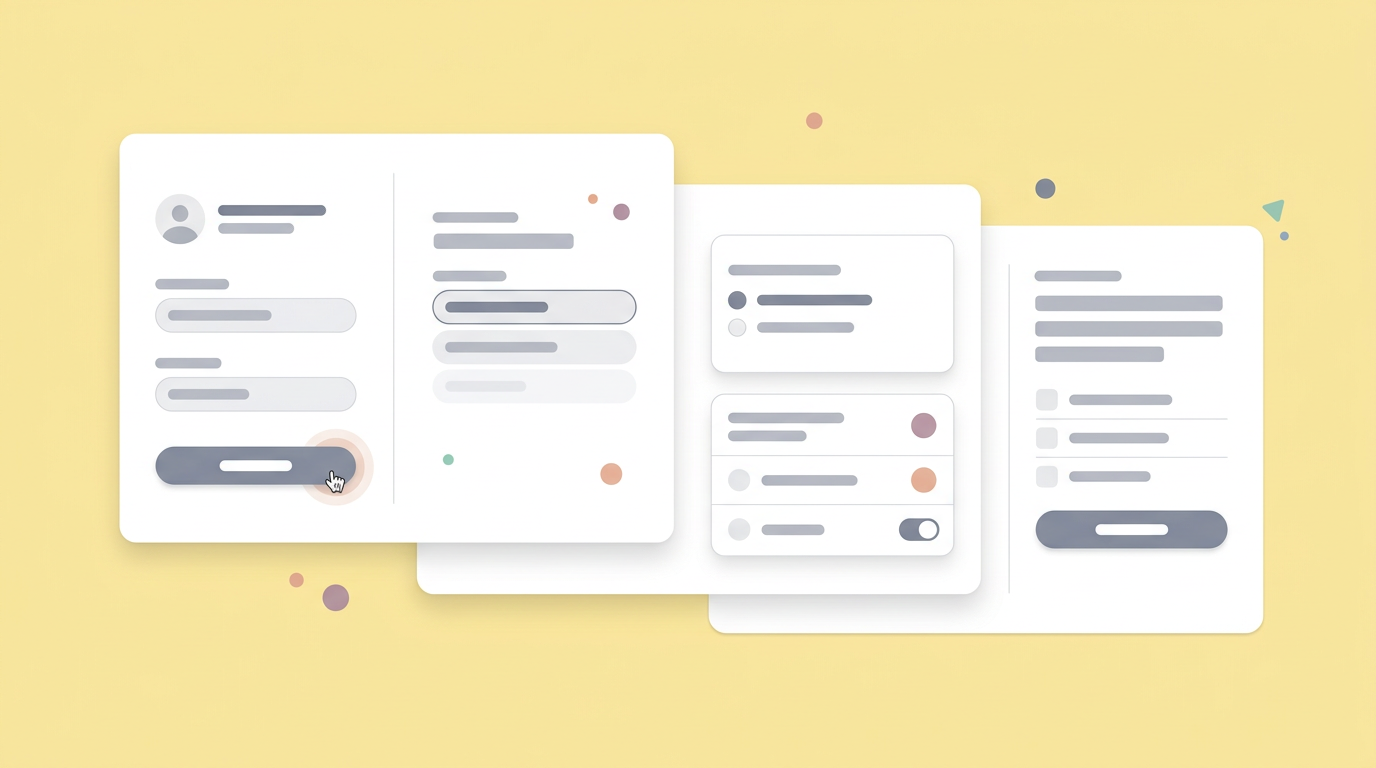
Static designs force users to imagine the workflow, while interactive models let them actually use it. This dynamic shift ensures teams receive behavioral feedback rather than just subjective aesthetic opinions on color palettes or typography.
When a user looks at a flat image, they evaluate it like a painting, providing commentary on layout density or brand alignment. When you give them a functional flow, they evaluate it like a tool.
This distinction matters because product success relies heavily on utility, and the business impact of catching functional errors early is substantial. Recent estimates from Precedence Research value the U.S. rapid prototyping market at $1.07 billion in 2025, projecting robust growth as validation tools become embedded in every enterprise workflow.
Step 1: Defining the Purpose of Rapid Experimenting Prototyping
The main purpose of rapid experimenting prototyping is to validate specific product assumptions quickly and affordably. Teams focus on isolating one or two mechanics to test, ensuring the resulting feedback drives clean product decisions for the upcoming sprint.
What is rapid prototyping in simple words?
In simple words, rapid prototyping is building a quick, functioning mock-up of an idea to see if it works. It acts as a temporary model that helps teams visualize the final product without spending months building the actual system infrastructure.
Experienced hardware and software leaders utilize this approach to de-risk feature launches. Drawing on engineering scale models from consumer-grade organizations with Wix or TikTok lineage, product leaders understand that complex backend performance relies on simple upfront validation. The prototype becomes a disposable artifact with immense diagnostic value; you keep the insights and iterate the model.
Narrowing your learning objectives
Setting tight objectives prevents the usability test from growing too wide and yielding murky data. You want to ask specific behavioral questions, such as whether users intuitively locate the bulk-edit function, rather than asking if they easily understand the dashboard.
In our testing across different agile teams, we find that vague prompts produce vague feedback. A prompt like "Explore the interface" often results in the participant clicking randomly and giving polite, useless remarks. A prompt like "Add a new payment method and set it as your default" creates a clear success-or-failure condition. The friction observed during that single task forms the bedrock of iterative design testing, echoing experiences shared by many UX professionals in fast-paced development environments.
Step 2: Translating Ideas into Prototype-Based User Feedback
Generating prototype-based user feedback starts with creating realistic task scenarios within an interactive mockup. The prototype only needs enough functional depth to support these exact testing paths, keeping the effort low and the insights focused.
What is rapid prototyping used for?
Product organizations use rapid prototyping primarily to test complex flows, secure stakeholder understanding, and prevent expensive engineering misfires. It serves as a visual contract that ensures everyone grasps the expected behavior before development tickets are written.
Creating these artifacts requires discipline. PMs must resist the urge to map out every single edge case in the model. A prototype designed for an early usability validation session should act like a movie set. The facades of the buildings exist purely to look real from the camera's specific angle. If the participant tries to open a door that isn't part of the core task, the prototype simply doesn't react.
Letting AI accelerate the build process
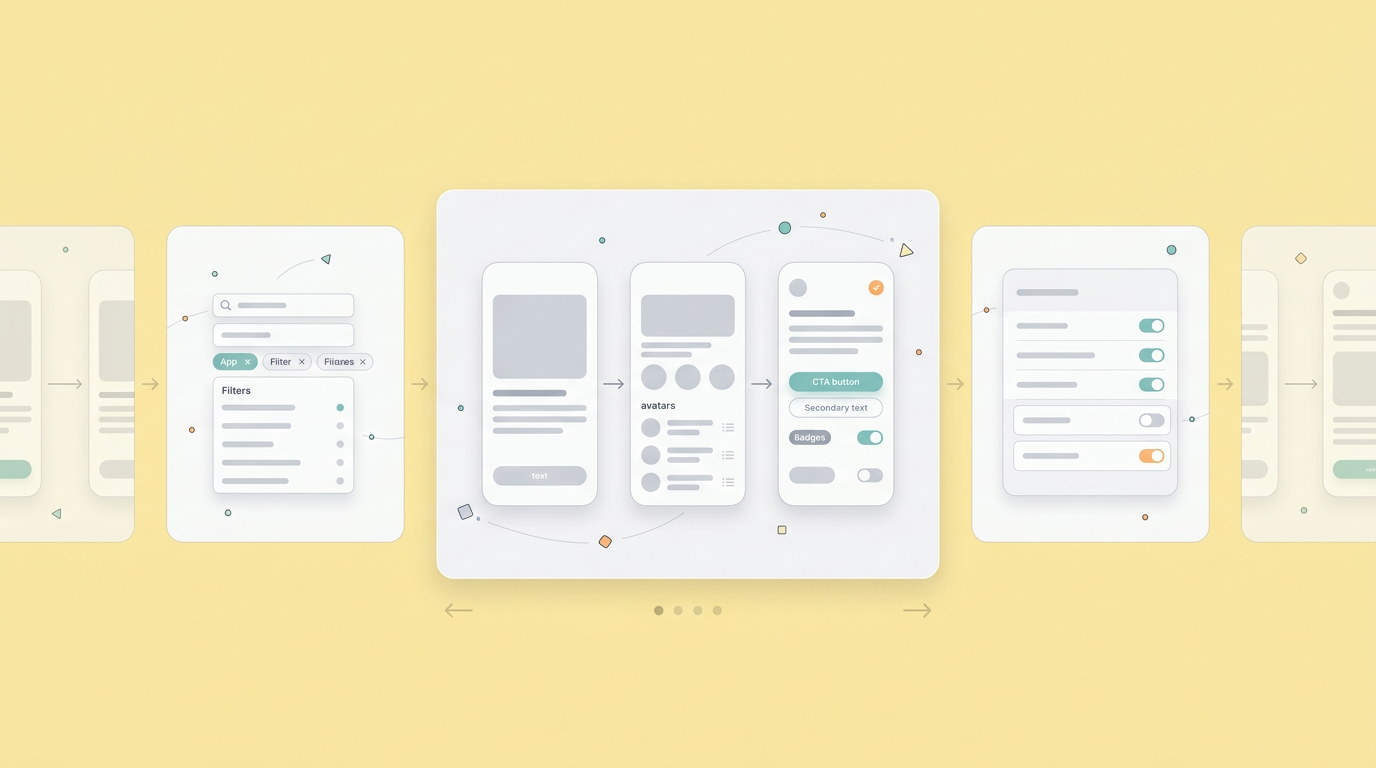
Generative AI capabilities allow product managers to outline complex user journeys and instantly visualize them as structural flows. This skips the tedious phase of linking individual wireframe screens manually.
As the PM's teammate from ideation and spec writing through a hand-off ready prototype, using Dazl keeps the whole team aligned on the interaction logic without waiting for weeks of design cycles. PMs can describe the desired flow and immediately generate a functional asset. The global appetite for this kind of accelerated tooling is expanding rapidly. Data mapped by Musemind on UX practices calculates the global rapid prototyping market at roughly $3.25 billion in 2025, anticipating it will reach $9.65 billion by 2030.
Step 3: Running Early Usability Validation Sessions
Conducting early usability validation requires observing how participants navigate the test model without direct guidance. Teams rely heavily on unmoderated testing and remote observation software to capture authentic, unprompted user reactions to the flow.
Sourcing the right participants remotely
Finding participants who match your target user persona dictates the reliability of your feedback. A highly technical tool tested by a general consumer audience will yield misleading insights that can skew the entire product roadmap in the wrong direction.
The logistics of testing have shifted drastically away from in-person lab sessions. A comprehensive 2025 whitepaper from Userlytics detailing the state of UX outlines a significant industry-wide increase in the adoption of remote usability testing and AI-driven insight aggregation. Remote panels allow product teams to test niche B2B personas, like logistics managers or compliance officers, who would never have the time to drive to a physical testing facility.
Prioritize these criteria to ensure meaningful insights.
Watching tasks over asking questions
Observing participant behavior yields far richer data than soliciting direct opinions. When users confidently click the wrong menu item or hesitate entirely on a primary call to action, their physical actions tell you exactly what the design got wrong.
Relying on their actions neutralizes this bias. Track metrics like time-on-task, misclick rates, and task completion percentage. If a participant asks, "Should I click this?", reply with a neutral, "What do you think would happen if you did?" Let the prototype answer for itself.
Step 4: Translating Agile Development Usability Feedback into Action
Integrating agile development usability practices means cataloging friction points by severity and modifying the source prototype immediately. You prioritize show-stopping confusion over minor visual preferences to streamline the product iteration cycle effectively.
Grading the severity of friction points
Categorizing incoming feedback prevents the product team from treating every minor user comment as a critical bug. Focusing exclusively on blockers that stop users from completing their core flow ensures development resources handle real structural priorities first.
A standard severity scale helps secure stakeholder buy-in. You can rank issues on a basic 1-to-3 scale. A critical severity metric applies when users cannot finish the scenario. A moderate severity metric applies when users eventually succeed but take a frustrating, roundabout path. Minor severity applies to cosmetic confusion that doesn't halt progress. PMs log only the critical and moderate issues into tools like Jira or Linear for the next iteration round.
Refining the design before development handoff
Applying testing feedback back into the prototype refines the overall experience right up until engineering takes over. A validated, revised prototype serves as a tested blueprint, drastically minimizing back-and-forth clarification during active execution sprints.
Tuning the agile design handoff process relies completely on the quality of the provided artifact. Developers face fewer blockers when they receive a prototype that real humans have successfully navigated. The interactive asset acts as a source of truth for micro-interactions, state changes, and error handling. Engineers stop guessing how a dropdown should behave and simply reference the validated build.
Moving Frontline Insights Directly into the Engineering Cycle
The final output of an intense testing rotation is a deeply validated prototype that unites product managers, designers, and developers around a shared perspective. This artifact shifts sprint planning conversations from abstract debates about user intent to concrete reviews of proven workflows.
Pushing validated models forward provides immense clarity for engineering teams. They no longer need to parse lengthy, text-heavy PRDs to understand basic site architecture. A structural prototype backed by behavioral data serves as the clearest possible spec. It answers the difficult questions about navigation logic before a single line of backend code is committed to the repository. The gap between how the team imagined the product and how humans use it closes, leaving only the execution phase ahead.
Sign up for Dazl to help your team build functional prototypes and conduct usability tests that streamline your discovery process.
Get Started