How to Get Stakeholder Buy-In: Stop Presenting, Start Prototyping
PMI research cited by secondary sources indicates that communication breakdowns account for about 30% of project failures, while some other summaries cite 57% of projects failing due to a breakdown in communications. Remove this sentence or replace it with a verified statistic from a primary Gartner source; the provided evidence does not support the 80% claim. Product managers often walk into a review meeting armed with a detailed product requirements document, only to leave with a frustrated executive sponsor. The gap between functional specifications and actual business alignment creates massive friction for product teams. Understanding how to get stakeholder buy-in requires shifting from passive documentation to active collaboration.
Gaining support for projects demands a fundamental change in team behavior and processes. You must transition from broadcasting status updates into holding meaningful conversations where shared feedback genuinely alters what gets shipped. By establishing clear alignment early, product teams can drastically reduce approval cycles and ship functionality faster.
Decoding What Stakeholder Buy-In Actually Means
Stakeholder buy-in represents the active and continuous backing from internal groups who supply resources, approvals, or political capital. Securing this support moves a product from a fragile concept into an aligned initiative equipped with a clear path to production.
Many teams mistakenly confuse quiet nodding in a kickoff meeting with genuine operational commitment. Real buy-in means cross-functional partners are willing to defend the product decisions when inevitable trade-offs arise. Treating key partners as co-creators rather than a passive audience structurally changes the outcome.
Those driving internal project implementations understand that assuming alignment without verifying it creates severe downstream risks. A lack of genuine support often surfaces exactly when a critical dependency requires cross-department resource allocation. Establishing true consensus requires intentional and ongoing relationship management.
Aligning Motivations Early
Aligning individual stakeholder goals with project outcomes creates an immediate and resilient foundation of trust. Recognizing different functional motivations ensures that proposed product changes resonate across the broader business goals.
Sales leaders primarily care about close rates and revenue targets. Engineering managers prioritize architectural stability and reduced technical debt. According to research highlighted by Unboxed Technology, initiatives with aligned stakeholder interests are three times more likely to succeed.
For additional framing on handling these dynamic relationships, read The PM's Guide to Managing Stakeholder Expectations in Agile.
Comparing Communication Methods: Text Versus Tangible Artifacts
Comparing text documents against interactive prototypes reveals a stark difference in executive engagement levels. Delivering a tangible workflow consistently outperforms asking highly distracted professionals to decipher technical acceptance criteria.
Building stakeholder consensus requires speaking a language that cross-functional peers immediately comprehend. When you bring highly interactive artifacts to a review session, you dramatically lower the cognitive barrier to entry for non-technical stakeholders.
The Limits of Traditional Documentation
Relying exclusively on Jira epics and dense spreadsheets often leaves excessive space for subjective interpretation. Text demands a high cognitive load that many functional partners simply cannot accommodate during a tightly packed workday.
We consistently see teams struggle to build consensus when they only offer written descriptions of user interfaces. A marketing lead might imagine a totally different layout than the lead developer based on the exact same paragraph. This fundamental misalignment inevitably surfaces during the final days of sprint planning.
- * Product requirement documents often stretch beyond ten pages and lose the core business narrative.
- Ticket systems atomize the product vision into unrecognizable and isolated technical fragments.
- Static design files fail to convey complex interactive user states or dynamic logic.
How Visuals Accelerate Alignment
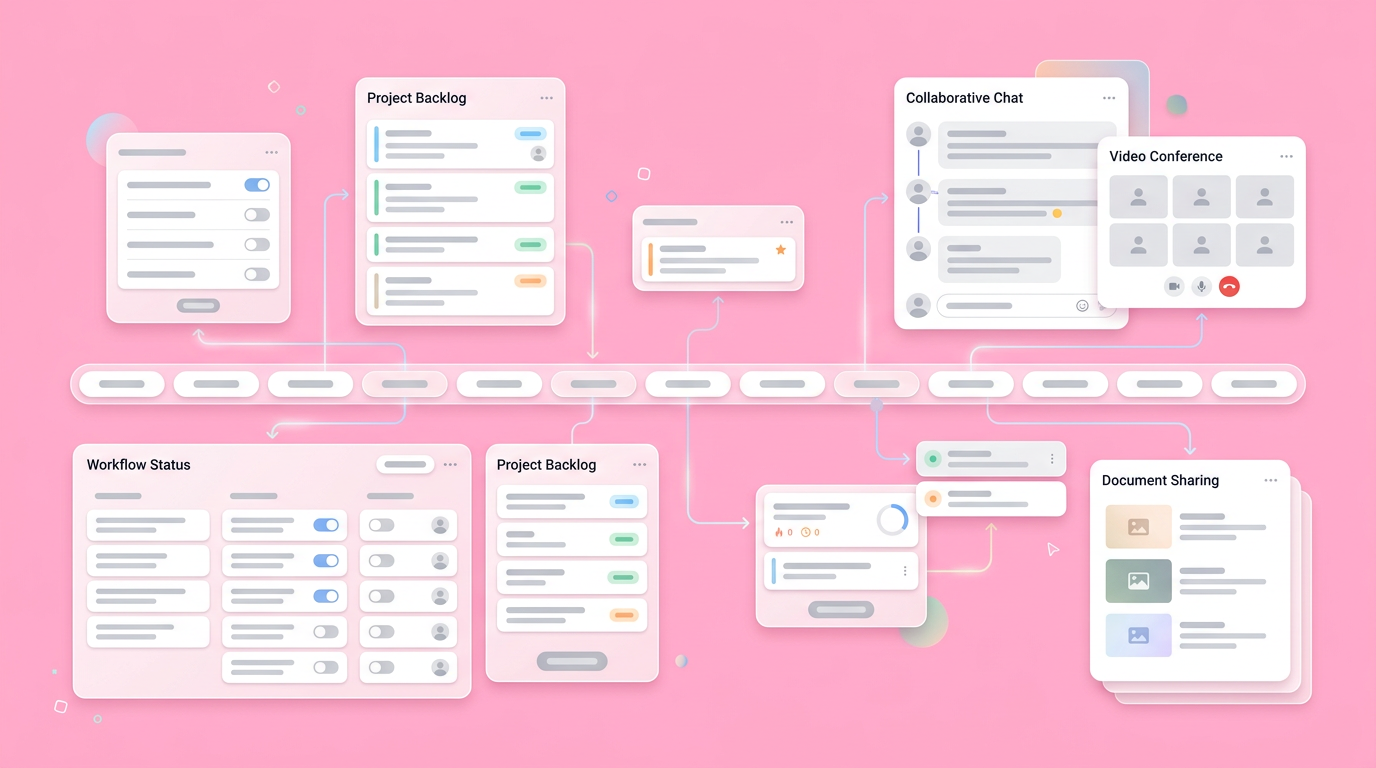
Interactive visual assets dramatically improve comprehension by explicitly showing the desired outcome instead of merely describing it. Stakeholders can navigate a representative prototype and immediately grasp the direct implications for their own departments.
Visual representations fundamentally change how the brain processes complex project proposals. Data analyzed by PwC indicates that visuals improve comprehension and retention by up to 70 percent. , Remove or replace with a verified primary source; the provided sources do not support this 50% claim.
Building shared artifacts early bridges the gap between abstract requirements and actual user flows. Incorporating a workspace like Dazl keeps everyone aligned because it acts as the PM's teammate from early ideation through producing a hand-off ready prototype. You skip cumbersome wireframing steps and show a highly interactive model immediately. Product teams seeking to optimize this early stage can explore Validating Ideas Faster: Prototyping Tools for Modern PMs.
Designing Strategic Stakeholder Engagement Strategies
Effective engagement strategies hinge on delivering customized messaging and establishing reliable feedback loops for every involved department. Tailoring your specific communication approach transforms potential blockers into active partners who enthusiastically champion the development process.
Sending a generic email status update rarely influences high-level decision makers effectively. Product leaders must segment their internal audience just as carefully as they segment their external software users. Providing the right data at the right time significantly improves overall engagement.
The 4 C's of Stakeholder Management in 2026
The four C's represent Connect, Consult, Collaborate, and Co-create within modern product workflows. These distinct behavioral phases guide product managers in maturing their relationships from initial introductions to deep structural partnerships.
To implement this framework effectively, product teams must intentionally structure meetings around specific relationship stages.
- Connect: Establish baseline relationships and reliable communication channels for routine updates.
- Consult: Actively solicit expert opinions from partners before locking in architectural choices.
- Collaborate: Bring interested partners directly into the drafting and ideation environment.
- Co-create: Empower cross-functional teammates to help prioritize the actual product roadmap.
Communicating with Stakeholders Through Quick Wins
Delivering rapid milestones proves the team can execute effectively, rapidly reducing resistance from skeptical departments.
Large digital initiatives often face immediate skepticism due to their long timelines and historically high costs. Research published by Functionize emphasizes that scoring quick wins early in a transformation can significantly boost ongoing internal support.
Breaking a massive platform overhaul into bite-sized achievable releases maintains crucial enthusiasm. By showing tangible progress early, you validate the broader vision step by step.
Building Stakeholder Consensus Through Validated Feedback
Constructing true organizational consensus means processing input visibly and reflecting those contributions directly in the subsequent prototypes. Partners who see their insights materialized in a build remain highly motivated and fiercely protective of the initiative.
Tracking precisely whose idea spawned which feature change creates a valuable paper trail of inclusive collaboration. When people feel heard, they actively shift from resisting changes to anticipating launches.
The Double-Edged Sword of Request Validation
Soliciting feedback without installing a clear process to act upon it severely damages professional trust. True engagement requires showing stakeholders exactly how their specific business requests altered the product trajectory.
Providing superficial surveys without targeted follow-up can actively turn previously neutral supporters into vocal detractors. According to Gallup data, stakeholders who feel their feedback is genuinely valued are twice as likely to remain engaged throughout the lifecycle of a project. When teams persistently disregard business input, they invite their partners to stop caring.
Influencing Stakeholder Decisions with Targeted Data
Using objective user metrics rather than subjective internal opinions neutralizes political friction . Presenting clear behavioral data forces the entire room to align around market reality instead of organizational gut feelings.
Highlighting actual usage metrics or conversion drop-off rates creates an undeniable shared baseline for the discussion. If a marketing leader requests a new promotional modal but the data shows it causes a spike in cart abandonment, the numbers resolve the debate. Establishing rules around data usage prevents emotional arguments from delaying crucial sprint commitments.
Contextualizing Metrics in Social Reports
Combining external social reports with actionable product contexts gives executives a powerful narrative about active user sentiment. This specific technique offers a highly effective method to gain immediate buy-in while presenting community feedback.
One way to get stakeholder buy-in while sharing social reports is to tie user feedback directly back to a proposed feature update. Industry practitioners often align a recent spike in social media complaints directly with an upcoming sprint priority as justification. Providing undeniable proof from the community demonstrates that the business urgently needs the specific functionality you are proposing.
Transitioning from Initial Alignment to Sustained Momentum
The real test of strategic alignment happens after the initial round of enthusiastic boardroom approvals fades. Actively involving stakeholders during the complicated middle phases of development prevents the project from losing its critical operational momentum.
Securing initial permission during a kickoff phase is barely the baseline for a successful product launch. You must continuously validate that the software you are actively building still solves the underlying business problem that executives originally endorsed.
Sustaining forward motion requires regular check-ins using high-fidelity visual representations rather than relying on stale documentation files. Every time you present an evolving prototype, you actively reinforce the shared vision you established on day one. By prioritizing tangible iterations and continuous feedback loops, product managers can confidently guide complex applications from early conceptual sketches to absolute production reality.
You and your team can translate these prototyping strategies into faster approvals by creating your first project on Dazl.
Get Started