The PM's Guide to Managing Stakeholder Expectations in Agile
You walk into the sprint review feeling confident about the team's progress. Engineering shipped exactly what was written in the ticket, the acceptance criteria are met, and the feature functions flawlessly. But when the lead stakeholder looks at the screen, they frown and say, "That is not at all how I pictured this working." The resulting tension in the room rarely stems from poor code quality or lazy planning; instead, it highlights a fundamental disconnect in shared understanding. Stakeholders approach software from the perspective of business outcomes and user journeys, while product teams break those concepts into discrete technical tasks. Bridging that translation gap requires deliberate, continuous effort.
For product managers, aligning the expectations of leadership, sales, and external partners is just as critical as maintaining the product backlog. As technical systems grow more complex, the cost of miscommunication increases. Fortunately, modern product workflows provide structured methods to align everyone before engineering cycles begin. By establishing transparent processes, using visual artifacts early, and maintaining empathy for business concerns, product teams can mitigate surprises and build a culture of trust.
The New Baseline for Agile Stakeholder Communication Strategies
Modern agile stakeholder communication relies on continuous alignment rather than disjointed status updates. Product managers must establish predictable feedback loops, use visual artifacts early to surface hidden assumptions, and shift from simply conveying timelines to building a shared understanding of project outcomes.
Over the last few years, the product landscape has evolved significantly. According to an analysis of project management trends, as AI and automation increasingly handle administrative tasks, product managers are projected to spend up to 60% more of their week addressing strategic stakeholder expectations. This transition requires a shift in how teams communicate. Sending a lengthy spreadsheet of feature roadmaps is no longer sufficient. Stakeholders expect to understand what is being built, and why specific trade-offs are necessary and how the final product will look.
In our testing of various team workflows, we found that relying solely on asynchronous text updates inevitably leads to misalignment. When stakeholders read an update, they project their own assumptions onto the text. If an update says "authentication flow is 80% complete," a sales director might assume the user interface is fully polished and ready for a demo. A more rigorous approach involves showing progress through tangible artifacts and having direct conversations about remaining risk.
Shifting from Updates to Active Alignment
Active alignment requires product teams to involve stakeholders in problem-solving discussions rather than just presenting finished work. Doing so transitions the relationship from a vendor-client dynamic to a collaborative partnership, significantly reducing late-stage friction and scope disagreements.
A highly effective project manager treats stakeholders as partners in the product journey. Instead of treating the sprint review as a high-stakes performance where finished work is unveiled for judgment, the review should be one of many continuous touchpoints. Active alignment involves bringing stakeholders into the discovery and scoping conversations early. When team members collaborate openly about architectural constraints or market limitations, stakeholders stop viewing technical pushback as laziness and start seeing it as necessary business prioritization.
According to PMI's outlook on high-performing agile teams, product managers are ultimately responsible for delivery and meeting stakeholder expectations by creating a safe environment for feedback. Giving stakeholders visibility into the prioritization process helps them understand the logic behind roadmaps. If a feature request gets pushed to a later quarter, active alignment ensures the stakeholder understands exactly which high-priority items took precedence.
The 4 C's of Stakeholder Management in 2026
The 4 C's of stakeholder management are Comprehension, Connection, Communication, and Collaboration. These pillars guide product managers to:
- Understand stakeholder needs.
- Build interpersonal trust.
- Maintain transparent information flow.
- Work together on navigating product trade-offs throughout the agile lifecycle.
Understanding the 4 C's gives product professionals a mental model for evaluating their stakeholder relationships.
- Comprehension: This involves deeply understanding the stakeholder's core motivations. A marketing director cares about launch dates and messaging, while a technical founder cares about debt and scalability.
- Connection: Building a personal baseline of trust ensures that when difficult conversations arise about scope cuts, the stakeholder knows the product team has their best interests in mind.
- Communication: Predictable, transparent cadences for information sharing ensure no one feels out of the loop.
- Collaboration: Working together through trade-offs rather than dictating terms from a silo.
When you apply these four pillars systematically, the dynamic shifts. Instead of viewing stakeholders as hurdles to clear, they become valuable resources for market context and business strategy.
Step 1: Aligning Agile Project Goals with Stakeholders Early
Aligning agile project goals requires capturing both business objectives and user needs during initial planning phases. Product managers must translate vague stakeholder requests into concrete, prioritized user stories, ensuring everybody agrees on the definition of success before engineering work begins.
The earliest phases of a project are the most vulnerable to misalignment. When a stakeholder requests a "smart reporting dashboard," their internal vision might include predictive analytics and custom exports. If the product team interprets the request as a basic data table with filtering, the gap will only become apparent weeks later. Establishing shared definitions of success is mandatory. Product managers must document not only the features, but also the expected user outcomes and business metrics that define a successful release.
Data from recent industry surveys indicates that 56% of major project failures trace directly back to poor initial communication and ill-defined requirements. To combat this, modern teams invest heavily in rigorous sprint planning and requirement gathering. By defining the "definition of done" collaboratively, teams protect themselves from scope creep and provide stakeholders with a clear framework for what will be delivered.
Breaking Down the 5 C's of Agile Management
The 5 C's of agile management - Communication, Commitment, Collaboration, Continuous Improvement, and Courage - provide a framework for high-performing teams. Product managers apply these principles to:
- Set realistic expectations.
- Champion necessary changes.
- Maintain alignment with stakeholders even when facing technical constraints.
While the 4 C's apply to managing individuals, the 5 C's apply to managing the agile process itself. Communication and Collaboration naturally carry over, but the additions of Commitment, Continuous Improvement, and Courage are vital for product leaders.
Courage is particularly relevant when dealing with powerful stakeholders. It takes courage to say "no" to a brilliant idea that simply does not fit the current sprint capacity. It takes courage to pause development when a previously undiscovered technical hurdle threatens the timeline. By adhering to the 5 C's, agile teams build a reputation for reliability. Stakeholders learn to respect the boundaries established by the product organization because those boundaries consistently result in high-quality software delivery.
Moving Beyond Static PRDs to Visual Alignment
Relying solely on text-heavy product requirement documents often leaves room for conflicting interpretations. Modern product teams increasingly use interactive prototypes early in the scoping phase to validate assumptions, giving stakeholders a tangible feel for the product before committing to development.
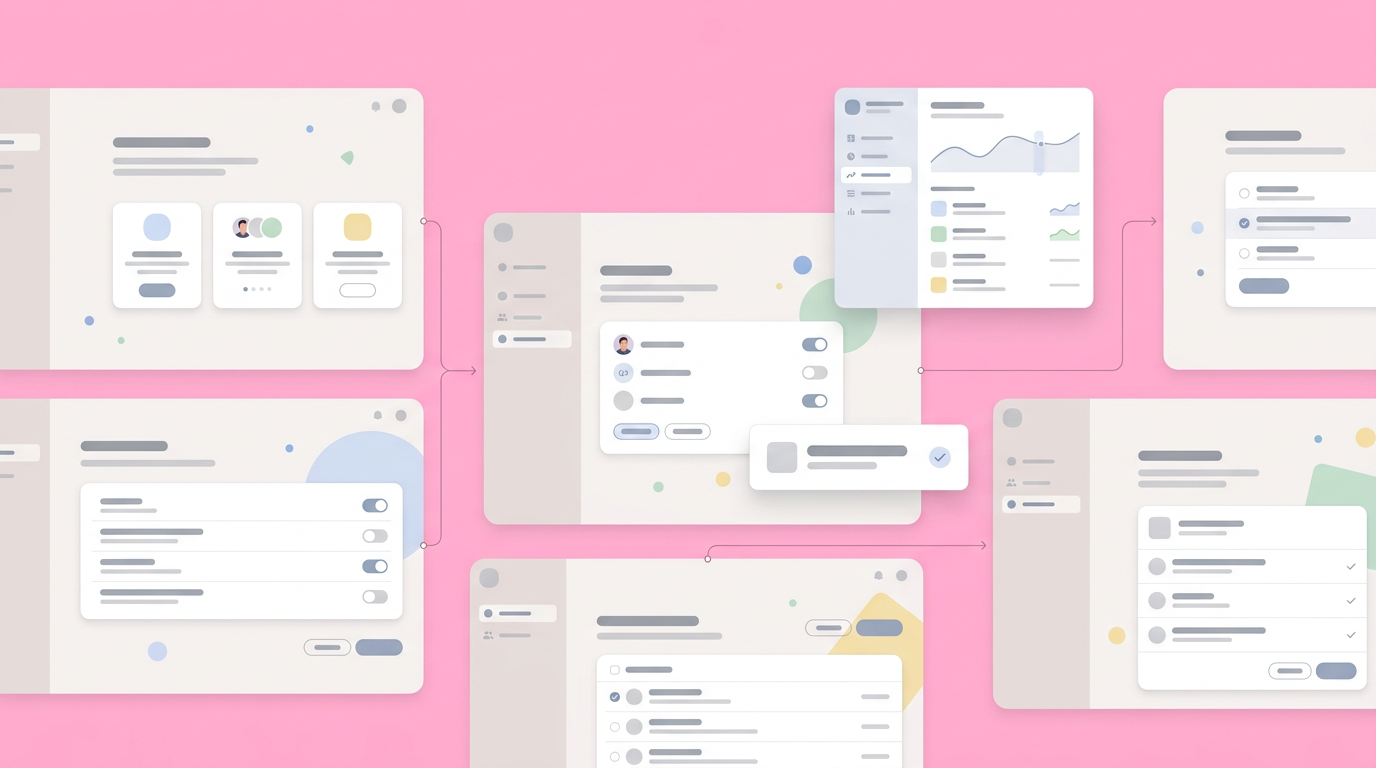
Documents are great for cataloging criteria, but they fall short when communicating complex user interactions. If a Product Managers' Guide to Securing Stakeholder Buy In emphasizes anything, it is the power of visual aids. When a stakeholder can click through a prototype, they immediately spot missing workflows or awkward transitions that they would have glossed over in a written document.
In our experience, teams reporting via internal productivity metrics note up to an 80% reduction in late-stage design handoff conflicts when using interactive artifacts. Taking the time to build a rough wireframe or interactive mock-up forces both the PM and the stakeholder to slow down and consider the actual mechanics of the feature. This transitions the conversation from abstract wishlist items to concrete functional realities.
Step 2: Designing Effective Stakeholder Engagement Agile Workflows
Effective stakeholder engagement in agile involves setting structured, recurring touchpoints tied to sprint cadences. PMs must balance the frequency of updates with the depth of information shared, customizing their approach based on each stakeholder's influence and interest in the project.
Every stakeholder has a different appetite for detail. An executive sponsor might only need a high-level summary of milestone progress and risk factors once a month. Conversely, a customer success lead might want weekly, detailed updates on specific bug fixes that impact key client accounts. Product managers must map their stakeholders, categorizing them by their level of influence and their level of interest.
Once the mapping is complete, communication workflows should be institutionalized. Relying on ad-hoc Slack messages invites inconsistency. Instead, PMs should use their existing tools - like Jira for technical tracking or automated summary emails - to provide standardized updates. According to a recent discussion on managing stakeholder expectations, building trust requires making the internal workings of the project visible and accessible, without overwhelming non-technical partners with engineering jargon.
Applying the 3 5 3 Rule in Agile Environments
The 3 5 3 rule in agile defines the three core roles, five events, and three artifacts of the Scrum framework. Understanding this structure helps product managers educate stakeholders on how and when to provide input without disrupting the team's focused development cycles.
For teams strictly adhering to Scrum methodologies, the 3 5 3 rule is the bedrock of their operating rhythm. The three roles (Product Owner, Scrum Master, Developers), five events (Sprint, Sprint Planning, Daily Scrum, Sprint Review, Sprint Retrospective), and three artifacts (Product Backlog, Sprint Backlog, Increment) provide a predictable cadence.
Educating stakeholders on this framework is incredibly beneficial. When stakeholders understand that the Sprint Backlog is locked during a sprint, they stop expecting immediate implementation of their mid-week ideas. Instead, they learn to channel those ideas into the Product Backlog for future prioritization. This protects the developers' focus while reassuring stakeholders that their input process is documented and secure. Check out the 7 Essential Elements of a Modern PRD in Project Management for more on structuring these artifacts clearly.
Establishing Agile Stakeholder Feedback Loops
Agile stakeholder feedback loops are structured mechanisms for capturing and integrating input during development. By scheduling regular sprint reviews, providing async testing environments, and maintaining transparent backlogs, product teams ensure stakeholder feedback genuinely shapes the product without causing unexpected derailments.
Feedback is only valuable if there is a systematic way to process it. When you allow feedback to arrive sporadically through emails, passing hallway conversations, or direct messages, it inevitably leads to priority whiplash. The product manager's job is to consolidate that raw feedback into a centralized repository.
A strong feedback loop requires mutual commitment. The product team must commit to showcasing increments of the product frequently - ideally at the end of every sprint cycle. In return, stakeholders must commit to providing constructive, detailed feedback during those dedicated review sessions rather than waiting until the project is theoretically finished. This iterative approach allows the team to pivot slightly week by week, guaranteeing that the final product aligns perfectly with evolving stakeholder needs.
Step 3: Handling Stakeholder Resistance in Agile Projects
Handling stakeholder resistance requires empathy, clear data, and visual artifacts to explore concerns objectively. Product managers address pushback by identifying the underlying fears, demonstrating how agile iterative cycles mitigate risk, and reframing scope negotiations as collaborative prioritization exercises.
Resistance is rarely malicious. When stakeholders push back against an agile approach, demand rigid timelines, or request massive scope additions late in the game, it usually stems from anxiety. They are accountable for their own departmental goals, and any uncertainty in the product timeline threatens those goals.
McKinsey research notes that high-performing agile teams can increase stakeholder satisfaction by 30% simply by addressing resistance proactively. When faced with a difficult demand, the worst response is a flat refusal without context. The best response is curiosity. Product managers should ask probing questions to uncover the business driver behind the sudden request. Often, the stakeholder does not actually need the complex feature they asked for; they just need a solution to a specific operational pain point, which the team might be able to solve through a much simpler, lower-effort adjustment.
Identifying the Root Cause of Friction
Frictional stakeholder relationships often stem from misaligned expectations regarding control, visibility, or changing priorities. PMs must investigate these root causes through direct, empathetic conversations, mapping stakeholder concerns to specific project risks rather than dismissing them as mere difficult behavior.
When a stakeholder consistently derails sprint planning or complains about velocity, the product manager must schedule a one-on-one session. In these conversations, active listening is critical. Is the stakeholder frustrated because they feel their department's needs are constantly deprioritized? Are they anxious because poor communication from the product team made them look uninformed in front of their own leadership?
By diagnosing the exact nature of the friction, PMs can adjust their engagement strategy. If the issue is a lack of visibility, granting the stakeholder read-only access to a specific roadmap view might resolve the tension. If the issue is changing priorities, spending time explaining the broader company strategy and how it dictates the current backlog can help them understand the larger context. Treat stakeholder health exactly how you would treat user health: monitor the signals and intervene before churn occurs.
Reframing Scope Conversations with Prototypes
When stakeholders request out-of-scope features, discussing constraints abstractly often escalates tension. Using rapid prototypes allows product managers to visually demonstrate the technical trade-offs of proposed changes, transforming an adversarial "no" into an objective discussion about project priorities and constraints.

Debating the definition of scope over a conference table is an exhausting exercise for all involved. When a stakeholder insists that a new drop-down menu should take "only a few hours," verbal explanations of backend database complexity rarely land well. This is where validating ideas faster with prototyping tools changes the dynamic.
As noted by product thought leaders like Aakash Gupta in his analysis of the AI prototyping ecosystem, bringing a tangible artifact to a meeting immediately grounds the conversation. If you can quickly generate a prototype that visually maps out the complex user flow required by their new request, the stakeholder can see the friction for themselves. The conversation shifts from "the PM is blocking my idea" to "this idea introduces too much UX complexity for this sprint." You move to the same side of the table, evaluating the artifact objectively together.
Moving From Status Reports to Shared Reality
The future of stakeholder management shifts focus from managing isolated tasks to aligning the entire team around a shared product vision. Product managers who use interactive artifacts to bridge the gap between abstract requirements and tangible outcomes consistently deliver better product results.
Managing expectations involves constant translation. You are translating business metrics into user stories, design systems into engineering tickets, and technical constraints back into business realities. The most successful product teams do not attempt to force stakeholders to learn engineering terminology. Instead, they use continuous, visual alignment to ensure everyone is experiencing the same reality as the product evolves.
When you need to turn a vague stakeholder request into a tangible conversation piece, Dazl sits in the PM's workflow as a true teammate. By bridging the gap between ideating requirements and presenting a realistic vision, it empowers product managers to:
- Generate hand-off ready prototypes quickly.
- Stop debating abstract specifications.
- Start aligning around functional, shareable prototypes that keep everyone moving forward together.
You and your team can implement these collaborative strategies and streamline your feedback loops by signing up for Dazl.
Get Started