Bridging the Gap: From Product Discovery to Clickable Prototype
You just finished a grueling two-week sprint of user interviews, synthesizing dozens of transcripts into a beautifully organized digital whiteboard. Sticky notes are clustered by theme, insights are highlighted, and the team feels completely aligned on the user pain points. Then, you open a blank wireframing canvas to start designing the solution, and the momentum instantly vanishes. Moving from abstract research to concrete interface components often feels like starting over from scratch.
We see teams struggle with this transition constantly. The jump from research notes to actionable wireframes is where most product context gets lost. A 2026 blog post discussing roughly 300 teams reported that continuous discovery is replacing quarterly studies and that teams need to process insights faster. When product managers have to manually translate every sticky note into a user story, and then explain that story to a designer who wasn't on the research calls, details slip through the cracks.
Choosing the right early stage product development software determines whether your research actually makes it into the final build. Teams usually choose between heavily fragmented workflows that rely on multiple specialized apps, or more integrated workspaces that keep the insight and the prototype in the same environment.
The Gap Between the Research Canvas and the First Wireframe
The hardest phase in early product development is maintaining the connection between why you are building something and what you are actually building. Most teams use a dedicated product discovery and prototyping tool to manage this phase, but they often treat discovery and prototyping as two completely isolated steps.
Why Context Disappears in Translation
Research lives in text and sticky notes, while prototypes live in pixels and interactions. When a product manager hands off a synthesis board to a design team, the rationale behind specific decisions often gets flattened. The designer sees a requirement for a "data filtering component" but might not understand the specific workflow constraints the user described during the interview.
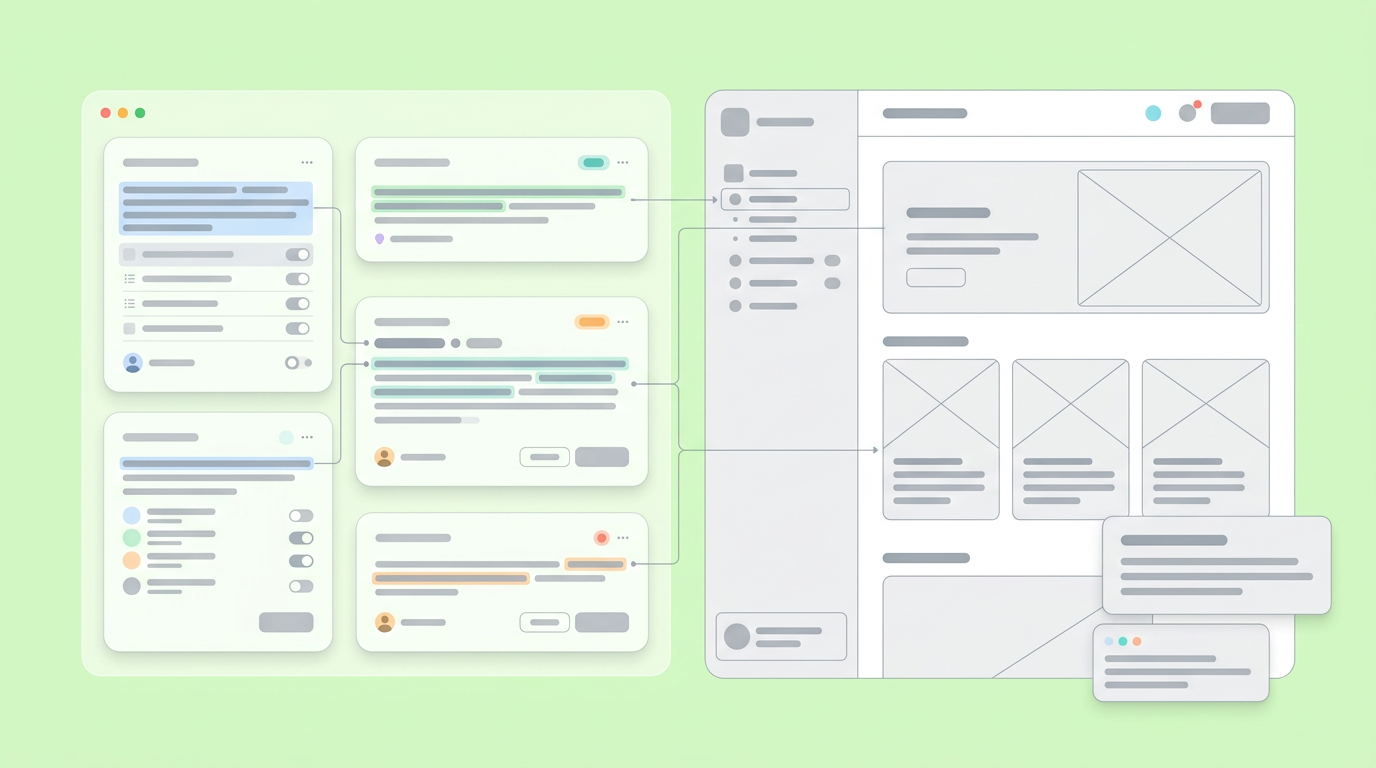
This context loss leads to frustrating review cycles where the prototype technically meets the written requirements but misses the underlying user need. Research and handoffs often lose context. As Maze points out in their 2026 tooling guide, teams need versatility in their tech stack to put continuous product discovery into action. Without tight integration, product managers spend hours writing exhaustive specifications just to bridge the gap between their research and the first wireframe. Stopping context loss between your PRD and prototype requires tools that explicitly link insights to interface elements.
The Momentum Drop-Off After User Interviews
Discovery momentum typically peaks right after a synthesis session. The team is excited about the opportunities identified on the canvas. However, translating those opportunities into a visual product prototyping platform takes time. If the engineering and design queues are backed up, that excitement fades.
By the time the first wireframes are ready for review, weeks might have passed. The stakeholders who enthusiastically agreed on the problem space now struggle to remember the nuances of the research. To keep discovery momentum from dying, product managers need ways to generate low-fidelity prototypes almost immediately after synthesizing the research. Showing a rough, clickable concept within hours of finalizing the research keeps the conversation focused and actionable.
Evaluating Approaches to Discovery and Handoffs
When selecting user experience design tools to bridge research and building, teams generally evaluate two primary approaches. The first involves connecting highly specialized, distinct platforms. The second involves using unified workspaces that bring discovery artifacts and prototyping engines closer together.
The Fragmented Stack Approach
The traditional approach involves chaining together separate best-in-class tools. A team might use a dedicated repository for user interviews, a digital whiteboard for synthesis, Jira product discovery for prioritizing opportunities, and a separate design platform for mockups.
The use of Jira product discovery is particularly common for organizing user feedback against delivery roadmaps. It helps product managers score and prioritize ideas based on impact. However, the downside of this fragmented approach is the sheer amount of manual copying and pasting required. A product idea validation software might confirm a feature is needed, but the PM still has to manually rebuild that context inside the design tool. The seams between these tools create friction, slowing down iteration cycles when speed is critical.
The Integrated Canvas-to-Prototype Approach
A newer approach focuses on compressing the distance between the discovery canvas and the interactive prototype. Rather than moving to a completely different platform to start wireframing, PMs use workspaces that can directly interpret discovery artifacts.
Dazl acts as the PM's teammate from ideation and spec writing through a hand-off ready prototype, keeping the whole team aligned. By maintaining the research context in the same environment where the prototype is generated, teams avoid the translation errors that plague traditional handoffs. We have found that when PMs can highlight a specific research insight and immediately attach it to a generated interface component, stakeholder alignment improves dramatically.
Frameworks to Prevent Discovery Stagnation
Having the right interactive mockup creation tools is only part of the equation. Product managers also need robust frameworks to structure how they move from unstructured research to validated concepts. In 2026, the industry is moving rapidly toward continuous, outcome-based models rather than rigid, output-driven roadmaps.
Adapting Outcome-Based Discovery in 2026
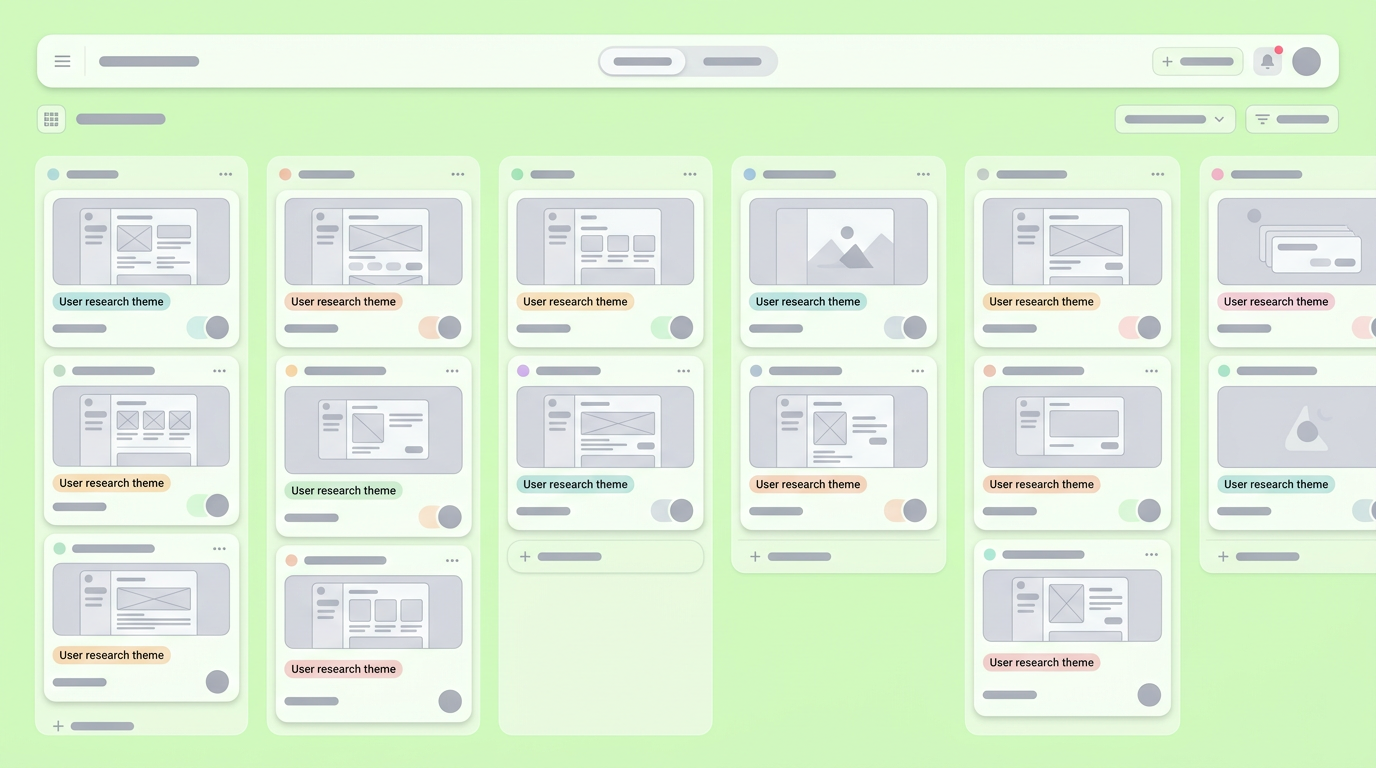
Effective frameworks for product discovery prioritize identifying the right problems over simply shipping features. According to recent industry analyses, outcome-based discovery emphasizes themes and impact over fixed feature roadmaps. Teams focus on moving specific business metrics rather than delivering a predetermined list of features.
This shift requires continuous validation. Product managers cannot afford to do research once a quarter and spend the next three months building. They must constantly test small, interactive concepts against user feedback. Advanced simulation and digital prototyping tools continue to shorten development cycles, allowing teams to validate these thematic clusters rapidly. Using a product discovery and prototyping tool that supports quick iteration is essential for maintaining this pace.
Aligning the 7 Stages of Product Development
One common 7-stage product development model includes idea generation, idea screening, concept development and testing, building a market strategy, product development, market testing, and commercialization. The transition from concept development to actual product development is where discovery efforts often stall.
If a PM cannot quickly generate a prototype during the concept testing stage, the idea screening process drags on. By utilizing tools that accelerate the path from product idea to clickable prototype, teams can move through the initial three stages much faster. The faster you can put a tangible concept in front of a user, the faster you can validate your market strategy and move into confident development.
Examples of Product Prototypes That Maintain Context
What is an example of a product prototype that actually bridges the gap from discovery? It is a static picture of an app. A context-rich prototype is a clickable artifact that explicitly ties interface decisions back to the original user needs identified during research.
From Low-Fidelity Concepts to Clickable Realities
A good example of a product prototype in the discovery phase is a medium-fidelity interactive mockup that users can navigate. From past experience, we've found that these clickable mockups significantly reduce misinterpretations during stakeholder reviews. If your research indicated that users are abandoning a checkout flow because they cannot find shipping costs, the prototype should focus entirely on testing new shipping calculator interactions.
The prototype does not need perfect branding or final copy. It needs to accurately represent the proposed solution to the specific problem uncovered on the discovery canvas. Interactive mockup creation tools allow PMs to build these functional flows without waiting for high-fidelity design resources. We've often observed that this direct linkage to research data helps stakeholders quickly grasp the 'why' behind design choices. When you present this prototype to stakeholders, you can directly reference the sticky notes and interview quotes that prompted the design, keeping the conversation grounded in data rather than subjective opinions.
Integrating Ethical Design and AI Moderation
As product discovery evolves, teams are increasingly incorporating AI-moderated interviews and ethical design practices into their workflows. When AI assists in gathering and synthesizing user feedback, the volume of data grows exponentially. Product managers need ways to distill that massive amount of data into actionable design directions.
Using early stage product development software that can parse these AI-generated transcripts and suggest initial wireframe structures helps manage this data overload. The goal is to let the tooling handle the heavy lifting of initial translation, so the product manager can focus on refining the user experience and ensuring the prototype ethically addresses the user's core problems.
Retaining Momentum Through the Build Phase
The handoff from discovery to delivery should not feel like throwing a heavy document over a wall, where critical context and momentum are lost. Instead, the transition requires a shared environment where the original research, the PRD, and the interactive prototype live together fluidly. This integration ensures that the 'why' behind design decisions remains clear and accessible throughout the entire development lifecycle. When engineers and designers can trace a specific button in a prototype all the way back to a user quote from a discovery interview, the entire team builds with more confidence and speed, understanding the foundational user needs that drove each requirement. To achieve this, teams should focus on several key practices:
- Maintain a single source of truth: Ensure all discovery artifacts, PRDs, and prototypes are housed in an interconnected system.
- Automate context linking: Use tools that automatically link interface elements to underlying research insights.
- Facilitate continuous feedback: Establish clear channels for designers and engineers to ask questions and access original research without friction.
- Standardize communication protocols: Implement consistent methods for sharing updates and decisions between discovery and delivery teams.
- Regular cross-functional syncs: Schedule frequent meetings where product, design, and engineering can review progress and align on next steps.
Focusing on tightening this feedback loop will ensure that your discovery efforts consistently result in shipped features that actually solve the right problems, rather than getting diluted or misinterpreted during implementation.
You can maintain this strategic alignment by signing your team up for Dazl to start transforming your research insights into interactive prototypes.
Get Started