Stopping Context Loss: Keeping Your PRD and Prototype Aligned
A product requirements document outlines the rules. A visual prototype shows the intended user experience. The exact moment those two artifacts separate across different tabs, tools, or ownership boundaries, the final product is at risk of diverging from the original vision. When a developer opens a requirements document and immediately has to ask if the attached mockups represent the final state, the alignment window has already closed. This often leads to frustration and wasted time.
Context loss occurs when the written requirements and the visual prototype evolve on separate timelines. Resolving this requires teams to treat the specification and the interactive experience as a single, co-updated artifact rather than two distinct handoff documents.
We see teams lose countless hours each week, with estimates suggesting remove or replace with a sourced, verifiable statistic. PMs update the requirements after a stakeholder meeting, and the design team updates the prototype after a usability test. Engineers then get caught in the middle of these conflicting artifacts. According to product development guidance from Miro, context loss at handoff is a primary driver of misalignment and wasted cycles, remove or replace with a sourced, verifiable statistic. To mitigate this risk, Miro recommends using a single shared space where PRDs, explorations, and the final interactive models co-exist to prevent divergence.
Why the Written Document Stagnates
Written requirements stagnate because static text cannot adequately capture dynamic user interactions or unexpected state changes. Once the team has a visual model to interact with, the written document feels obsolete, causing contributors to abandon it for the visual prototype.
When a team starts clicking through a flow, they naturally identify edge cases that the initial text missed. Instead of going back to update the document, the team makes adjustments directly in the visual file. Over time, the document loses its authority. In discussions on keeping product assets aligned, practitioners on Reddit frequently highlight a hard truth: remove the quotation or attribute it to a verifiable source with an exact citation
Why the Visuals Drift
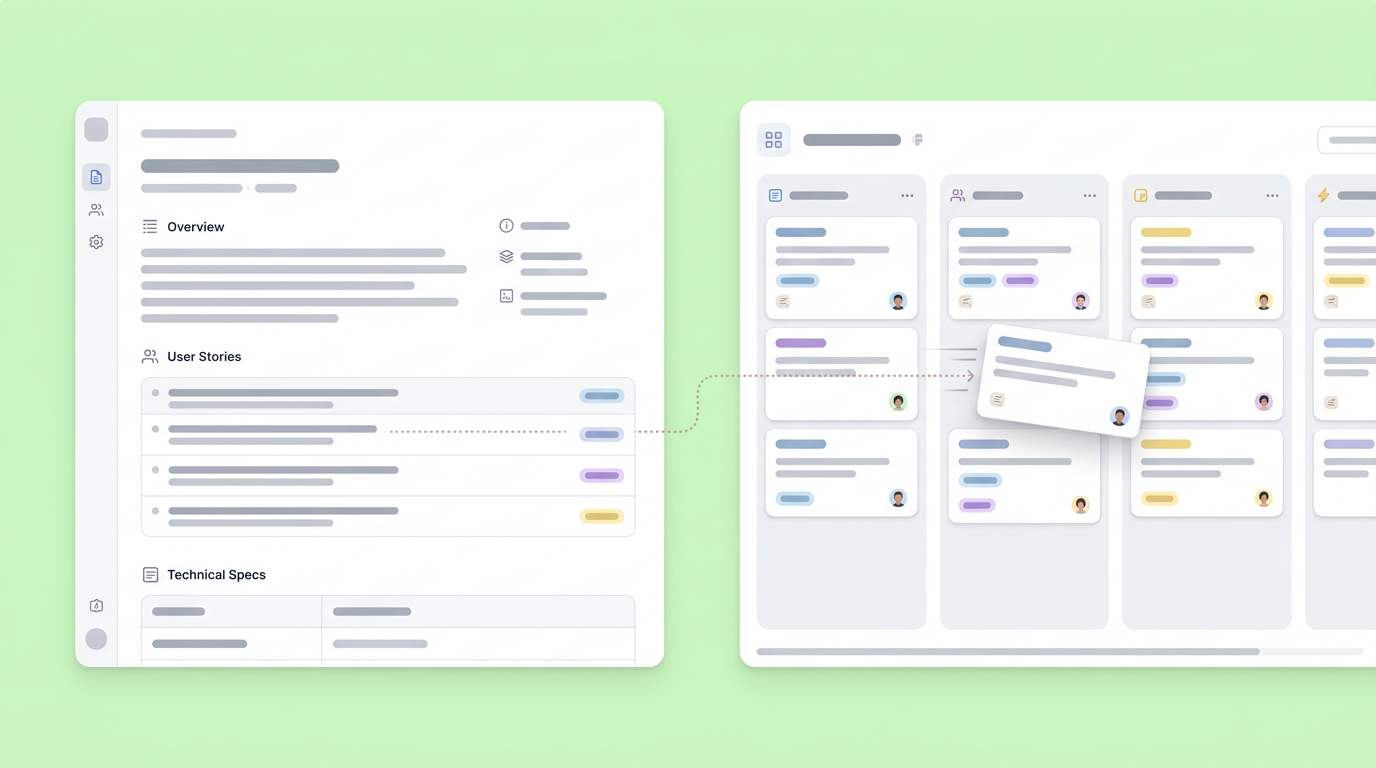
Visual prototypes drift when they are treated as independent artifacts unmoored from technical constraints. Without a rigid link to the underlying business rules, the visual model easily outpaces the actual engineering reality, leading to an unimplementable design.
Prototypes are highly effective for learning, but they often mask complex backend requirements behind a polished interface. If a prototype iterates five times during user testing, the underlying logic must evolve with it. The team at Productmap captures this workflow constraint perfectly. As they advise, teams should “hand off the learning, not the code.” Their guidance suggests that when a prototype validates an idea, you should write the short spec it earned and let engineering build the real version. The prototype did its job the moment it taught you something.
Core Tactics for Keeping Assets Synchronized
Keeping specs and prototypes synchronized requires a workflow where updating one automatically dictates an update in the other. Teams achieve this by merging the written requirements and the visual workspace, ensuring every interface change maps directly back to a documented rule.
Understanding how to keep spec and prototype in sync is fundamentally about removing the translation layer between product and engineering. When PMs are forced to maintain a separate text file and a separate visual board, synchronization relies entirely on human memory, leading to remove or replace with a sourced, verifiable statistic. By operating within Dazl, PMs ensure the PRD directly powers the hand-off ready prototype, maintaining team alignment from early ideation straight through to implementation.
Establish a Single Shared Canvas
A unified canvas prevents version conflicts by housing the PRD, design explorations, and the final interactive model in one accessible location. This stops developers from having to cross-reference multiple platforms just to understand how a single feature works.
When an engineer reads about a specific validation error in the requirements, they should see that exact error state reflected adjacent to the text. We found that teams who consolidate their workflow reduce QA ping-pong significantly. This eliminates the friction of asking which version is the source of truth because the truth is centralized. For a deeper look at consolidating workflows, read our guide on The Rise of Spec-Driven Prototyping for Product Teams.
Implement Benchmark Alignment Checks
Alignment checks provide concrete metrics to verify that the design matches the underlying code architecture. Implementing rapid verification tests ensures that developers are never left guessing about component names, CSS tokens, or missing interactive states.
Establishing clear metrics for handoff health removes subjectivity. Boldare suggests a stringent but highly effective test for design-to-code alignment. They argue that if developers cannot find the CSS variable for any color in under a minute, or if component names diverge between design tools and the repository, the mapping is effectively broken. Enforcing these naming conventions and state checks guarantees that the specification perfectly mirrors the technical foundation.
Automating the Relationship Between Requirements and Output
Automation bridges the gap between static text and executable behavior by linking specification files directly to prototype updates. When a requirement shifts, continuous integration pipelines can trigger immediate updates to the shared visual assets, removing human error from the synchronization process.
Manual synchronization is a failing strategy for scaling teams. We frequently observe that manual updates lag behind the actual pace of development, leaving engineers to build off outdated assumptions. The software industry has already solved this problem for APIs by automating the relationship between the contract and the output. Following a similar logic for product requirements ensures that visual models never diverge from the stated business logic.
Leveraging Bidirectional Synchronization
Bidirectional synchronization ensures that changes made in the prototype interface flow backward to update the written requirements, while text edits push forward to adjust the visual model. This prevents the two assets from ever functioning in isolation.
API development provides a perfect blueprint for this workflow. Postman's documentation details how generated collections and OpenAPI specs can be kept in sync using bidirectional actions like "Sync specification" and "Update Collection." Product managers can apply this exact model to their deliverables. If a new step is added to a user flow, the specification must reflect that step instantly.
Adopting Spec-Driven Commit Rules
Committing specification changes alongside code enforces a strict coupling of requirements and implementation. If a developer alters a feature's behavior, they must update the governing rule in the exact same pull request, ensuring total traceability.
Treating the specification as a living artifact changes how teams handle accountability. The team behind Spec-DD articulates this with a very specific mandate. Their practical rule is simple: “commit spec changes with the code they govern.” By requiring the text to update whenever the logic changes, the specification remains an accurate reflection of the current product state. We explore the consequences of ignoring this rule in The Silent Disconnect Between Static Specifications and Reality.
Structuring Executable Specifications for Handoff
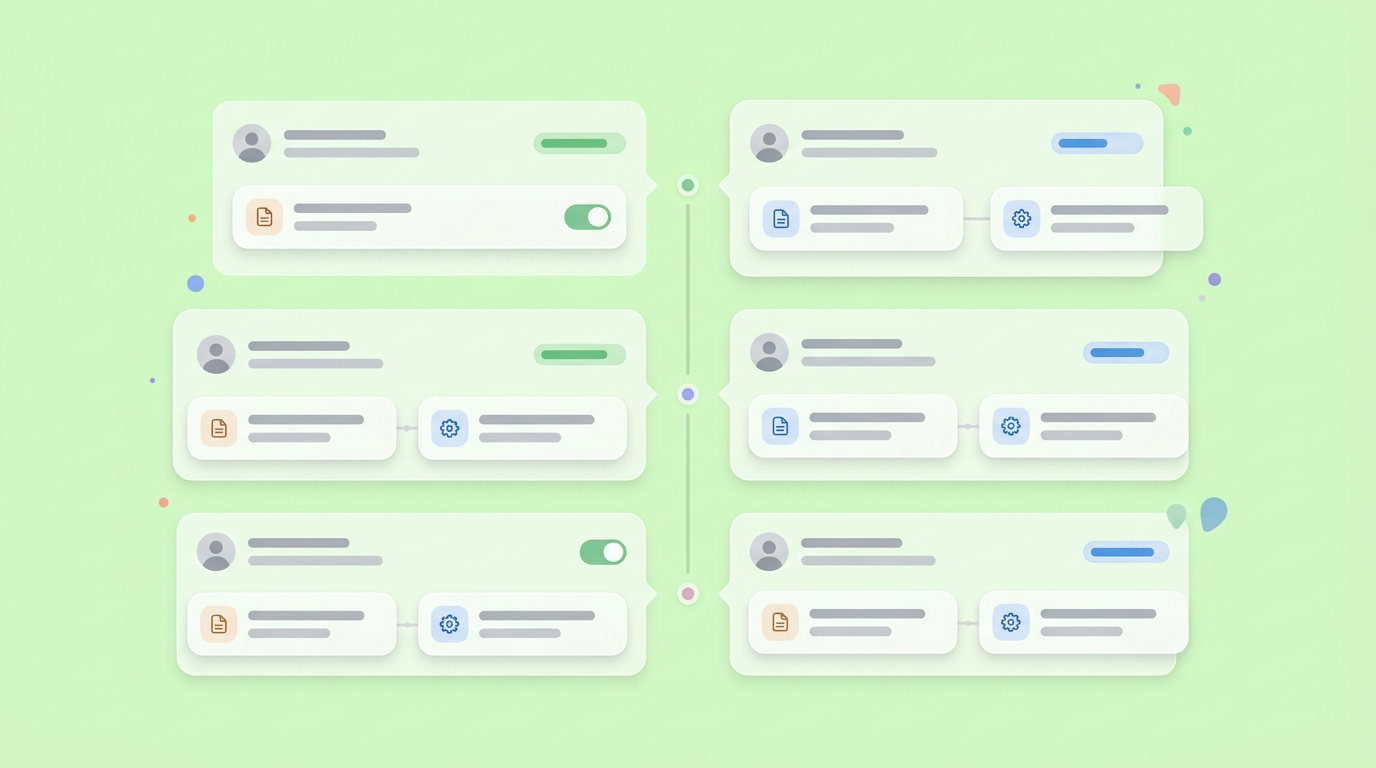
Executable specifications turn passive documentation into testable constraints that govern the prototype's behavior. By formatting PRDs as direct inputs for the prototype engine, product managers ensure that every edge case is visibly accounted for before engineering begins.
A document that only describes the happy path is fundamentally incomplete. When PMs write specifications that act as direct inputs for a prototype, they are forced to account for error states, loading times, and edge cases. According to research from the Nielsen Norman Group, good prototype specifications empower teams to replace with “help teams specify intended behavior more clearly” or similar. Key characteristics include:
- Clear behaviors for all user interactions
- Explicitly defined states (e.g., loading, error, empty)
- Detailed constraints and business rules
These elements drastically reduce ambiguity between the design phase and the development phase.
Defining Clear Ready-for-Dev Triggers
A ready-for-dev trigger establishes a strict threshold that a prototype and its accompanying spec must meet before engineering handoff. This gatekeeping ensures all component states are covered and the core assumptions are validated.
Before a ticket moves into the sprint backlog, the synchronization between the text and the visuals must be verified. This means every button state described in the document must have a visual representation. We consistently notice that teams who implement a shared definition of "ready" spend far less time answering clarifying questions during the sprint. This approach ensures that assumptions are tested and documented swiftly.
Embedding Documentation into the Workflow
Embedded documentation places context directly inside the tools where the team operates daily. Keeping comments, business logic, and constraints attached to the specific UI components reduces cognitive load and maintains alignment as the product scales.
Forcing engineers to hunt for information across disparate platforms guarantees context loss. Discussions on StackOverflow about keeping code and specifications aligned frequently converge on a single solution: putting documentation directly inside the code or using literate programming concepts where the specification and the implementation reside together. Applying this logic to product management means embedding the PRD requirements directly into the components of the prototype.
Sustaining Product Truth Past the First Sprint
Maintaining alignment requires shifting from document-centric handoffs to behavior-centric models. When the specification acts as the operational engine for the visual prototype, teams eliminate the friction of translating text into screens and finally build exactly what was planned.
The transition toward executable specifications and unified canvases means that product managers no longer have to police the boundaries between design and development. You validate the concept, write the constraints, and the system ensures the prototype reflects that reality. This fundamentally shifts the PM role from policing documents to defining executable rules.
When the prototype genuinely mirrors the written rules, engineers can trust the artifacts they are given. They can click through the interface to understand the user experience, while referencing the attached logic to understand the backend constraints. By prioritizing synchronization from the very first draft, you protect the product vision and shorten the path to a successful deployment.
Your team can eliminate manual updates and maintain total alignment across your development workflow by joining Dazl to automate the synchronization.
Get Started