The Silent Disconnect Between Static Specifications and Reality
You hand off a fully detailed, twelve-page specification, feeling confident every edge case is covered, only to watch the engineering output drift completely from the core mechanics you outlined. Relying on written documents to dictate dynamic software behavior often creates a persistent gap in alignment. This can lead to:
- Visual aesthetics looking correct, but interaction logic feeling alien.
- Repeated rework when developed interactions fail basic usability checks.
- Difficulty for stakeholders to assess the strategic viability of proposed solutions.
- Delays in project timelines due to constant clarification.
- Increased development costs from unforeseen changes.
A static requirement document cannot simulate the tactile experience of navigating a product. Writing down how a multi-step form should function requires profound translation effort from designers and engineers. When that translation breaks down, the document loses its authority, rapidly devolving into an archived artifact rather than a living blueprint.
The Disconnect Between Static Specs and Interactive Realities
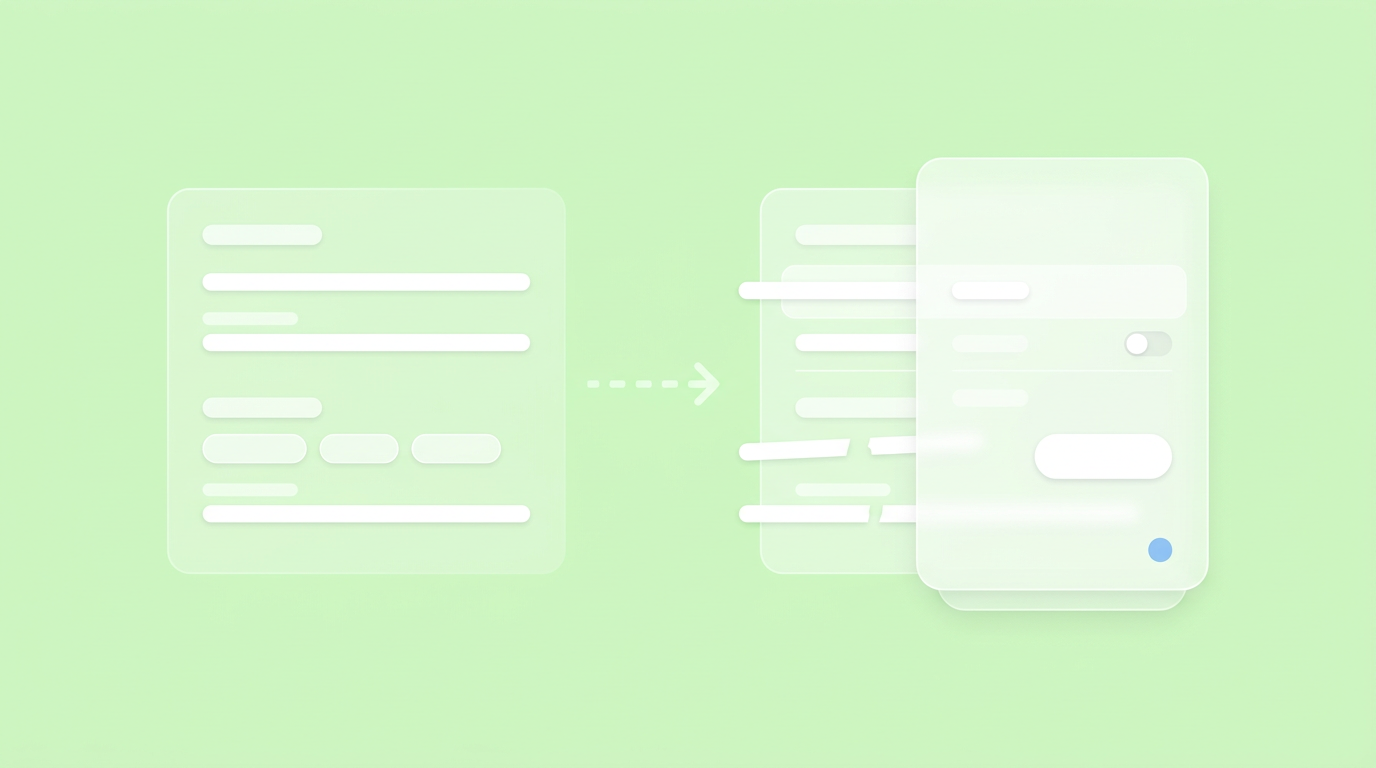
Relying exclusively on text strings to enforce behavioral requirements guarantees varying interpretations across cross-functional groups. Transforming descriptions into working layers requires bridging the gap between flat documentation and functional output.
Identifying the Cost of Interpretation
A plain-text description leaves interaction patterns entirely open to the reader's mental model. This ambiguity directly impacts quality output, driving immediate rework when the developed interaction fails basic usability checks.
The 'quarter of active development time' statistic is an unverified internal claim ('we found') and should be removed or supported by external data. The text limits their ability to visualize the actual product development to prototype pipeline. Rather than validating mechanics prior to investing engineering hours, they build assumptions into the foundational codebase.
Why the Document Goes Stale
Product requirements decay the moment dynamic development starts. Developers move faster than writers, meaning the codebase instantly outpaces the historical text.
As soon as an engineer encounters an edge case and makes an undocumented technical decision, the specification falls out of sync. End the PRD translation trap by recognizing that forcing builders back to a dense, outdated text file interrupts their workflow. When the source of truth lags behind the actual interface, product managers lose visibility into structural compromises happening on the floor.
Teams often try enforcing rigorous update ceremonies to keep the document pristine. This habit treats the symptom rather than the systemic issue. Continual manual updates drain bandwidth and fail to surface how a granular change impacts the overall user journey across different viewports.
Measuring the Resource Drain
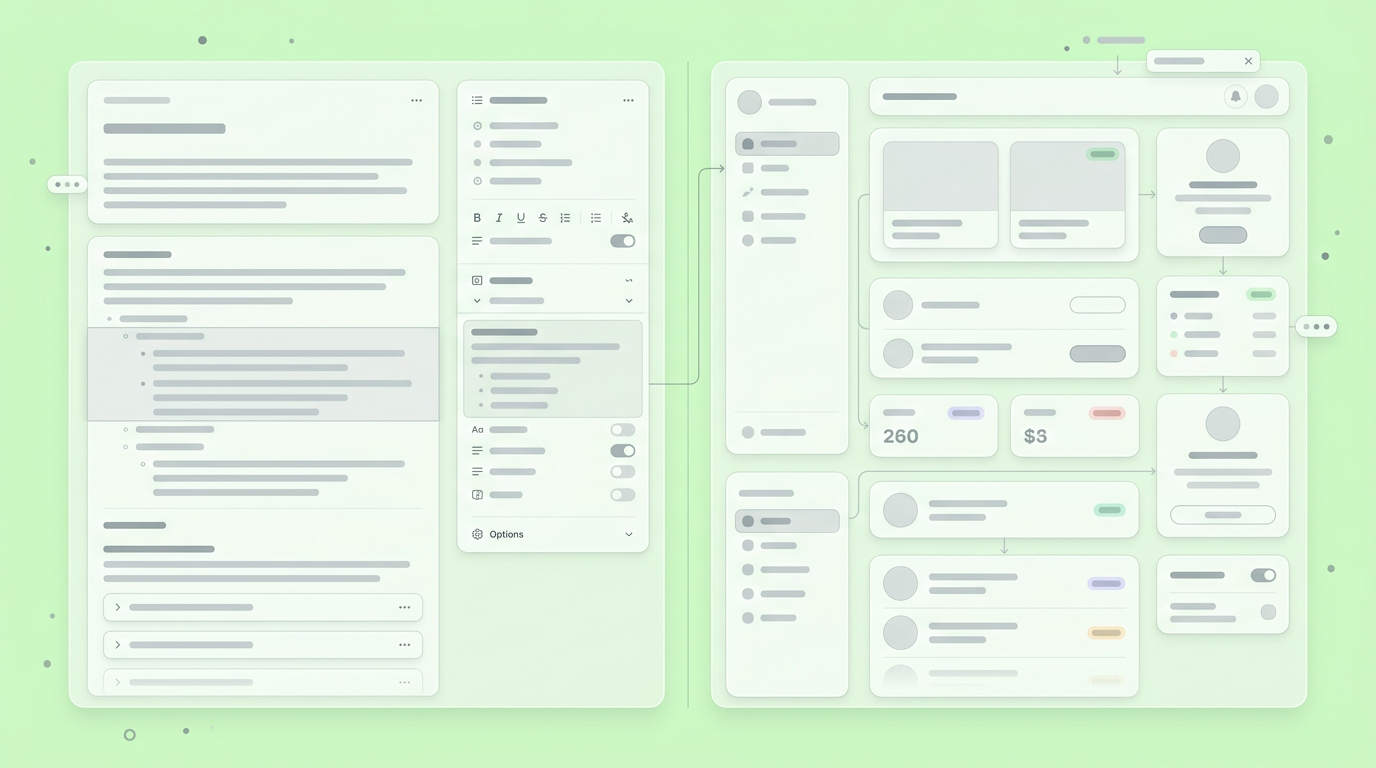
Every cycle spent resolving text-based misinterpretations drains both capital and morale from the entire project team. Identifying the resource drain early provides the strongest justification for upgrading the workflow to something grounded in visual reality.
The global prototyping software market, expected to reach $1.81 billion in 2026 according to a recent GII research report, expands rapidly exactly because static specifications are failing modern delivery speeds. Product design to prototype software serves as the critical intervention point. If a feature takes three sprints to stabilize because of aligned misunderstandings, the initial requirement document failed its primary objective.
Diagnosing the Translation Breakdown
Pinpointing where the breakdown occurs reveals why traditional hand-offs fail despite comprehensive detail. The failure rarely stems from a lack of effort; it stems from a mismatch between the medium and the message.
The Ambiguity of Plain Text
Words describe outcomes sequentially, but user interfaces operate concurrently. Documenting simultaneous state changes across multiple interface elements via paragraphs leads to cognitive overload for the builder.
We often notice that when documentation is disconnected from a visual representation, critical flow dependencies get buried under formatting. Product designers are forced to reconstruct intent from bullet points. The phrase "the menu updates dynamically" holds vastly different interaction meanings to a frontend engineer versus a product manager.
This translation breakdown demands a tighter connection between the written intent and the simulated action. Relying on an early stage product development tool that merges these disciplines helps eliminate assumptions. When a specification behaves interactively, the ambiguity evaporates instantly.
Stakeholders Missing the Flow
Executives and cross-functional partners struggle to evaluate abstract technical documentation effectively. They need to experience the proposed solution to assess its strategic viability.
Handing a dense requirement specification to a sales leader rarely yields constructive feedback on user flow. They skim the text, missing the nuanced conditional logic driving the user experience. By transitioning the conversation to prototype development platforms, stakeholders provide feedback on the actual mechanic rather than the theoretical description.
Gathering alignment requires demonstrating the mechanic. A functional representation grounds the abstract strategy into something tangible, sparking conversations about value rather than formatting disputes.
Rebuilding the Foundation
Establishing a solid groundwork requires changing the atomic unit of the specification. You must transition the standard output from a static document bundle to a verifiable artifact.
When observing high-performing product groups, we realized that their requirement files always prioritize structural clarity over narrative length. The best teams treat their text files as direct inputs for interactive validation rather than final destinations.
Transitioning to an Interactive Baseline
Adopting a workflow where the text intrinsically informs a dynamic interface reduces friction across the entire building phase. Interactive baselines secure alignment before developers commit substantial architectural code.
Adopting a PRD to Prototype Tool Workflow
Integrating advanced generative systems into the product management cycle accelerates the path from raw idea to functional simulation. The shift moves teams away from isolated text into an interconnected visual environment.
According to a State of AI in Design analysis, roughly 85% of relevant practitioners now use AI coding tools or AI app builders. Many product managers utilize resources highlighted in recent workflow guides, such as the Alloy guide that notes product managers use external generators to turn plain-English descriptions into working apps for fast idea validation. Because practitioners are already testing prompt-to-app mechanics, formalizing a prd to prototype tool path prevents shadow-IT workflows.
Deploying Dazl offers a centralized environment for exactly this transition, acting as the PM's teammate from ideation and spec writing through a hand-off ready prototype, keeping the whole team aligned. By maintaining the textual requirements alongside the visual logic, the source of truth remains functionally linked to the visual output.
Defining Logic Before Development
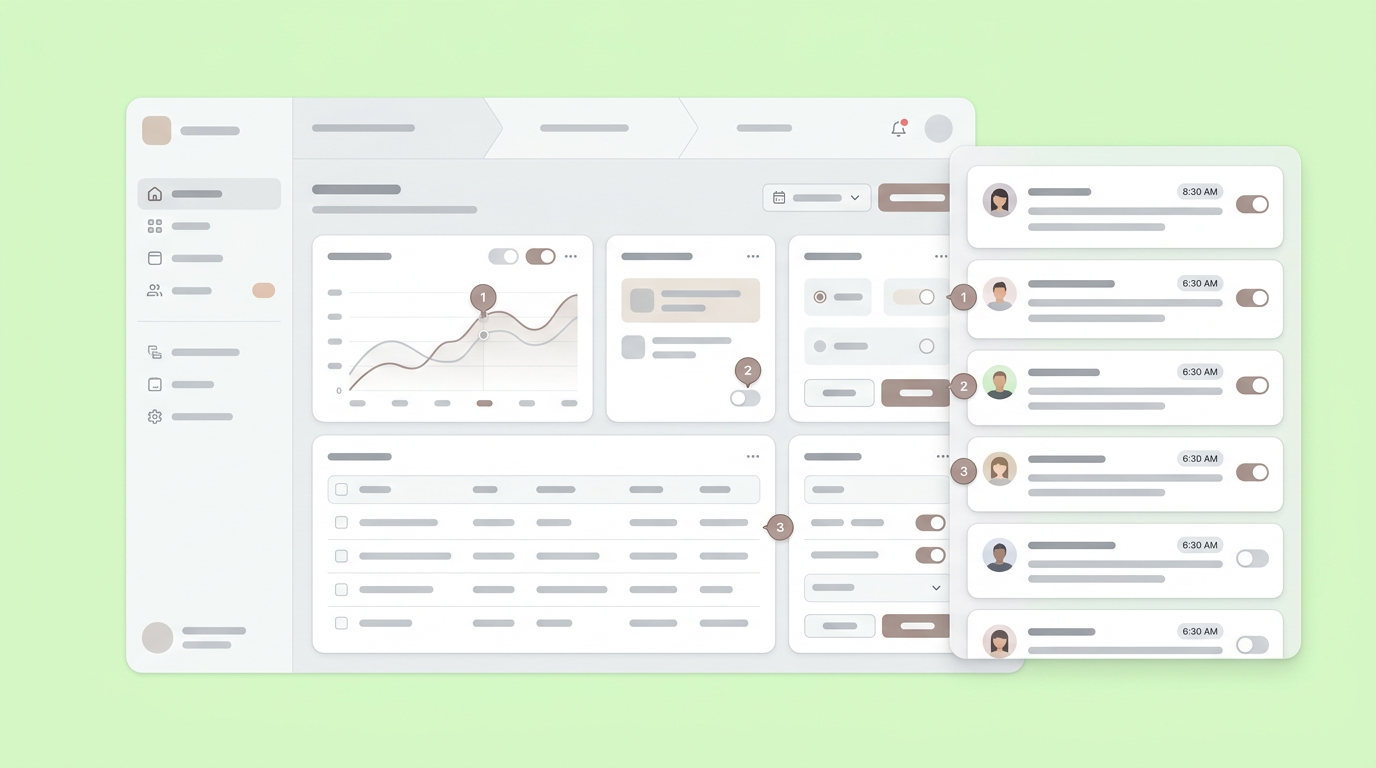
Clarifying state logic through structured data forces the product manager to resolve operational blind spots. Pre-defining interactions using standardized formats ensures the prototype accurately reflects strict requirements.
To eliminate ambiguity, product teams increasingly rely on basic data schemas inside their specifications. Structuring requirements as clear JSON objects ensures rapid prototyping tools for product development interpret state accurately.
{
  "user_state": "unauthenticated",
  "feature_flag": "beta_access_enabled",
  "expected_action": "display_registration_modal",
  "fallback_ui": "standard_login_view"
}
Defining logic rigidly in the specification allows the subsequent simulation to adopt those states without interpretation. The data model serves as the structural bridge between the written word and the functional layout.
Testing Inclusivity Early
Validating accessibility requirements through a working interface proves significantly more effective than listing compliance rules. Early structural testing ensures the product remains usable across diverse interaction patterns.
Waiting for fully compiled code to run screen-reader evaluations creates an extremely expensive feedback loop. Instead, when the requirement document powers the initial simulation, testing inclusion can happen continuously. This proactive approach offers several benefits:
- Identifies accessibility issues early in the development cycle.
- Reduces the overall cost and time spent on remediation.
- Ensures a more inclusive user experience from the start.
- Improves compliance with accessibility standards.
- Enhances user satisfaction for a broader audience.
Bridging Requirements and High-Fidelity Validation
Connecting abstract requirements to high-fidelity outputs requires an unbroken chain of custody. The initial specification must maintain its authority while adapting to the visual constraints of a mature design system.
Achieving Design-to-Code Fidelity
Maintaining consistency from the product manager's intent through the final code compilation requires rigorous system architecture. High fidelity establishes trust between the product organization and the engineering group.
Modern prototyping software platforms achieve impressive technical alignment. A 2025 market insights report notes that heavily integrated platforms now achieve 90%+ design-to-code fidelity. This metric matters because it validates that the requirements initially laid out are accurately surviving the transition into production-grade assets.
When the initial document serves as the seed for these highly accurate components, you prototype in real code without losing stakeholders. The resulting simulation acts as a flawless architectural blueprint rather than a loose stylistic suggestion.
Setting the Standard for Output
Demanding highly interactive representations for complex features recalibrates team expectations. Engineers begin anticipating functional references rather than accepting paragraphs of ambiguous text.
After deploying structural changes to our spec templates, we found that engineers actively requested interactive states for complex workflows. They realized the time saved avoiding rework heavily outweighed the upfront investment in simulation. Defining output as an interactive asset transforms the product manager from a mere scribe into an architectural validation partner.
Establishing this standard fundamentally alters sprint planning. Refinement sessions shift from vocabulary debates to hands-on interaction testing.
Focusing on the Next Iteration
Treating the initial functional output as the baseline allows the team to prioritize continuous iteration. The specification remains relevant because it continues to describe the active reality being manipulated.
Maintaining this momentum requires acknowledging that the first visual output simply represents the beginning of the diagnostic process. Teams iterate on the visual artifact, resolving workflow friction visually, before writing any foundational production code.
Building a Foundation That Survives the Sprint
Establishing requirements through functional artifacts ensures the original intent outlives the initial development cycle. The documentation remains a vital reference point because it shares a heartbeat with the actual product.
Anchoring the Future Workflow
Tying operational requirements tightly to interactive outputs stabilizes the entire delivery pipeline. This approach shifts the focus from managing disjointed paperwork to validating functional value, offering several key advantages:
- Ensures a clear and verifiable artifact that reacts to user input.
- Strips away the friction of interpretation for the development group.
- Establishes a clear pathway toward production with total contextual clarity.
- Boosts team morale by reducing miscommunication.
- Accelerates time-to-market for new features.
Moving past the static specification demands treating documentation as a systemic input rather than a final deliverable. Providing a clear, verifiable artifact that reacts to user input ensures the development group starts their work with total contextual clarity. You strip away the friction of interpretation, establishing a clear pathway toward production.
Sustaining Cross-Functional Velocity
Empowering cross-functional teams with tangible assets accelerates organizational velocity. Stakeholders make faster decisions when they can physically navigate the proposed functionality.
As the team matures into this workflow, the boundary between the requirement and the feature naturally dissolves. The shared focus becomes the behavioral reality of the software, yielding highly accurate, tightly aligned product increments sprint after sprint.
You and your team can bridge this gap by joining Dazl to transform your written requirements into interactive prototypes.
Get Started