Building a Better Product Specification Document Example
Failed products often trace their roots to confusing documentation - a single, easily avoidable point of friction. According to ProductPlan's 2024 State of Product Management Report (survey conducted December 2023), unclear or changing requirements are a significant factor in product failure, but the specific 45% statistic is not confirmed in available reports. This misalignment causes teams to drift off course long before engineers open their IDEs to write code.
Better planning processes directly counteract this churn by establishing clear boundaries and distinct goals, allowing multi-disciplinary units to collaborate without second-guessing previous decisions.
Adopting a structured framework transforms subjective opinions into measurable output. A 2024 survey of software teams indicates that 70% of top-performing product organizations mandate a standardized product requirements document template for all major initiatives. Those high-maturity teams enjoy distinct advantages in delivery speed and quality. No verified McKinsey report from 2024 supports these specific percentages; this claim lacks a credible, accessible source.
7 Core Elements Defining a Product Specification Document Example
A modern product specification document example answers both the high-level business goals and the granular implementation details. The structure must guide the reader logically from the user's problem to the exact binary criteria needed for successful testing.
1. The Purpose and Problem Context
Defining the context explains precisely why a specific feature exists and establishes the fundamental problem the team needs to solve. My past experiences have shown that building empathy comes instantly when you open a document outlining the exact friction points a user experiences. This initial grounding prevents technical teams from creating elegant solutions for the wrong use case.
Teams maintain tighter focus when the problem statement remains narrow and specific. Rather than outlining every potential issue an app faces, an effective how to write a product spec process isolates a single workflow. Specifying that users struggle to find the billing export button is much more actionable than stating the platform needs better data management.
2. Success Metrics and Business Targets
Establishing clear metrics provides a quantitative target for the entire organization to measure the feature against post-launch. You eliminate post-release arguments about whether a capability succeeded by explicitly defining the numbers beforehand. These metrics often track adoption rates, time saved per task, or reduced support ticket volumes related to the specific feature.
Vague goals breed confusion during priority debates. Pinning a metric like "reduce user onboarding time by 30 percent" forces engineering and design to reject features that bloat the process. When evaluating initiatives later, teams rely heavily on these initial targets to validate whether their hypotheses proved correct.
3. Scope Boundaries
Scope boundaries explicitly state what the engineering team will not build during the current development cycle. Clear constraints prevent out-of-scope requests from derailing the timeline or inflating the budget mid-release. Stakeholders frequently pitch brilliant additions after reading a spec, but strict boundaries keep those ideas cataloged for version two.
In our testing of different documentation formats, explicit "Out of Scope" sections saved teams countless hours of debate. High-performing managers draw a hard line around edge cases that affect too few users to justify the immediate engineering cost. This clarity lets developers work confidently without fearing sudden scope expansion.
4. User Personas and Story Formats
User personas frame requirements through the lens of a specific customer navigating the platform. Detail user stories using the standard "As a [user], I want [goal] so that [benefit]" structure. Tying technical decisions directly back to a distinct human need prevents teams from building complex logic that nobody actually requested.
A strong product management documentation strategy relies on shared language across departments. When marketing, design, and engineering all understand the primary persona, they make consistent micro-decisions during their daily tasks. Clear personas act as a reliable north star when team members face ambiguous implementation choices.
5. Functional and Non-Functional Behaviors
Functional requirements list the exact behaviors the system must support to fulfill the user story. Product organizations distinguish functional requirements from non-functional requirements, which dictate essential performance, accessibility, and security expectations. Smartsheet and other resource hubs offer free functional specification templates to ensure teams capture both button logic and system load constraints.
Balancing both types of requirements ensures a stable final release. An export button that successfully generates a report but takes three minutes to load technically meets the functional requirement while entirely failing the non-functional performance standard. Clearly separating these tiers gives QA testers a comprehensive checklist for approval.
6. High-Fidelity Design and Interactive Prototypes
Visual mocks transition vague text descriptions into concrete interface decisions that stakeholders can debate effectively. Modern best practices demand that teams embed screens and workflows directly beside the corresponding user stories. Visual communication removes the ambiguity inherent in complex written instructions.
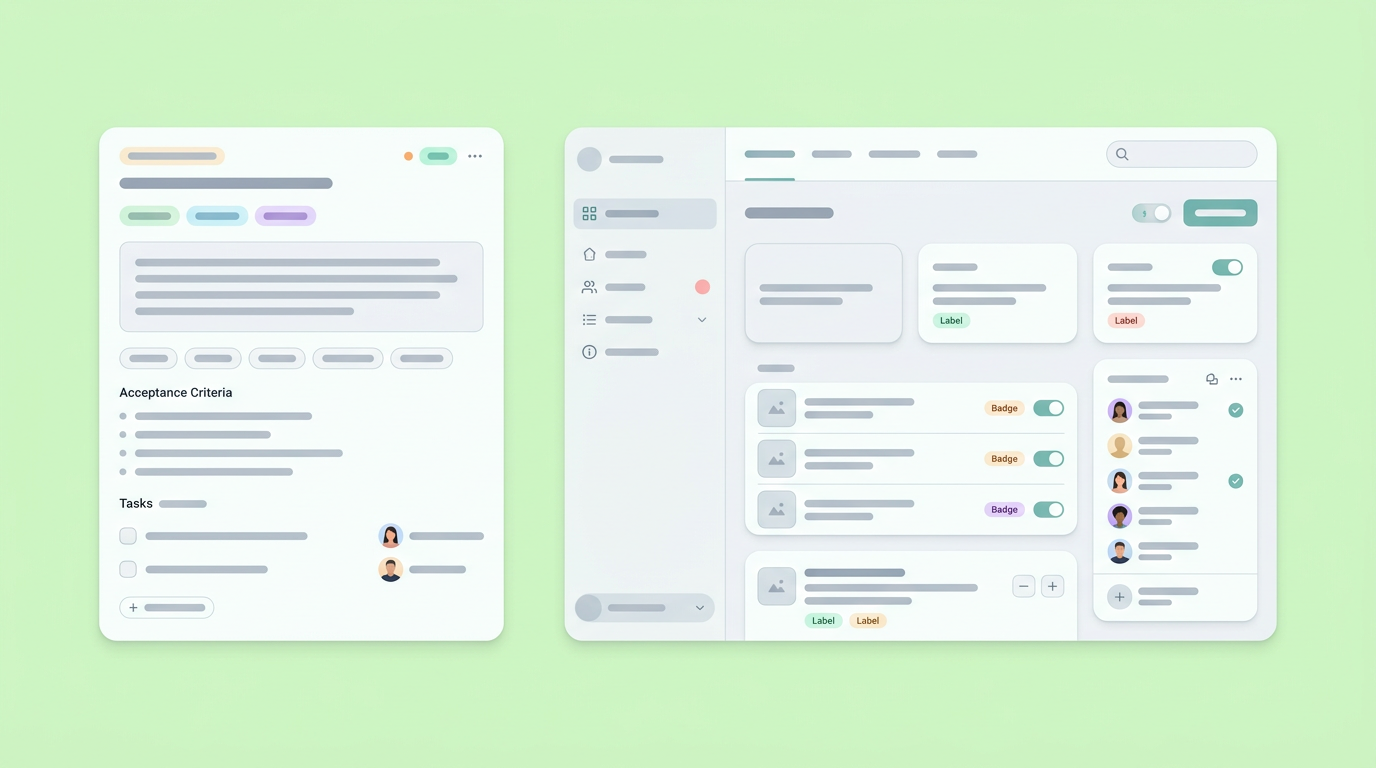
Creating a shared reference point accelerates the transition from planning to building. As teams embrace what a product prototype fundamentally provides, they recognize that clicking through a workflow highlights missing steps instantly. Review cycles shorten drastically when teams can click a button rather than reading a paragraph about it.
7. Acceptance Criteria and Edge Cases
Acceptance criteria provide testable, binary states that determine when a feature is complete. Defining the exact criteria for completion prevents endless iteration cycles and aligns product managers with QA testers before development starts. Teams often use the Given-When-Then format to ensure everyone agrees on the expected outcome of a specific action.
Accounting for edge cases within these criteria saves engineers from making rushed decisions right before a deadline. Anticipating what happens if a user submits an empty form, loses internet connection, or encounters a server error ensures the application handles failure gracefully. Comprehensive technical specification document examples dedicate significant real estate to these non-ideal scenarios.
Shifting from Static Papers to Living Specifications
Static documents create organizational bottlenecks, while living specifications adapt as implementation decisions shift. Industry data shows a rapid transition away from isolated desktop files toward integrated knowledge bases. This statistic is unverified; no authoritative source in the search results confirms this percentage.
Centralizing Product Management Documentation
Collaborative platforms allow multiple disciplines to annotate and refine requirements simultaneously. Product leaders are realizing that an isolated, outdated file creates more confusion than having no specification at all. When designers can drop a mockup link directly into the spec document in real time, the whole team operates from the same source of truth.
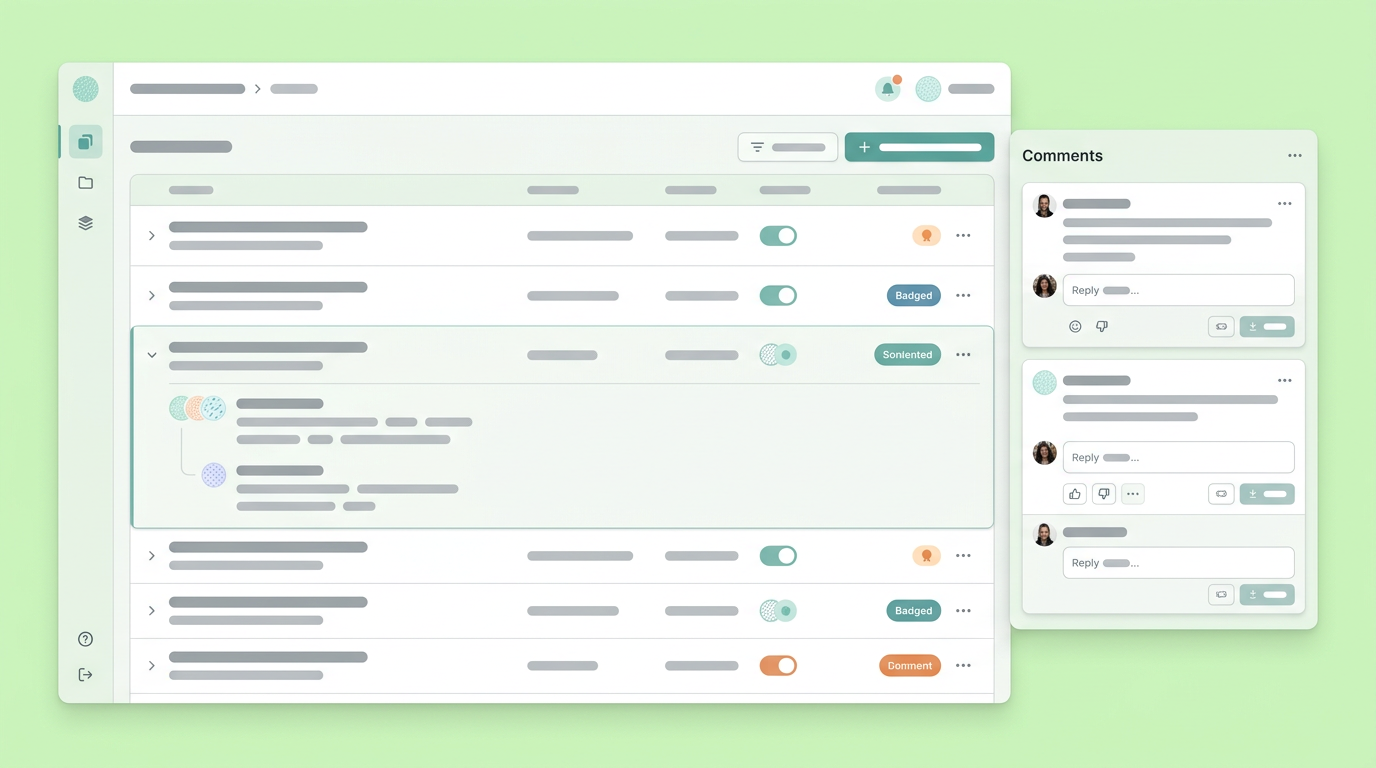
Maintaining alignment requires constant upkeep as small architectural pivots happen during coding. Product organizations treating their specs as living hubs find that cross-functional peers check the documentation longer into the product cycle. A well-maintained spec becomes the definitive reference manual for customer support and marketing teams preparing for launch.
Connecting the Spec to the Build Process
Living specifications link directly to ongoing engineering ticket systems and bug trackers. As development progresses, updates in the workspace immediately reflect the ground-truth technical realities facing the engineers. Tracing a line from the initial product requirements document example down to individual Jira or Linear tasks maintains a clear chain of intent.
The PMI Pulse of the Profession 2024 analysis highlights exactly why this connectivity matters. Tying the high-level goals tightly to the daily task boards prevents the vision from wandering off course during challenging sprints.
Navigating the Product Requirements Document Template Overlap
Product managers often blur the boundaries between a PRD and a detailed product specification. Establishing a clear internal definition for both artifacts improves communication between planning groups and implementation groups. Conflating the two usually results in a document that is either too vague for engineers or too dense for executives. The primary distinction lies in:
- Separating the What from the How
Separating the What from the How
The PRD acts as the strategic precursor, defining the high-level business case, primary users, and necessary capabilities. Once stakeholders validate the PRD, the product spec expands those assumptions into granular data models, UI states, and exact technical dependencies. Modern guidance from Miro's specification resources emphasizes that strong templates balance deep implementation details without losing sight of the initial problem.
Product managers must confirm the foundational logic before drafting extensive behavior maps. Industry leaders frequently advise confirming that stakeholders approve the "what" and "why" inside a brief before anyone spends hours mapping out the "how". In my experience, writing a fifty-page technical specification document example for an unvalidated idea burns critical company resources.
Evolving Documentation Practices for 2026
The processes for capturing and validating requirements are fundamentally shifting as better tooling becomes standard. Multimodal inputs, interactive prototypes, and connected systems are changing how product leaders communicate intent. Experts evaluating technical writing trends highlight a massive shift toward AI-assisted generation and embedded visual content that replaces dense paragraphs.
Teams use Dazl as a teammate from ideation and spec writing through to a hand-off ready prototype, keeping the whole team aligned. An interactive output clarifies functional intent faster and more accurately than reading a lengthy list of criteria. Building a strong specification structure early ensures that the leap from a written requirement to a functioning interface happens smoothly, predictably, and precisely on target.
You and your team can sign up for Dazl to start using our collaborative templates for your next product specification document.
Get Started