Conversational AI Prototyping: Aligning Teams and Logic
A product manager sits in a review meeting attempting to explain a generative chat interface using twenty static artboards. The stakeholders nod, but everyone in the room interprets the complex user experience differently. It is hard to validate how software feels when the user logic branches infinitely based on natural language inputs. Developing conversational AI prototypes solves this exact communication gap. Static mockups force teams to guess how a language model will handle unexpected context, creating immense friction when the engineering team actually builds the backend logic.
The Core Problem With Conversational AI Flow
Static design tools struggle to represent fluid generative pathways, leading to delayed feedback loops and misalignment between what product managers expect and what engineering ships.
Right now, product teams face immense pressure to deliver intelligent chat features quickly. According to a 2026 enterprise technology report, 79% of cross-functional product leaders are currently integrating AI for prototyping, or plan to within the next two years. However, management teams frequently attempt to map out these complex unstructured systems using standard diagramming software. Every edge case, hallucination, and API failure requires its own distinct pathway. When users start building conversational AI models, the visual map quickly becomes impossible to maintain.
The Disconnect Between Static Specs and Dynamic Behaviors
Building conversational models often requires defining logic in addition to screens, because visual tools alone may not capture the variability of large language model behavior.
We found in our testing that attempting to script every natural language input leads to brittle requirements documentation. When product managers hand over static flowcharts that assume absolute predictability, engineers struggle to write system instructions that match those exact rigid assumptions. The resulting handoff creates a fragmented workflow where the deployed application acts entirely differently from the approved design files.
Stakeholder Misalignment on AI Capabilities
Stakeholders often overestimate or underestimate conversational capabilities when reviewing flat documents, making interactive behavioral validation essential for early buy-in.
, 59 percent of consumers believe these tools fundamentally change interaction methods according to industry trend data. To justify these massive investments, stakeholders must clearly understand the exact user interaction. Explaining latency, reasoning limits, and tone via a slide deck rarely works in practice.
How to Make an AI Prototype That Communicates Context
Creating effective prototypes often requires shifting focus from pixel-perfect visual interfaces toward intent-driven logic, state management, and clear system prompts aligned to user goals.
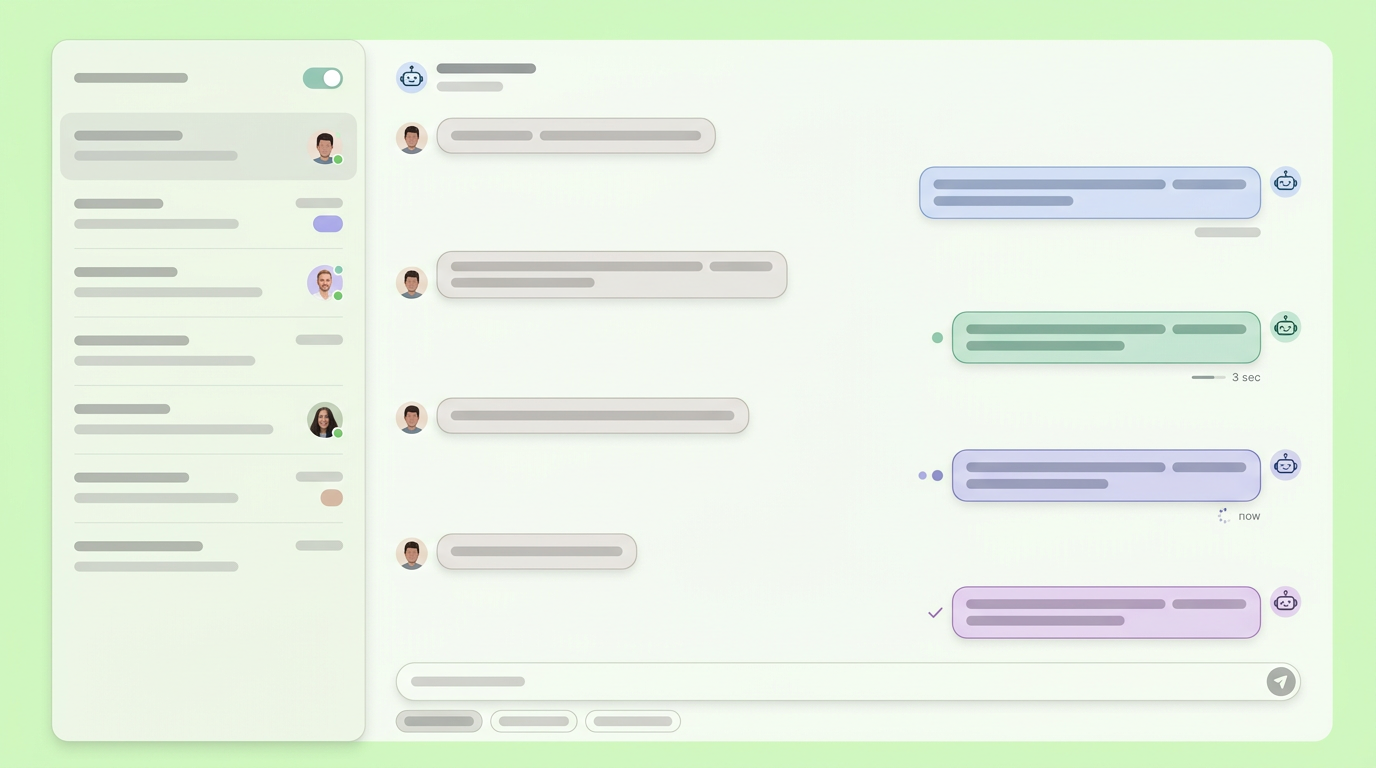
To fix the communication gap, product managers must establish environments where the team can interact directly with the proposed conversational logic. Using dynamic workspaces like Dazl helps product teams move from initial ideation and spec writing straight into a hand-off ready prototype, keeping the whole team aligned on actual model behavior. A functional framework allows everyone to try breaking the chat interface with edge cases before a single production database is spun up.
Defining Intent-Driven Workflows
Intent-driven conversational design identifies the user primary goal first, mapping the quickest route to an action instead of forcing linear dialogue trees.
Enterprises in 2026 are shifting heavily away from basic question-and-answer bots toward intent-driven workflows and governed execution. Effectively tackling AI conversational interface design requires defining what the user wants to accomplish at an infrastructure level.
{
  "intent": "escalate_account_issue",
  "required_slots": ["account_id", "issue_category"],
  "fallback_action": "route_to_human_agent"
}
Mapping the variables needed to complete a task lets the language model handle the conversational phrasing organically.
Designing for Conversational AI Decision Support
Decision support interfaces require models that prompt users with clarifying questions based on historical context, requiring dynamic prototyping tools that maintain conversation history.
Basic chat interfaces may not retain prior context unless designed with memory or state management. Real enterprise value comes from agents that hold state and reference previous interactions to guide user decisions. Product managers must prototype how the system retrieves that context securely. See our guide on testing product concepts fast in 2026 for practical ways to validate these state management connections early in the discovery phase.
Creating AI Dialogue Systems That Scale
Creating AI dialogue systems means establishing a modular architecture where system prompts, external functions, and user context flow together to retrieve exact knowledge.
We consistently see that teams succeed when they prototype with actual sample data. By connecting a simple front-end interface directly to an LLM endpoint, product teams observe exactly how the agent handles complex queries. Prototyping these architectural connections early prevents engineers from having to rewrite the entire data retrieval process right before launch.
Navigating the 4 Types of Prototypes for Voice and Text
Product teams typically evaluate conversational ideas using four types of prototypes for voice and text:
- Paper flowcharts: These map out basic user intents and fallback logic, often on whiteboards.
- Wizard of Oz mockups: A human simulates AI responses behind the scenes to test user interaction.
- Interactive click-throughs: Static screens are linked to provide basic navigation validation without generative text.
- API-driven simulations: A frontend connects directly to a live LLM endpoint for realistic generative output testing.
Not every new feature logic requires writing custom code. The specific fidelity you need depends on which assumptions require external validation. Teams choose their prototyping method based on the core risk of the feature being built.
Paper and Flowchart Prototyping
Paper and flowchart models map out basic user intents and fallback logic on whiteboards, providing the fastest way to align on conversational architecture before writing code.
Before touching a digital tool, listing out core intents on a whiteboard saves massive amounts of conceptual time. Teams report that establishing this foundational map prevents architecture bottlenecks. You start with a few sticky notes for a basic request flow, and use that physical space to map out where user intentions commonly diverge from the happy path.
Wizard of Oz Prototyping Techniques
The Wizard of Oz method involves a human manually typing responses behind the scenes to simulate AI behavior, helping product teams test mental models with real users early.
Sometimes the best way to validate AI chatbot prototype development involves stripping out the technical layer entirely. A team member acts as the intelligence logic while a user interacts with a basic chat interface. This process reveals exactly what jargon users naturally type when trying to complete a specific task.
Interactive Click-Through Models
Click-through conversation prototypes use design tools to link static text screens together, allowing basic validation of happy-path navigation without generative text responses.
Designers often use standard layout platforms to link basic conversational paths together. While legacy platforms like Dialogflow or Amazon Lex exist to structure rigid backend routing flows, a simple click-through model handles basic visual placement validation perfectly. If the stakeholder just needs to see how the chat widget animates on the screen, an interactive screen link works well.
High-Fidelity API-Driven Prototypes
API-driven prototypes connect a frontend interface directly to an LLM endpoint with custom system instructions, offering the most realistic test of generative capabilities.
When the core risk lies in generative output variation, API-driven prototypes can provide more realistic feedback. Here, product managers feed specific system instructions into a live language model and observe the behavioral outputs in a sandbox environment. This approach is a core part of building better products with AI.
Results Driven by Proper AI Chatbot Prototype Development
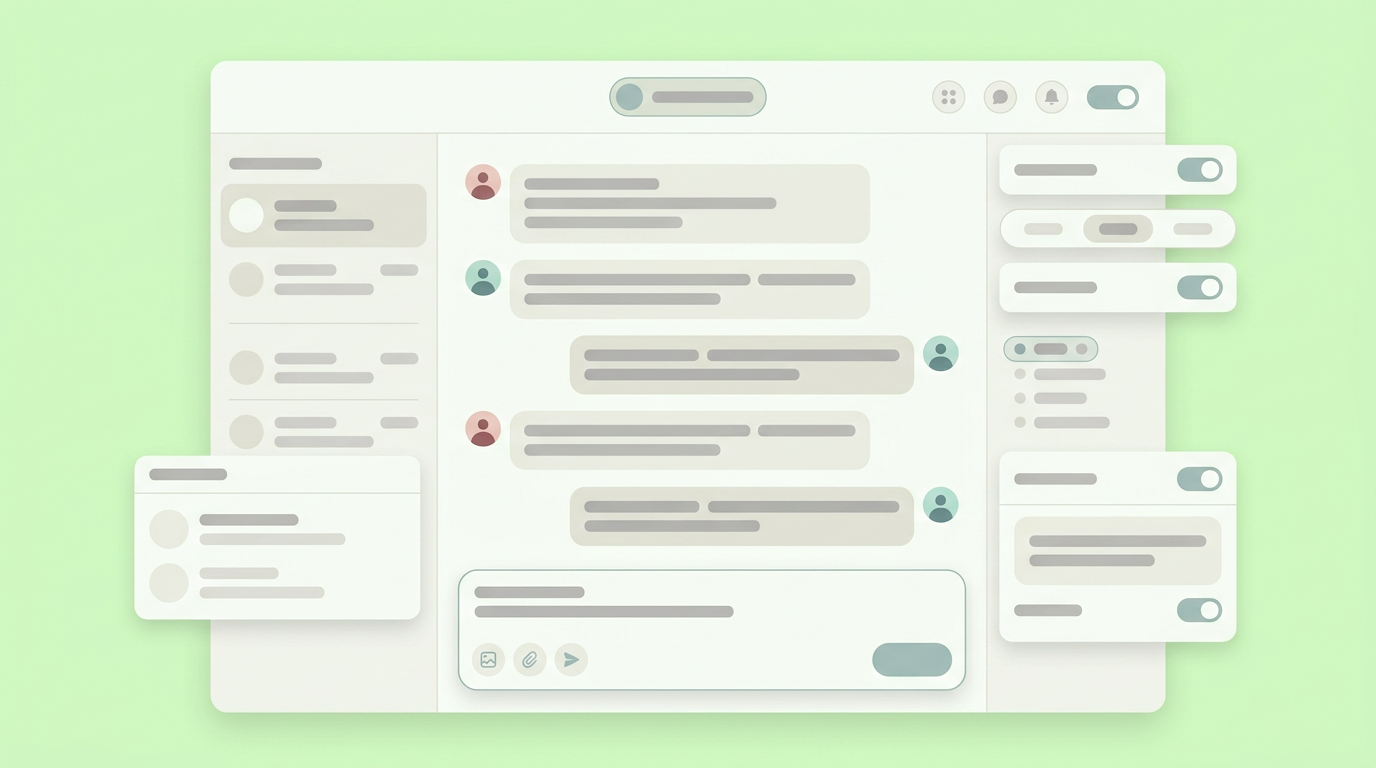
High-fidelity conversational prototyping can reduce engineering rework and help validate complex logic and user intents earlier in the process.
Teams that validate contextual logic before writing production code experience dramatically fewer launch delays. By creating highly realistic interaction models, you stop guessing how the language model will perform and start observing how humans actually converse with the agent.
Applying the 10 20 70 Rule for AI Resource Allocation
The widely cited 10-20-70 rule for AI recommends roughly 10% of effort to algorithms, 20% to technology and data infrastructure, and 70% to people and process change.
In true product management, the actual underlying natural language engine usually matters less than how the organization implements it into the user journey. Focusing 70 percent of your effort on aligning stakeholders around a functional prototype ensures the application solves a real customer pain point. Ignoring user alignment usually results in highly advanced technical systems that nobody actually uses.
Prototyping Voice Assistant Applications for Rapid ROI
Prototyping voice assistant applications reveals friction points in spoken interactions immediately, helping companies achieve faster returns by fixing conversational dead-ends early.
Consumers expect immediate tangible value from spoken natural language interfaces. To capture what the industry calls the prototype economy, companies rely on fast, aggressive iterations. In our experience, testing these spoken conversational pathways interactively forces designers to keep audio prompts incredibly concise and clear. Voice pathways require relentless validation because users cannot simply scroll up to read previous context.
Moving Beyond the Static Interface
The software market is rapidly shifting from conversational interfaces that just answer generic questions to specialized agents that take autonomous action. As software intelligence becomes integrated into physical workflows, product teams must adapt how they communicate intended functionality to engineering. You can no longer rely on drawing rectangles and arrows to show what an application does. When the underlying logic drives the entire user experience, the prototype must execute that specific logic. Building interactive, shareable artifacts ensures the entire organization understands the precise user intent long before it reaches a production codebase.
You and your team can now streamline this technical workflow by signing up for Dazl to build and test your prototypes.
Get Started