Ending Context Loss: Moving from Product Ideation to Clickable Prototypes
Product managers often watch their best concepts die in translation. You finish a massive round of user research, compile pages of notes, and start drafting a specification. By the time those notes turn into a static wireframe, the original intent is missing. The nuance of the customer problem gets flattened into a generic user interface mockup. Teams spend weeks trying to align on what exactly they are building, while the momentum from the initial discovery phase completely stalls. This often leads to frustration and delays, impacting the entire product development lifecycle.
Fixing this disconnect requires a structured approach to discovery. Modern product ideation software helps connect the dots from raw research to a functional prototype. When you use a proper product manager ideation tool, you stop handing off abstract documents and start showing your team exactly how the solution should work.
What Is Ideation in Product Management Today?
Ideation in product management is the structured process of generating, validating, and prioritizing solutions to specific user problems. It moves a team from abstract concepts to a validated approach that is ready for development.
The traditional discovery phase relies heavily on scattered whiteboards and text documents. From my own experience, this method, while good for initial brainstorming, struggles significantly to communicate interactive behavior. When a concept cannot be tested or clicked, stakeholders invariably fill in the gaps with their own assumptions, often leading to misunderstandings.
This creates alignment issues down the road when engineering delivers something that does not match the product manager's vision.
A dedicated product manager ideation tool bridges the gap between text-based research and visual planning. Teams are heavily investing in these platforms because structured ideation reduces the risk of building the wrong feature.
When product teams treat ideation as a formalized stage rather than a messy whiteboard session, the results improve. We found that creating a shared space for early-stage concepts allows engineering and design to provide technical input before any code is written. This early alignment prevents costly rework and ensures the final implementation accurately reflects the initial customer feedback.
The Tool Sprawl Problem in Discovery
Tool sprawl actively harms product discovery. When research lives in a document, feedback sits in a spreadsheet, and wireframes exist in a design app, context gets lost between tabs.
The median product management team used 4.2 tools for their core work in 2026, down from 5.8 tools in 2024, according to a comprehensive industry survey. The drive to consolidate toolchains is clear. Product teams are tired of paying for overlapping subscriptions and managing fragmented workflows. Buyers increasingly prefer integrated platforms over standalone point solutions.
When your brainstorming tools for product teams are scattered, the actual process suffers. You spend more time organizing links than refining the product idea. Consolidating your discovery process into a single environment ensures that everyone looks at the same source of truth. If you want to learn more about keeping your documentation connected to your visuals, read our guide on stopping context loss.
Core Workflows Suffer Without Ideation Systems
Execution workflows dominate the product manager toolkit, leaving structured ideation behind. Teams excel at tracking tickets but struggle to formalize how new ideas are generated and validated.
This means teams are highly optimized for building features but under-equipped for deciding what to build in the first place.
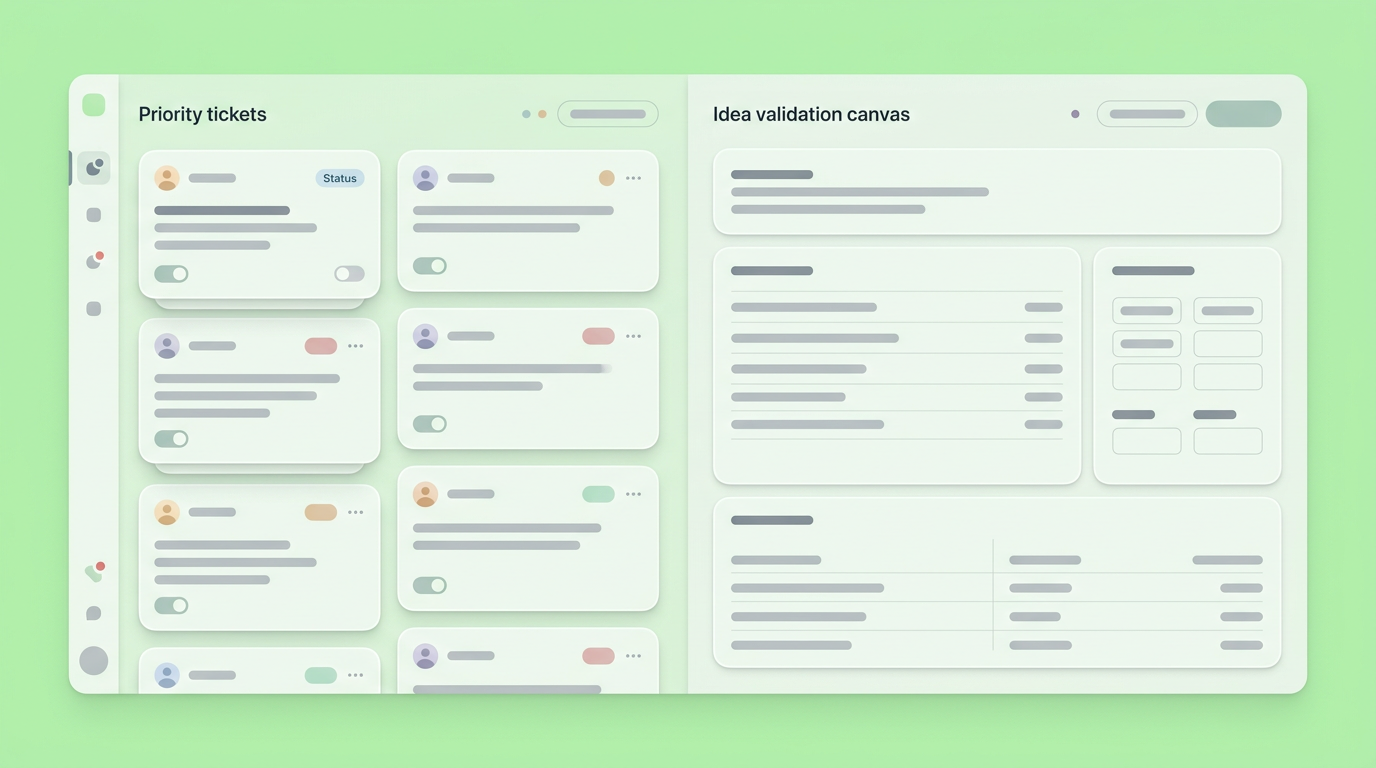
This imbalance often results in feature factories. When the ticket tracker is the most used application in your stack, the default behavior is to push ideas straight into the backlog. A structured idea management platform forces you to slow down, validate the concept, and build a cohesive prototype before asking engineering to estimate the work.
The 80/20 Rule in Product Discovery
The 80/20 rule in product management dictates that 80 percent of your outcomes will come from 20 percent of your features. Identifying that high-impact 20 percent requires rigorous discovery and prototyping.
Most product ideas will fail to move the needle. Without a reliable way to test concepts early, teams waste engineering cycles building the wrong 80 percent. The goal of product discovery is to kill bad ideas quickly and cheaply. By prototyping early, you can validate assumptions with real users and internal stakeholders before committing resources.
Applying the 80/20 rule means prioritizing velocity in your ideation phase. You need a process that allows you to mock up a workflow, get feedback, and iterate in days rather than weeks. This rapid iteration cycle is the only reliable way to separate the transformative ideas from the distractions.
Fixing the Discovery Workflow with AI and Prototypes
Integrating artificial intelligence into product discovery accelerates the transition from research to interactive models. AI tools help process qualitative data and generate structured requirements that feed directly into prototypes.
This investment reflects a significant shift toward faster, more intelligent workflows that remove the manual labor from documentation and ideation.
We found that using AI during the discovery phase completely changes how teams approach new product development ideation. Instead of starting with a blank page, you start with synthesized insights and generated frameworks. This allows the product manager to focus on strategy and user experience rather than formatting documents and summarizing transcripts. By relying on AI to handle the heavy lifting, teams can move into the prototyping phase much faster.
Using LLMs for Product and Market Research
Large language models process vast amounts of unstructured feedback into clear product themes. Product managers use these tools to synthesize customer interviews, identify market gaps, and draft initial specifications.
When you finish thirty customer interviews, extracting actionable insights takes days of manual tagging. An LLM can instantly identify recurring pain points and group them into logical categories. You can prompt the model to analyze support tickets against feature requests, highlighting the exact areas where users struggle most. This turns qualitative research into a structured foundation for your next product iteration.
Beyond synthesis, LLMs excel at scenario generation. You can ask the model to outline edge cases for a proposed feature or generate user stories based on the synthesized themes. This ensures your initial product requirements cover the full scope of the problem. It is a critical step in preparing your concepts for actual prototyping.
Machine Learning for Product Managers
Machine learning for product managers involves framing data-driven problems, validating predictive models, and managing the ethical implications of automated decisions. It requires specific tools to collaborate on model governance and impact assessment.
Product managers working on machine learning features face unique discovery challenges. You are designing a user interface; you are designing an algorithm's behavior. You need tools that allow you to define success metrics, outline data requirements, and map out how the model will handle edge cases or biased inputs.
Structuring this logic before data scientists begin their work is crucial.
Effective machine learning product management requires robust collaboration features. The product manager must bridge the gap between business objectives and technical constraints. Using an ideation platform that supports detailed problem framing helps align the team on exactly what the model should predict and how those predictions will be surfaced to the user.
Turning Concepts into Clickable Realities
Moving from a synthesized specification to a clickable prototype is the most critical step in discovery. Interactive prototypes reveal usability flaws that static documents completely hide.
When you present a static wireframe, stakeholders nod and agree. When you hand them a clickable prototype, they immediately find the edge cases. They click the wrong button, get confused by the navigation, and ask questions about state changes. This is the exact feedback you need during discovery. Creating interactive artifacts forces the team to confront the actual user experience.
If you want to understand how shifting away from static designs improves team alignment, you can read our perspective on making product discovery clickable. Prototyping should not be reserved for the final stages of design. It belongs at the very center of the product manager's ideation workflow.
Keeping Momentum Alive Between Research and Hand-off
Maintaining discovery momentum requires a continuous feedback loop where research directly informs an evolving prototype. When teams stop to rewrite specifications or switch tools, the project stalls and context decays.
The gap between finalizing research and presenting the first visual concept is where most product ideas lose their edge. Stakeholders forget the core user pain points, and the initial excitement fades. To prevent this, product managers must shorten the time to value. You must translate findings into a tangible artifact fast enough to keep the conversation going.
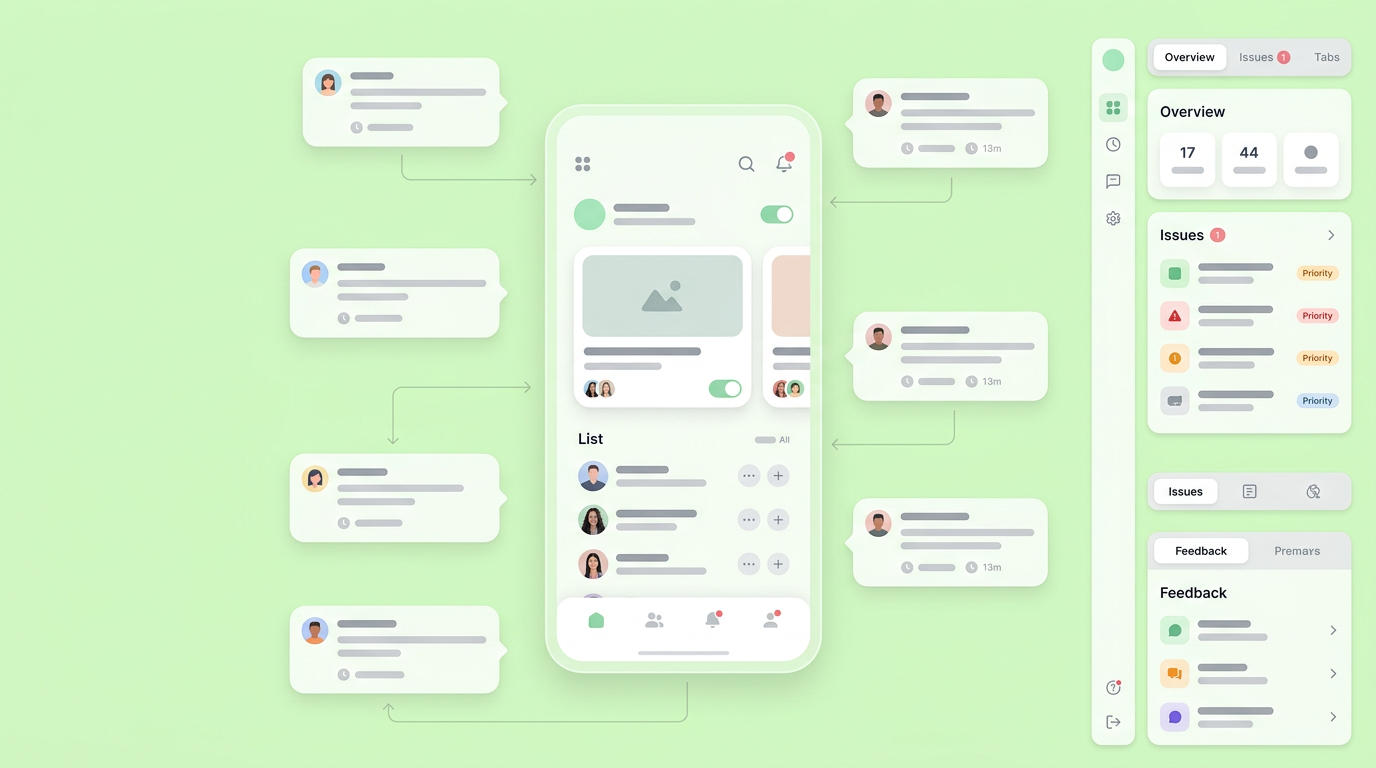
Momentum dies when teams treat discovery as a linear, gated process. If you require approval on a text document before moving to a wireframe, you introduce artificial delays. A better approach blends these steps. You refine the requirements alongside the prototype, using the visual model to validate the written rules. This parallel workflow keeps everyone engaged and focused on the end goal.
Collaboration Tools for Product Ideas
Effective collaboration tools allow cross-functional teams to comment, debate, and adjust product concepts in real time. They centralize the conversation around the actual artifact being built.
When engineering, design, and product management review an idea in silos, misalignment is guaranteed. The best ideation software brings these disciplines into a single workspace. Engineers can flag technical constraints directly on the prototype, while designers can suggest layout improvements. This shared context eliminates the endless back-and-forth typical of email or isolated ticketing systems.
You can learn more about streamlining these workflows by visiting Dazl to see how centralized prototyping changes team dynamics. Creating a shared environment ensures that every piece of feedback is contextualized within the actual product experience.
Iterating Based on Technical Feasibility
Evaluating technical feasibility during the ideation phase prevents product managers from designing impossible features. Early engineering input shapes the prototype into a buildable solution.
It is easy to design a perfect user experience that requires six months of backend refactoring. By bringing engineering into the discovery process early, you can identify these technical traps before committing to them. The team can review the prototype and suggest alternative approaches that deliver 90 percent of the value at a fraction of the cost.
This technical negotiation is a core part of effective ideation. The goal is to design a great product, but to design a product that can actually be shipped. Continuous dialogue between product and engineering ensures the prototype remains grounded in reality.
Preparing for a Seamless Hand-off
A successful hand-off occurs when the engineering team understands both what to build and why it matters. The prototype and the specification must tell a single, unified story.
When discovery is done correctly, the hand-off meeting becomes a formality. The engineers have already seen the prototype, provided their input, and understand the customer context. The product manager simply provides the finalized interactive model and the supporting requirements. This level of preparation drastically reduces development friction.
Effective hand-offs involve several key components:
- Shared Understanding: Engineers comprehending the 'why' behind features, not just the 'what.'
- Interactive Models: Providing clickable prototypes that allow for hands-on exploration and feedback.
- Comprehensive Documentation: Ensuring all requirements, user stories, and technical specifications are easily accessible and linked to the prototype.
- Early Engineering Involvement: Integrating engineering feedback throughout the discovery phase to catch potential issues proactively.
- Clear Success Metrics: Defining how the feature's success will be measured post-launch.
The quality of your hand-off is a direct reflection of your ideation process. If the team is confused during the kick-off, it's a clear signal that the discovery phase failed to build consensus. From what I've observed, using a comprehensive platform ensures that the final deliverables are clear, actionable, and ready for production, minimizing last-minute questions and rework.
Shaping the Future of Product Discovery
The tools and methods we use to define products are shifting toward rapid visual validation and deeper cross-functional alignment. The next era of product management will demand faster cycles and more interactive communication. For instance, the growing emphasis on interactive prototypes over static documents highlights this trend, as they provide immediate, actionable feedback.
Product managers are increasingly expected to own the ambiguity of early-stage discovery. According to recent insights on the state of product management, teams that rely heavily on static documentation will struggle to keep pace. The expectation is shifting toward presenting functional, testable models that leave no room for interpretation. You will need to get comfortable building these models yourself, rather than waiting for design resources.
As artificial intelligence continues to lower the barrier to prototyping, the definition of a product manager ideation tool will expand. It will no longer just be a place to store notes or draw boxes. It will be an active environment where ideas are instantly translated into testable experiences. Product managers who embrace this shift will shorten their time to market and deliver solutions that consistently hit the mark.
You can maintain momentum by signing up for Dazl to bridge the gap between your team's initial brainstorming and functional prototypes.
Get Started