
Evaluating Generative AI Business Use Cases in 2026
Walking into a cross-functional product sync late in the quarter often reveals exactly how software development has adapted. Engineering managers are no longer writing boilerplate email parsers from scratch, and design leads are leaning on automated agents to generate component variations during the initial wireframing phase. The enterprise conversation has shifted from questioning what language models can produce to actively implementing generative AI business use cases that shorten the distance between an idea and a shipped feature. Evaluating these operational shifts requires looking past the generic chat interfaces that dominated earlier adoption cycles. Teams need focused workflows built directly into their daily environments to see actual yield on their software investments.
The Transition from Novelty to Everyday Workflow
Generative AI use cases in business span content creation, workflow logic execution, collaborative coding, and product prototyping. Companies are leveraging these localized models to reduce manual drafting processes and keep cross-functional teams completely aligned on complex, high-velocity technical deployments.
Organizations are building specific operational channels that process daily tasks rather than relying on one-off queries. Product managers and engineers evaluate these tools based on how effectively they reduce friction in existing technical routines.
Specialized Workflows Over General Queries
Marketing and revenue organizations treat generative AI as an infrastructure component rather than a side utility. Enterprise applications are embedded straight into CRM databases and support ticketing environments. Support teams use these localized models to draft contextual responses directly within existing helpdesk software like Zendesk or Intercom.
Instead of routing users through rigid, predefined decision trees, modern systems analyze previous ticket resolutions and suggest highly accurate draft responses to human agents.
- Contextual routing: Systems assign and categorize support requests based on the inferred urgency and sentiment of the user prompt.
- Knowledge base summarization: Models digest lengthy technical documentation strictly to extract the specific troubleshooting steps a user needs.
- Draft generation: Agents review AI-generated responses tailored to the specific context of the customer's historical account data.
Engineering and Collaborative Code Generation
Applications of generative AI in business extend deep into the engineering stack, fundamentally altering how technical resources allocate their hours. Developer environments integrate these tools as autocomplete utilities, but as structural collaborators. According to widespread industry tracking, technical teams using systems like GitHub Copilot complete tasks 55% faster. A recent Gartner report echoes this, projecting that by 2028, systematic adoption of AI code assistants will result in at least 36% compounded developer productivity gains.
Engineers rely on these systems to scaffold new repositories, write unit tests for edge cases, and generate documentation for complex API endpoints. The utility hinges entirely on the contextual awareness of the model. When a codebase is fully indexed, the AI provides syntax suggestions that align strictly with internal coding standards and variable naming conventions.
Generative AI for Growth and Operational Alignment
Operations and human resources function as critical testing grounds for business solutions powered by generative AI. Team leaders need reliable methodologies to manage scaling headcounts and administrative overhead without losing vital institutional knowledge during rapid expansion phases.
These departments handle massive document volumes, requiring systems capable of sorting unstructured data. By applying targeted models to administrative pipelines, companies maintain compliance standards while processing sensitive information significantly faster.
Handling HR and Talent Acquisition
The administrative burden in human resources frequently bottlenecks proactive team expansion. Talent acquisition requires immense documentation, ranging from specialized job descriptions to multi-week onboarding curriculums. According to an Itransition analysis, content creation for talent acquisition, recruiting, and onboarding acts as the generative AI use case with the greatest value potential in HR, verified impact metric not found in available research.
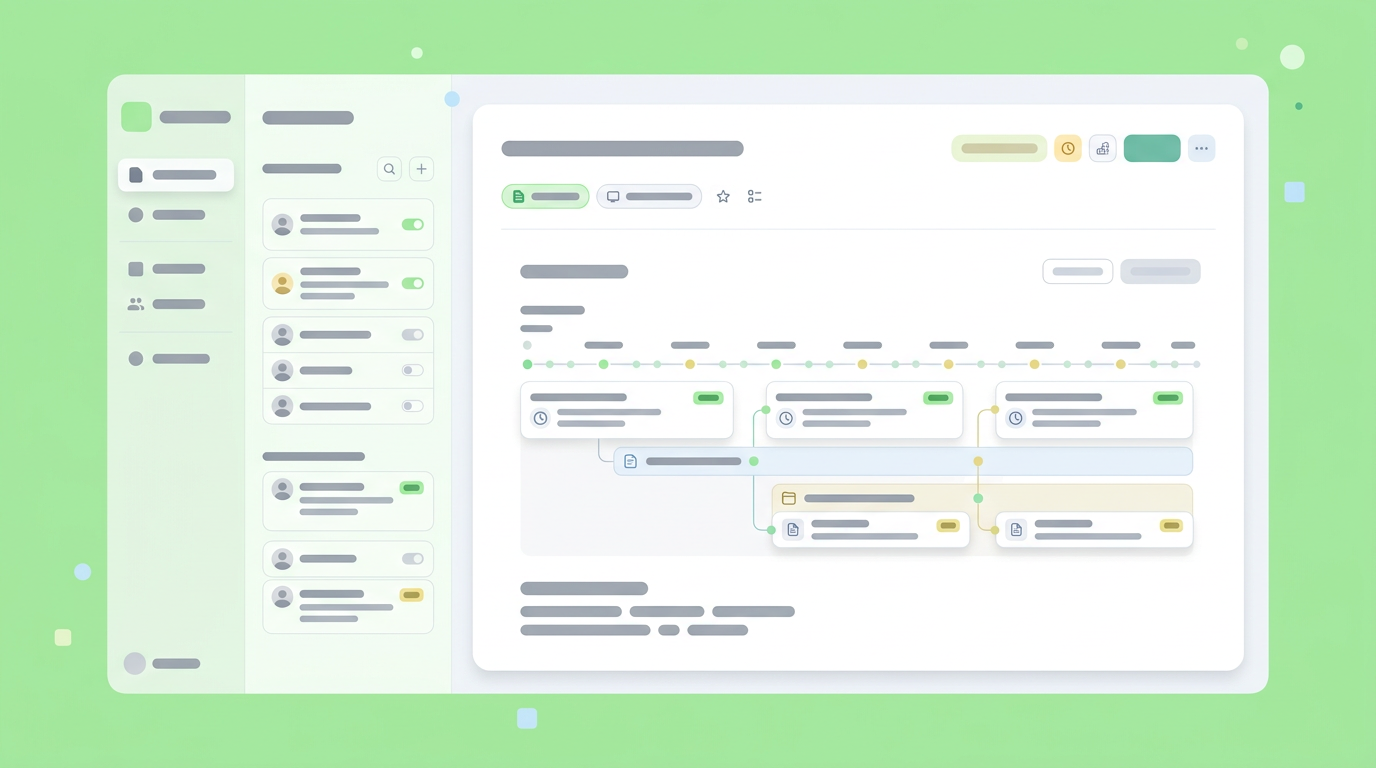
Recruitment workflows run on structured consistency. When hiring managers combine raw requirement lists with generative workflows, they yield polished candidate packets that standardize the hiring experience.
- Interview guides: Automatically generated question sets based on specific role requirements and required technical competencies.
- Policy compilation: Condensing complex employee handbooks into easily searchable internal knowledge repositories.
- Onboarding schedules: Creating tailored 30-day integration plans depending on the applicant's designated department.
Market Analytics and Reporting Synthesis
Product managers spend significant cycles aggregating sprawling market feedback before making critical roadmap decisions. Leveraging generative AI for enterprise analytics enables teams to synthesize unstructured data sources quickly.
Customer interview transcripts, sales call recordings, and feature request surveys hold immense strategic value. Instead of manually parsing hours of audio or hundreds of feedback forms, teams feed this qualitative data into analytical models. The output surfaces recurring themes, critical user friction points, and requested feature clusters.
Transforming R&D and Product Prototyping Workflows
Generative AI transforming business operations appears most evident in how R&D teams move from initial ideas to testable user interfaces. By 2026, generative models operate directly inside design environments, fundamentally altering the standard collaboration dynamic between product and engineering leaders.
Visual ideation no longer requires hours of manual pixel-pushing before a concept can be evaluated by stakeholders. Product teams generate functional representations of interfaces straight from detailed text specifications, enabling faster validation cycles.
Connecting Context to Live Interfaces
Writing a product requirements document frequently ends in a frustrating translation phase where specifications are misinterpreted during wireframing. When PMs handle scoping inside Dazl, the workspace acts as an active partner from early ideation through producing a hand-off ready prototype. You describe the application's underlying logic, state changes, and user flows, and the environment visually generates the required structural elements.
To see how teams successfully bridge this gap, reviewing how to write a PRD effectively illuminates the shifting standards of documentation.
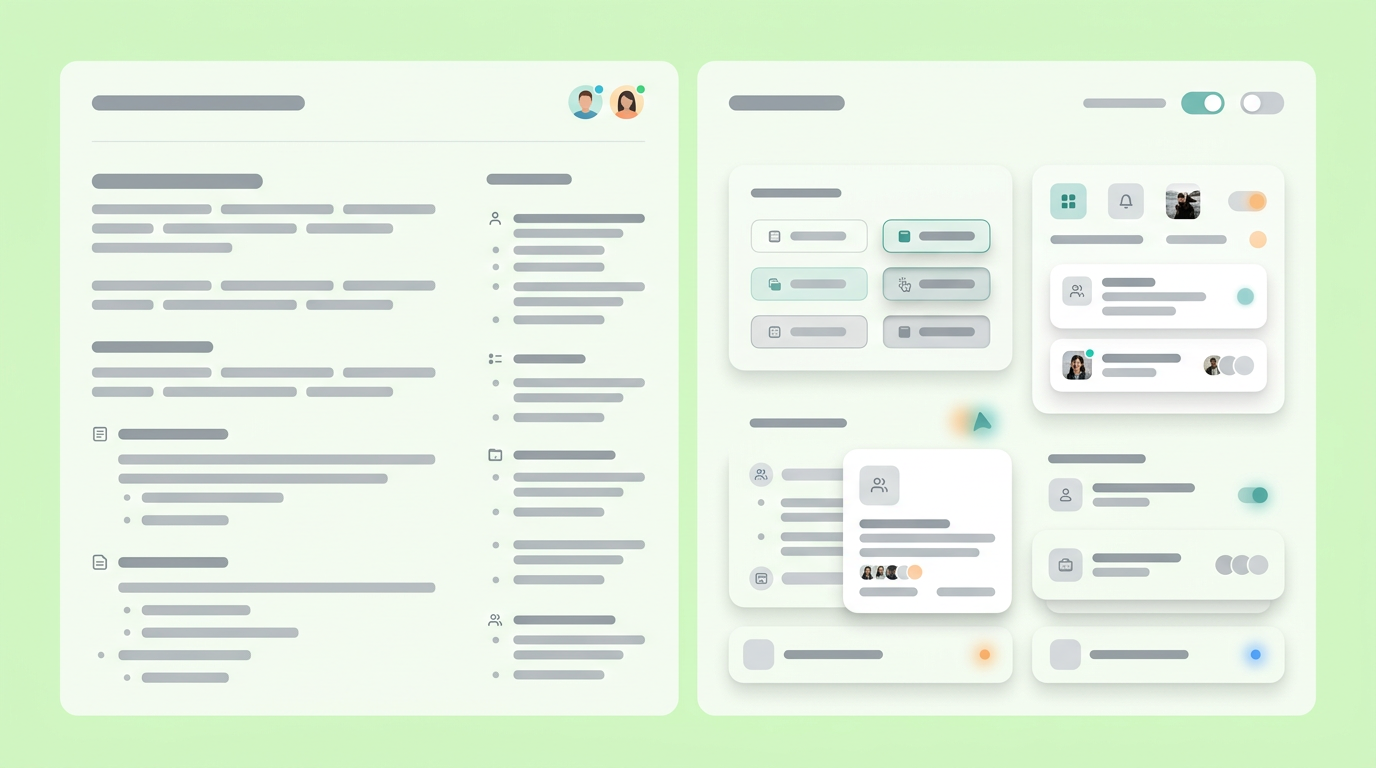
Instead of relying on a rigid blueprint, the specification becomes a living configuration.
- Rapid iteration: Adjusting text requirements instantly updates the visual relationships across the interface mockup.
- Component mapping: The model translates written data structures directly into visual tables, cards, and input fields.
- Interactive logic: PMs define button states and conditional navigation rules that function during stakeholder demonstrations.
Elevating Cross-Functional Alignment
Stakeholder buy-in requires visual fidelity early in the process. Generative platforms enable teams to evaluate multiple design directions simultaneously without burdening the design department with endless rework requests. As tracked in forecasting covering the current AI transformation, AI agents now work side-by-side with humans on initial research and UI structure across modern studios.
Stakeholders react to interactive components rather than abstract concepts. This visibility leads to faster consensus and drastically reduces late-stage engineering changes during active sprint cycles.
Structuring the Data Pipeline for AI Systems
Relying on generative systems for core business operations demands rigorous data architecture and strict knowledge management practices. A model is only as effective and safe as the context it receives from your organizational repositories.
Engineering teams spend significant time structuring data lakes to feed these models precise information. Without structured data pipelines, generative applications suffer from hallucinated outputs and irrelevant structural recommendations.
Integrating Document Data
Connecting internal knowledge bases to active generative layers ensures models use company-approved terminology and design standards. When product teams feed structured component libraries, CSS variables, and historical project plans into their prompt environments, the resulting outputs match the existing product ecosystem.
Teams establish clear extraction formatting to guarantee these tools output ready-to-use insights. To understand how organizations scale successful frameworks, cross-referencing 8 proven generative AI product use cases scaling in 2026 provides a breakdown of necessary architectural preparations. You must treat your internal document logic as the foundational prompt engineering for any enterprise deployment.
Establishing Measurable Production Impact
Evaluating commercial AI tools requires tracking concrete velocity changes across software delivery metrics. Leaders must look past immediate novelty and measure how integrations actually lower the cost of production.
Teams maintain velocity by ensuring engineers stay inside their assigned workflows rather than toggling between disjointed requirement wikis and code editors. Tracking sprint completion rates, pull request resolution times, and the volume of bug reports provides necessary visibility into the toolchain's actual efficacy.
Navigating Enterprise Security Protocols
Deploying AI systems across organizational boundaries introduces strict requirements for intellectual property protection and regulatory compliance. Legal and security teams rigorously vet any platform that processes internal technical specifications or sensitive customer feedback.
Enterprise environments require configurable sandboxes. Organizations cannot risk transmitting proprietary algorithms, unreleased financial projections, or personally identifiable information through open, public-facing language models.
Role-Based Access and Auditing
Business solutions powered by generative AI require comprehensive role-based access control. System administrators implement strict permission borders that dictate which teams can query specific internal datasets.
- Granular permissions: Defining read and write access for generative applications based on the user's active directory group.
- Audit trails: Logging every prompt and generated output attached to the system for legal compliance reviews.
- Data retention limits: Establishing automated purging schedules for sensitive queries processed by the model.
Mitigating Training Data Leakage
The foundation of secure enterprise AI implementation rests on data segregation clauses. Contracts with underlying model providers must guarantee that proprietary inputs are not scraped or recycled to train external models. Leading enterprise platforms operate on zero-retention architectures, meaning the systems process the prompt, return the output, and immediately discard the contextual memory to preserve corporate confidentiality.
The Maturing Tool Stack for Product Teams
The current development ecosystem moves far past singular text generation queries, pushing toward persistent, multi-agent collaboration environments. We expect product and engineering squads to increasingly rely on workspaces where context remains active across multiple sprints, actively adapting as the initial requirements change. This shift necessitates a re-evaluation of traditional tool stacks, favoring integrated platforms that support continuous iteration and intelligent automation. The operational gap between a strategic product thesis and a fully testable visual asset continues to narrow, rewarding teams that formalize their generative workflows today. Product teams are now looking for tools that not only accelerate individual tasks; they also need to enhance the collective intelligence of the entire development cycle, from early concept to deployment. This includes advanced capabilities like automated documentation generation, intelligent dependency management, and predictive insights into potential integration issues, all contributing to a more cohesive and efficient product development pipeline.
You can explore these generative AI applications for your team and streamline your infrastructure by choosing Dazl as your partner.
Get Started