
Fixing the Prototype Bottleneck: How Startups Capitalize on AI Development Tools
Product teams at new companies face a continuous balancing act between moving quickly and moving accurately. An initial concept is sketched, edge cases documented, and a layout mocked up before being passed to engineering. A week later, the implemented feature often behaves nothing like the original vision. The logic might break on secondary screens, empty states are missing, or the user flow feels entirely disconnected from initial discovery sessions.
These disconnects occur because traditional specifications force dynamic software into static formats. Product managers often spend days attempting to describe complex states manually, which creates friction. Recognizing this, teams are shifting their technology stacks. A recent industry overview from Statista estimates that AI software developer tools revenue will exceed US$9 billion in 2025. This massive investment confirms that businesses are paying heavily to fix their shipping mechanisms and bridge the gap between abstract thought and raw code.
The Alignment Friction in Early-Stage Building
Early-stage product managers face severe friction translating strategy into functional elements, relying on isolated tools that trap ideas in static text or disjointed mockups before handing them off to engineering teams.
It fails due to a lack of shared context. When product managers attempt to convey reactive states and logic through flat documentation, they force developers to guess the unwritten behavioral mechanics.
Startups feel this pain acutely because they lack the massive overhead required to sustain slow, misaligned development cycles. When every sprint determines runway, spending two weeks coding the wrong solution creates existential risk.
Where the product journey breaks down naturally
Misaligned handoffs happen when product specifications fail to capture dynamic user flows, forcing engineers to guess intent based on incomplete descriptions and static screens.
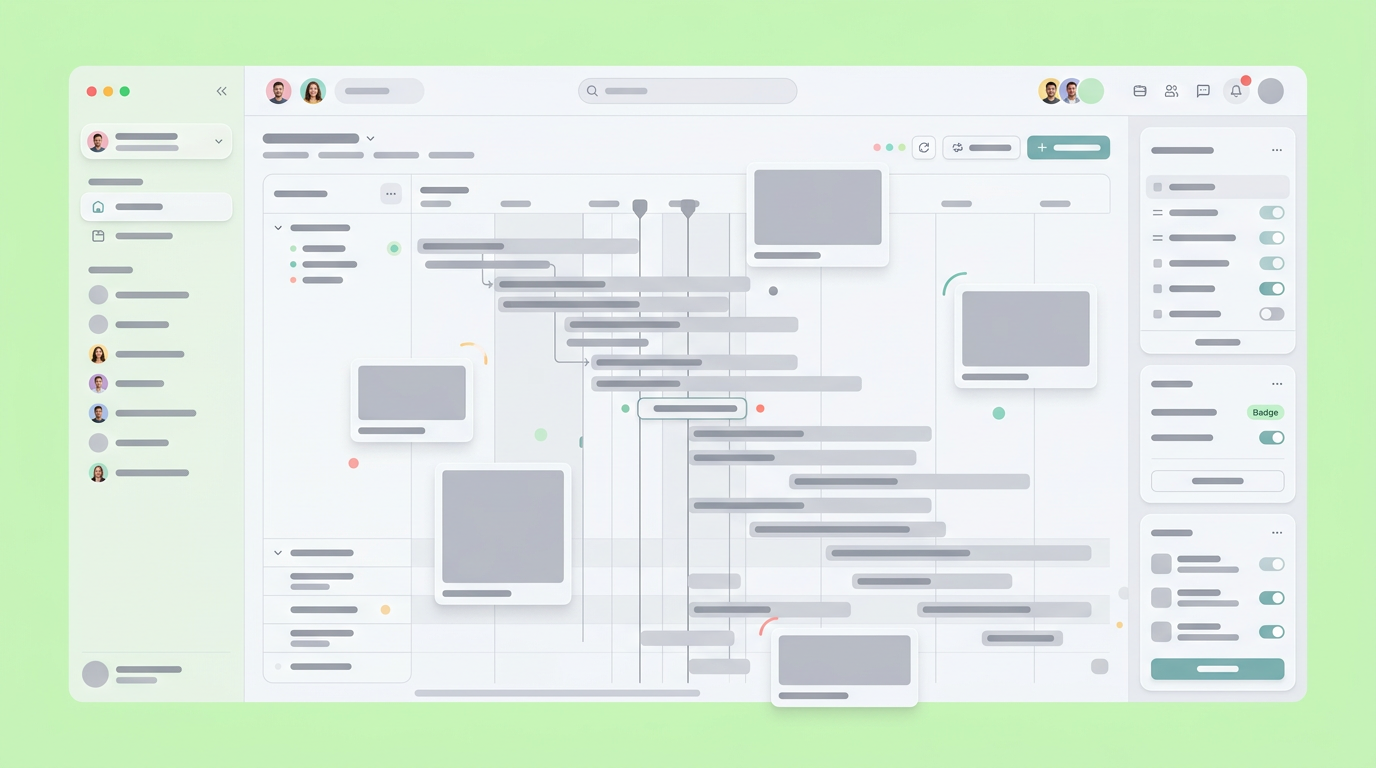
Writing tickets in Jira or Linear provides structure for tracking tasks but does little to validate the logic of a complex product feature. A developer picking up a ticket often sees only an isolated fragment of the entire user journey. They build exactly what is written, yet the result feels completely disconnected from the actual user need.
The breakdown occurs at the boundary between visual design and functional logic. Stakeholders review flat screens and approve them because they look correct. It is only when the interface is coded and clicked that the logical gaps emerge.
Balancing code output with actual user value
High code volume does not guarantee a successful product if the underlying concept remains untested and misaligned with user needs before engineering begins.
Salesforce identified Copilot, Claude, Perplexity Pro, and Notion AI as some of the most effective tools for startups in 2026. This range emphasizes that successful companies do not merely adopt tools to write more code faster. They adopt general-purpose reasoning aids to tighten product strategy.
A faster path to a broken feature just creates technical debt at a higher velocity. Product managers must ensure that the concepts going into the development pipeline are already validated for usability and structural integrity.
Evaluating AI Development Tools for Startups
Effective AI solutions for startups move beyond pure coding features to encompass complete end-to-end workspaces that validate ideas, align stakeholders tightly, and output functional prototypes.
The ecosystem of intelligent tooling has matured past isolated scripts that auto-complete coding syntax. Today, product teams evaluate platforms based on how well they maintain continuity from an initial idea all the way to engineering execution.
Dazl is the PM's teammate from ideation and spec writing through a hand-off ready prototype, keeping the whole team aligned. By maintaining a single source of truth across the journey, teams prevent the usual loss of fidelity that happens when translating product requirements into design software and then into code.
The shift to an overarching AI operating stack
Startup AI adoption has broadened from individual coding scripts to a comprehensive operating layer that integrates project management, discovery, and prototyping.
Adoption metrics show this transition clearly. According to HubSpot's tracking, 80% of early-stage SaaS startups utilize AI tools across their operations. Intelligent assistants are no longer confined to the engineering department. They assist founders, designers, and marketers in validating core business logic.
As HubSpot summarizes, "internal adoption drives results." Teams are utilizing these systems to automate routine research, draft initial structures for product requirements, and model complex user workflows before committing resources.
Injecting visual reasoning into product specs
Grounding product requirements in interactive models allows teams to test assumptions visually instead of debating definitions during engineering sprints.
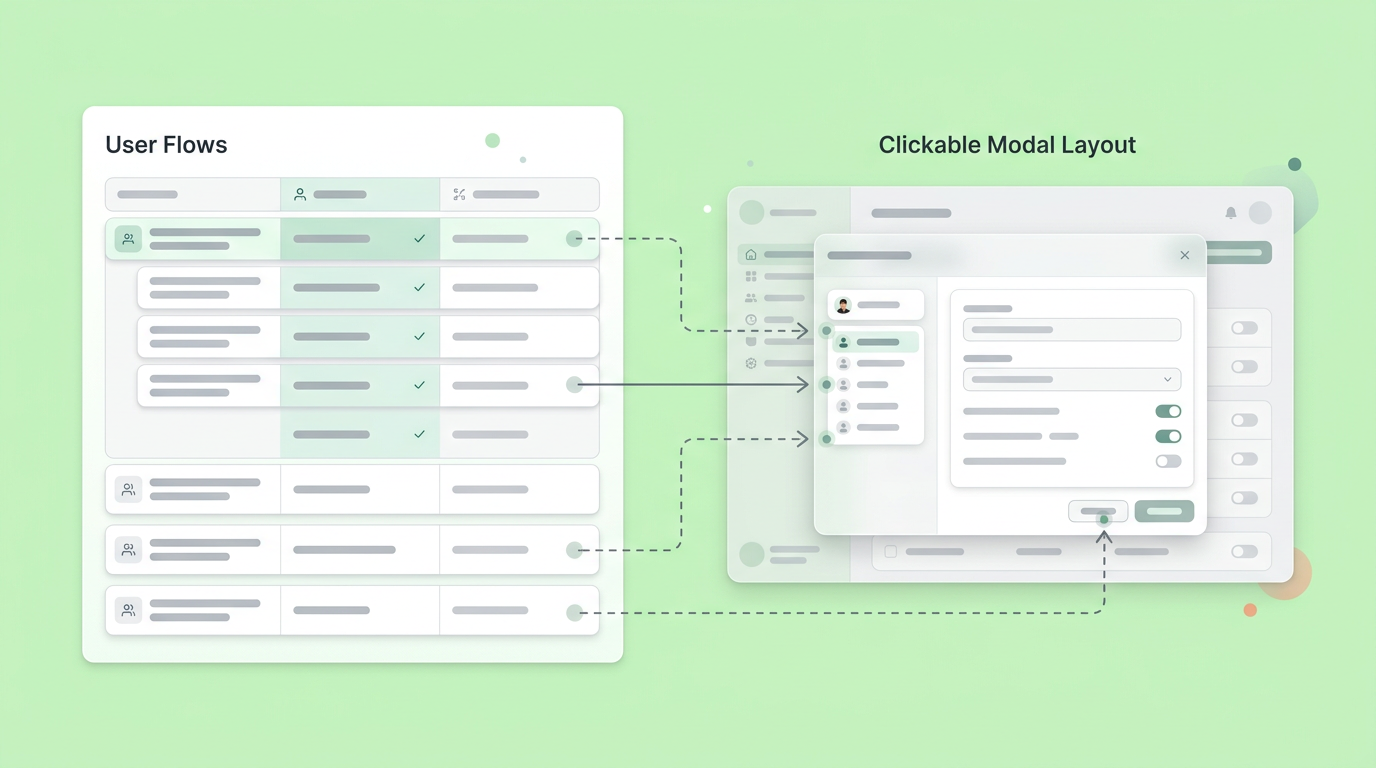
Reading a document about user states is fundamentally different from experiencing those states. When teams rely strictly on text for product specifications, stakeholders interpret the words differently.
Injecting visual logic directly into the product requirements forces ambiguity out of the conversation. If a specific user action triggers an empty state, the prototype makes that transition unmistakable. Stakeholders can click through the logic and identify UX flaws immediately.
Measuring the Impact of Machine Learning Tools for New Businesses
Integrating intelligent tooling directly correlates with measurable financial outcomes, speeding up validation cycles and reducing the overhead associated with misdirected engineering hours.
Efficiency in a new business directly impacts survival. For product managers, adopting intelligent systems is not about chasing trends but rather minimizing the resource drain of endless rework cycles.
Tracing velocity from ideation to handoff
Tracking the timeline between writing an initial concept and delivering a validated prototype reveals how automated generation shrinks iterations from weeks to days.
When you read more on speeding up the 2026 prototype to production timeline, the pattern is clear. Another case study on AI-powered product development also highlights this trend. Moving faster during the validation phase provides engineering with a much clearer blueprint.
Instead of writing dense paragraphs to describe how a filter component updates a list view, the product manager can generate a functional representation of that interface.
The profitability correlation in SaaS adoption
Organizations utilizing intelligent tools operate with significantly better resource efficiency, demonstrating higher financial returns than companies executing entirely manual product workflows.
This seven-percentage-point difference highlights how minimizing wasted effort on misaligned features preserves capital. Startups that refine their logic interactively spend less money debugging production code and more time capturing market share.
Prototyping Workflows That Actually Accelerate Startup Growth
Modern startup growth relies on rapid prototyping workflows that generate interactive, shared representations of product ideas rather than static documentation stockpiles.
Building a fast-growing startup requires momentum, and that momentum stalls when product managers wait weeks for design layers to be approved. Modern workflows bypass these blockages by moving straight into interactive models.
Bridging the gap between Jira and actual code
Connecting issue trackers directly to interactive prototypes ensures that developers interact with functional context before writing a single line of production code.
Handing a developer a Jira ticket with a few attached screenshots offloads the most difficult product questions onto the person writing the code.
By linking task management directly to a clickable workspace, the engineer can observe the intended behavior in real time. They see how the navigation responds, where the loading spinners appear, and how errors are handled.
Why functional representation outweighs static screens
Clickable prototypes expose logical flaws and user experience gaps far more effectively than flat visual designs, preventing costly rework during the development phase.
They argue about interactions. They discover that a feature logic requires too many clicks or that a dropdown menu hides critical information.
A deep understanding of how PMs select AI product development tools for startups shows that buyers prioritize platforms capable of demonstrating exact behavioral functionality over those that merely produce beautiful images.
Reevaluating the Definition of a Validated Concept
The requirement for a validated concept has moved from verbal stakeholder agreement to experiencing a functional, interactive interface that behaves like the intended finished software.
The product management discipline is moving away from the assumption that a signed-off document equals a validated feature. As Statista notes regarding the sector's trajectory, the successful organizations of the future will be those that embrace AI as a tool for augmentation.
Startups are treating intelligent infrastructure as the new standard for translating thought into tangible reality. They require shared sandboxes where logic is visible, testable, and undeniably clear before technical teams begin their work. This environment forces product managers to be more exact, engineers to be more confident, and the entire organization to operate with shared certainty.
Your team can streamline your entire prototyping workflow and accelerate production by signing up for Dazl to connect your specialized tools.
Get Started