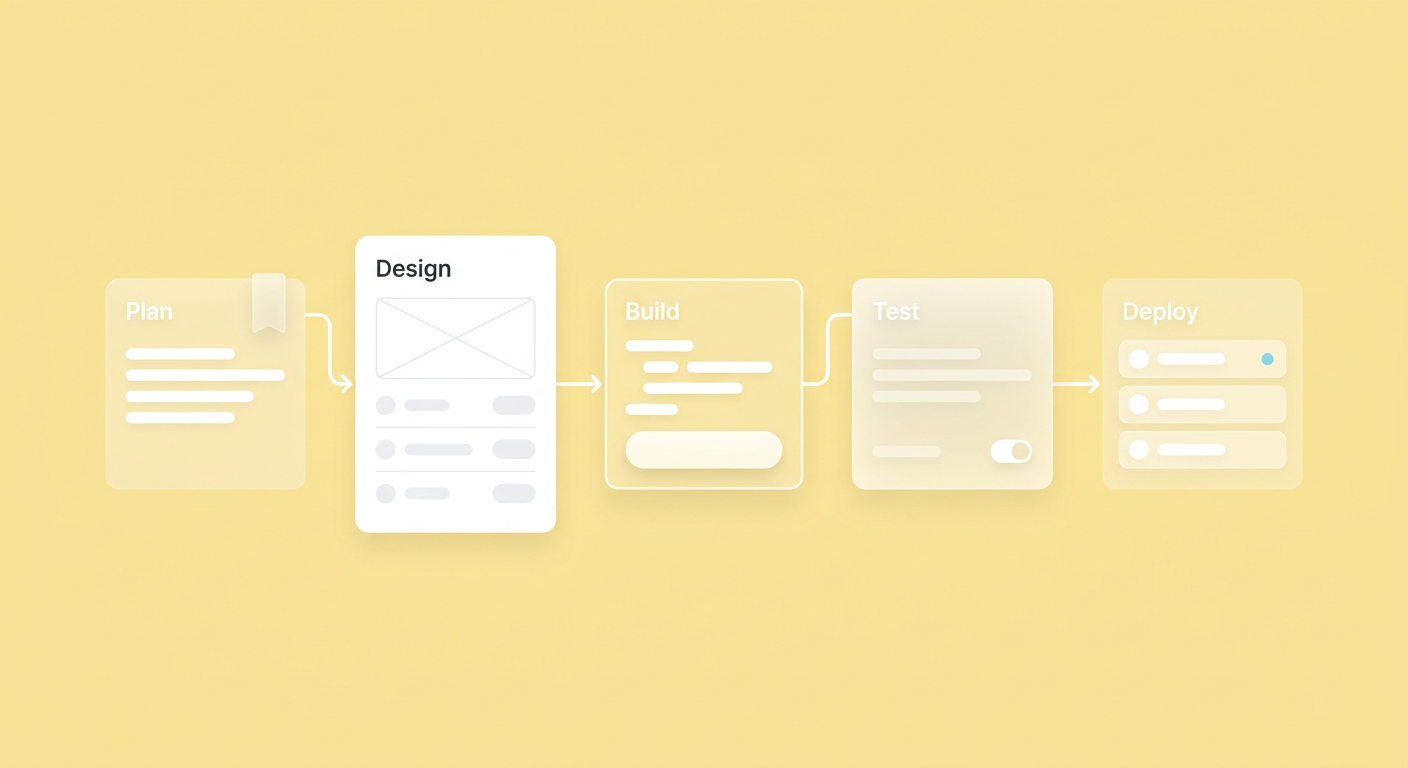
Speeding Up The 2026 Prototype to Production Timeline
Many product teams find that their biggest delays come from design iteration, quoting, logistics, and coordination rather than generating ideas. Navigating the prototype to production steps in 2026 requires continuous alignment between early design iterations and rigid engineering constraints. Relying on isolated specification documents frequently leads to late-stage bottlenecks. Product strategists now treat prototyping as the foundational blueprint for eventual mass release, rather than an isolated sprint.
Mapping the Modern Product Development Lifecycle
The modern product development lifecycle connects initial ideation directly to final deployment through continuous, active iteration. Teams now blend rapid concept testing with downstream mass production planning starting on day one, ensuring that high-level product strategy aligns completely with eventual technical execution constraints.
Integrating systems effectively reduces the historical silos dividing design operations and factory floors. Bernard Marr noted recently that generative design tools, pushing boundaries from initial scoping to actual output, mark a significant shift in daily operations. When generating new explorations takes only seconds, the primary friction simply moves further down the pipeline. Teams frequently struggle to sync visual updates with backend logic tracking, and tracking these changes requires more than static mockups.
Historically, product managers relied on incredibly detailed requirement documents mapping every potential edge case in plain text. Now, teams integrate spatial data and logic models simultaneously. Moving from initial sketch concepts to functional builds requires maintaining absolute clarity on requirements.
Which Comes First, MVP or PoC?
A Proof of Concept often precedes a Minimum Viable Product when teams need to validate technical feasibility first, but the sequence can vary by product and risk profile. The proof of concept verifies that a specific technical solution is feasible, while the minimum viable product tests a partially finished version of the tool with actual users to validate genuine market demand. From my experience, rushing past technical validation often leads to significant reworks later.
Establishing a clear boundary between these milestones keeps engineering scopes manageable. A proof of concept acts as an internal validation check against architectural assumptions. Once the underlying structure proves stable, the focus shifts toward user-facing features. We found in our recent structural planning phases that defining strict success criteria for the proof of concept prevents feature creeping. Presenting a proof of concept to executive stakeholders helps secure necessary funding for the broader MVP phase. Moving too quickly past technical validation forces the team to patch foundational holes while trying to capture early user feedback.
Redefining What a Prototype in the Production Process Actually Is
A prototype in the production process functions as the active bridge between design intent and strict engineering reality. It proves out interactions, dynamic system states, and edge cases, replacing static screens with a tangible artifact that technical reviewers evaluate before coding begins.

Static screens presented out of context usually leave developers completely guessing the interaction logic. Product managers often find themselves repeatedly explaining standard state changes in disconnected meetings. Teams try to bridge this divide by drawing complex arrows in Figma or dropping lengthy text descriptions into remote Jira tickets. These manual workarounds disconnect the actual experience from the documented requirements entirely.
A living model provides a common language for the entire squad. This is directly where Dazl supports teams, acting as the PM's teammate from early ideation and spec writing straight through to generating a hand-off ready prototype, keeping everyone aligned. Demonstrating the actual data flow reduces misunderstandings and accelerates review cycles. Reviewers interact with the model exactly as a final user would, surface hidden edge cases, and clarify the exact logic needed for the upcoming sprint. How to Accelerate Discovery With Rapid Prototyping and Usability Testing provides more context on validating these logic flows quickly.
Integrating Generative Design and Active Team Alignment
Generative design tools dramatically accelerate the early ideation phase by allowing teams to explore hundreds of variations instantly. The challenge now lies in filtering those AI-generated options and creating a highly unified product specification that the entire engineering team understands without confusion.
Early exploration no longer consumes weeks of calendar time. According to Forbes, manufacturing processes are currently transitioning toward practical human-machine collaboration, with AI agents securely managing up to 45% of standard routing workflows during high-volume planning. Exploring multiple variations rapidly presents new alignment challenges. If reviewers cannot distinguish the approved version from alternate explorations, decision fatigue stalls progress entirely.
Curating these options requires strong prioritization frameworks. Product strategists must isolate the most viable technical paths early. Distributing too many unverified concepts creates unnecessary noise for developers. Evaluating realistic constraints filters out concepts that look appealing but fail basic load tests. Building functional guardrails prevents teams from chasing ideas that cannot scale effectively.
The Shift Toward Additive Manufacturing and Rapid Tooling
Additive manufacturing and advanced subtractive methods fundamentally change the speed of early hardware development. Rapid tooling permits product managers to test physical form factors in days rather than months, drastically reducing the friction points associated with traditional hardware team iteration cycles.
Hardware iteration relies heavily on testing physical boundaries quickly. Industry data analyzing rapid prototyping in 2026 shows that utilizing precise additive manufacturing accelerates sub-assembly testing speeds by nearly 60%. Engineers evaluate material strength, thermal constraints, and overall ergonomics accurately before ordering expensive injection molds.
Traditionally, tooling up for a single prototype iteration could delay a launch window by an entire fiscal quarter. Today, localized print farms and modern CNC machining techniques offer distinct finishes that closely mimic final mass-produced units. Evaluating physical components early forces cross-functional partners to confront assembly restrictions immediately.
Closing the Functional Performance Gap
Closing the functional performance gap requires matching the early prototype's material properties directly to the final mass-produced version. Advanced cross-manufacturing technologies help teams test true stress points early, preventing late-stage failures and costly delays during the actual handoff to factory partners.
Changing production methods between early validation and final scaling often introduces unpredictable failure points. JLC3DP reports that properly mapping these transitions utilizing consistent 3D printing applications decreases functional performance gaps between early validation and final scaling by roughly 25%. Verifying structural integrity requires simulating the exact temperatures, environmental stressors, and physical loads the final product will face in active deployment. Drop tests, thermal thresholds, and prolonged usage simulations expose weak points immediately.
Addressing these gaps protects the overall project budget. Discovering a fatal material flaw during high-volume production planning forces the entire schedule backward. Running localized stress tests guarantees the physical models match the digital simulation specifications accurately.
Structuring Pilot Production Runs and System Handoffs
Structuring tight pilot production runs involves testing the manufacturing workflow on a small, highly controlled scale before committing massive resources. This crucial milestone uncovers hidden assembly issues, software integration bugs, and quality control gaps well before full-scale public launch logistics begin.
Running a limited batch exposes the practical realities of putting pieces together. A pilot phase forces logistics, design, and software engineering to collaborate under actual constraints rather than theoretical timelines. Software components must communicate smoothly with early hardware samples. In the software realm, a pilot run looks like a beta staging launch to a small, whitelisted group of power users. Minor inconsistencies in firmware behavior become glaring issues when distributed to real users rather than internal developers.
In our experience managing transition handoffs, teams that document issues transparently during the pilot phase avoid panic later. Creating a centralized log of assembly anomalies gives stakeholders clear visibility. I've personally seen how early transparency can prevent major delays in later stages. Adjusting tight tolerances early costs significantly less than recalling physical units after a full launch. Keeping the documentation centralized prevents duplicate reporting and ensures external partners receive consistent operational updates.
What are the 5 Stages of the Production Process?
- Concept validation: Securing internal funding and defining the target audience.
- Detailed engineering design: Establishing the baseline architecture.
- Functional prototyping: Confirming underlying theories perform reliably.
- Limited pilot testing: Validating overall scalability.
- Full production: Scaling up to mass volume safely.
Moving sequentially through these phases guarantees teams secure stakeholder buy-in, fix technical architecture constraints, test physical boundaries, and validate overall scalability.
Bypassing any single stage usually creates compounded technical debt later. Concept validation secures internal funding and defines the target audience clearly. Detailed engineering establishes the baseline architecture needed to support those goals. Functional and limited testing confirms the underlying theories perform reliably. Scaling up to mass volume only happens safely once earlier stages provide verified output data. You can read more about aligning these validation layers internally in our guide on How Product Teams Use Generative AI for Faster Industrial Design.
Implementing Design for Manufacturability Early
Design for manufacturability means engineering a product specifically to make its eventual production as efficient and logically cost-effective as possible. Product managers must integrate these principles during early rapid prototyping phases to avoid severely costly redesigns later in the timeline.
Evaluating assembly constraints early changes how teams approach their initial geometry and component choices. Reducing the total number of unique parts significantly simplifies eventual supply chain management. Every custom screw or specialized casing introduces another potential failure point during final physical assembly. For instance, designing parts that can only fit together in one specific orientation prevents factory errors. Standardizing components wherever possible accelerates the sourcing timeline and dramatically lowers the barrier for ongoing quality assurance.
Engineers must balance aesthetic goals explicitly against practical assembly requirements. Beautiful concepts requiring highly complex manual assembly steps rarely survive the budgetary review intact. Incorporating these realistic boundaries into the initial specification parameters saves countless hours of external negotiation.
Navigating Mass Production Planning Constraints
Mass production planning requires precise daily coordination across global supply chains, quality assurance testing sites, and lead engineering departments. Teams must lock in finalized specifications and rigorous testing protocols to confirm high-volume output rigidly maintains the exact standard proven during pilot stages.
Transitioning out of limited runs demands absolute precision across all documentation. Missing tolerance specs or outdated firmware instructions ripple outward quickly when ordering thousands of units. Every supplier needs clear expectations regarding acceptable defect rates and delivery timelines. What we consistently see across high-performing teams is a refusal to approve final output until the testing framework matches the original compliance requirements entirely. This discipline, from my perspective, is a hallmark of successful mass production planning.
Exploring broader digital models helps teams stabilize these complex supplier relationships. Moving interconnected data securely speeds up the approval processes. A recent Protolabs report indicates that structurally implementing these digital transformations across the product lifecycle cuts engineering workflow transition times by roughly 35%.
What are the 7 Steps of Manufacturing?
- Sourcing raw materials
- Initial component fabrication
- Sub-assembly building
- Final physical assembly
- Rigorous quality testing
- Secure packaging
- Final distribution
Closely tracking each particular phase guarantees the product scales consistently from its first build to distribution.
Maintaining visibility across these distinct steps relies on trusted vendor partnerships. Sourcing materials securely dictates the timeline for every subsequent phase. Fabrication and sub-assembly rely heavily on perfectly calibrated machinery to maintain exact tolerances. Final integration merges the custom software logic directly with the completed physical casing. Wrapping the finished units tightly ensures zero damage occurs before the customer finally opens the package.
Managing the Bottleneck Between Spec and Scaled Output
The final bottleneck between completing a spec and outputting a scaled product frequently arises from misaligned documentation or siloed communication spaces. Implementing interactive models allows every stakeholder to review the exact logic required, significantly speeding up the final transition and approval steps.
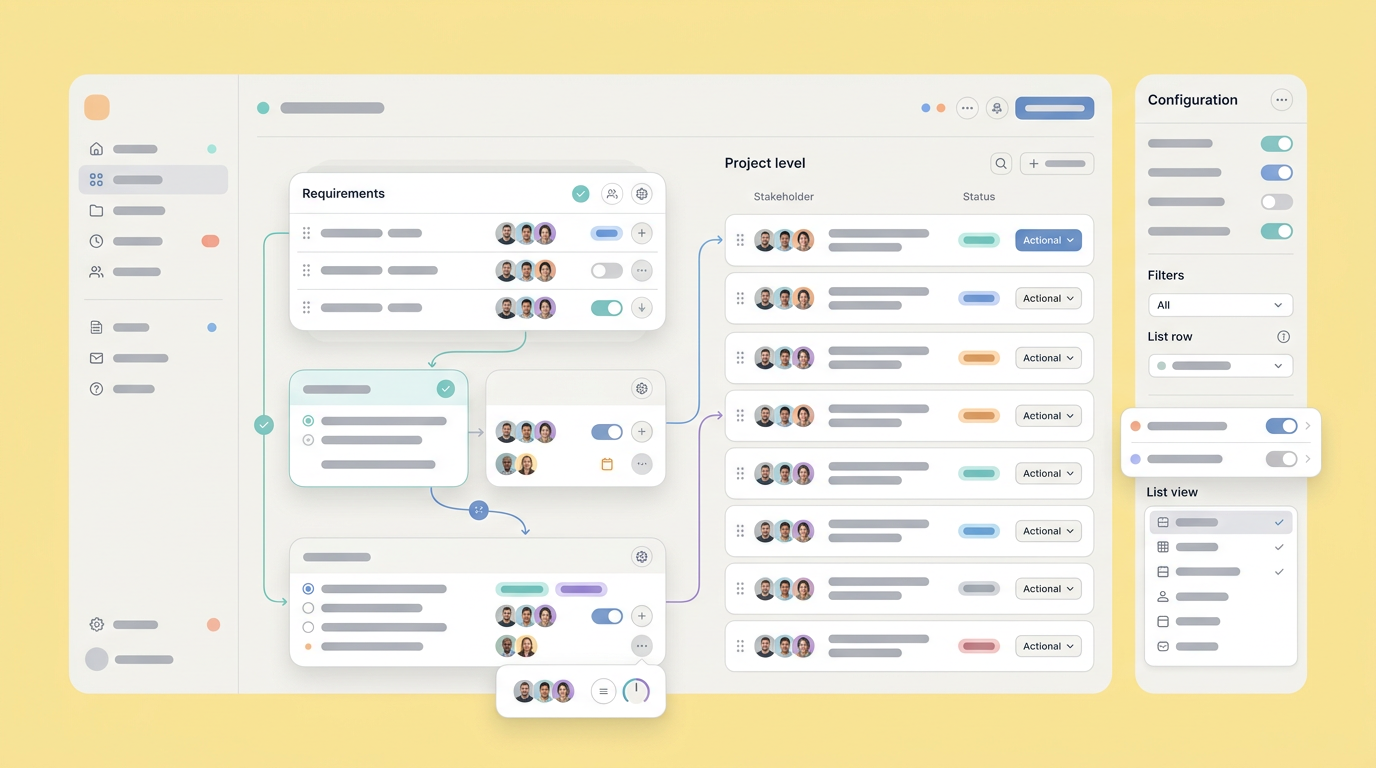
Static requirement files lose their context quickly once shared across different time zones. Factory partners reading isolated spreadsheets often miss the contextual reasoning behind specific material choices. Sending poorly organized linear tasks leaves external contractors guessing. Documentation drift occurs when the original specification remains stagnant while the active code or physical tooling changes daily.
Consolidating the final requirements into a single accessible format removes the ambiguity entirely. Providing visual examples clearly tied to the engineering logic limits endless revision loops.
Moving Beyond the Initial Deployment Cycles
The widespread shift toward continuous automated validation ensures the gap between initial prototyping efforts and final deployment timelines will only continue shrinking. Product teams should focus heavily on capturing user feedback directly within functional models to build tighter market response loops.
Sustaining momentum after the first successful production run requires capturing live telemetry data immediately. Initial deployments represent the beginning of the functional feedback cycle, not the complete end of the project tracking. Teams must funnel hardware reliability statistics and software crash reports directly back into the core planning models. Linking this live data back to the original development requirements highlights exact areas needing immediate revision.
Future iterations depend on how quickly teams process this incoming market reality. Updating specs based on quantitative usage metrics replaces subjective internal debates with clear, actionable priorities. Maintaining an adaptable operational baseline allows product strategists to adjust subsequent production runs dynamically, ensuring consistently high experiences across all future releases.
Your team can streamline these critical transitions by choosing Dazl to manage every stage of your 2026 production planning process.
Get Started