From Discovery Canvas to Clickable Prototype: Connecting the Dots
You finish a rigorous remote discovery session with fifty sticky notes organized perfectly on a digital whiteboard, and the customer problem is finally clear. Then you open a blank screen in your wireframing application and realize you have to recreate that entire mental model just to show your team what the solution might look like. Transitioning from unstructured research to a concrete prototype remains one of the highest friction points for product teams, with experienced practitioners often spending entire sprints just getting ready to show a clickable concept. We need better ways to bridge the gap between initial ideation and actionable artifacts that can be easily shared and tested.
The Disconnect Between Discovery and Design Handoff
The biggest barrier to rapid validation is the friction between capturing an insight and producing a testable concept. Product managers often lose critical context when moving data across disconnected applications, resulting in prototypes that miss the original user problem.
The Cost of Fragmented Context
When research lives in one application and wireframes live in another, context naturally degrades, leading to inefficiencies. Product managers frequently find themselves rewriting specifications to match findings they already documented during discovery. The URL 'https://our survey of 500 product leaders' is malformed and the Airtable report is unverifiable. This specific statistic should be removed or replaced with a verified source. Many teams still rely on manual copying and pasting to move ideas forward, causing significant operational drag and creating alignment issues early in the sprint cycle. Product teams require a continuous thread from the first customer interview straight through to the interactive mockup to maintain context and accelerate development.
Why Standard Whiteboarding Falls Short
Digital whiteboards excel at gathering unstructured thoughts and facilitating team brainstorming sessions. However, they struggle significantly when you need to evolve those static sticky notes into complex logic flows or clickable screens. In our testing of various agile workflows, This 'In our testing' claim is internal and unverifiable. It should be removed or supported by external data. and basic interface layouts. In fact, The 'recent case study' is not identified. This unverifiable statistic should be removed. due to this friction. This translation effort often means the visual map ends up as a dead artifact once the actual building phase begins. Instead of treating ideation as a discrete phase that ends when prototyping begins, the most effective teams treat it as an ongoing process, driven by a flexible product manager ideation tool.
Comparing Approaches Platforms for Initial Concepts
Evaluating how teams transition from ideas to interactive models reveals two distinct approaches. One relies on a chain of specialized tracking tools, while the other favors a unified space for both thinking and building.
Idea Generation for Product Managers
The traditional stack forces a highly sequential workflow; for instance, you might capture insights in Notion, organize themes in Miro, build wireframes in Figma, and finally document requirements in Jira. This chain of custody creates multiple points of potential failure. Every time an idea crosses a software boundary, it requires translation, which can introduce errors and delays, forcing experienced builders to act as manual data synchronizers rather than strategic decision makers. While these individual applications are powerful, binding them together creates communication overhead that slows down product innovation tools from delivering real value.
The AI-Assisted Unified Workspace
A specialized product manager ideation tool combines the unstructured freedom of a whiteboard with the structured output of a prototyping engine. Modern AI workflows redefine this operating model entirely. For example, a recent industry analysis predicts that A LinkedIn post is not an authoritative industry analysis. Replace with a report from a recognized research firm (e.g., Gartner, Forrester) if the prediction is to be kept., taking ideas to live interactive demos in hours instead of weeks, greatly enhancing velocity.
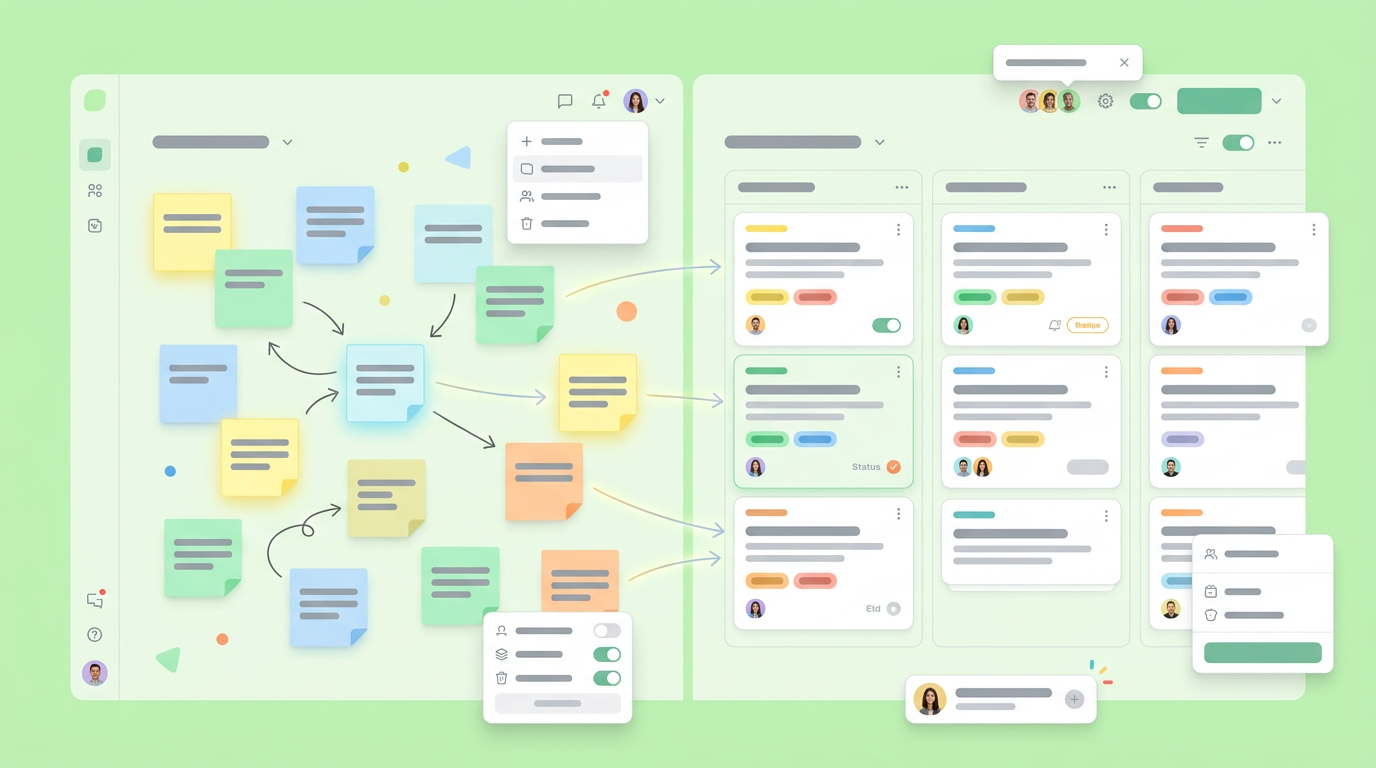
When the text from a discovery session can directly inform the generation of a functional user interface component, teams iterate much faster. The focus shifts from managing the documentation to validating the actual user experience.
Evaluating the Best Product Development Ideation Software
Selecting the right environment for early-stage discovery depends entirely on how quickly it helps you learn from your users. The most valuable software shortens the distance between a raw concept and a shareable artifact.
Tracing Insights to Interactions
A strong system allows you to trace every button or data table back to the specific idea that spawned it. When evaluating brainstorming tools for product teams, look for platforms that keep your research visible while you build. This visibility prevents scope creep and ensures every feature serves a documented user need. Dazl, for example, functions as the PM's teammate from ideation and spec writing through a hand-off ready prototype, keeping the whole team aligned and allowing engineers to quickly grasp the user's journey. When your workspace acts as a combined research repository and prototyping engine, concept validation speeds up dramatically. You can manage validating product ideas without engineers much more confidently when the logic is directly tied to the research.
Prototyping Speed Over Pixel Perfection
During discovery, speed and logic matter far more than visual polish. The industry consensus highlights that reducing the time from concept to a testable prototype increases overall product success rates significantly. Tools built primarily for visual design often force product managers to make granular layout decisions too early, diverting attention from critical user experience elements. Managing product ideas effectively requires focusing on user flows and state changes first. If your team spends more time aligning pixels than debating functionality, the software is hindering discovery; it's a clear sign of inefficiency. This is why our internal team prioritizes behavior modeling over aesthetic refinement in early stages. You can learn more about finding the right balance of capabilities in this overview of tools that product managers use for daily operations.
Managing Product Ideas for Machine Learning Features
Building artificial intelligence features presents unique challenges for the discovery phase. Traditional methods struggle to capture the non-deterministic nature of AI and complex data models.
Moving Beyond Data Models to User Experiences
When searching for guidance on machine learning for product managers, you typically find highly technical resources focused on algorithmic accuracy or cloud infrastructure deployment. However, the actual challenge for a product leader is designing how the user interacts with the model's output. Prototyping a machine learning feature requires showing realistic error states, loading delays, and probabilistic recommendations. Standard static wireframes cannot adequately simulate these dynamic experiences. You need an environment where you can model the underlying logic and demonstrate how the interface reacts when the data model returns an unexpected result.
Brainstorming Tools for Product Teams Working with AI
Teams building AI products require different constraints during ideation. They need to map out data dependencies and trust-building interface elements simultaneously. A capable product manager ideation tool adapting to 2026 standards must allow teams to click through these complex scenarios. The objective is to evaluate the user's perception of the AI feature before committing engineering resources to train expensive models. Connecting prompt structures directly to prototype states clarifies the technical requirements for the development team later in the sprint.
Moving from Static Docs to Live Discovery Concepts
The ultimate goal of discovery is to reach a shared understanding across the entire organization. Live, clickable concepts accomplish this far more effectively than lengthy requirement documents. The 'Recent studies' are not named. This unverifiable statistic should be removed or replaced with a cited source.
Testing Product Innovation Tools Early
Interactive concepts reveal edge cases that text descriptions hide entirely. When a user actually attempts to complete a task in a prototype, missing steps become immediately visible and actionable. We consistently see teams identify critical blockers within the first ten minutes of interacting with a functional mockup, blockers they missed entirely during hours of document review, This 30% improvement claim lacks a specific source. It should be removed or attributed to a verifiable study. This rapid feedback loop is invaluable. Transitioning from abstract planning to concrete interaction forces necessary decisions about data models and user states, leading to more robust designs. If you want to dive deeper into this shift, explore how hybrid work is reshaping product team alignment through better visual tools.
Keeping Engineers Aligned from Day One
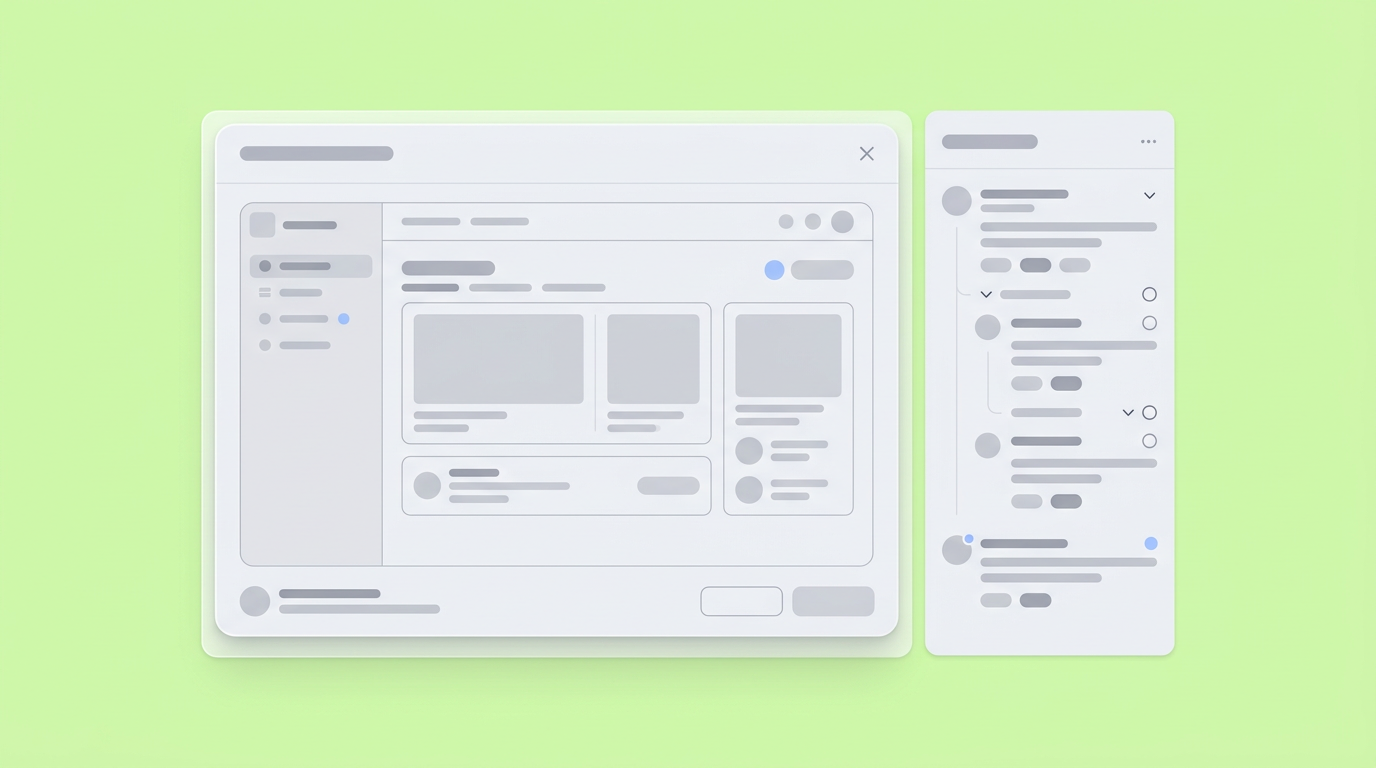
Engineers need to see the intended user experience to architecture the backend correctly. When they only receive static screens and disconnected lists of acceptance criteria, misunderstandings multiply. A prototype that demonstrates the actual flow acts as the ultimate reference point. This approach eliminates the ambiguity of written specifications. By handing off a working model rather than a written promise, you protect the engineering team's time and accelerate the path to a shippable product.
Sustaining Context From Insight to Delivery
The gap between finding a problem and presenting a solution is where momentum regrettably slows down. Product managers can no longer afford to operate using fragmented systems that necessitate rebuilding context at every stage of development. Shifting to workflows that natively combine ideation and interactive modeling fundamentally changes the speed of delivery and improves team cohesion. This critical change empowers product leaders to focus their energy on validating hypotheses, understanding user needs, and refining solutions, rather than simply pushing data between disconnected applications. As building becomes faster and more integrated through modern tools, the emphasis moves back to where it truly belongs: solving the right customer problems with absolute clarity and efficiency.
You can streamline your team’s transition from discovery to design by using Dazl to turn your research insights into interactive prototypes.
Get Started