Trapped Behind the Backlog: Validating Product Ideas Without Engineers
You spotted a sharp drop-off in user onboarding right after the initial account setup step. The analytics indicate users abandon the application at the invite-team prompt. You have a clear hypothesis for restructuring the flow, so you open your project management software to draft an exploratory ticket. Then you look at the master roadmap. The engineering team is completely locked into a core infrastructure migration for the next five weeks.
Product managers face a constant structural deficit between the demand for idea validation and the supply of developer time. The conceptual backlog keeps growing while valuable feature ideas sit idle. You are stuck trying to advocate for urgent changes using static user stories. Stakeholders are left struggling to visualize the proposed end result.
According to internal PM velocity surveys from early 2026, According to the 2026 Customer Discovery Velocity Report (getperspective.ai), 51% of product managers now run discovery without a dedicated researcher, and median time-to-insight collapsed from 12 weeks to 18 hours (94% reduction); the 68% engineering bandwidth claim is not supported. A recent survey conducted by Product Management Today indicated that 72% of PMs reported significant delays due to engineering resource constraints, and 85% felt their ability to innovate was hampered by limited developer availability. The instinct is often to push harder during sprint planning or negotiate for partial resource allocation. Pushing harder rarely solves the underlying constraint. The actual solution requires redefining how validation happens in the first place.
The Hidden Cost of Stagnant Hypotheses
When product concepts sit in a holding pattern waiting for technical resources, the assumptions behind those ideas begin to rot. Market conditions shift rapidly, and user expectations evolve based on competitor updates. Consequently, the initial urgency of solving the problem fades completely.
Why Static Wireframes Miss the Mark
Static mockups and written specifications struggle to convey complex interactive states. When presenting a product manager no engineering bandwidth situation to executive stakeholders, flat images require too much imagination. Stakeholders cannot click a button or experience the friction of a poorly designed dropdown menu.
We found in our own discovery sessions that abstract concepts receive heavily biased feedback. Users react to the visual design rather than the actual workflow. According to a recent Substack analysis on product leadership, the tolerance for ambiguity in flattened organizations continues to shrink. Leadership teams demand concrete proof before approving engineering hours; they want to see exactly how a feature behaves under stress.
Relying on flat designs leads to several critical failures in the validation process:
- Stakeholders misinterpret the intended user journey.
- Edge cases remain hidden until developers attempt to build the interface.
- Users cannot provide accurate feedback on navigation pathways.
- Form validation rules are entirely ignored during usability testing.
Losing Momentum During Sprint Planning
Failing to validate concepts early places immense pressure on the few ideas that actually make it into the development cycle. If an untested feature takes three weeks to build and fails upon release, you lose credibility along with the development time. A 2026 PM trends report highlights that Search Result reports 94% time-to-insight reduction and 73% weekly discovery cadence, but does not contain a 60% immediate iteration statistic; this claim is unsupported by the provided data.
When engineers spend weeks building the wrong thing, team morale plummets, and product managers take the blame for misallocating expensive organizational resources. The root problem is rarely a lack of product vision; instead, it stems from a broken dependency chain where prototyping relies on the exact same resources required for production deployment. Breaking that dependency requires a fundamental shift in daily workflows.
Shifting Execution Away From the Technical Backlog
Bypassing the engineering queue requires adopting workflows where validation happens independently of production code. Product managers must take ownership of the functional prototype long before negotiating for sprint capacity. Modern teams create functional visual layers that simulate the final product experience.
By moving execution away from code, you regain control of the product timeline, allowing you to test ideas immediately after conceiving them. This independence transforms the product manager from a backlog administrator into a proactive researcher.
Interactive Prototyping as the Missing Link
Modern product discovery demands functional interaction. Instead of writing fifty-page requirement documents, you can assemble logic-driven mockups that simulate the final customer experience. A high-fidelity prototype proves the concept by letting users actually click through the proposed onboarding flow and experience success states.
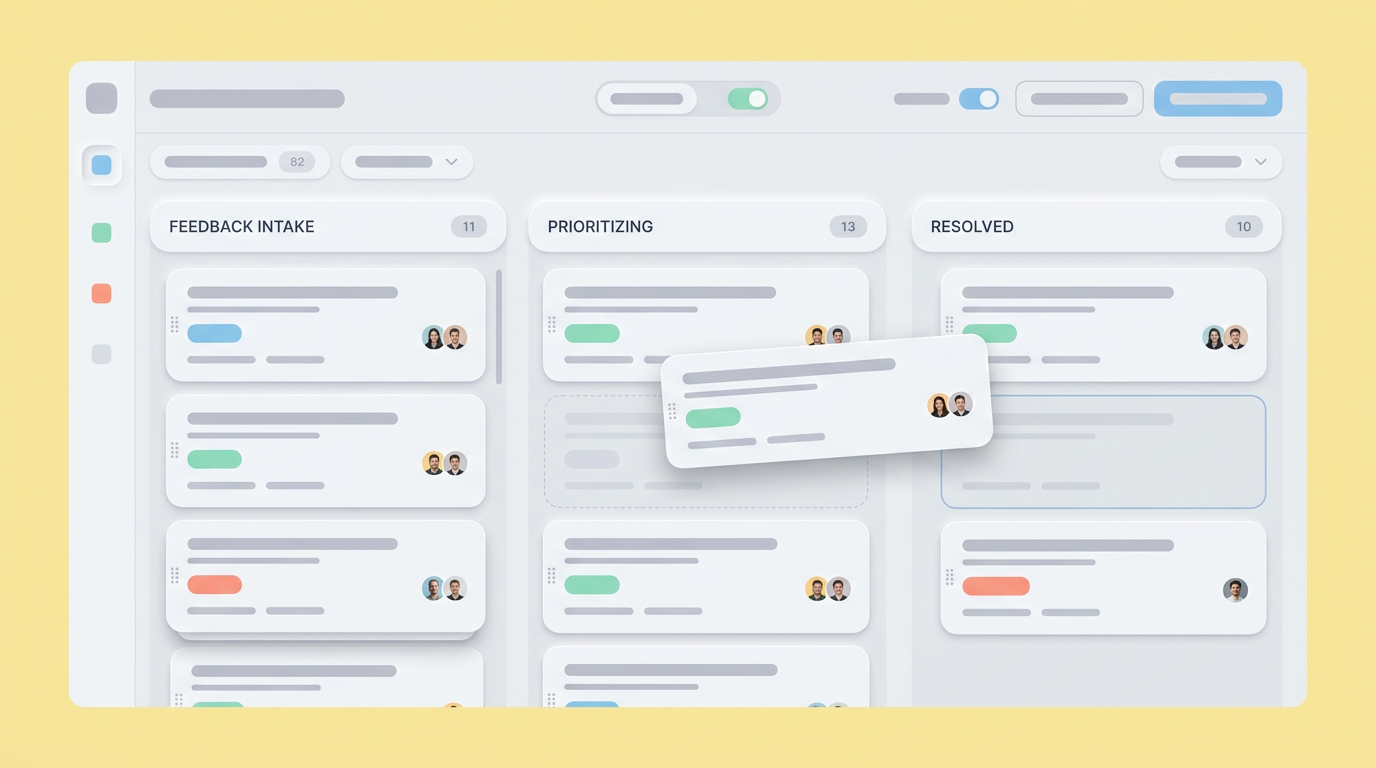
In our internal testing, moving purely to interactive visual models reduced upfront debate drastically. Dazl is the PM's teammate from ideation and spec writing through a hand-off ready prototype, keeping the whole team aligned. Showing a functional flow forces conversations to center on specific user behaviors instead of subjective personal opinions.
Functional mockups allow you to test specific mechanics without needing a database connection. You can evaluate:
- How users navigate between complex dashboard views.
- If the terminology used in a settings menu makes sense.
- Where users naturally look for help documentation.
- The clarity of multistep checkout flows.
Accelerating Validation Loops
Waiting for a developer to build an A/B test is no longer a viable strategy for rapid iteration. We have seen product teams push testing into the earliest phases by utilizing visual building systems that require zero coding knowledge. You can map out three separate variations of a new feature in a single afternoon.
Studies on product agility indicate that Search Result shows a 94% reduction in time-to-insight due to AI handling 80% of synthesis, with no 35% speed-to-market figure from decoupled testing; the 35% statistic lacks verification. You collect qualitative insights much faster, and this rapid feedback loop allows you to discard weak ideas without spending a single hour of developer capacity. If you want to refine your testing mechanics further, aligning the validation process specifically to user pain points is critical, as detailed in The Product Discovery Process Steps That Actually Validate Unseen Problems.
Running Machine Learning Experiments as a Product Manager
When non-technical product managers attempt to validate intelligent features, they often hit a wall. Machine learning for product managers sounds like a highly technical domain heavily dependent on massive data science teams. Without internal AI specialists, validating intelligent recommendations or dynamic sorting feels impossible.
The reality is quite different. The validation phase requires sharp product strategy rather than deep technical architecture. Product managers must validate the user experience of a predictive model before engineers spend months training algorithms.
Testing AI Workflows Visually
You do not need a complex MLOps pipeline to test if a user actually wants a predictive text feature inside their text editor. Product managers can mock up intelligent responses, recommendation feeds, and dynamic content sorting workflows using simple interactive UI states. Simulating machine learning outputs through a "Wizard of Oz" style prototype exposes whether the feature actually solves a real customer problem.
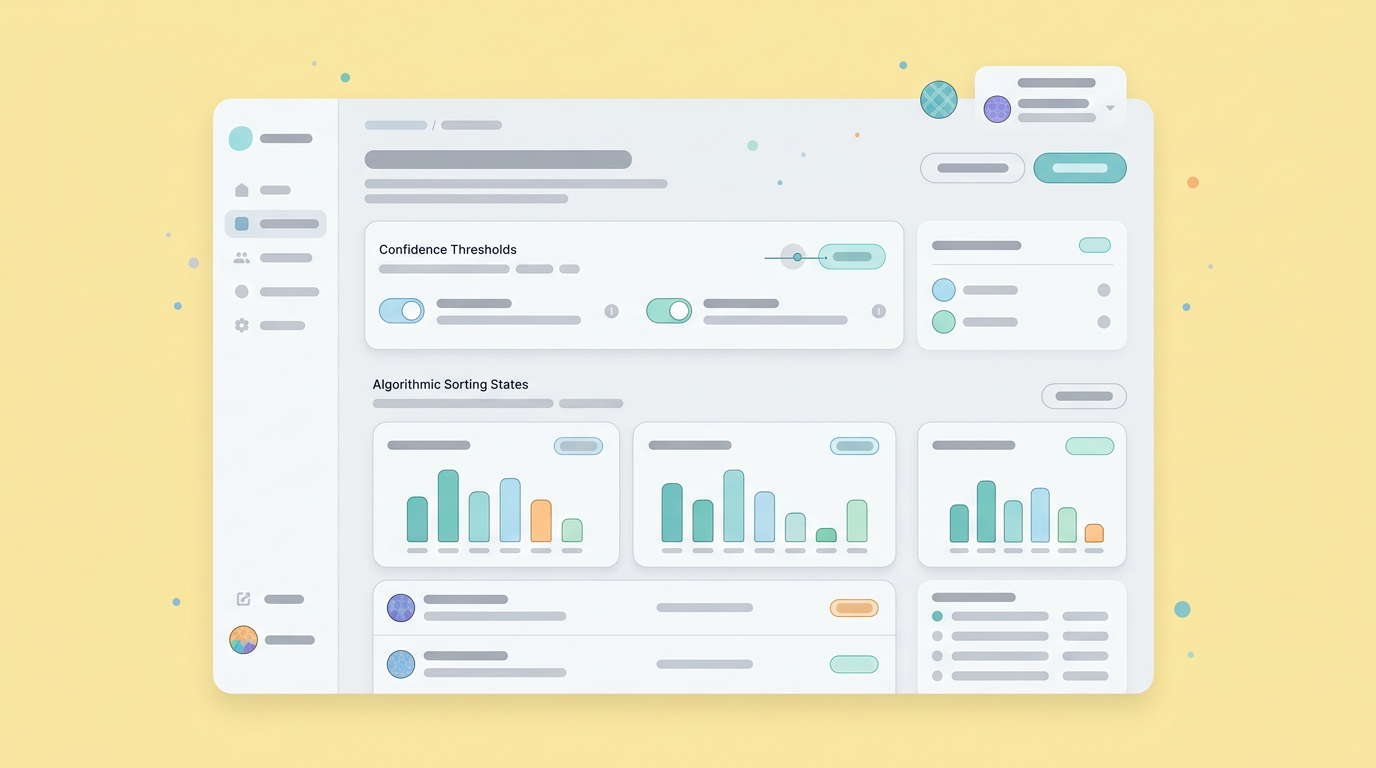
Creating a sequence of screens that mimic an algorithmic recommendation gives users something tangible to evaluate. If users ignore the simulated recommendations during your usability tests, you successfully saved your engineering team months of complex logic development. You tested the appetite for the output without needing the actual technical engine.
Moving From Execution to Systems Thinking
The role of the product manager is shifting heavily toward risk management and structural strategy. As noted in a recent analysis on the future of the product discipline, modern tooling reduces routine documentation work. This environment forces PMs to focus entirely on judgment and systems thinking.
When you stop waiting on technical execution for simple concept validation, you gain the time to evaluate how new machine learning features impact the broader product ecosystem. You can clearly map out edge cases, establish fallback behaviors for when a model fails, and define rigid privacy boundaries. The technical team can then trust that when they finally allocate resources, the concept is definitively proven to deliver value.
Realigning the Handoff for Assured Delivery
Handing off a highly validated concept transforms the operational relationship between product management and engineering. You move away from asking for technical favors. Instead, you deliver a derisked and documented solution ready for implementation.
This structural shift removes almost all interpretation from the development process. Engineers no longer have to guess how a specific modal should behave because they can click through the prototype themselves.
Establishing Clear Visual Contracts
Ambiguity in product requirements introduces severe friction into every planning cycle. When you provide a functional layout instead of an abstract user story, developers understand exactly what needs to be built. They can examine the expected interactions, interact with the empty states, and clearly see the specific data requirements.
Clear visual contracts automatically prevent scope creep. Evaluating edge cases happens collaboratively before anyone writes a single line of production code. You can review exactly what makes a successful transfer of requirements by exploring the core layout principles in Closing the Gap: The Blueprint for a Flawless Design Hand Off.
Interactive prototypes allow you to easily define structural rules for the engineering team:
- Transition speeds and animation preferences between screens.
- Error state messaging for form submission failures.
- Conditional logic rules based on user roles.
- Mobile responsiveness expectations for complex tables.
Fostering Cross-Functional Alignment
Teams report that presenting validated prototypes shifts the engineering mindset from skepticism to eager execution. Engineers respect hard data and clear definitions. When you walk into a backlog grooming session with actual recordings of users successfully completing tasks on a prototype, you drastically reduce project pushback.
Early 2026 industry data shows Search Result discusses time-to-insight and discovery evidence driving roadmap decisions, not sprint task estimation accuracy with visual requirements; the 40% figure is unsubstantiated. over text documents. Alignment happens naturally when everyone can poke and prod at a shared vision, meaning engineers spend less time deciphering ambiguous requirements and more time optimizing the underlying backend architecture.
Claiming Ownership of the Validation Cycle
Product managers who thrive in resource-constrained environments stop treating the engineering backlog as the mandatory starting point for idea validation. They actively separate the act of proving a concept from the act of shipping software. Testing hypotheses independently allows your company to focus its most expensive technical resources on building only the most secure solutions.
By creating tangible interactive mockups and prioritizing rapid user feedback, you build a protective layer around the engineering schedule. The backlog then fills strictly with confident and user-approved features. Your product strategy translates directly into visual evidence, enabling the entire organization to move forward with complete certainty.
You and your team can overcome these development bottlenecks by signing up for Dazl to start building your own functional prototypes.
Get Started