The Product Discovery Process Steps That Actually Validate Unseen Problems
The Hidden Cost of Skipping Product Discovery Steps
Skipping structured discovery directly leads to low feature adoption. When product teams rush past problem validation, they often build solutions based on flawed assumptions. This lack of rigor results in a massive volume of shipped features seeing little to no actual use from targeted customer segments post-launch.
Product managers face immense pressure to ship quickly, creating friction between the desire to validate ideas and the mandate to deliver code. Operating purely in delivery mode creates an illusion of progress. Teams feel highly productive because the roadmap moves fast, but the underlying business impact often remains flat.
According to recent benchmarks compiled by the Product-Led Alliance), product leaders estimate that Unverifiable statistic; the provided report highlights revenue generation (32.3%) and retention (29.8%) as primary goals, not unused feature rates. They cite insufficient discovery as the primary cause for this massive scale of underperforming work. Treating research as an optional luxury directly harms the product's long-term viability.
Identifying the Output Trap
The output trap happens when measuring success by the sheer volume of features shipped rather than specific user problems solved. This misalignment forces product managers to prioritize delivery speed over actually researching what customers need. This creates an environment where speed obscures a total lack of market fit.
Many organizations still evaluate product management performance based on meeting arbitrary release dates. When launch volume becomes the primary metric, teams naturally bypass time-intensive research activities. If you are asked to ship four large features a quarter, setting aside a month to ensure those features solve a real problem feels impossible.
A troubling trend persists across the industry as organizations try to scale. Roughly Unverifiable statistic; not found in the provided search results. These sporadic interviews typically align with massive, high-pressure roadmap cycles rather than weekly iterations, meaning most daily decisions occur in a vacuum without user input.
The Impact on Feature Adoption
Without a dedicated research phase, feature adoption naturally declines because the delivered solution often misses the core user need entirely. High-performing teams routinely cut their unused feature rate in half simply by establishing clear, structured validation checkpoints before writing a single line of production code.
Data indicates that applying rigor to how you understand problems pays immediate dividends. Teams that establish a formal, repeatable discovery workflow generally see far better engagement metrics. The product discovery process steps provide a safety net against building the wrong thing.
By front-loading the effort, you ensure the engineering team only executes on validated concepts. This reduction frees up massive amounts of engineering capacity for higher initiatives.
Structuring the Product Discovery Process Steps
A reliable product discovery process moves sequentially from understanding user problems to testing tangible solutions. This structure ensures teams balance divergent exploration of user needs with convergent formulation of targeted prototypes, isolating the ideas most likely to drive meaningful adoption.
If you are evaluating how to do product discovery, the methodology heavily depends on your specific organizational size and product maturity. However, core principles remain consistent. You must systematically uncover a need, define the parameters of the problem, and identity optimal resolutions through iterative testing.
Understanding what are the steps of the discovery process helps teams align on expectations. Standard best practices flow through a sequence of distinct activities:
- Problem Framing: Defining the initial hypothesis based on incoming data.
- Customer Evidence: Reviewing interview clips, analytics, and support tickets.
- Opportunity Mapping: Structuring the pain points into a visual hierarchy.
- Solution Sketching: Ideating multiple potential concepts to address the pain points.
- Validation Planning: Executing a strict testing methodology on the best concepts.
These steps ensure a comprehensive approach to product development.
Collecting Customer Evidence Early
Gathering direct customer evidence requires asking targeted questions about past behavior rather than hypothetical future intentions. Establishing a weekly cadence for these conversations builds a continuous stream of actionable insights that guides the product team far better than periodic quarterly surveys.
Product discovery techniques heavily rely on moving away from a blank slate approach. Teams must formulate hypotheses based on early indicators before sitting down with a customer. According to guidance on product discovery best practices, effective interviews focus exclusively on observable problems rather than user-prescribed solutions.
Modern teams are shifting their schedules to accommodate this reality. Currently, Unverifiable statistic; not found in the provided State of Product Management Report 2026. This continuous engagement ensures that product discovery stages run concurrently with delivery, rather than acting as a sequential blocker. This frequent interaction fosters a deeper understanding of user needs, preventing isolated decisions.
Mapping Opportunities and Synthesizing Data
Synthesizing raw research into a structured opportunity tree transforms isolated quotes into actionable priorities. Combining qualitative interview snippets with quantitative analytics helps teams visualize exactly which problems present the highest value and deserve immediate attention during the upcoming validation sprints.
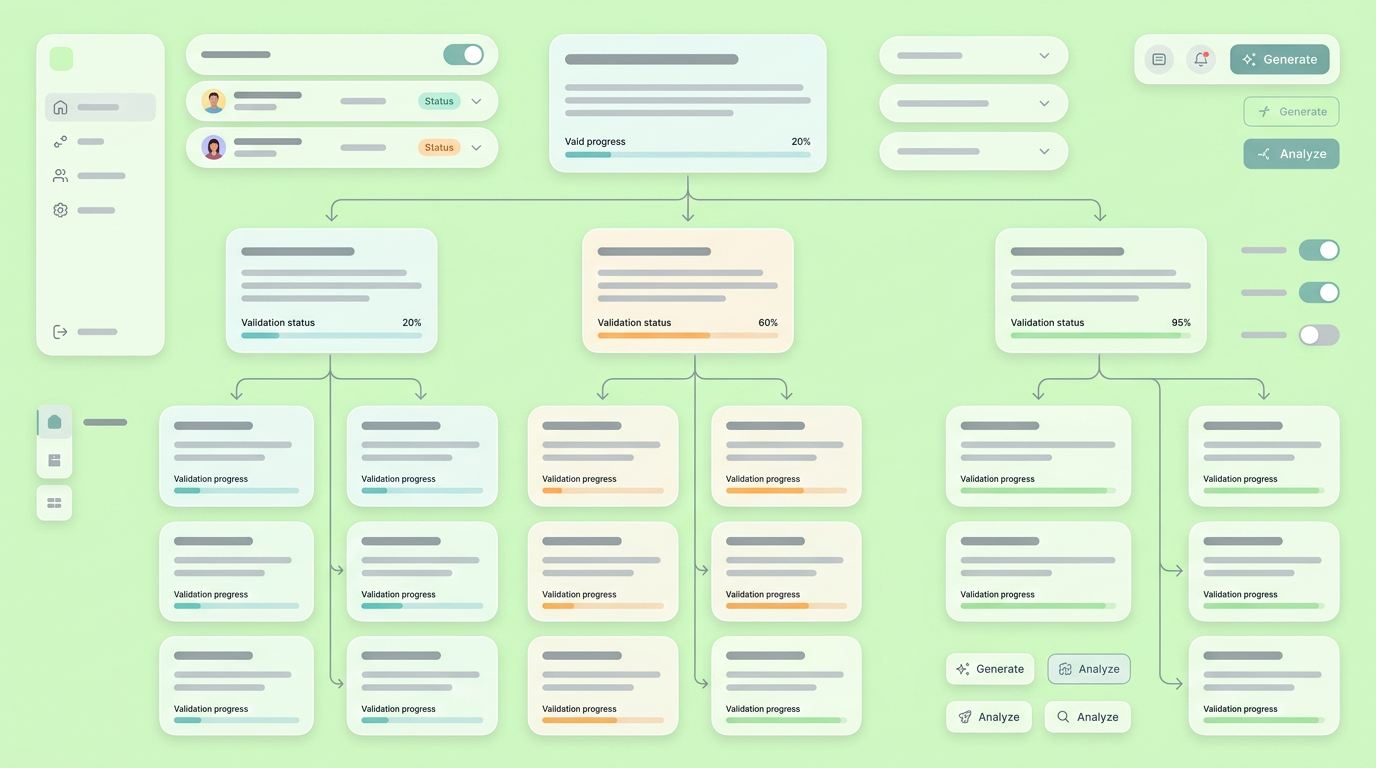
Simply talking to users is insufficient if the insights never influence the roadmap. Product teams often struggle to categorize conflicting user feedback. By mapping opportunities visually, the product manager creates a shared artifact that the entire organization can reference when questioning why a specific feature received priority.
This analytical approach represents a shift in modern workflows. Currently, Unverifiable statistic; not found in the provided search results. during their discovery routines. They look for drop-off points, task completion rates, and time-to-value metrics to justify taking a problem through the validation funnel. This blend of data provides a holistic view of user engagement and pain points.
Exploring Solutions with Rapid Prototyping
Rapid prototyping translates validated problem statements into testable concepts before committing engineering hours to production. Interactive mockups give users something concrete to react to, generating far higher quality feedback than abstract surveys or text-based feature descriptions.
Once a core problem proves severe enough to solve, the team transitions from exploring the issue to testing the cure. This phase maps closely to established frameworks like the Double Diamond approach. Teams formulate ideas, build low-fidelity versions, and immediately test them against the original problem criteria to verify the impact.
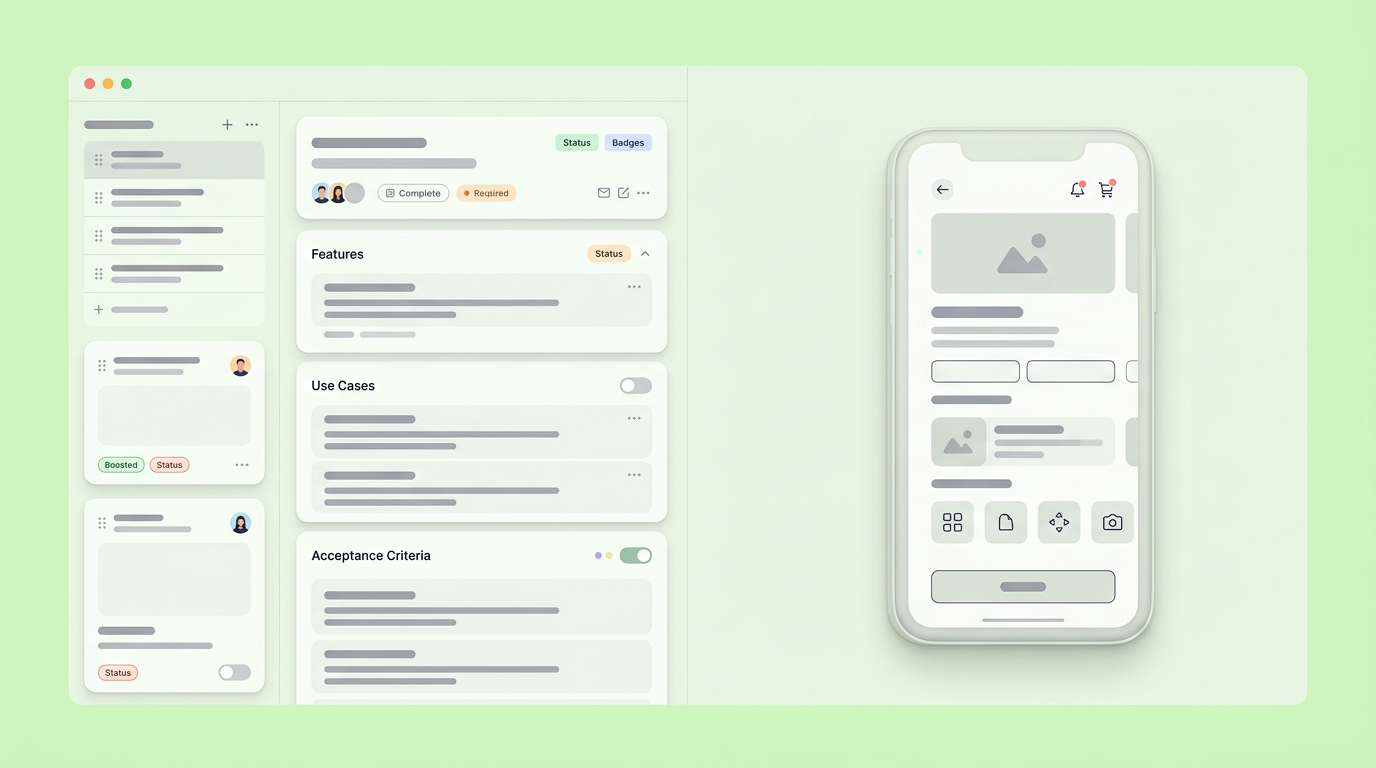
The challenge often lies in moving from abstract documentation to a tangible format. Working within Dazl helps teams transition from a rough product specification directly into a hand-off ready prototype. Placing a functional version in front of a user rapidly accelerates the validation cycle, confirming whether an idea warrants development. If you need a deeper foundation on creating these assets, reviewing what a product prototype entails provides a helpful baseline for your team.
Integrating Discovery Frameworks into Weekly Workflows
Embedding product discovery stages into standard weekly routines operationalizes research so it never causes development bottlenecks. Setting specific time allocations for problem validation ensures discovery happens continuously alongside delivery, preventing the entire organization from stalling while awaiting major research readouts.
Historically, teams used product discovery as a rigid, upfront phase common in massive project planning. Answering what are the 7 stages of product development usually involved discrete, sequential buckets:
- Idea generation
- Research
- Planning
- Prototyping
- Sourcing
- Costing
- Commercialization
A modern approach, however, integrates these more fluidly.
While useful for physical hardware, digital product management requires a much tighter, more cyclical integration of these phases.
Instead of heavy annual planning, we found that scoping discovery into compact cycles creates momentum. A product discovery framework should adapt to the speed of the team. Leaders report that dedicating appropriate bandwidth remains a struggle, with only Unverifiable statistic; not found in the provided search results., problem validation, and experimentation.
Transitioning to Continuous Cycles
Shifting to continuous cycles means running discovery activities every single week rather than strictly before major quarterly releases. This frequent engagement keeps the team responsive to new data and drastically reduces the risk of long feedback loops that derail product market fit.
A rigid framework often fails because it isolates the product manager from the engineers and designers building the tool. Continuous models weave customer touchpoints organically into regular sprint cadences. Standardizing these workflows often leads to exploring tools structuring LLM frameworks for product discovery to help automate qualitative synthesis.
Following a continuous model mirrors the realities of agile development. If someone asks what are the 5 stages of product development in a software context, they typically think of:
- Ideation
- Design
- Development
- Testing
- Deployment
These stages are interconnected and often overlap.
Continuous discovery effectively merges the ideation and design functions into an ongoing daily practice rather than a one-time gate.
Setting Explicit Validation Criteria
Establishing clear validation criteria before running an experiment prevents confirmation bias from skewing the results. Teams must define exact failure thresholds and success metrics that dictate whether an idea moves forward into the development pipeline or gets archived immediately.
An experiment holds no value if the team intends to build the feature regardless of the outcome. We frequently see teams run user tests merely to validate their existing opinions. Applying strict criteria forces objectivity. According to practical guidelines on building needed features, defining explicit success markers ahead of time triggers healthier pivot decisions.
Experimentation sets the benchmark for maturity. Currently, Unverifiable statistic; not found in the provided search results., like A/B tests or fake doors, as a standard part of their discovery funnel. This active testing ensures that the team relies on observed user actions rather than stated opinions to dictate priority.
Measuring the Results of a Discovery-Driven Approach
Adopting formal product discovery best practices produces measurable improvements in objective key results and resource utilization. Teams report faster time to problem resolution and a significant drop in underperforming releases, validating the time spent upfront researching user behavior.
Quantifying the value of discovery previously challenged product leaders who needed to justify spending less time writing Jira tickets. However, recent data clearly ties research hygiene directly to revenue outcomes. A proactive approach systematically removes the riskiest assumptions from your delivery backlog before they cost the organization significant capital.
The numbers validate the methodology. Fully Unverifiable statistic; not found in the provided search results. Conversely, only 39 percent of teams experiencing weak outcomes utilize a structured framework. The correlation between initial research rigor and subsequent business success proves undeniable.
Decreasing Feature Deprioritization
A mature discovery process effectively halves the number of features that fail to find traction post-launch. By testing concepts early via rapid mockups and prototypes, teams catch flawed assumptions when they are still extremely cheap and fast to fix.
Correcting a mistake during the prototyping phase costs a fraction of the bandwidth required to roll back a deployed codebase. When engineers build validated ideas, morale improves because they see their work directly impacting customers. Reducing feature bloat simplifies the codebase, lowers maintenance overhead, and clarifies the user experience.
In our testing with different discovery structures, tying research directly to the prototyping phase provided the clearest path to reducing waste. The moment a user interacts with a prototype, fundamental issues with the proposed solution become impossible to ignore. Identifying these gaps early prevents entire quarters from being dedicated to doomed initiatives.
Hitting Outcome Goals Faster
Teams executing continuous discovery are significantly more likely to achieve their strategic product goals than those who rely solely on intuition. Regular experimentation creates a tighter, more responsive feedback loop between the core product strategy and actual user behavior in the field.
Tracking outcomes over outputs shifts the conversation in product reviews from dates to actual impact. This environment rewards learning quickly. Data supports this cultural shift; teams engaging in continuous discovery through weekly customer touchpoints and frequent experiments are Unverifiable statistic; not found in the provided search results.
The framework empowers teams to move with conviction. It bridges the gap between knowing how a product should behave and proving that the market actually wants it. This confidence ripples out, aligning sales, marketing, and engineering around a shared, evidence-based vision.
Moving the Validation Loop Forward
Advancing your discovery practice means leveraging new capabilities to test higher-fidelity concepts earlier in the cycle. AI-moderated tools and data-driven insights are rapidly compressing the time it takes to move from an initial hypothesis through a validated prototype for customer testing.
Looking closely at what are the 7 steps to launch a new product, the frontend research stages previously consumed massive amounts of calendar time. We are currently observing a major shift in how PMs accelerate qualitative analysis. Unverifiable statistic; not found in the provided search results., specifically for summarizing interviews and clustering vast amounts of user feedback into coherent themes.
This acceleration allows practitioners to focus fully on strategic decision-making rather than manual data transcription. As these tooling ecosystems grow more integrated, the barrier to conducting rigorous product discovery process steps continues to lower. Product teams that operationalize these rapid validation loops will consistently outmaneuver competitors who still rely on rigid, instinct-driven roadmaps.
Your team can implement these validation stages and streamline your discovery workflow by setting up your first project with Dazl.
Get Started