How PMs Skip the Engineering Queue by Building Their Own Prototypes
You are sitting in a roadmap review, pitching a new onboarding flow to leadership, and the room goes quiet. The executive team cannot visualize how the edge cases connect, and your engineering lead immediately asks how the complex state changes will impact the current sprint. Product discovery stalls right here for many Senior IC Product Managers in Series A to B companies. Waiting on engineering bandwidth to build a proof of concept drains your momentum, leaving you stuck with text-heavy requirements that fail to communicate the actual user experience.
The Trap of the Static Product Requirements Document
Writing a text-heavy product requirements document and attaching static wireframes creates an immediate bottleneck for independent product managers. Instead of aligning cross-functional teams, this approach forces you to wait weeks for engineering bandwidth just to validate basic interactions.
Many PMs operate under the assumption that a more detailed specification document will magically resolve ambiguity. The reality of building software tells a different story. Words cannot effectively simulate a live interaction, and static rectangles fail to demonstrate complex state logic. You end up trapped in a cycle of endless clarification meetings. If you want to know how to prototype independently as PM, you have to recognize that the static document is a liability.
Why Product Discovery Loses Momentum
Product discovery stalls when product managers cannot test ideas without assigning a sprint ticket. Waiting weeks for developers to build a concept prevents rapid validation and causes the entire team to lose momentum during the most critical phase of planning.
In a 100-to-500 person company where you have no direct reports, resources are fiercely protected. Your engineering partners are locked into the current sprint, working down an existing backlog. When you cannot validate an idea yourself, discovery freezes. Comparing PM workflows when engineering bandwidth is zero shows that teams defaulting to asynchronous tickets often drift into a waterfall process disguised as agile development.
The Engineer's Perspective on PM Wireframes
Engineers need to see logic, state management, and edge cases, which static wireframes rarely provide. When PMs present lifeless rectangles, developers struggle to take the ideas seriously until they can interact with a functioning interface.
Engineers think in systems, data flows, and constraints. A static screen in Figma leaves too many unanswered questions about API errors, loading states, and responsive behavior. According to Product School's 2026 PM toolkit, over 70% of senior product roles now expect PMs to produce working demos in hours rather than waiting for formal sprint cycles. Presenting a clickable model bridges the communication gap and earns immediate credibility with your technical counterparts.
Building Prototypes as a Product Manager in 2026
Prototyping as a PM today requires shifting from drawing static layouts to assembling interactive, logic-driven models. Modern workflows allow product managers to build high-fidelity representations using AI-assisted environments, entirely independent of the engineering backlog.
The expectation for product manager prototyping skills has fundamentally shifted. You no longer need to rely on a designer to move a button three pixels to the left, and you do not need an engineer to link two screens together. By embracing functional modeling, you maintain control over the product narrative.
Prototyping Without Coding Backgrounds
You no longer need to write production code to create functional interfaces. Using natural language and AI-assisted workspaces, product managers can define rules, components, and data flows to generate clickable experiences entirely on their own.
The industry used to believe that technical PMs held an unfair advantage because they could spin up a React application over the weekend. That barrier to entry has vanished. Your role in prototyping centers on systems thinking rather than syntax. You guide the output by providing precise constraints and clear product context.
The 8 6 4 Rapid Prototype Method Explained
The 8 6 4 rapid prototype method involves defining eight core user actions, creating six key interface views, and testing within four hours. This framework helps product managers constrain scope and independently validate ideas fast.
Timeboxing your discovery phase prevents feature creep. If you spend three days building a prototype, you are likely over-engineering the solution. The most effective product managers stick to strict parameters:
- Define exactly 8 core user actions you need to validate.
- Map those actions across exactly 6 interface views.
- Limit your build and testing phase to exactly 4 hours.
Moving from Idea to Clickable Experience
Transitioning from an abstract idea to a clickable prototype requires mapping out the user journey and applying logic to individual states. Independent PMs connect these states directly to immediately simulate the live product behavior.
Moving quickly from concept to a tangible model changes the trajectory of a product launch. A recent review of product management trends by Airtable reveals that teams iterating with rapid MVPs launch features 40% faster than those relying on traditional specification documents. You capture stakeholder attention immediately because they can click through the flow themselves.
Product Manager Prototyping Skills You Actually Need
The modern PM role in prototyping focuses on systems thinking, defining clear edge cases, and guiding AI outputs. Success depends entirely on your ability to structure logic and manage user states rather than perfecting visual design.
Your value lies in defining what happens when the happy path breaks. Building prototypes as a product manager requires a deep understanding of the user journey and the business rules that govern it. Let your design partners handle the typography and spacing. You must own the interaction model.
Defining Logic Over Drawing Pixels
Product managers should prioritize the functional behavior of a feature rather than the exact visual padding. Defining how a user moves from an empty state to an error state proves far more valuable than choosing brand colors.
The successful minority focuses strictly on logic. They define the conditional rules that make the product work.
Iterating Live During Stakeholder Meetings
Live iteration during meetings eliminates asynchronous feedback loops and creates immediate alignment. Product managers can instantly update logic or modify flows in their workspace, showing stakeholders the exact impact of their suggestions.
Taking notes during a roadmap review and promising to follow up next week kills product velocity. When you learn how to prototype independently as pm, you can adjust the model right there on the screen.
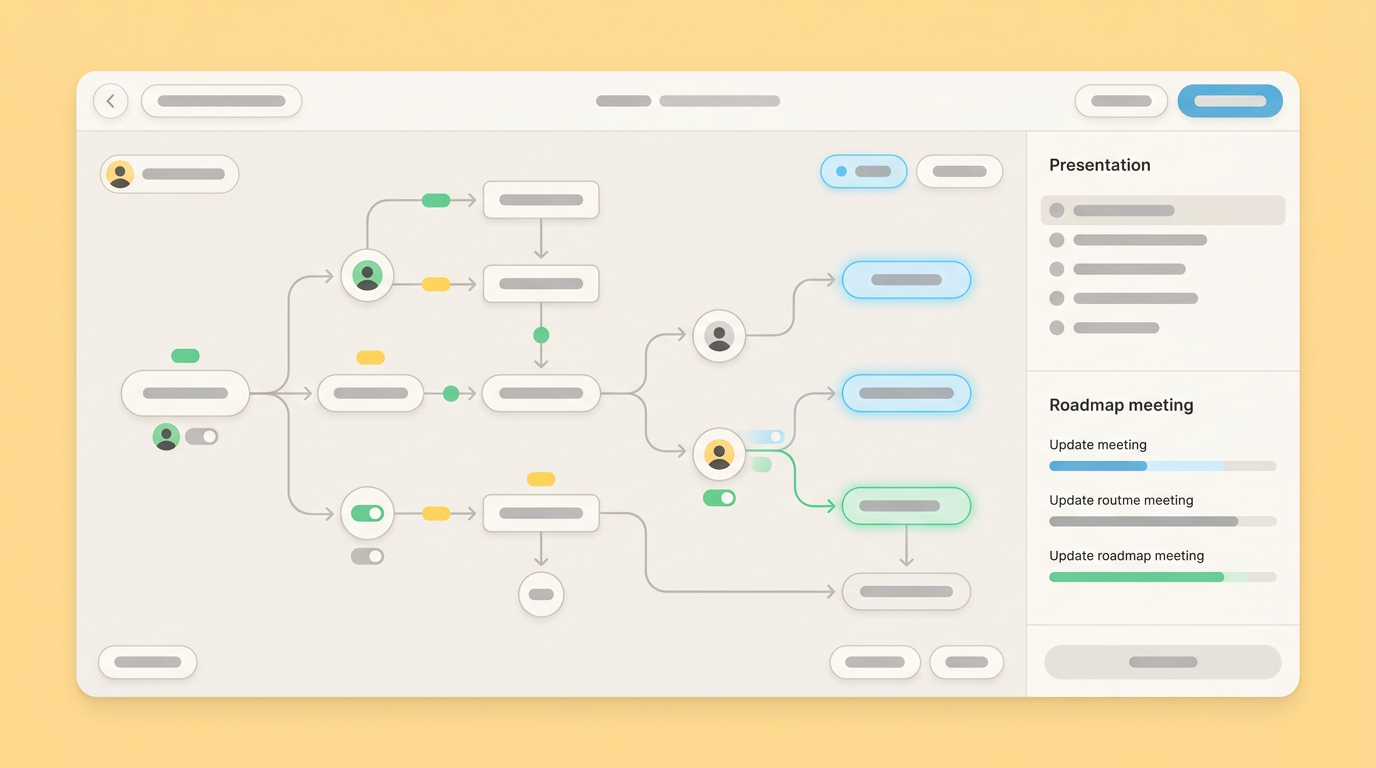
Managing the 5 Stages of Prototype Fidelity
The five stages of prototype fidelity are conceptual, wireframe, interactive, high-fidelity visual, and data-connected. Product managers must decide which stage provides enough context to validate their assumptions without over-engineering the deliverable.
Knowing when to stop building is a critical product management prototyping best practice. You only need to reach the fidelity stage that answers your specific hypothesis. These stages include: conceptual outline for initial buy-in, low-fidelity wireframe for structural layout, interactive logic model for user flow validation, high-fidelity visual for design alignment, and data-connected prototype for engineering handoff.
Independent PM Prototyping Tools That Fit the Workflow
Selecting the right workspace allows a product manager to connect their discovery phase directly to engineering handoff. The most effective independent PM prototyping tools combine natural language generation with strict design system adherence.
Fragmented toolchains cause context loss. Moving from a text document to a whiteboard to a design file introduces translation errors at every step. You need a unified space that understands product context. Dazl is the PM's teammate from ideation and spec writing through a hand-off ready prototype, keeping the whole team aligned. By maintaining a single source of truth, you eliminate the friction of jumping between disconnected platforms.
Integrating Prototypes with Design Systems
Prototypes must utilize existing design components to remain realistic and credible to engineering teams. When PMs use tools that sync with their company's design system, the resulting prototype feels exactly like the actual product.
Using rogue UI components creates unnecessary tension with your design team. You respect their work by building with their approved systems.
Handing Off Interactive Specs Instead of Jira Tickets
Transitioning from static tickets to interactive specifications gives developers a clear, functional blueprint. This reduces misinterpretation and significantly accelerates the engineering team's ability to ship the final feature.
Developers prefer executable specifications over lengthy essays. Research by Epicflow on project management trends found that 85% of high-performing teams now rely on integrated workspaces rather than fragmented ticketing tools. Ending handoff pain requires more than static UI screens, and delivering an interactive prototype answers questions before they hit the Slack channel.
Shaping the Next Generation of Product Discovery
Prototyping independently transforms the product manager from a backlog administrator into a strategic builder. By bringing functional, logic-driven models to the table, PMs accelerate decision-making and build deeper trust with their engineering counterparts.
The boundary between writing a requirement and building a live model is rapidly disappearing. Product managers who wait for engineering bandwidth to validate their assumptions will find themselves consistently outpaced. Teams report that adopting a hands-on prototyping workflow changes the fundamental dynamic of their cross-functional relationships. Instead of asking for permission to test an idea, you show up with the evidence already in hand. Mastering independent prototyping secures your position as the true owner of the product narrative, driving alignment through action rather than endless documentation.
You can accelerate your product discovery process by joining Dazl to start building functional prototypes that align your team today.
Get Started