
Product Manager Roles and Responsibilities: The 2026 Workflow Guide
The everyday workflow involves continuous context switching, from analyzing user feedback to aligning engineering schedules with marketing timelines.
Despite the growth of the discipline, the everyday mechanics of the job often feel disconnected from polished seminar frameworks. Teams report that maintaining momentum across strategy, design, and execution requires intense coordination. Many professionals get stuck trying to translate abstract requirements into actionable visual references, rather than spending time on deep product thinking.
The Reality of Product Manager Roles and Responsibilities in 2026
Product manager duties center on these key areas:
- Deeply understanding customer needs to identify pain points and opportunities.
- Defining a clear product strategy that aligns with business objectives and market demands.
- Aligning cross-functional teams (engineering, design, marketing, sales) to build the right solutions efficiently.
Daily responsibilities require professionals to maintain the roadmap, write specifications, and guide engineering and design teams through execution.
A common product moment happens when you try to explain a complex user flow using only a text document. Words often fail to capture interaction nuances, leading to misalignment. The data reflects this operational friction. You are expected to be present at every major juncture of a feature's lifecycle. We found that this split attention makes efficient communication critical.
If you are spending nearly half your hours helping teams execute, the fidelity of your specifications matters immensely. Modern product management is less about writing lengthy requirements and more about creating a shared brain for the entire cross-functional team.
Shifting from Roadmaps to Prototypes
A functional prototype provides immediate clarity that a static roadmap or text document cannot match. By showing an idea visually rather than just describing it, teams can validate core assumptions much earlier in the cycle.
In recent years, the emphasis has shifted away from rigid, long-term roadmaps. Product principles and interactive prototypes have become the primary currency for team alignment. Aakash Gupta recently wrote that AI prototyping has completely altered the profession, calling visual artifacts the missing link in early-stage ideation. When you can quickly spin up a hand-off ready prototype, you bypass weeks of back-and-forth iteration.
Navigating Cross-Functional Alignment
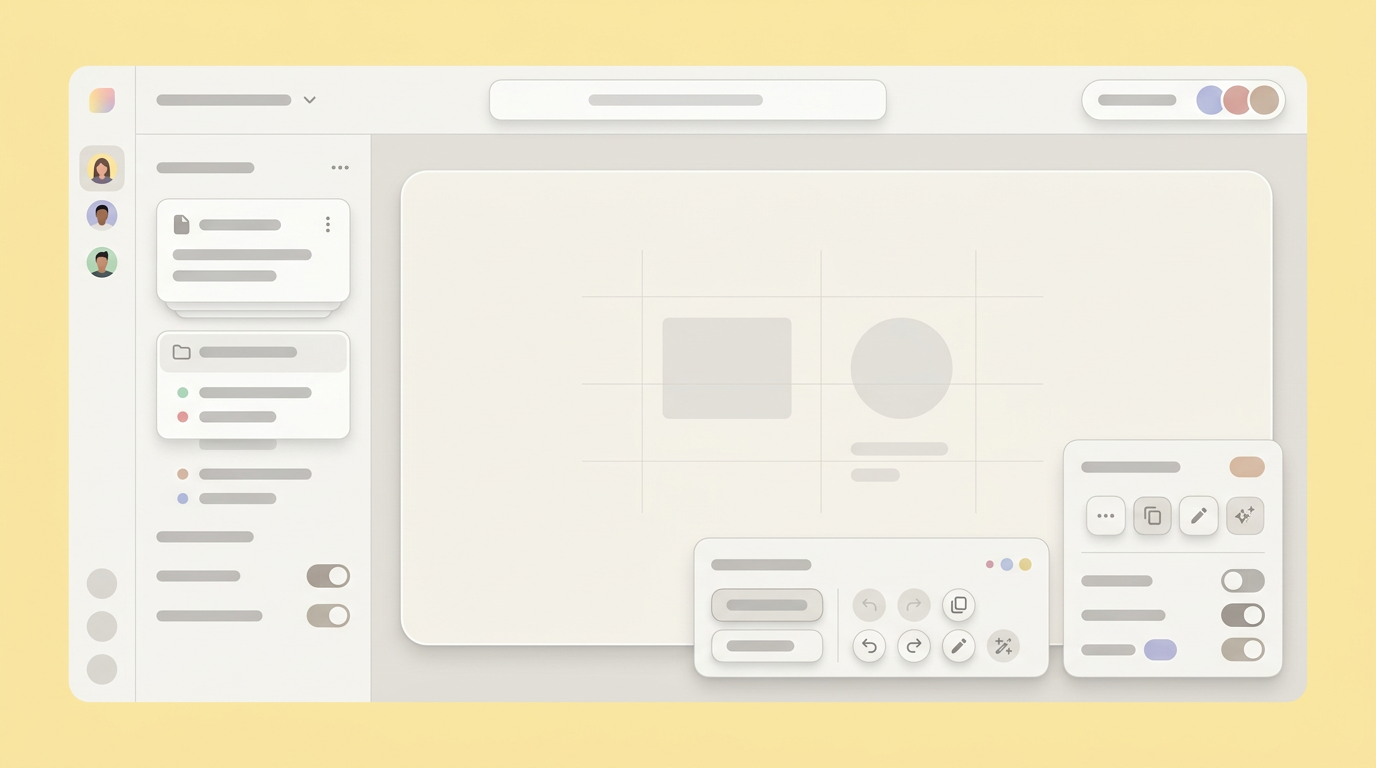
Cross-functional alignment occurs when product strategy integrates with design, engineering, and marketing goals. Successful managers establish early consensus on priorities, ensuring that every department understands exactly how a feature contributes to the broader company vision.
This level of involvement requires you to be conversant in multiple disciplines. Keeping your team focused on the 80 20 rule, delivering the 20% of features that generate 80% of the value, requires tools that help everyone visualize the end state before writing extensive code.
Bridging the Gap: Machine Learning and New Workflows
Integrating machine learning into product workflows allows teams to process qualitative feedback, generate interactive visuals, and identify usage patterns quickly. These capabilities reduce the manual overhead of requirement gathering and empower product leaders to make faster, data-informed decisions.
As artificial intelligence components become standard, product managers must adapt their technical toolkits. In our testing, incorporating AI tools directly into the planning phase shortens the path to production. Instead of waiting for weekly design syncs to visualize an idea, you can generate functional screens during a conceptual discussion. This agility keeps the development cycle moving cleanly from ideation to hand-off.
Machine Learning for Product Managers: Immediate Applications
Applying machine learning in daily product management includes several immediate applications:
- Using generative models to automate specification structuring, reducing manual effort and ensuring consistency.
- Synthesizing user research from vast qualitative data to extract actionable insights quickly.
- Rapidly building interactive user interfaces (UIs) to visualize concepts and gather early feedback.
These practical applications remove bottlenecks during the early stages of feature development.
The focus of machine learning in product management is workflow acceleration, not coding algorithms from scratch. The goal is to utilize these models to support the 5 C's of product management: company, customer, competitor, collaborators, and climate. By feeding market signals into an AI workspace, you can surface structural patterns faster than manual analysis, augmenting your strategic capacity and allowing focus on user outcomes.
The Role of Analytics and Design Iteration
Combining self-serve analytics with rapid design iteration ensures that product choices are validated by real data rather than just intuition. Utilizing behavioral metrics to adjust visual prototypes helps teams optimize the user experience before finalizing the engineering build.
Christopher Nguyen, a notable UX leader, outlines a highly affective workflow for these moments. You bring the product concept in, explore ideas rapidly, refine the visuals and interactions, and immediately share them for reactions. This iterative loop reduces reliance on separate data analysts or siloed design phases just to test an initial hypothesis.
A Case Study in Better Prototyping and Alignment
Implementing AI-driven prototyping spaces transforms abstract strategy meetings into collaborative building sessions. By working through realistic visual representations together, stakeholders quickly resolve misunderstandings, leading to significantly tighter alignment before engineering begins.
Consider a mid-sized product team trying to revamp a complex user onboarding sequence. The initial written specifications lived in Jira, while early wireframes were scattered. Engineers felt the interactions were undefined, and designers felt their visual intentions were constantly misunderstood. The core problem was a shared lack of early-stage clarity. By introducing an integrated visual workspace, the team shifted their entire approach to fixing the design handoff.
They transitioned from describing complex multi-step forms to generating interactive prototypes live during their syncs. This workflow change fundamentally altered their output velocity.
Expanding the Core Job Description
A product manager's updated job description heavily emphasizes leading without authority, driving consensus through visual artifacts, and maintaining momentum across remote or distributed teams. Success is measured by how easily the broader organization understands and acts on product direction.
The proximity to executive decision-making is also increasing. This visibility demands outputs that are immediately comprehensible to non-technical stakeholders. Presenting a functional, shareable prototype to a board member provides far more confidence than walking them through a backlog spreadsheet.
The Results: Faster Sign-Offs and Smoother Hand-Offs
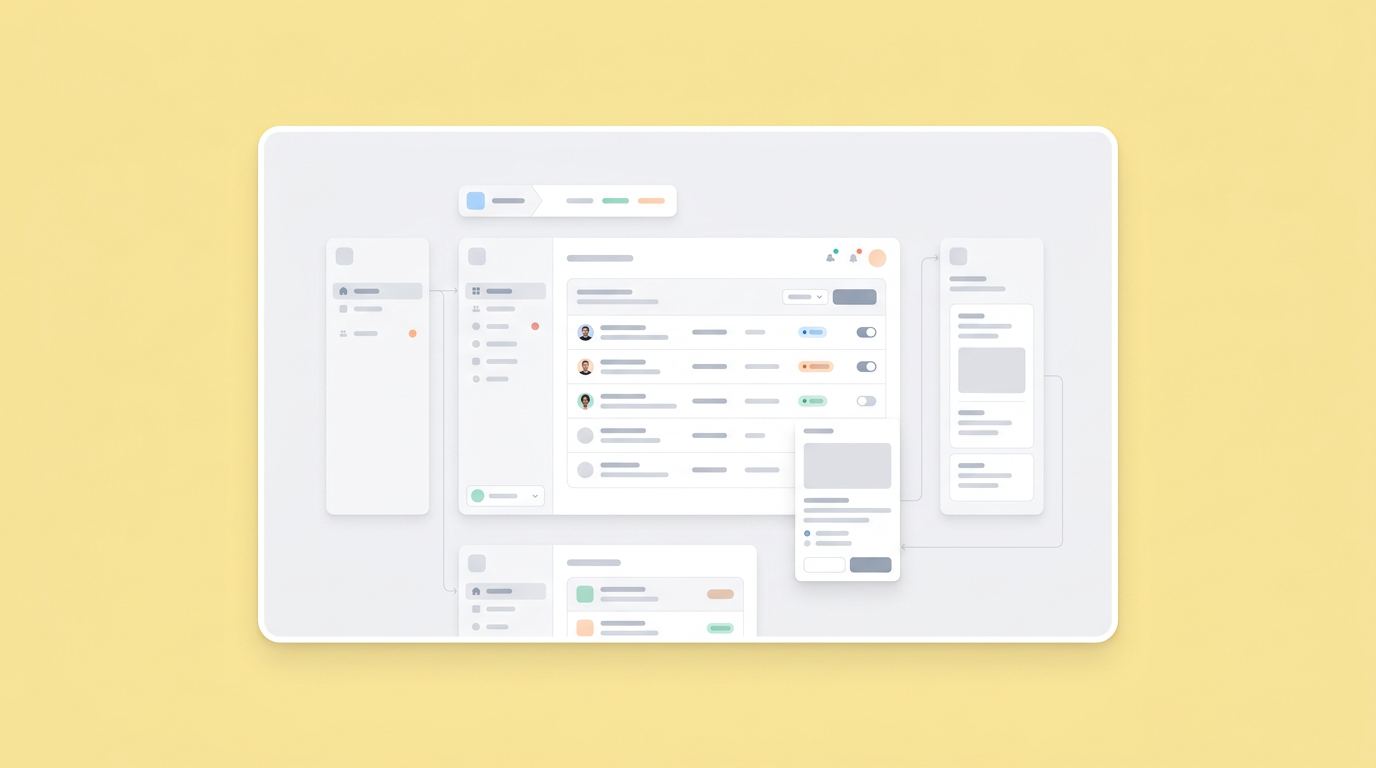
Transitioning to prototype-led communication typically results in fewer revision cycles, higher stakeholder confidence, and a much clearer path for development teams. Engineers receive highly specific interaction guides, reducing friction during the final handover.
After adopting an interactive approach, teams often experience a notable drop in mid-sprint scope changes. When everyone can click through an interface before a single line of production code is written, hidden edge cases surface immediately. Evaluating the top AI tools for accelerating product teams reveals that the best platforms act as a dedicated design partner. They keep the whole group aligned, ensuring the transition from a product manager's brain to the engineering team's queue is entirely visual and deeply detailed.
Empowering the Modern Product Management Career Path
A product management career path progresses from tactical feature execution to broad portfolio strategy and organizational leadership. Advancement in this demanding field requires continuous development in several key areas:
- Continuously refining communication tactics to clearly articulate vision and drive consensus across diverse stakeholders.
- Mastering data analysis to make informed, evidence-based decisions and measure product success.
- Learning to deploy new digital accelerators effectively, including AI/ML tools, to enhance efficiency and innovation.
While the hyper-growth of the previous decade has steadied, the demand for strong product talent remains robust. Adapting to this competitive landscape requires a willingness to rotate roles, upskill constantly, and embrace new operational methods.
Industry Demographics and Pay
The product management industry is gradually diversifying, with compensation structures reflecting the highly strategic value of the role. Average salaries remain competitive globally as companies recognize the critical importance of strong product direction in market positioning.
This evolving baseline supports a healthier, more inclusive professional environment for the next wave of builders.
Embracing the Right Kind of Tooling
Adopting advanced prototyping software equips product leaders to visualize complex ideas instantly, effectively reducing dependencies on stretched design departments. The most impactful software functions as an active participant in the ideation phase, rather than just a passive repository.
Leading product educators like Tal Raviv are already exploring workflows that include AI subagents directly in product design meetings. The goal is never to replace the human element of understanding user empathy. Instead, these systems take on the mechanical burden of structural design generation. By utilizing tools built specifically for the product journey, managers maintain high visual standards without needing to master specialized graphic design software.
Shaping the Future of Product Collaboration
The future of cross-functional development relies on transparent, highly visual workflows that keep every discipline perfectly synchronized. As teams become more resource-conscious, the ability to build consensus through functional demonstrations will separate the most effective product leaders from the rest.
The expectation for product managers to master full-stack capabilities is not about writing backend code. It is about possessing the agency to mock up an idea, validate the logic, and hand it over beautifully. Tools created with a deep understanding of builder challenges, much like the foundation built by Wix co-founder Nadav Abrahami, aim to provide exactly that agency. Whether you are drafting initial specs or finalizing interactions, a dedicated partner like Dazl keeps you grounded in realistic, high-fidelity outputs. By ending your stories with shareable prototypes instead of isolated documents, you significantly shorten your actual path to production.
To help your team master this 2026 workflow and streamline every stage of the product lifecycle, you should register for Dazl.
Get Started