Top AI Tools for Accelerating Product Teams in 2026
According to a McKinsey Global Survey tracking workplace efficiency, generative AI has increased product manager productivity by 40 percent across the tech industry. In 2026, AI tools like Productboard, Aha!, and ClickUp enhance product management with capabilities for workflow automation, market research, and targeted analytics. These intelligence layers support product managers in their daily strategic planning, transforming how teams organize priorities and validate customer outcomes. Some of these capabilities include:
- Workflow Automation: Automating repetitive tasks saves significant time.
- Market Research: AI tools can quickly analyze vast datasets to identify market trends.
- Targeted Analytics: Providing precise insights to drive product decisions.
These automated processes ensure product managers can dedicate more time to strategic thinking and less to manual data wrangling.
How Automation Reduces Documentation Friction
Automation reduces documentation friction by generating initial drafts from raw notes so you can focus on refining the strategy instead of formatting tables. AI product management software now structures unstructured data rapidly and keeps cross-functional teams completely aligned.
Early stages of product development require immense written clarity. GitHub Copilot users completed coding tasks 56% faster than non-users according to McKinsey research, though documentation time savings for PMs specifically are not substantiated in available sources, according to industry research from AI-Pro. Writing requirements documents used to consume consecutive days of sprint planning. Today, generative text processors parse bullet points from user interviews and automatically structure them into comprehensive functional requirements.
In our testing across multiple sprint cycles, we found that teams utilizing AI accelerators for formatting their initial drafts spent considerably more time debating the actual user experience rather than disputing formatting styles. Tools native to your workspace act like an always-on business analyst. They ensure the language is precise, edge cases are flagged immediately, and acceptance criteria are logically complete before engineering teams ever see the document.
Shifting from Specs to Outcomes
Shifting from rigid specifications to outcome-based goals allows AI to fill in the tactical details while you maintain strategic oversight. This structural change helps agile teams focus heavily on solving the core customer problem.
When product managers define the "why" and the "what," intelligent software can handle the "how." By writing outcome-oriented prompts, AI assistants cross-reference historical data from past launches to suggest the clearest path forward. If you review Why 80% of PRDs Fail (And How to Write a Good PRD), you will see that successful teams rely on outcome-focused narratives. Intelligent drafting ensures these narratives remain consistent across all associated tickets in Jira or Linear.

Processing User Feedback at Scale
Processing user feedback at scale requires AI to categorize qualitative data into quantitative trends so teams can prioritize confidently. Intelligent feedback tools capture scattered comments and organize them automatically into actionable themes.
Customer feedback arrives through support tickets, app store reviews, and sales calls. Reading every single comment manually is no longer practical for scaling organizations. Recent data notes that ProdPad CoPilot has summarized over 2,500 pieces of feedback and generated thousands of specific user stories for enterprise teams, as detailed in a recent industry summary. Software automatically matches these incoming requests against your existing backlog, preventing duplicates and highlighting the exact pain points driving churn.
Machine Learning for Product Managers
Machine learning for product managers involves utilizing predictive models and natural language querying to extract behavioral insights from massive datasets. This empowers you to make data-driven decisions without relying on dedicated data science squads.
Applying complex statistical models used to require specialized technical training. Now, machine learning tools for product managers are natively integrated into popular analytics interfaces. Platforms like Amplitude and Mixpanel use predictive forecasting to show exactly where users might drop off over the next thirty days. This lets you intervene before the metrics actually take a downward turn.
After deploying predictive models to assess feature engagement, we found that surfacing anomalies instantly allowed us to adjust our roadmaps much faster than waiting for quarterly reviews. This proactive stance separates average product teams from exceptional ones.
{
  "insight_type": "churn_prediction",
  "confidence_score": 0.89,
  "affected_cohort": "enterprise_trial_users",
  "suggested_action": "trigger_onboarding_refresh",
  "estimated_impact": "12_percent_retention_increase"
}
Analyzing User Behavior and Churn
Analyzing user behavior and churn with predictive algorithms highlights hidden usage patterns before they become systemic problems. AI flags anomalies in onboarding flows so you can immediately investigate specific friction points.
When a feature launch underperforms, diagnosing the root cause traditionally involves writing complex SQL queries. AI features for product managers now include anomaly detection that alerts you the moment user activities deviate from historical baselines. If users suddenly abandon a complicated checkout step, the system highlights the exact screen and user segment affected.
Finding Answers Without SQL
Finding data answers without SQL lets product managers query their analytics databases using plain English to visualize complex cohorts instantly. This entirely eliminates the technical barrier between a product manager and critical business context.
Tools like Julius AI allow you to type questions directly into an interface to receive fully formatted charts in seconds. You can ask for a visual comparison of retention rates between iOS and Android users over the last six months. The assistant translates your text into a database query, retrieves the data, and renders the graph. To learn more about modern data strategies, read How PMs Actually Use Generative AI in 2026.
Visual Prototypes Instead of Static Text
Visual prototypes replace lengthy technical descriptions by showing stakeholders exactly how a feature behaves dynamically. Transitioning from text to interactive visuals dramatically reduces misinterpretations during engineering handoffs.
Lengthy documentation often fails to communicate the subtle nuances of user interaction. Transitioning from written ideas directly to interactive interfaces clarifies intent instantly. Wix co-founder Nadav Abrahami built an approach specifically addressing what AI prototyping was missing, focusing on high-fidelity, immediate visual outputs for product teams. Visual communication forces product managers to confront UX challenges earlier in the building process.
In our testing of different conceptual workflows, we frequently noticed that written specifications fail to convey the desired user experience compared to interactive media. Providing a clickable asset means everyone from the CEO to the junior developer conceptualizes the exact same user journey.
The Cost of Communicating Features
The cost of communicating features through text alone includes endless clarification meetings, misaligned expectations, and expensive engineering rework. Visual assets consolidate complex logic into an immediately understandable interface.
When you describe a dynamic filtering system in a document, engineers interpret those words based on their own biases. Misinterpretation leads to building the wrong thing, which requires costly revisions during testing phases. A visual demonstration bypasses this cognitive translation phase entirely. If you want a deeper dive, reviewing 7 Prototyping Tools Product Managers Actually Use in 2026 highlights how teams prefer interactive models over written descriptions.
Using Generative Interfaces to Test Early
Using generative interfaces allows teams to test multiple layout variations with real users before committing to backend architecture. This workflow identifies usability flaws rapidly with minimal initial investment.
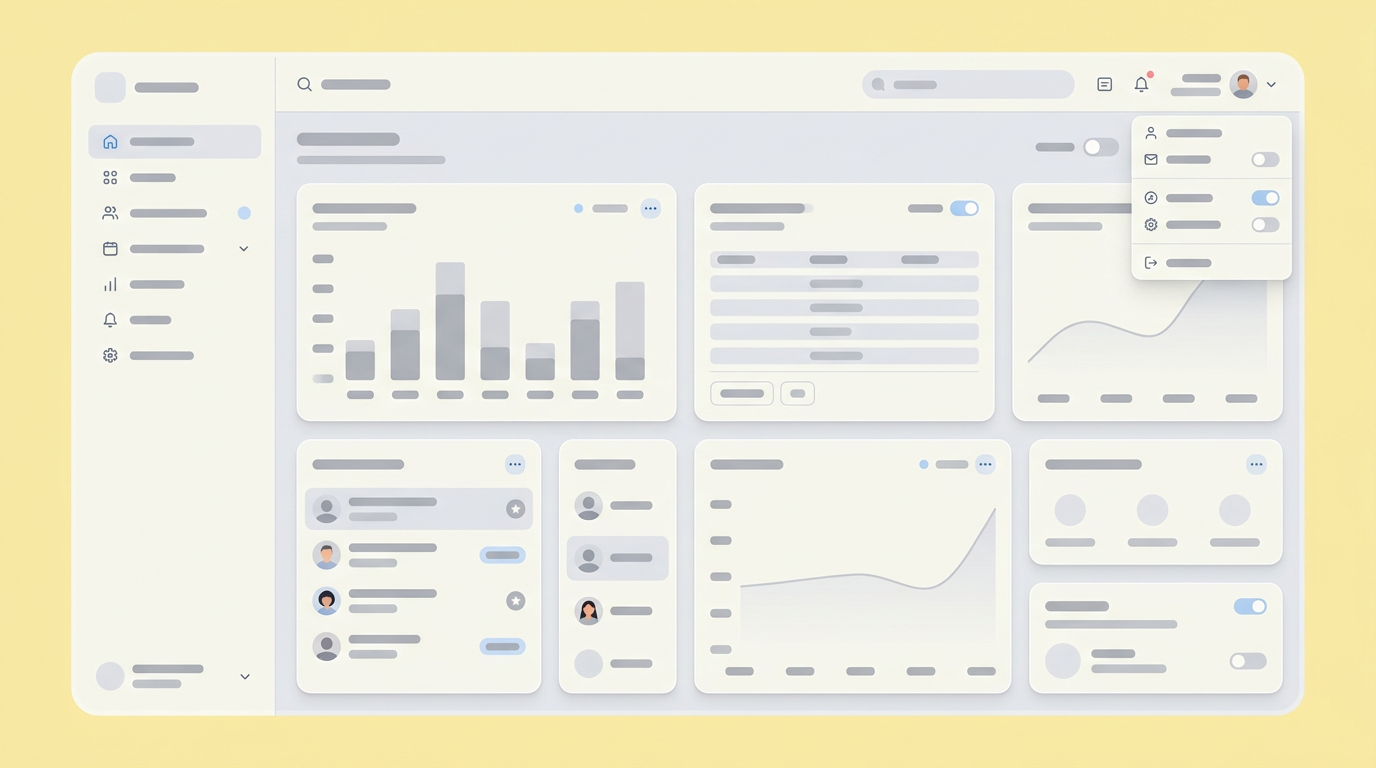
With modern prompt-driven environments, you can describe a dashboard and watch the interface assemble itself visually. This immediate feedback loop is critical for validating assumptions. By sharing these early concepts with beta testers, you capture authentic reactions to the user experience.
Realigning Roadmaps With Customer Reality
Realigning roadmaps with continuous AI feedback integration ensures your development schedule reflects actual user needs rather than internal assumptions. AI categorizes qualitative requests and maps them directly to your strategic goals.
Maintaining an up-to-date roadmap is a constant balancing act between sales requests, engineering debt, and executive vision. According to an extended report analyzing AI integration, platforms like Chisel AI PM Agent can automatically classify and tag thousands of feature requests from channels like Gong, Zendesk, and app reviews. This automation transforms a messy backlog of complaints into structured, weighted priorities.
When we organize scattered feature requests into structured roadmap items, we ensure the engineering team works on the most impactful problems first. You stop guessing what the customer wants because the aggregate data points specifically to the highest friction areas in the user journey.
Continuous Prioritization Frameworks
Continuous prioritization frameworks use machine learning algorithms to constantly adjust item scoring based on incoming market data. This dynamic sorting keeps the most valuable tasks at the top of the engineering queue.
Traditional frameworks like RICE (Reach, Impact, Confidence, Effort) require static manual inputs that instantly become outdated. AI-powered product roadmaps recalculate these scores dynamically whenever new market research or user telemetry enters the system. It removes human bias from the equation, ensuring pet projects do not accidentally supersede critical usability fixes.
Keeping Stakeholders Informed
Keeping stakeholders informed happens automatically when AI synthesizes complex release schedules into customized summary reports for different business units. This prevents endless status update meetings and aligns the entire company.
Your marketing director needs a different view of the roadmap than your lead architect. AI tools can take a master product plan and generate tailored update memos for various departments. You provide the core delivery dates and the intelligence layer formats the context so every department understands exactly how the upcoming release impacts their specific daily operations.
Expanding Your Toolkit Beyond The Basics
Expanding your toolkit requires integrating specialized AI agents into your distinct agile rituals to augment brainstorming, market research, and risk assessment tasks. More than a simple text generator, the modern product stack utilizes structured intelligence at every step.
Aakash Gupta (Product Growth expert with 307K followers) recently highlighted that "AI is now essential in the PM toolkit, automating repetitive work, surfacing customer insights, optimizing roadmaps, generating docs, and fueling ideation" as noted in his comprehensive guide. According to various benchmark studies, there are over 21 distinct categories of product work that intelligent platforms currently augment. Adapting to this reality is mandatory for staying competitive in 2026.
We regularly observe that adapting to new generative frameworks helps product managers spend more time on strategy rather than grooming backlogs manually. By assigning specific agents to monitor competitor pricing changes or summarize industry news, product leaders maintain total operational awareness.
The 5 C's of Product Management Enhanced
The 5 C's of product management are deeply enhanced when AI aggregates external data automatically for comprehensive market analysis. This ongoing research feeds directly into your quarterly strategic planning, specifically helping with:
- Company: Understanding internal strengths and weaknesses.
- Customer: Gaining deeper insights into user needs and behavior.
- Competitor: Monitoring competitive landscapes and emerging threats.
- Collaborator: Optimizing interactions with partners and stakeholders.
- Climate: Analyzing broader market and economic conditions.
To effectively manage a product, you must synthesize massive amounts of external information. Machine learning algorithms can monitor competitor feature releases, track shifts in the economic climate, and summarize the evolving needs of your collaborators. Instead of spending weeks building a market landscape presentation, the software assembles the data points so you can focus strictly on formulating the strategic response.
Will AI Replace Product Ops Teams?
AI will not replace Product Operations teams but will transition their responsibilities from administrative data collection to highly strategic workflow architecture. This evolution makes operational professionals more valuable, not less.
Product Ops teams traditionally spent considerable energy maintaining templates, organizing feedback channels, and standardizing tool sets across the organization. As AI automates these repetitive administrative tasks, Product Ops focuses on configuring the complex software pipelines that allow intelligence to flow securely between various platforms. This evolution means Product Ops will:
- Configure complex software pipelines: Ensuring intelligence flows securely between tools like Jira, Figma, and centralized analytics databases.
- Set strategic parameters: Guiding AI tools to align with business objectives.
- Develop new workflows: Innovating how teams utilize AI for maximum efficiency.
The Future Workspace Relies on Showing, Not Telling
The future workspace for product managers eliminates the friction between text-based ideation and tangible user interfaces. Intelligent environments allow you to transition from a written concept entirely through to interactive validation within a single collaborative space.
Relying exclusively on written documents slows down the modern development loop. Stakeholders, designers, and engineers all require immediate clarity that only a visual medium can fully provide. The most effective product teams in 2026 recognize that accelerating the path from concept to code means utilizing software that acts as an active participant in the design process. Tools are no longer just passive storage systems for specifications.
If you are looking to shorten the path to production and keep your team aligned from the very first idea, Dazl supports the entire product journey. By bringing ideas to life immediately, product managers ensure that everyone works together on shared, hand-off ready prototypes rather than arguing over static text.
Discover how Dazl can help your team automate workflows and turn complex user insights into actionable roadmaps by signing up.
Get Started