
Structuring Your Strategy: Product Manager Skills for AI Workflows
You sit down in a scoping meeting trying to translate an open-ended user complaint into a structured engineering ticket. The engineering team starts mapping out vector databases and discussing context window limits. You are just trying to figure out if the user actually needs a conversational interface or an an intelligent default setting that saves them five clicks. From our team's experience, bridging this gap requires a product manager to deeply understand both user needs and technical constraints. Managing that gap requires a distinct set of operational habits.
Shaping Machine Learning for Product Managers
Grasping machine learning for product managers means shifting focus from infrastructure to output evaluation. PMs guide technical execution by defining success criteria, clarifying data pipeline requirements, and establishing strict behavioral boundaries for how models should react when unexpected edge cases hit production workflows.
While theoretical courses teach the mechanics of model training, practical application demands grounded decision-making in the product cycle. Relying solely on technical architecture diagrams often leaves the actual user experience unresolved. Instead of writing code, PMs prioritize rapid experimentation. They focus heavily on interpreting system outputs and ensuring the feature solves an existing workflow friction point.
Shifting from technical coding to prompt architecture
Engineering teams build the backend infrastructure, but product managers must shape the inputs to guarantee viable business outputs. Writing effective system prompts establishes the operational guardrails, ensuring models return consistent formats rather than hallucinated text that frustrates end users.
You do not need to push code to a repository to influence how a solution behaves. Crafting the instructions that constrain a model's behavior is a direct method of controlling the user experience. Teams often spend hours refining these constraints before engineering formalizes the data pipeline.
Balancing the four core model trade-offs
Every intelligent feature requires weighing competing priorities before a single line of backend logic gets finalized. Product managers negotiate the specific parameters of how a model operates, determining exactly what compromises the end user is willing to accept during daily tasks.
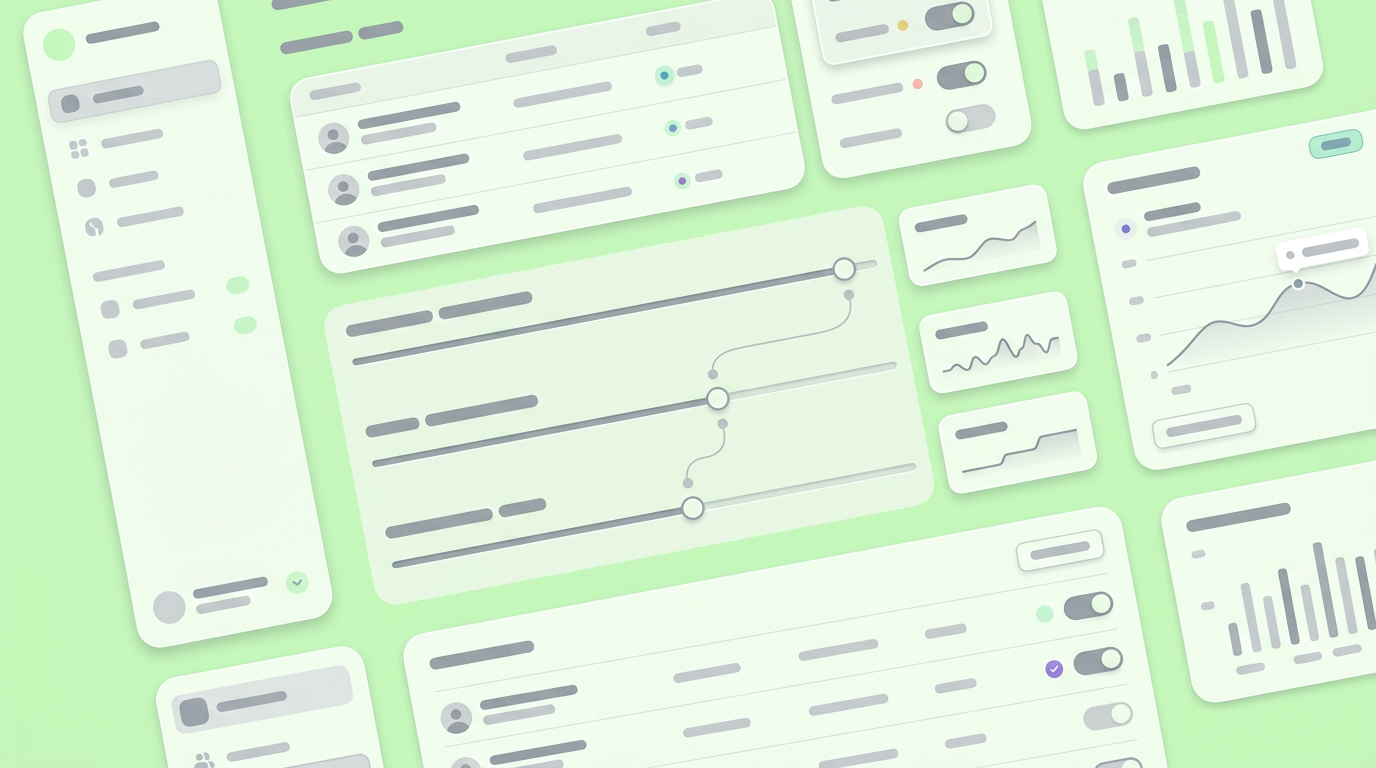
Productboard outlines four fundamental trade-offs teams must balance: accuracy, latency, cost, and user experience. We found in our testing that users reliably abandon slow features, even if the underlying model logic is flawlessly accurate. Generating a highly precise response that takes forty seconds to load often creates more frustration than providing a less detailed answer instantly. PMs draw the line on these compromises.
Building Specialized Product Manager Skills for AI
The most effective product manager skills for AI blend data fluency with behavioral psychology. Product Managers (PMs) evaluate whether an open-ended customer problem fits an algorithmic solution, continuously interpreting model data and refining prompts based on real-world adoption patterns over time. These skills include:
- Data Fluency: Understanding data inputs, outputs, and limitations.
- Behavioral Psychology: Interpreting user actions and predicting responses.
- Continuous Iteration: Refining models and prompts based on real-world adoption.
- Strategic Thinking: Connecting technical capabilities to business objectives and user needs.
- Ethical AI Principles: Ensuring fairness, privacy, and transparency in AI applications.
Relying on intuition rarely works when dealing with probabilistic systems. Features that simulate intelligence require rigid evaluation frameworks. As cross-functional teams look to product management for direction, the ability to translate ambiguous goals into testable, metric-driven hypotheses becomes critical.
Deepening data science product skills
Understanding how information flows through your system dictates the ultimate quality of the feature you ship. Product managers must audit the training inputs, looking for representation gaps and edge cases that will inevitably influence the final user experience in production.
Recent analysis from monday.com highlights that data interpretation outranks deep technical coding for modern PM capabilities. If you do not grasp what information feeds the system, you cannot troubleshoot why a recommendation failed for a specific cohort. Data science product skills center on questioning the underlying logic. You must ask engineering what happens when user inputs fall outside the expected statistical distribution.
Mastering the rapid experimentation loop
Evaluating probabilistic systems requires deploying small tests frequently rather than waiting for a massive quarterly release. Product managers build tight feedback cycles to validate assumptions, ensuring the team pivots quickly when a chosen model struggles to handle real customer inputs.
Harvard Business Review emphasizes that successful workplace AI adoption requires core product management disciplines: defining valuable problems, rapid experimentation, and evaluating continuous solutions. Dazl acts as the PM's teammate from ideation and spec writing through a hand-off ready prototype, keeping the whole team aligned during these rapid cycles. Quickly validating a small interaction model prevents weeks of misplaced engineering effort.
Structuring an AI Product Strategy That Translates Promptly
A grounded AI product strategy connects technical capabilities directly to persistent user friction points. Instead of treating intelligence as a vague roadmap objective, successful teams pinpoint exact workflows where automation or prediction demonstrably removes user effort and accelerates task completion.
Adding a chat window to an existing interface does not automatically equal a strategy. True strategic alignment happens when specific algorithms deploy to resolve specific bottlenecks. The highest functioning teams measure success by how much time they return to the user.
Pinpointing the right workflow problems
Identifying which customer tasks carry the highest cognitive load reveals the best opportunities for algorithmic intervention. Product managers map out everyday workflows step by step, isolating the moments where users stall, switch contexts, or abandon the task completely. This process often involves:
- Workflow Mapping: Documenting current user journeys, often revealing that up to 30% of a user's time is spent on repetitive, automatable tasks.
- Cognitive Load Assessment: Identifying points of friction and decision overload.
- Bottleneck Identification: Pinpointing where users struggle or drop off.
If generating a summary takes longer than reading the original text, the capability offers no tangible value. We have to map out the current state before introducing automation. Egon Zehnder reports that the role requires continuous investment across three pillars: data literacy, strategic thinking, and emotional intelligence. Applying emotional intelligence helps teams understand the user's actual frustration, ensuring the proposed solution addresses the root pain point.
Managing ethical AI product development
Integrating compliance and privacy checks early in the conceptual phase prevents severe operational roadblocks closer to launch. Product managers champion responsible data use, establishing clear guidelines on user consent, algorithmic fairness, and data retention policies from day one.
Teams report that treating privacy boundaries as creative design constraints leads to more transparent user experiences. Defining how data is stored and utilized must happen before drafting the technical specifications. If you establish these guidelines late, the resulting rework can stall a critical deployment for months. Ensuring your specifications are tight from the start bridges this gap, a practice detailed in our guide on comparing PRD formats for faster builds.
Prototyping AI Product Roadmap Features Early
Documenting AI product roadmap features requires more than static mockups and basic user stories. Prototyping intelligence means capturing conversation flows, conditional logic, and state changes so engineering understands the intended user experience before touching production environments. Key aspects of this prototyping include:
- Conversation Flow Design: Mapping out natural language interactions.
- Conditional Logic Specification: Defining system responses based on various inputs.
- State Change Visualization: Illustrating how the system and user interface evolve.
Traditional design tools struggle to represent variable outputs. When systems generate unpredictable information, flat images fail to communicate the intended fallback states or loading behaviors. Prototyping these interactions allows the cross-functional team to feel the latency and experience the user flow firsthand.
Moving from static wireframes to functional flows
Simulating a dynamic text response or complex conditional routing requires interactive components that mirror real system behavior. Product managers build functional prototypes to validate logic paths, ensuring that every possible user input maps to a safe, coherent system response.
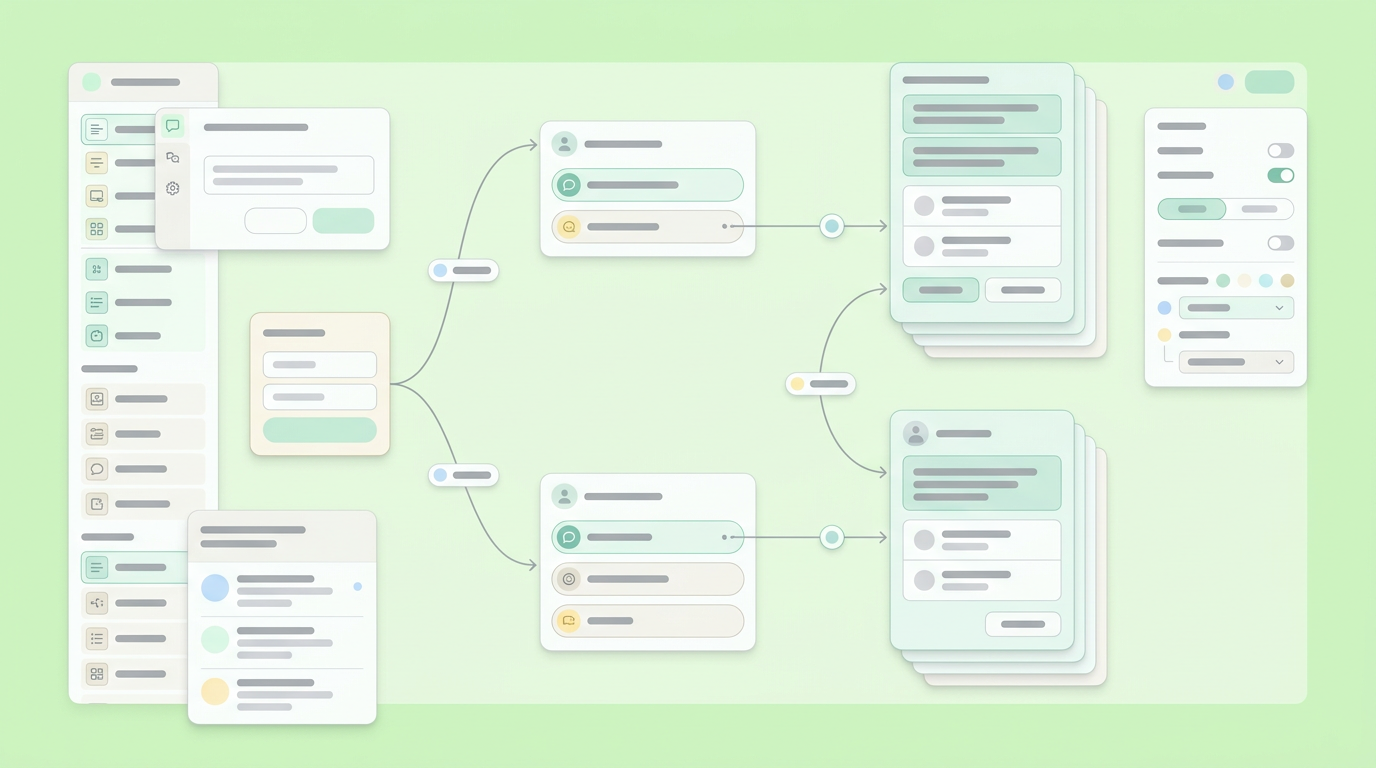
When a user asks a complex question, the interface needs to show an active processing state rather than a frozen screen. You must define what happens when the prompt hits a filter or times out. Mapping these nodes visually prevents misunderstandings down the line. You can explore this particular workflow in depth by looking at conversational AI prototyping for aligning teams.
Aligning cross-functional teams around realistic interactions
Bringing data scientists, UX designers, and engineers together around a shared functional model dramatically reduces translation errors. Product managers use interactive flows to force discussions about technical limitations and design expectations long before front-end development begins.
In our own product cycles, placing a functional interaction model in front of the team immediately highlights edge cases we previously ignored. Designers recognize where loading states are needed, and engineers spot constraints in the data pipeline. This shared context shortens the path to deployment and minimizes risky assumptions.
The Next Iteration of the PM Role
Expanding your skillset changes how you approach ambiguous user problems moving forward. As algorithmic capabilities embed themselves into standard web infrastructure over the coming years, the emphasis shifts completely toward problem definition and cross-discipline alignment.
You no longer need to be the authority on cloud architecture or deep learning algorithms. Your primary objective remains translating human friction into systematic solutions. Developing a strong grasp of data limitations and behavioral tradeoffs ensures you guide your team toward building features people actually use. The tools will evolve, but the core discipline of evaluating outcomes over outputs remains the anchor of a strong product practice.
Your team can master these core competencies and streamline your intelligent workflows by joining Dazl to start building today.
Get Started