The Static Prototype Problem: Achieving Consensus Across EPD in 2026
You sit down with the VP of Sales, the Head of Customer Success, and the engineering lead to review an upcoming feature. You put a static mockup on the screen. Everyone nods, asks a few questions about button placement, agrees on the general aesthetic, and offers approval. Six weeks later, the beta drops. The VP of Sales calls you to ask why the user flow is so rigid, and engineering points out that the design team’s approved vision conflicts with backend constraints.
Figuring out how to get stakeholder alignment on product design requires moving past these superficial nods of approval. When cross-functional partners review flat images, they fill in the blanks with their own assumptions. Securing true product roadmap stakeholder agreement means giving them an interactive experience - something they can interact with, test, and understand before development begins.
The Gap Between Perceived Strategy and Actual Execution
Product leaders often believe their teams share a unified vision, but execution teams frequently report high fragmentation. Closing this gap requires shifting from assumed consensus to verified, shared understanding across product, engineering, and design.
The reality of product development in 2026 shows a stark contrast between the boardroom and the backlog. Executives might agree on high-level objectives, but this agreement rarely cascades neatly down to the people building the software.
According to the Productboard CPO Survey Results 2025, a staggering 90% of surveyed product leaders report being fully or mostly aligned with their key stakeholders. This creates a false sense of security. Leaders assume that because the overarching strategy was approved, daily design and technical decisions will naturally follow suit.
However, the execution layer tells a completely different story. Teams responsible for actually shipping the product experience intense friction when translating those high-level goals into concrete user interfaces and database architectures.
Why Product Leaders See Alignment Differently Than Execution Teams
Leaders look at high-level roadmaps and business goals, while execution teams struggle with detailed design decisions and context gaps that emerge during daily workflows.
Notion's Future of Product Development research reveals that only 33% of EPD teams feel fully aligned with their core product development team and cross-functional partners. The breakdown becomes even more specific when you separate the disciplines.
Designers often feel the brunt of this misalignment. They are tasked with balancing user empathy, technical feasibility, and business requirements. When stakeholders are only engaged during final sign-offs, designers are left isolated in the critical middle phases of product design consensus building. They end up guessing what executives actually meant, which leads directly to late-stage revisions.
The Cost of the Context Gap
Misalignment leads to teams updating multiple systems instead of building products. This context gap directly reduces project success rates and increases the time required to ship features.
When product, engineering, and design lack a shared source of truth, productivity drops. The same Notion report highlights that EPD teams lose hours updating multiple systems due to a severe context gap and lack of shared visibility. This friction creates a ripple effect across the entire organization.
Research compiled on stakeholder engagement statistics shows that only 7% of organizations frequently align stakeholder interests with business interests effectively. This rare capability is a massive competitive advantage. Missing the mark on alignment is a cultural issue; it directly impacts the financial success of the product.
Comparing Approaches to Product Design Consensus Building
Teams typically choose between two main approaches:
- Presenting Static Design Screens for Sign-off: This traditional method involves showcasing flat UI images, often leading to superficial feedback.
- Co-creating Interactive Prototypes: This approach allows stakeholders to experience the solution before engineering begins, fostering deeper engagement and more meaningful feedback.
The method you use to present your ideas dictates the quality of the feedback you receive.
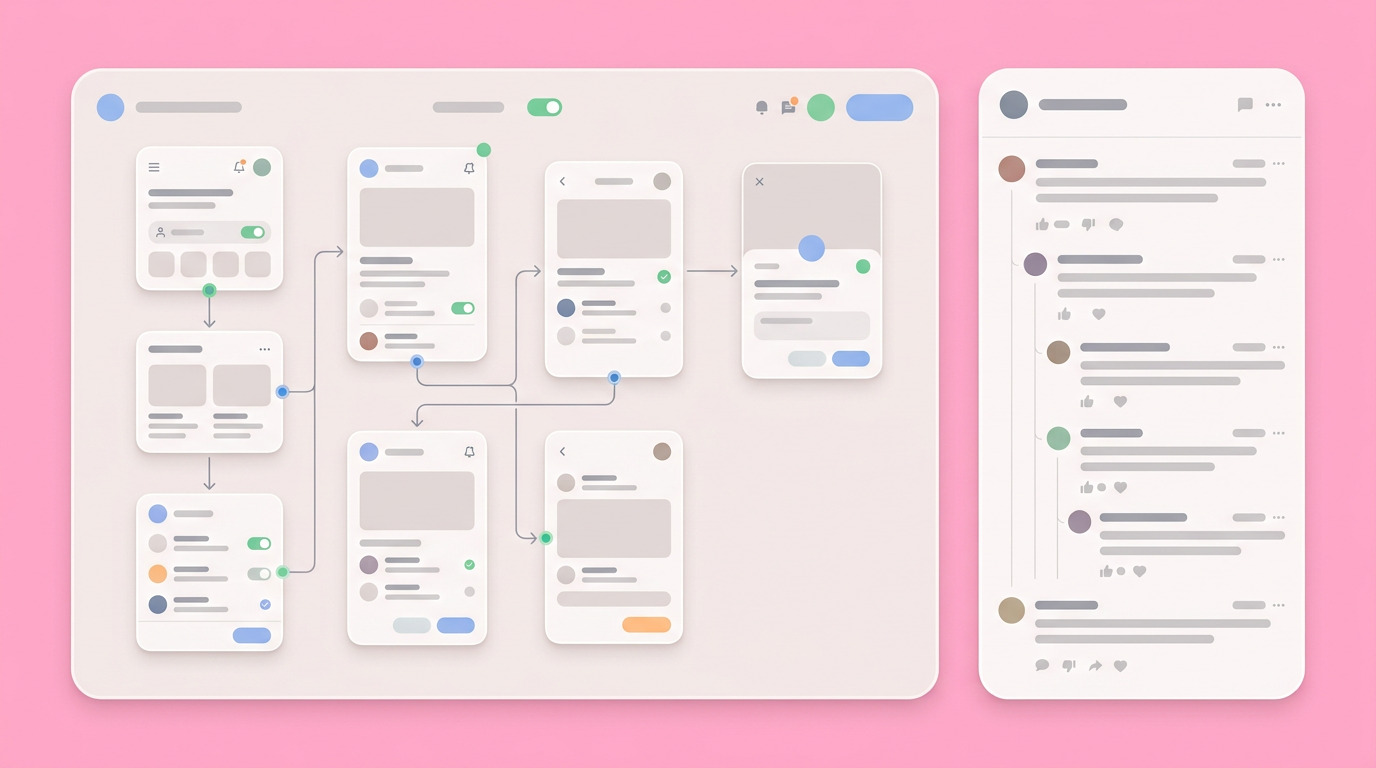
The method you use to present your ideas dictates the quality of the feedback you receive. For years, product managers have relied on presentation decks and flat mockups to explain complex interactions. Today, the standard is shifting toward methods that prioritize comprehension over visual polish.
When evaluating how to manage these reviews, product managers must weigh the speed of creating static assets against the clarity provided by interactive experiences.
The Traditional Static Review
Presenting flat UI images often results in superficial feedback. Stakeholders approve the visual aesthetics but fail to grasp the interaction logic; this leads to late-stage pushback.
The standard workflow usually involves a product manager sharing a link to a design file or pasting mockups into a document. Stakeholders look at the screens and comment on the things they understand immediately, such as copy or colors. They cannot feel the friction of a multi-step form or experience the logic of a complex data filter.
Because the artifact is static, the reviewer's brain fills in the behavioral gaps. The Head of Sales imagines the feature working one way, while the lead engineer assumes a different technical path. They both say "looks good," but they are approving two entirely different concepts. This is the root cause of The Silent Disconnect Between Static Specifications and Reality. When the actual software is delivered, the illusion breaks.
The Interactive Discovery Approach
Using clickable prototypes during discovery forces stakeholders to navigate the real user journey. This approach uncovers friction early and secures meaningful buy-in on the actual experience.
In our testing of different review formats, we found that shifting from static screens to interactive models completely changes the conversation. Stakeholders stop talking about button colors and start asking questions about the user flow. They click through the logic, experience the dead ends, and provide feedback on the actual mechanics of the feature.
This is exactly where Dazl fits into the workflow. Dazl is the PM's teammate from ideation and spec writing through a hand-off ready prototype, keeping the whole team aligned. By turning specifications into something tangible early in the process, teams can gather behavioral feedback instead of visual opinions. This approach shortens the feedback loop and ensures that engineering receives a concept that has already survived contact with the broader business.
This early validation reduces the risk of costly rework and helps foster a shared understanding across all teams involved.
How to Prevent Misalignment Before Engineering Starts
Bringing cross-functional partners into the problem space early and establishing regular communication rituals ensures that design decisions reflect both user needs and business constraints.
Waiting until the end of a sprint to reveal a design is a guaranteed path to friction. True collaboration in product design requires a proactive approach where stakeholders feel like partners rather than gatekeepers.
When you involve key players early, you distribute the ownership of the final decision. This reduces the pressure on the product manager to perfectly predict what the business wants and creates a safety net where potential issues are caught while they are still cheap to fix.
Co-Creating the Problem Space
Instead of seeking sign-off on finished designs, product managers should facilitate workshops where stakeholders help define the problem and explore potential solutions together.
Bruce McCarthy, a prominent product management expert, emphasizes the importance of co-creation. He advises teams to avoid coming up with a plan in isolation and then trying to convince people of it. Inviting key people into the process ensures that the final strategy becomes a shared plan, with alignment built directly into the foundation.
This principle is critical for collaboration among product design stakeholders. Surprising executives with fully formed solutions forces them into a defensive posture. By working together to frame the objective and agree on the user problem, you establish a neutral ground. A recent study on product engineering communication highlights that projects with strong early stakeholder engagement achieve roughly 30% better delivery performance and 25% greater alignment with user expectations.
Implementing Structured Communication Rituals
Regular touchpoints create a predictable cadence for feedback and keep the entire organization updated on design iterations, reducing the risk of late-stage surprises.
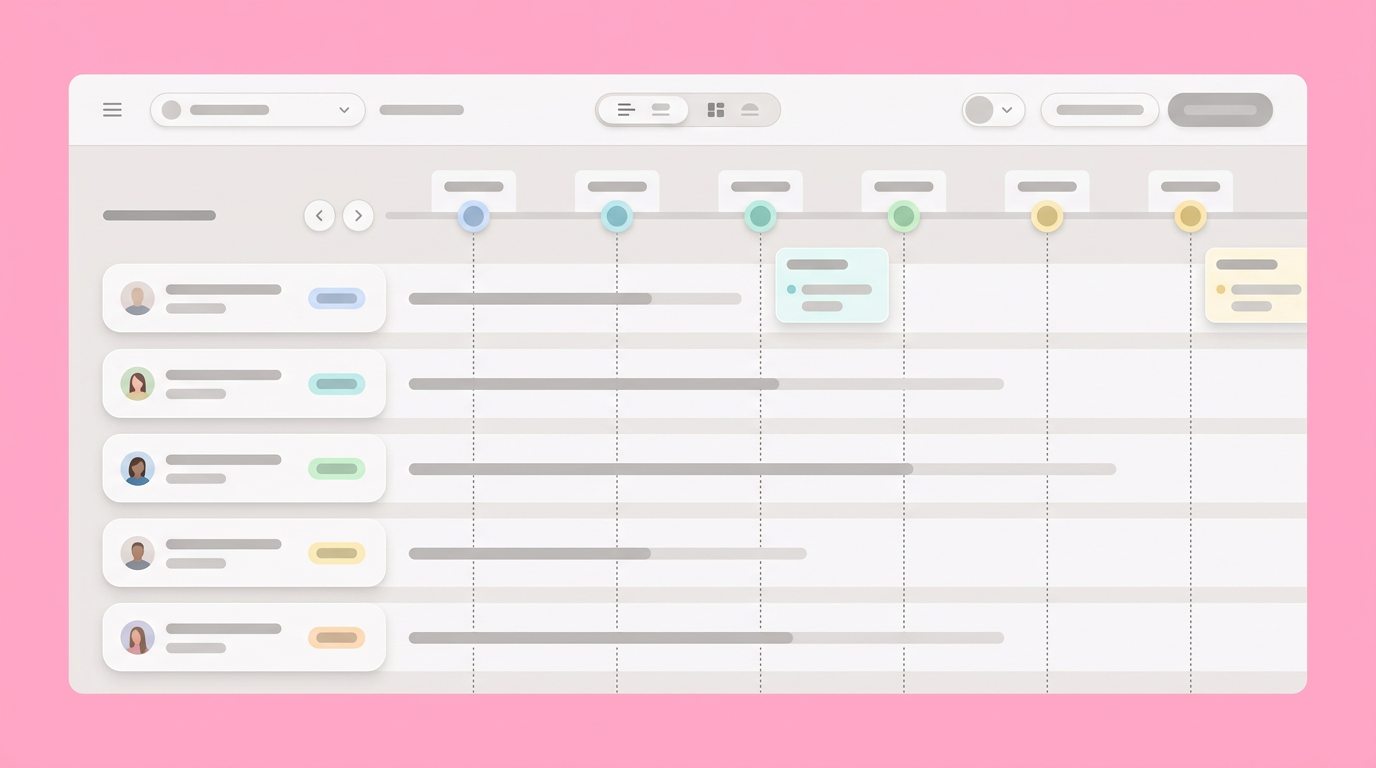
Alignment is not a one-time event; it requires ongoing maintenance. Relying on ad-hoc messages or hallway conversations guarantees that context will be lost. Structuring your communication ensures that everyone has equal access to updates and a dedicated forum to voice concerns.
When we evaluated this approach across our own product pods, we noticed a sharp drop in last-minute executive overrides. A predictable cadence calms anxieties. Stakeholders know exactly when they will see the next iteration, which stops them from micromanaging the daily work of the product team.
Managing Stakeholder Expectations in Product with Real Reactions
Proving the value of design decisions requires shifting conversations from subjective opinions to objective metrics and demonstrating how the product behavior solves the agreed-upon problem.
Stakeholders naturally bring their own biases and departmental priorities into product reviews. Sales wants features that close deals today, while engineering wants to minimize technical debt. Managing these competing expectations is the core challenge of securing stakeholder buy-in for product development.
To navigate this, product managers must anchor the conversation in observable reality. Subjective debates about whether a workflow is "intuitive" rarely lead to consensus; instead, you have to show them the impact.
Why Showing Beats Describing in the AI Era
As the future of AI in product design accelerates, tools now bridge the gap between static specs and functional code, allowing teams to generate and test ideas instantly.
We are moving past the days of writing exhaustive documents to describe interactions. When answering questions about the future of AI in product design, the focus is increasingly on how generative models help teams visualize solutions immediately. Instead of asking stakeholders to imagine a complex feature based on a text description, modern product managers generate structural prototypes on the fly.
Showing a working concept ends the debate over how a feature might function. When stakeholders can click a button and see the exact consequence of that action, they provide targeted, useful critiques. Experiencing the product's behavior firsthand makes the feedback much more actionable. If you are struggling with this phase, Interactive Prototypes for Executive Alignment: Ending the Endless Revision Loop offers a deeper look at replacing long specification documents with experiential models.
Securing Stakeholder Buy-In Through Measurable UX ROI
Quantifying the business impact of design decisions helps secure alignment. Presenting UX improvements as revenue drivers rather than aesthetic choices aligns design with executive priorities.
When cross-functional partners hesitate to approve a design direction, it is often because they cannot see the financial justification. Product managers need to speak the language of the business.
Data on UX statistics demonstrates that every $1 invested in UX can return between $2 and $100, depending on the context. Presenting these kinds of metrics during a review changes the dynamic. If a specific design pattern improves user retention or accelerates the onboarding funnel, lead with those numbers. Tying the design directly to the metrics that your stakeholders care about transforms the review from an aesthetic critique into a strategic business decision.
Moving Beyond the Sign-Off Illusion
True alignment requires abandoning the pursuit of passive approval in favor of active, ongoing collaboration that treats stakeholders as partners in the product journey.
The ritual of gathering signatures on a requirements document offers a false promise of stability. Real product development is messy, iterative, and requires constant adjustment. Getting stakeholder alignment on product design means building an environment where cross-functional partners feel comfortable engaging with rough concepts and providing input before decisions harden.
As organizations adapt to faster development cycles, the tools and rituals we use must also evolve. By prioritizing early co-creation, insisting on interactive reviews, and maintaining a strict cadence of communication, product teams can close the context gap. The goal is no longer just getting a 'yes' in a meeting. Instead, it is ensuring that the product you decide to build is exactly the product that arrives in the hands of your users.
Your team can establish this interactive workflow and secure executive buy-in by creating your first collaborative workspace on Dazl today.
Get Started