Why PMs Are Prototyping Without Engineering Sprints in 2026
The traditional product development cycle has a massive bottleneck built right into the middle of it. Product managers spend weeks conducting discovery, interviewing users, and refining a dense product requirements document. You hand that document over to engineering, only to realize the backlog is packed for the next two quarters. The ideas sit waiting for developer bandwidth.
According to a recent Gartner forecast, 70% of new applications developed by organizations will use low-code or no-code technologies by 2025. This is up from less than 25% in 2020. That near-tripling signals a massive shift in how digital experiences get built and validated early in the process. Product managers are no longer waiting. The market has shifted toward workflows where product teams assemble and test interactive concepts long before pulling an engineer away from production code. This approach leverages product managers' deep market understanding to validate ideas efficiently.
Using a product manager prototype tool without developer involvement is rapidly becoming the standard expectation for senior individual contributors. The data supports this changing behavior across the industry. Forrester's Developer Survey recently found that 89% of development executives report their firms are implementing or actively planning a citizen developer strategy. Product managers sit at the center of this strategy. You need a way to show stakeholders a working version of your concept without burning expensive engineering cycles on a purely exploratory concept.
The Bandwidth Bottleneck and the Rise of Citizen Developers
To reduce dependency on developers during early product exploration, product managers must adopt a citizen developer mindset. This means using platforms that translate product logic into interactive components automatically. You stop describing how an interface should react and start showing it.
The Reality of the Engineering Queue
Engineering teams are constantly balancing technical debt, security updates, and active sprint deliverables. When you bring an exploratory concept to the table, it naturally falls to the bottom of the priority list. We found that teams trying to secure sprint capacity for early-stage prototypes often wait weeks just for a basic wireframe implementation. This friction kills momentum.
Visual product prototyping software allows you to bypass this line entirely. The global prototyping tools market was valued at USD 1.38 billion in 2025 and is projected to reach USD 3.61 billion by 2034. A massive driver of this 11.2% compound annual growth rate is non-technical users taking ownership of early product phases.
Shifting from Requesting to Building
Moving from a requester of resources to a builder of early experiences changes your relationship with the engineering team. By the time you do request their time, you are bringing validated interaction patterns rather than theoretical requirements.
- You validate assumptions with real users using a functioning interface.
- You discover edge cases in the user journey before architecture decisions are made.
- You provide engineering with a concrete reference point that limits ambiguity.
- You save sprints that would otherwise be spent on abandoned concepts.
How to Move From PRD to Testable Interface Without an Engineering Sprint
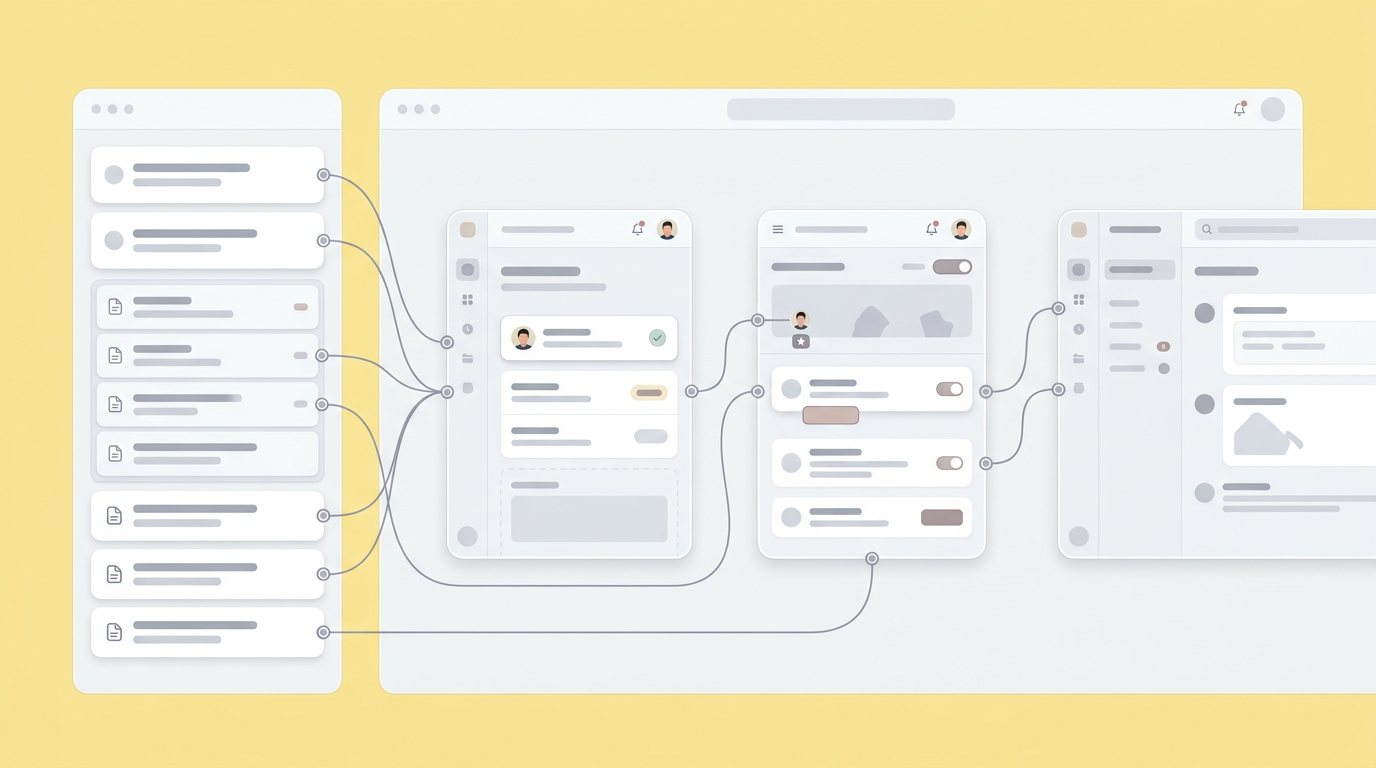
Moving from a written PRD to a testable interface requires translating text-based requirements into interactive states. You need a product manager prototype tool without developer dependencies to make this transition effective. The goal is to generate a functional representation of your logic quickly.
Start With Low-Code Prototyping for Product Managers
Low-code prototyping tools allow you to map out your user flows visually. Instead of writing paragraphs about how a user logs in, configures a dashboard, and exports a report, you map these actions to interactive components. The system handles the state transitions.
Using these tools effectively requires understanding the constraints of your actual production environment. A good prototype should reflect what is realistically buildable. You want to avoid designing custom UI components if your engineering team relies on a standard design system. Sticking to established patterns ensures your prototype remains grounded in reality.
Bridging the Gap With Interactive Context
Static mockups often fail to communicate the nuanced logic of complex features. When you review a static screen, stakeholders fill in the missing interactions with their own assumptions. This leads to misaligned expectations that only surface once the actual software is built. Dazl helps product managers turn ideation and spec writing into a hand-off ready prototype, keeping the whole team aligned on the actual behavior.
Interactive context solves this alignment issue. A prototype without coding for PMs lets you demonstrate exactly what happens when an API call fails or when a user inputs invalid data. You get to test the unhappy paths interactively. If you are struggling with this phase, reading about How PMs Skip the Engineering Queue by Building Their Own Prototypes provides a strong framework for structuring this work.
Machine Learning for Product Managers: Prototyping Complex Workflows
Machine learning for product managers often feels like an abstract concept that requires data science resources just to conceptualize. Prototyping features that rely on ML models or complex data orchestration presents a unique challenge when you lack developer support.
To address this, product managers can use various strategies.
Beyond Basic UI: Handling Models Visually
Modern prototyping requires illustrating how a system responds to probabilistic outcomes. If you are building a recommendation engine, your prototype needs to show different states based on varying data inputs. You can use no-code product design tools to simulate these dynamic responses.
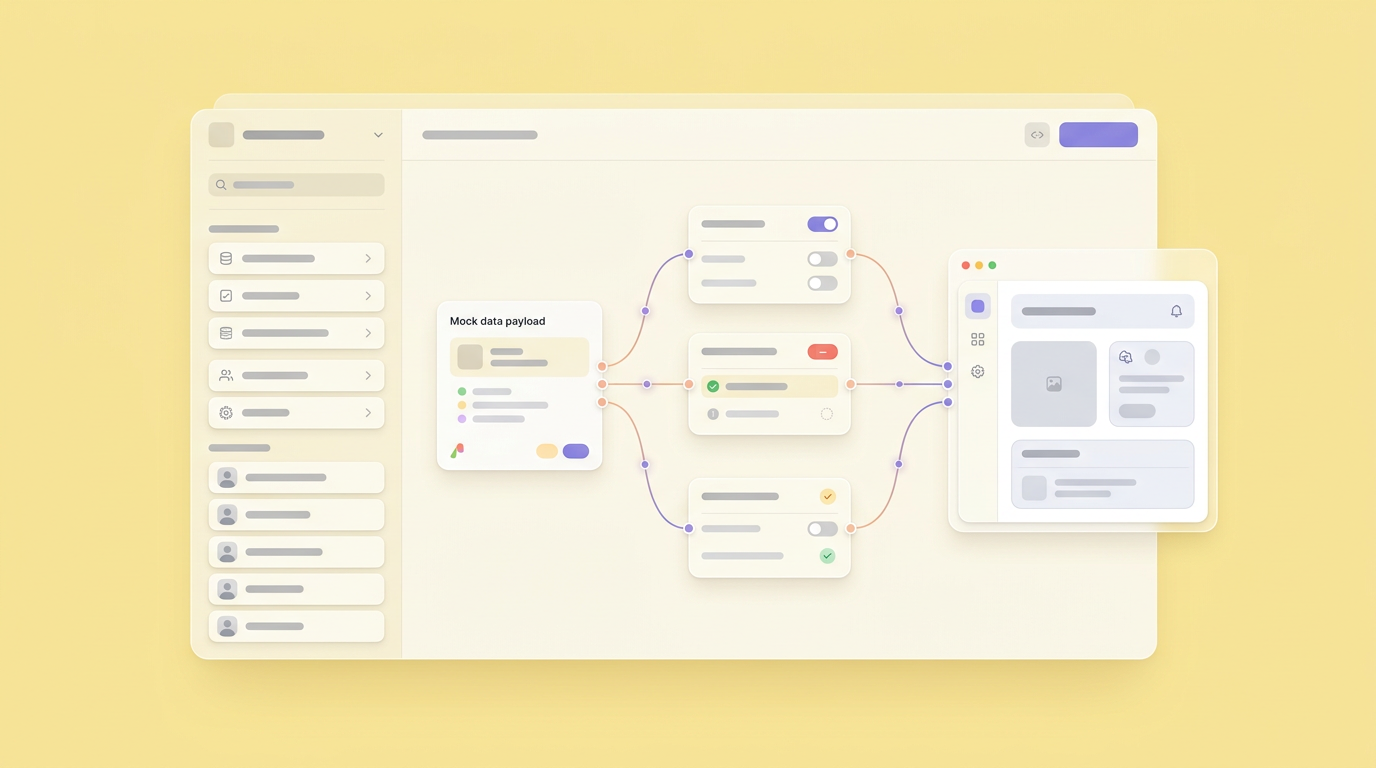
Instead of writing a complex SQL query or calling a real machine learning endpoint, you can hardcode realistic data payloads into your prototype's state management. This visual representation helps stakeholders understand the user experience impact of model accuracy. For example, you can:
- Create one view for a high-confidence prediction.
- Design another view for a low-confidence prediction.
Orchestrating Data Without Developers
Product managers working on data-heavy applications need to show how information flows across different views. Prototyping software increasingly supports variable binding. You can take an input from screen A and display it on screen B.
- Simulate dynamic dashboard filtering using component states.
- Demonstrate multi-step data pipelines by linking interactive frames.
- Show empty states and loading states to manage user expectations.
- Validate the perceived performance of complex data visualizations.
When you can orchestrate these data flows visually, you secure better feedback from both technical leads and business stakeholders.
Overcoming the Fear: Can You Be a Product Manager Without Coding?
Can you be a product manager without coding? Yes. The modern product management landscape requires systems thinking and logic, not syntax memorization. You need to understand how systems communicate, how APIs structure data, and how databases relate to one another. You do not need to write the code that executes those functions.
The Evolution of No-Code Product Design Tools
Product management tools for non-developers have evolved specifically to abstract the syntax while preserving the logic.
When you use a visual product prototyping software, you are still doing technical work. You are defining logic gates, managing user states, and structuring data relationships. You are simply using a visual interface rather than a code editor to accomplish it. In fact, a recent report by G2 on low-code platforms emphasizes the significant increase in adoption across various industries. This is why The Static Prototype Problem: Achieving Consensus Across EPD in 2026 highlights functional prototyping as a core competency.
Redefining the PM Skillset in 2026
Your job is to find the fastest path to validated learning, often by leveraging advanced prototyping tools. Often, the slowest path is waiting for an engineering sprint to test an unproven hypothesis.
We see product managers adopting prototyping tools not to replace engineers, but to protect engineers' time. When you handle the early-stage iteration cycles, you ensure that the tickets entering the sprint backlog are highly validated. You reduce the number of times an engineer builds a feature only for users to reject the core premise during beta testing.
Advancing the Iteration Cycle
The shift toward visual assembly means product managers can finally work at the speed of their own ideas. When you remove the wait times associated with engineering queues, your iteration cycles compress from weeks into hours. You gather feedback on a Tuesday, update the interactive logic on a Wednesday, and test a revised version by Thursday.
This acceleration fundamentally changes the relationship between product and engineering. The artifact you hand over is no longer a static document open to interpretation; it is a functioning baseline that proves the concept's viability. Embracing these capabilities ensures you spend less time debating requirements and more time validating real user value.
You can reclaim your roadmap by joining Dazl to start building functional prototypes that align your team before you involve engineering.
Get Started