Why Your PRD Fails in Design (And How to Fix the Handoff)
You hand over a carefully structured product requirements document, confident that every user story and acceptance criteria is clear. A week later, the design files come back, and the core user flow is fundamentally different from what the spec intended. Product managers spend hours documenting logic, only to find that the translation from text to visual mockups creates massive alignment gaps. The gap between what a PM specifies and what a designer visualizes remains one of the highest friction points in product development.
The Disconnect Between Static PRDs and Design Execution
Static text documents often fail to capture the dynamic reality of software, leaving designers to interpret complex business logic on their own. When requirements rely entirely on written descriptions, the interpretation gap widens, leading to cycles of frustrating revisions. Ambiguity in text naturally produces divergence in design.
Ambiguous Requirements Cost Time
When written specifications lack interactive context, teams lose hours decoding what the product manager actually meant. Ambiguous documentation forces designers to guess how a feature should behave in practice. This guesswork directly translates to lost productivity across the entire pod.
When you sit down to review weekly sprint velocity, you quickly realize how these administrative delays compound over time. Teams waste enormous capacity trying to bridge the gap between static text and functional software.
Missing Edge Cases and Interaction States
Written PRDs naturally focus on the happy path, frequently neglecting the nuanced states that define a robust user experience. Designers often receive specs that completely omit loading behaviors, error states, or empty states. Without these details, the resulting design files are incomplete.
- Loading States: How does the UI behave while data is being fetched or an action is processing?
- Error States: What messages and UI changes occur when an operation fails or invalid input is provided?
- Empty States: How does the UI look when there is no data to display in a particular section?
In our testing with mid-sized product pods, we found that simply adding more text to the PRD did not fix this. Denser paragraphs actually made it harder for designers to extract the necessary state requirements.
Traditional Translation vs. Spec-Driven Prototyping
Product teams generally choose between relying on traditional text-to-design translation or adopting spec-driven interactive workflows. Comparing these approaches reveals stark differences in how context is preserved across the product lifecycle. The choice dictates how much rework a team will face downstream.
The Traditional Translation Approach
The conventional workflow relies on writing a long PRD in Notion or Google Docs, creating Jira tickets, and waiting for the design team to interpret the requirements in Figma. This method separates the requirement from the visual context. It forces a manual translation step that introduces risk.
When teams use this separated model, misinterpretations are almost guaranteed. A product manager might specify a "dynamic filtering system," which the designer interprets as a complex multi-select modal rather than the intended simple dropdown. Because the PRD and the design environment are disconnected, these misalignment issues only surface during formal design reviews. By then, the designer has already invested significant time in the wrong direction. The traditional approach treats handoff as a distinct phase rather than a continuous collaborative state.
The Spec-Driven Interactive Approach
A more integrated approach involves creating artifacts that combine the requirement directly with a functional representation of the idea. Spec-driven prototyping allows product managers to define logic while simultaneously illustrating the interactive intent. This method reduces the need for manual translation.
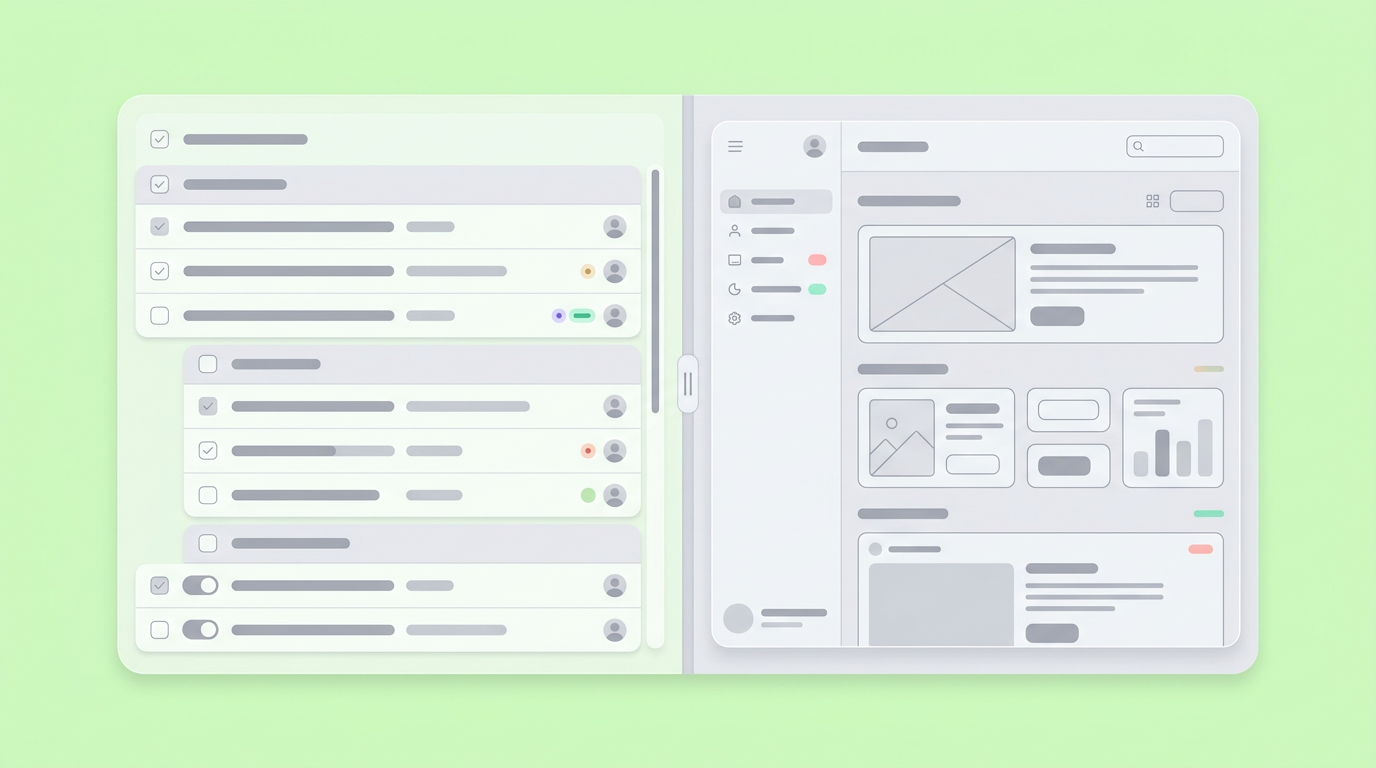
Using an integrated workspace like Dazl allows PMs to move from ideation directly to a handoff-ready prototype without losing the underlying requirements context. When the spec and the interactive model live together, designers do not have to guess the intended behavior. They can click through the product manager's interactive baseline and immediately understand the business logic. This approach ensures stopping context loss between your PRD and prototype happens naturally.
Common Failure Points in the Handoff Pipeline
Even with experienced teams, specific breakdown points repeatedly disrupt the flow from product specification to design and engineering. These failures usually stem from differing team assumptions and version control issues. Identifying these points is the first step to mitigating them.
Differences in Assumptions Across Teams
Product managers, designers, and engineers view the same feature request through entirely different lenses. When a static PRD is the only source of truth, these differing priorities cause friction.
- Product Manager Focus: Business value, market fit, and strategic impact.
- Designer Focus: User experience, usability, and visual consistency.
- Engineer Focus: Technical feasibility, performance, and scalability.
Recent data shows that 92% of designers and 91% of developers believe the handoff process needs significant improvement, according to recent design handoff statistics. The data illustrates a symmetric frustration across product functions. Teams report that reading the same document does not guarantee they share the same mental model of the product.
The Cost of Development Rework
When misinterpretations survive the design phase, they inevitably crash into the engineering workflow. Developers receive design files that look polished but lack the underlying logic specified in the original PRD. The resulting rework severely impacts project timelines and budgets.
, An engineer might start building a feature based on a mock-up that the PM and designer have already iterated past. This exact scenario forces engineering teams to pause work, clarify requirements, and rewrite code. A flawed PRD-to-design transition creates a ripple effect that manifests as expensive engineering delays.
How to Stop Engineers from Misreading Specs
Preventing engineers from misreading the original product requirements requires eliminating the ambiguity inherent in static documents. Teams must shift toward providing concrete, interactive references that demonstrate exactly how a feature should behave. Clear demonstration overrides lengthy explanation.
Moving from Static Text to Clickable Artifacts
Replacing descriptive paragraphs with interactive elements drastically reduces the chance of misinterpretation. Clickable artifacts provide definitive answers to behavioral questions.
- Interactive Demos: Allow engineers to click through a feature flow, seeing state changes directly.
- Conditional Logic Visualizations: Clearly show how the UI adapts based on user input or data conditions.
- Micro-interactions: Illustrate specific animations, transitions, and component behaviors that text struggles to convey.
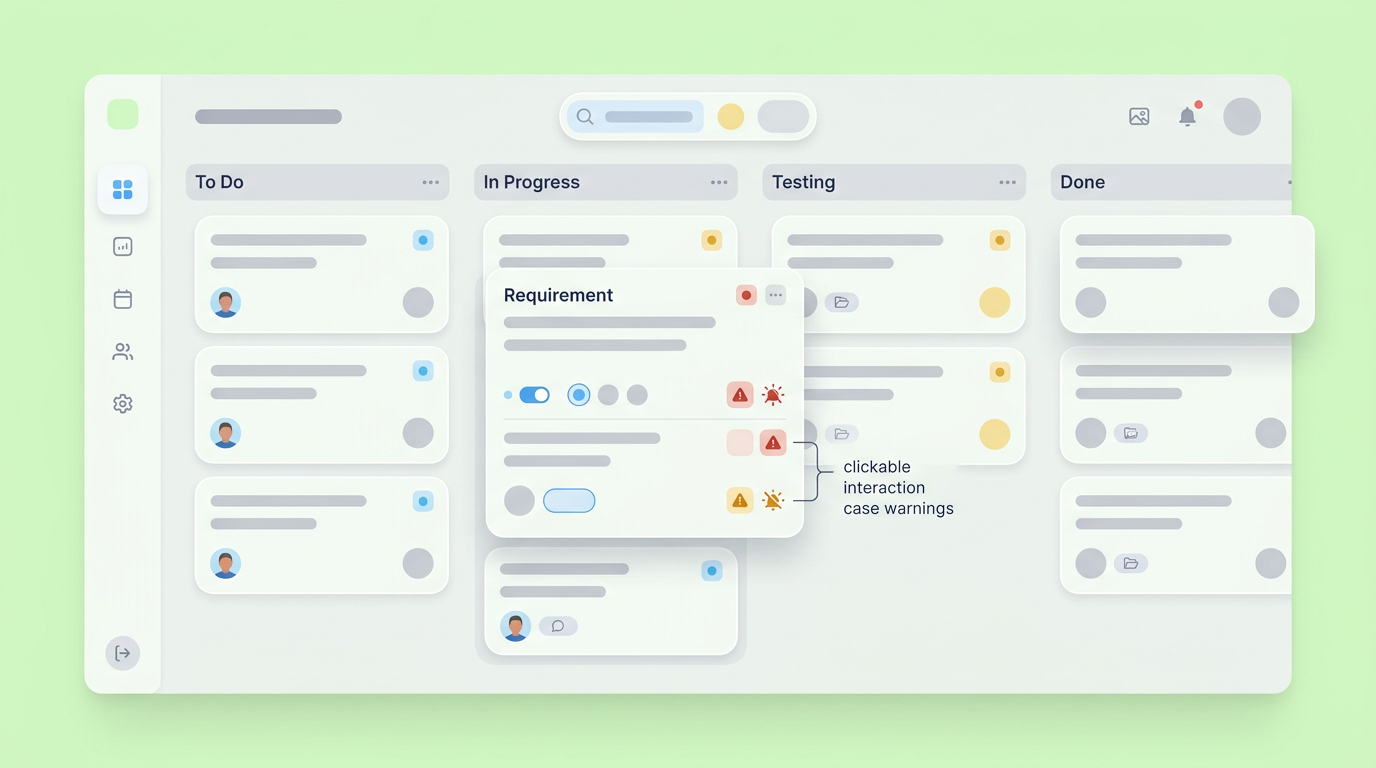
Instead of writing "the menu should expand and push the content down," product managers should provide an interactive model showing that exact behavior. This method leaves no room for interpretation. In our experience working with Series A companies, teams that accelerate the path to clickable prototypes consistently ship closer to the original spec. Engineers build exactly what they can interact with, entirely bypassing the translation errors caused by reading static text.
Maintaining Alignment Post-Handoff
The handoff is not a single moment in time; it is a continuous process of alignment as features evolve during development. Keeping the requirements document, the design files, and the technical implementation synchronized is a persistent challenge. Teams need workflows that support ongoing iteration without losing the baseline truth.
When requirements change mid-sprint, updating a static PRD rarely alerts the engineering team effectively. To counter this, teams must adopt centralized environments where the specification and the prototype are inherently linked. If a PM updates a requirement, the prototype reflects that change, ensuring developers always reference the current state of the product vision.
Redefining the Standard for Product Alignment
Product teams are moving away from isolated phases of writing, designing, and building. The future of product development relies on continuous, interactive context that travels from the initial idea to the final code. Aligning around functional models rather than static text changes how teams operate.
Organizations that transition to interactive spec workflows report higher team morale and faster shipping cadences. The friction of translating text to design and design to code dissipates when everyone views the same dynamic artifact. As tooling evolves, the expectation is shifting from comprehensive written documentation to comprehensive interactive demonstrations. Product managers who master this interactive alignment will consistently deliver features that match their original strategic vision.
You can refine your handoff process by joining Dazl to help your team turn static requirements into clear interactive prototypes.
Get Started