Winning Stakeholder Support: Visual Workflows for Product Managers
Presenting an abstract six-page product requirements document to a room of executives rarely ends in immediate alignment. Instead, it usually results in glazed expressions, subjective debates over terminology, and endless follow-up meetings that delay the actual build. There are three key problems with this approach:
- Lack of Engagement: Executives often struggle to connect with lengthy, static documents.
- Misinterpretation: Written specifications can be ambiguous, leading to different understandings among stakeholders.
- Inefficient Feedback: Static documents make it difficult to provide precise, actionable feedback, leading to vague comments and misdirected revisions.
- Delayed Decisions: Subjective debates and follow-up meetings prolong the approval process. Learning how to get stakeholder buy in requires shifting the conversation from what you intend to build to showing exactly how it will work. In 2026, product managers are moving past static text files and adopting visual, interactive methods to align their teams early. Presenting a tangible concept changes the dynamic from a one-way presentation into a collaborative working session.
Why Traditional Stakeholder Engagement Strategies Miss the Mark
Traditional stakeholder engagement strategies often fail due to several critical shortcomings, which include:
- Static Communication: Relying on one-way broadcasts rather than two-way conversations.
- Lack of Interaction: Failing to create opportunities for direct feedback and collaboration.
- Delayed Influence: Capturing feedback too late in the process, reducing its impact on the product narrative.
When evaluating alignment techniques, our teams consistently report that static slides create unnecessary distance between the product team and the decision-makers. Executives frequently struggle to visualize how written specifications will translate into a functional user experience. This misalignment often leads to delayed approvals and repeated review cycles. According to an Unboxed Technology guide, in 2025, the success of any major initiative hinges on securing stakeholder support. The traditional method of sending a document and asking for comments simply does not secure that necessary support.
Relying solely on asynchronous text updates removes that early involvement. Product managers who understand this dynamic prioritize interactive working methods to bring stakeholders into the conceptual phase early.
The Problem with Broadcasting Updates
Broadcasting updates through weekly emails isolates stakeholders from the actual product decisions. When team members only receive finished specs, they lose the opportunity to provide meaningful early input.
Sending out status updates creates an illusion of communication without actually achieving alignment. Stakeholders may read the email, but they rarely internalize the trade-offs the product team is making. As a result, critical feedback surfaces only when the project is nearing completion, causing frustrating delays.
Shifting to Co-Creation and Design
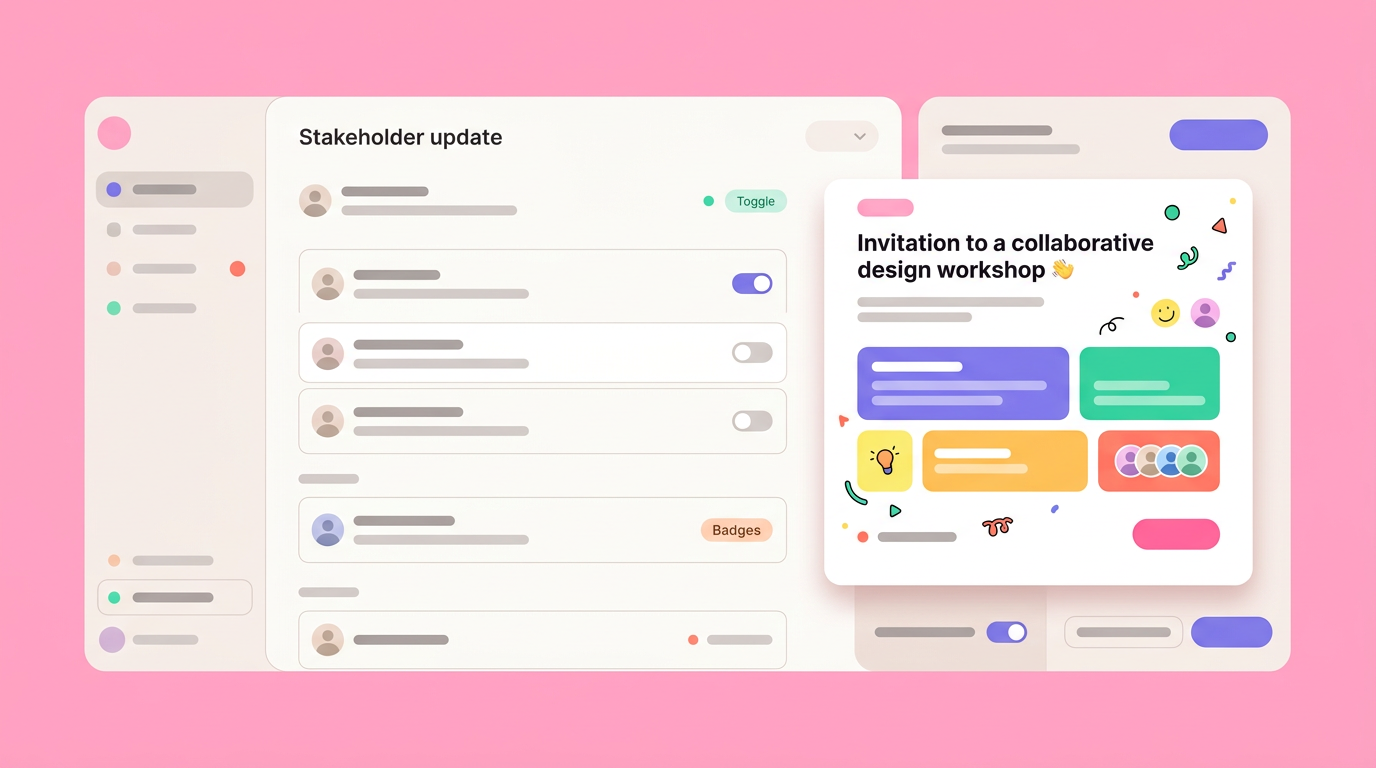
Co-creation invites stakeholders into the ideation phase, ensuring their priorities shape the product early on. This strategy turns critics into advocates because people actively support the initiatives they help design.
Bringing stakeholders into the design process early is a highly effective way to mitigate risk. A well-known leadership principle from Product School resources states that people support what they help create. When marketing, engineering, and sales leaders feel they had a hand in shaping the prototype, they become internal champions for the release.
5 Steps to Securing Stakeholder Approval in 2026
Securing stakeholder approval requires a systematic approach of identifying motivations, communicating visually, and iterating quickly. By mapping out goals and using interactive prototypes rather than static documents, you create a clear path to early and sustained team alignment.
When you follow a structured framework, gaining support for projects stops feeling like a political hurdle and starts functioning as a natural part of the development cycle. The most effective product managers treat stakeholder alignment as a core feature of their workflow rather than an afterthought.
Step 1. Map Stakeholder Needs and Motivations Early
Identifying the distinct priorities of your engineering, design, and business teams allows you to tailor your product narrative. Mapping these needs upfront prevents late-stage friction and ensures your proposed solution directly addresses their primary operational concerns.
Before you even open a prototyping canvas, take time to understand exactly what each department cares about. Sales leaders might want to see how a new feature accelerates conversions, while engineering managers are looking for technical feasibility and architectural scope. Documenting these specific interests helps you build a targeted narrative.
Step 2. Build a Stakeholder Communication Plan Based on Visuals
A stakeholder communication plan should prioritize visual artifacts over dense text documents. Utilizing clear diagrams and interactive models ensures everyone understands the expected user flow regardless of their technical background.
Relying heavily on text to describe complex interactive elements is a losing battle. Visuals bridge the technical gap between diverse teams. When mapping out how to validate a product idea quickly before writing code, always include a visual component to anchor the discussion.
Step 3. Move from Abstract Specs to Tangible Prototypes
Replacing text-heavy requirements with tangible prototypes gives stakeholders a precise understanding of the product experience. When you share a clickable interface, you eliminate the ambiguity that typically stalls project approvals.
After deploying interactive models instead of static documents, we observed a massive reduction in clarification meetings. A written document allows ten different stakeholders to imagine ten different products. Product growth expert Aakash Gupta noted this gap in the market, describing tools that bridge specification and visualization as exactly what AI prototyping was missing.
Step 4. Run Interactive Review Sessions
Hosting review sessions where you modify prototypes in real time keeps stakeholders highly engaged. This immediate iteration demonstrates that their concerns are being actively addressed and speeds up the consensus process.
Instead of taking notes and promising to return in two weeks with an updated mockup, make the changes right there in the meeting. Tools that allow for live manipulation of the product structure change the entire energy of a review. As PM educator Tal Raviv explored in recent industry thought leadership, using AI subagents during product design meetings allows teams to modify concepts on the fly.
Step 5. Gather Feedback That Changes What You Build
Effective feedback collection means actually adjusting the product direction based on stakeholder insights. Instead of just noting concerns in a spreadsheet, you must reflect those changes in the core prototype.
If you ask for input but never incorporate it, you will quickly lose the trust of your internal partners. Seeking out professional guidance on engaging teams makes it clear: active collaboration requires showing exactly how feedback altered the plan. Your prototype should evolve visibly between review cycles, cementing the fact that the project is a shared endeavor.
Gaining Support for Projects Through Visual Evidence
Gaining support for projects hinges on presenting visual evidence rather than theoretical arguments. When stakeholders can click through a prototype, they evaluate a realistic workflow rather than debating abstract product concepts.
Executives rarely have the time to read through comprehensive technical documentation. They want to see the proposed solution, understand its business value, and confidently approve the resources required to build it. Visual evidence instantly answers the foundational questions of usability and scope.
The Data Behind Visual Communication
Research consistently proves that stakeholders retain information better when it is presented visually. Combining a clear product narrative with an interactive model deeply anchors the core message in your audience's memory.
In our testing of different presentation styles, we found that narrative-backed prototypes drastically outperformed standard slideware. Coupling that narrative with a working prototype creates a highly persuasive environment for earning project approval.
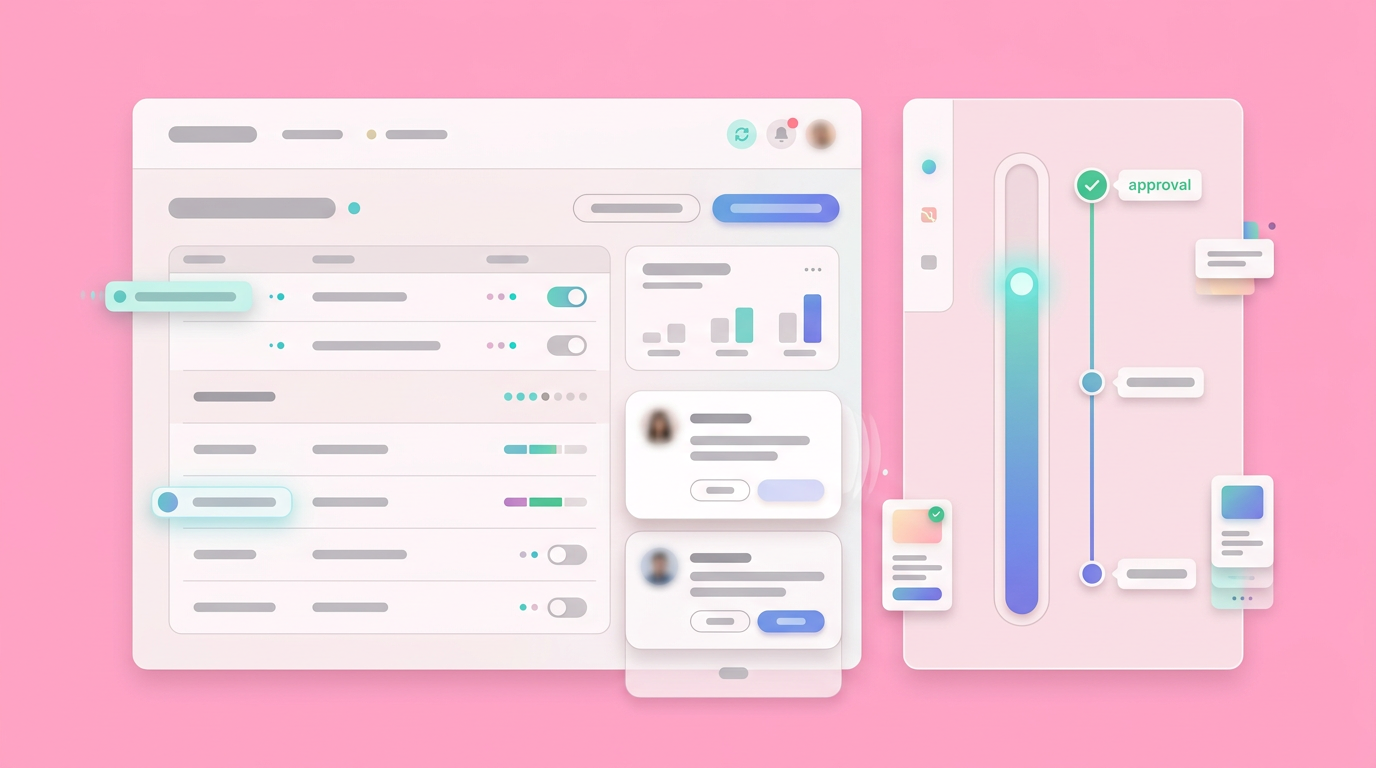
Aligning Engineering and Leadership
Visual evidence acts as a universal language that bridges the gap between technical constraints and business goals. A high-fidelity prototype allows engineers to assess feasibility while giving leadership confidence in the user experience.
When you present a realistic model, you give engineering the context they need to spot potential architectural issues early. Simultaneously, leadership can evaluate if the user journey will meet business objectives. If your team is struggling to unify these two very different audiences, refer to guides on creating effective lo-fi prototypes to start the conversation safely before committing to final designs.
Influencing Key Stakeholders With Fast Iteration Cycles
Influencing key stakeholders is infinitely easier when you can instantly incorporate their feedback into a working model. Fast iteration cycles prove that you are listening and actively adapting the product to meet organizational needs.
Nothing builds confidence faster than responsiveness. When a director of sales suggests a different onboarding flow, and you can show them a revised interactive path by the end of the day, you solidify their support. This velocity is exactly why modern product managers are shifting away from tools like Figma or Jira for initial ideation and relying on workspaces built specifically for rapid conceptualization. UX expert Christopher Nguyen commonly utilizes workflows tailored for this exact speed: bring the product problem in, explore ideas quickly, refine visuals, and immediately share for reactions.
The Shift Toward Intelligent Workspaces
Intelligent workspaces allow product teams to generate interactive components directly from initial ideas. This rapid translation from thought to visual representation keeps the momentum going during critical stakeholder meetings.
The focus in 2026 is on shortening the delay between a good idea and a visible outcome. Workspaces that integrate AI as a collaborative partner are helping PMs build these early iterations without waiting on design resources. Supported by a robust foundation, such as the $10 million seed funding raised by Wix co-founder Nadav Abrahami, these tools are built specifically to bridge the friction of early-stage product alignment.
Delivering Hand-Off Ready Artifacts
Providing hand-off ready artifacts assures stakeholders that the approved prototype can be immediately built by engineering. This removes the anxiety of a messy transition between the design approval and the actual coding phase.
A common fear among leadership is that the prototype they approve will look entirely different once built. By generating artifacts that are practically ready for engineering execution, you guarantee consistency. This approach offers several benefits:
- Reduced Risk: Minimizes the chance of deviations between design and build.
- Faster Handoffs: Streamlines the transition from design approval to coding.
- Clearer Directives: Provides engineering teams with precise, interactive blueprints, reducing guesswork and rework.
- Increased Confidence: Assures stakeholders that the final product will match their expectations. You can learn more about this transition by exploring strategies pushing beyond mockups and into agile handoffs. This confidence makes the final signature vastly easier to attain.
The Path to Lasting Team Alignment
Cultivating lasting team alignment means keeping every department moving together from the initial concept all the way to production. By focusing on shared interactive prototypes, you establish a single source of truth that guides the entire product journey.
Bringing your team along for the ride requires more than just persuasive speech; it demands transparency, responsiveness, and visual clarity. By showing instead of telling, and by actively designing alongside your stakeholders, you eliminate the friction that historically slowed product momentum. This collaborative approach turns your most critical executives into your strongest advocates.
Achieving this state of alignment is drastically simpler when your tooling exactly matches your collaborative methodology. Using an AI workspace designed specifically for the PM's entire product journey ensures you are never caught empty-handed in a review meeting. To see how visual iteration can completely transform your next strategy session, explore how Dazl serves as the dedicated design partner for modern product managers.
You can help your team secure executive approval by using Dazl to turn these theoretical concepts into interactive visual workflows.
Get Started