Beyond the PDF Guardrails: Making Design Consistency Stick
That disconnect usually shows up right before a major launch. You review a staging environment and realize the primary buttons are three different shades of blue, the typography scales conflict, and the empty states possess multiple distinct voices. This friction between defined rules and actual shipped products costs teams heavy QA hours and directly impacts customer trust. Examining how different methodologies standardise these inputs helps product managers build more predictable release cycles.
The Gap Between Defining Guidelines and Shipping Features
Teams fail to uphold visual expectations when rules live in static documents completely separated from the environments where features are built. Bridging this gap requires embedding styling constraints directly into the daily workspace.
A 2026 report indicates that a comprehensive guideline document remains a core requirement for operations serious about external cohesion. A cohesive identity demands standardization in colors, fonts, and interaction patterns to reinforce immediate recognition. The translation phase from a static mockup to interactive software is where these elements predictably fragment. Developers guessing padding sizes or interpreting motion curves differently leads to a disjointed user journey.
The concept of maintaining brand consistency in modern workflows
Maintaining brand consistency means uniform visuals, messaging, and system behaviors exist across every online and offline touchpoint. Users need to clearly and positively identify your company regardless of the specific screen they interact with.
Business operations experts estimate that up to 68% of professionals report measurable revenue boosts when they keep styling and messaging aligned. In our testing with cross-functional product groups, we found that visual cohesion prevents usability errors. Users trust interfaces that behave predictably. When navigation patterns and visual hierarchies constantly shift, cognitive load increases and conversion rates drop.
Why visual brand consistency drops off after handoff
Visual brand consistency degrades because managing brand assets is frequently treated as a one-time retrieval task rather than a continuous dependency. Product teams download a logo file or check a hex code once and rarely verify updates.
Static PDF manuals ask humans to remember and manually check rules across thousands of interface nodes. This expectation is fundamentally flawed for fast-moving product teams. Enforcing brand standards through manual audits inevitably creates production bottlenecks. Product managers find themselves playing pixel police instead of focusing on user value, slowing down velocity.
Comparing Approaches: Static References vs. Living Systems
Static references require constant manual oversight, making consistency an ongoing chore. Modern product teams replace these references with centralized hubs that automatically distribute approved styling tokens directly to the interface builders.
Organizations relying on traditional rulebooks face uphill battles adapting to fluid digital environments. Specialized channel research documents a 23% to 33% revenue increase for operations maintaining an exact presentation across platforms. Managing components through automated distribution systems averts the drift that occurs when builders manually rebuild interface elements from scratch every sprint.
Managing brand assets through central portals
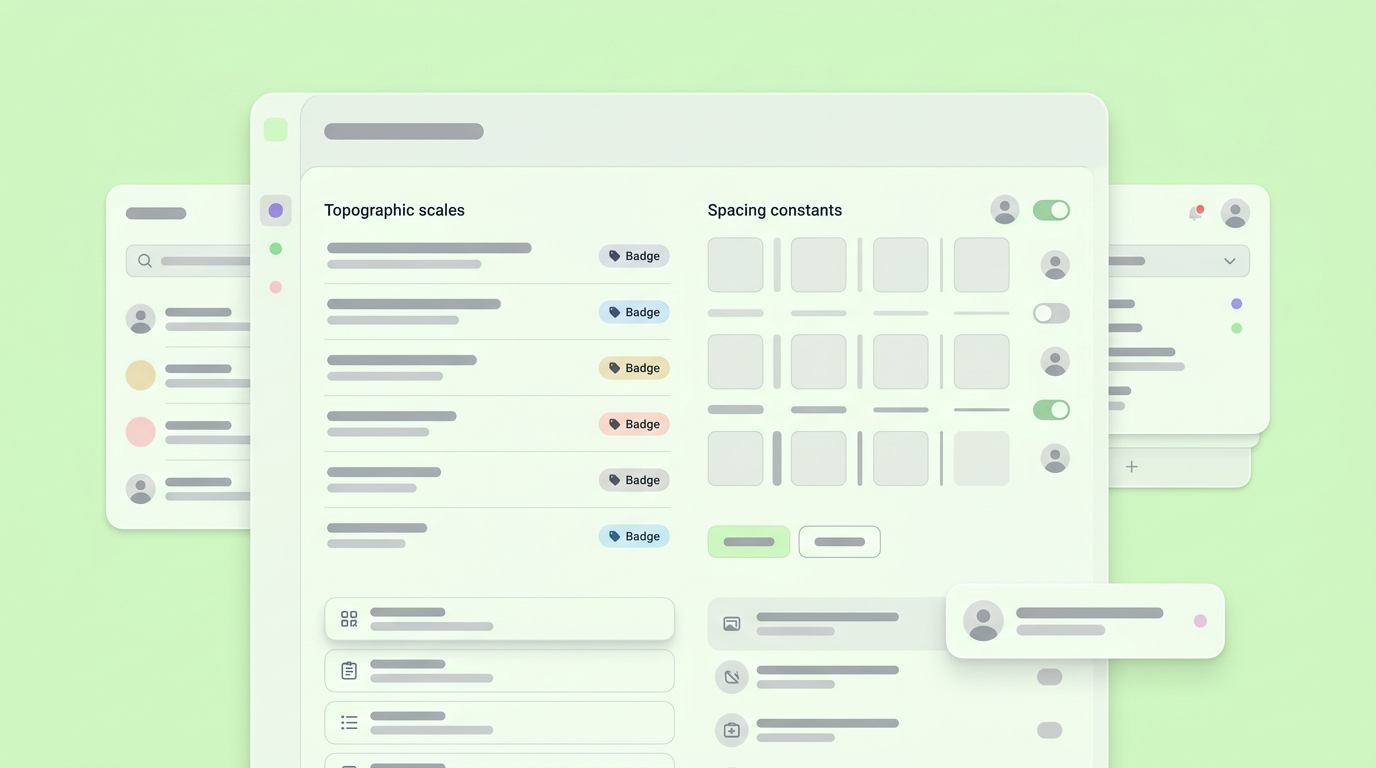
Centralized asset portals function as a single source of truth that dynamically updates components across all active projects. Connecting these portals directly to the build environment eliminates the friction of outdated documentation.
A Product Information Management (PIM) approach helps structure content, automatically updating approved components across different channels. This structure ensures that a change to a secondary button style ripples outward to every active file instantly. Product alignment improves drastically when everyone pulls from the exact same library of blocks. Dazl acts as the product manager's teammate from ideation through a hand-off ready prototype, allowing teams to utilize these unified libraries from the very first mock.
Integrating logic into the prototyping phase
Baking brand identity guidelines into the initial prototypes ensures that stakeholders review technically accurate representations rather than idealized sketches. This early integration aligns expectations before engineering begins.
Early fidelity in planning shapes how smoothly a handoff goes. If the rules are checked only after code is written, rework cycles multiply. Building with components that automatically obey corporate standards allows product managers to test the actual product experience. Teams can spend their reviews debating user flow rather than arguing over typography scales or border radiuses.
Defining the Standards That Actually Survive Production
Establishing standards that survive production requires translating abstract marketing values into concrete technical components. Frameworks help product managers turn high-level positioning into strict user interface parameters.
To ensure ideas survive the journey to production, cross-functional brand teams must participate in creating the initial libraries. Product managers often translate these concepts for engineers. Writing clear definitions directly into the technical specification removes ambiguity.
What are the 5 C's of branding in a product environment?
Product managers use these pillars to evaluate whether a new feature aligns with the core company identity.
Clarity ensures the interface immediately explains its intent to the user. Character dictates the specific tone of the microcopy. Consistency demands that interaction behaviors match across features. Commitment reflects the ongoing investment in maintaining centralized systems. Chemistry is the resulting trust users develop when the first four pillars are successfully executed.
Applying the 3 7 27 rule of branding to user flows
Repeated interface patterns build this necessary familiarity.
If an onboarding sequence uses one heading format and the main dashboard uses completely different typography, the recognition cycle resets. Enforcing strict repetition of visual and behavioral elements reduces the required learning curve for the user. Consistent application across routine workflows is mandatory for establishing this structural habituation.
Connecting brand messaging consistency with UI components
Brand messaging consistency ensures the product's voice, error alerts, and empty states sound like they belong to a unified entity. Visual cohesion fails if the written copy sounds disconnected.
Designers understand that visual choices must match the text content. We notice significant improvement in user comprehension when teams treat microcopy as a rigid component. As consumer expectations shift toward transparency and authentic connection, creating product specs that actually accelerate builds involves hardcoding voice constraints directly into the requirements. Users expect applications to mirror genuine organizational values through every alert and success message.
Enforcing Standards Without Hindering Velocity
Product managers enforce design standards effectively by shifting from retroactive audits to proactive guardrails. Embedding strict parameters into the foundational building blocks guarantees compliance without sacrificing speed.
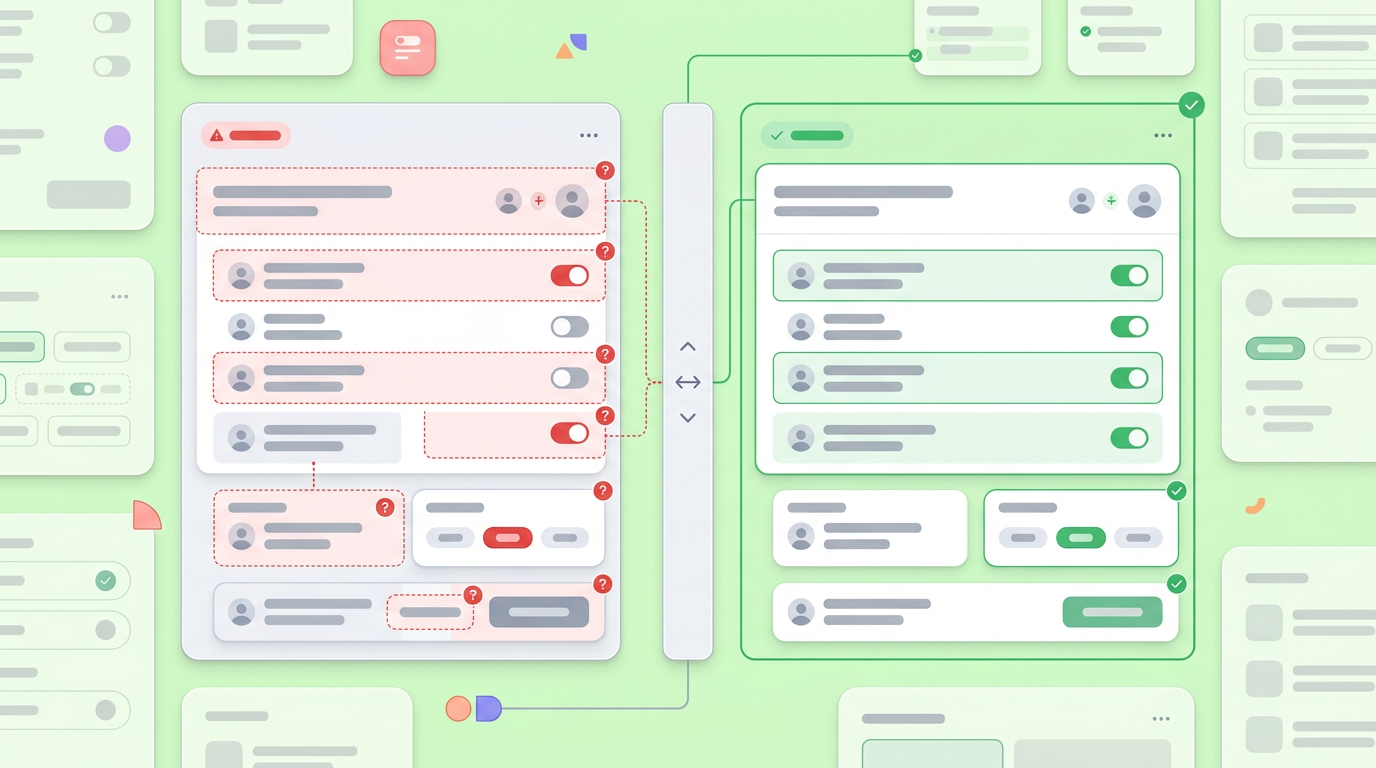
Friction increases rapidly when compliance requires extra steps. Setting up workflows where the easiest path is also the correct path solves the enforcement problem organically. When cross-functional teams report fewer conflicts, it frequently links back to the structural constraints built into their foundational tools.
Moving from manual audits to automated guardrails
Automated guardrails prevent non-compliant components from reaching the next stage of development. Moving away from manual visual checks reduces human error and accelerates deployment.
Relying on end-of-sprint reviews to catch hex code variations is inefficient. Modern pipelines run visual diff checks that spot deviations instantly. Teams operating within constrained systems notice a sharp decrease in styling arguments. The components themselves carry the approved rules, eliminating subjective interpretations entirely.
Using intelligent systems to audit brand identity guidelines
Systematic oversight tools rapidly scan prototypes and codebases, identifying inconsistencies against the master library. These automated checks maintain design brand consistency at scale without adding headcount.
Intelligent rule-checkers can flag rogue typography or unauthorized spacing variants as they are applied. After deploying dynamic library workflows, operations see improved baseline quality across independent product squads. Implementing comprehensive structural rules accelerates the prototype to production timeline by removing the need for manual inspection cycles.
The Next Iteration of System Logic
The evolution of managing product systems relies on context-aware rule sets that adapt interfaces fluidly across device types. Rigid, static documents are giving way to programmatic frameworks that automatically govern compliance.
Applying strict rules to these dynamic environments requires highly responsive workflows that static PDFs cannot support. Product leaders need to view defining parameters as establishing a clear foundation for experimentation rather than building a restrictive cage. Shifting the focus from policing minor details to launching mathematically coherent experiences allows cross-functional teams to iterate with confidence. Organizations that successfully transition their standard operating procedures into functional, code-aligned logic will outpace competitors still debating font sizes in spreadsheets.
You can help your team move past static documentation by joining Dazl to centralize your living components and automate design consistency.
Get Started