The 2026 AI App Development Roadmap for Product Managers
When product managers organize AI integration efforts, they often encounter a wall of fragmented communication. Translating an abstract machine learning model into a tangible user interface requires tight coordination between data scientists, software engineers, and UX designers.
An AI application roadmap serves as a structural bridge across these disciplines. It shifts the conversation away from raw algorithms toward user validation, feedback loops, and rapid prototype iteration. For product teams building intelligent features today, success requires applying rigorous planning to a highly fluid technological baseline.
The Current State of AI Application Development in 2026
AI application development in 2026 relies heavily on edge computing, AI native engineering, and low code platforms integrated directly into the product lifecycle.
The industry has rapidly matured past the initial excitement of generic conversational wrappers. Today, developers and product managers focus on task specific intelligence that processes information efficiently. The global AI application market is projected to grow substantially, forcing enterprise teams to standardize their workflows. But adoption metrics show an interesting split between tool usage and organizational trust.
This trust deficit creates a unique challenge for product managers. We have the tools to build features quickly, but we lack the shared visual language to validate those features before committing them to the main codebase.
Shifting from Chatbots to Workflows
Product teams are migrating toward edge AI deployments that enable real time local data processing for speed and privacy. This shift fundamentally alters the roadmap for building AI applications. Instead of querying massive cloud models for every interaction, apps now run smaller, specialized models directly on user devices.
In our internal testing, we found that scoping real time, edge based AI features requires completely different wireframe fidelity. You have to account for local processing latency, offline states, and battery consumption. Product managers must visually document these edge cases early in the design phase to prevent engineering rework down the line.
The Rise of Low Code and No Code Adoption
Another significant shift impacting the AI product development plan is the integration of visual building platforms.
These environments embed generative capabilities directly into the workspace. By lowering the technical barrier to entry, cross functional teams can collaborate earlier in the cycle. This means product managers can spend less time writing extensive technical specifications and more time validating the actual user experience.
Structuring Your AI App Development Roadmap
A well structured AI app development roadmap typically follows seven iterative stages: ideation, data strategy, model selection, rapid prototyping, integration, evaluation, and continuous monitoring.
Many teams search for the standard 7 stages of AI development, hoping for a rigid waterfall checklist. In reality, modern product management demands rapid iteration across these phases. You cannot wait until stage six to realize the data context is flawed. To keep teams aligned and enhance visibility, you must build visual checkpoints and include regular feedback loops into a comprehensive guide to AI app creation.
We can break these stages down into three major functional phases for the product team.
The First Phase: Ideation and Data Strategy
Before writing a single line of backend logic, the team must define the exact user problem the AI will solve. This phase involves setting clear performance expectations and auditing the available data. As highlighted in our guide to Mapping AI Application Architecture Patterns in 2026, your architecture depends entirely on your data constraints.
- Problem Framing: Determine if the issue actually requires an intelligent model or if a standard script would suffice.
- Data Readiness: Evaluate whether the required data is accessible, clean, and compliant with privacy regulations.
- Skill Assessment: Review team capabilities against AppBuilder's 2025 trends report, which notes that 71% of tech leaders view machine learning as a required skill.
The Middle Phase: Prototyping and Model Selection
This phase is where product managers exert the most influence. Instead of waiting for a fully trained model, teams should mock up the expected outputs and build interactive interfaces around them.
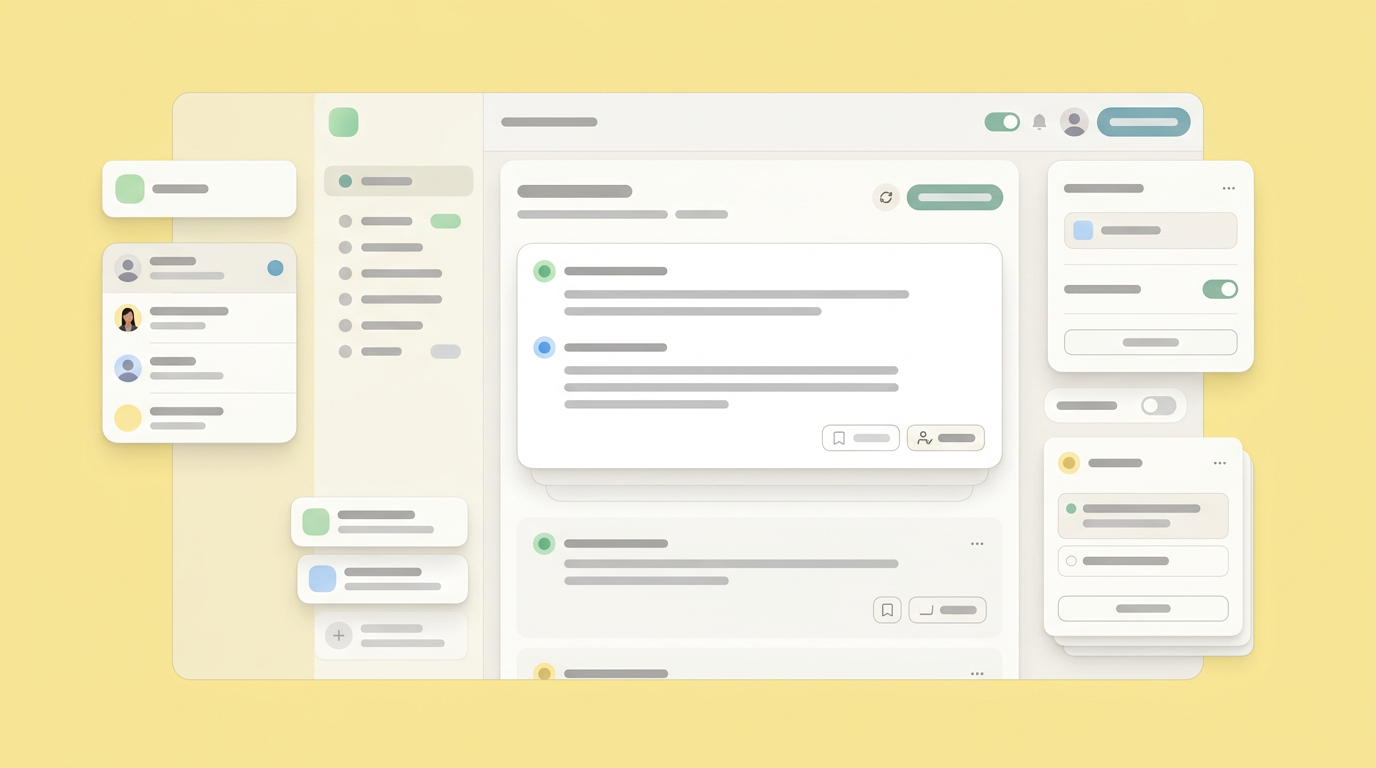
Teams report consistent friction when transitioning from a written data specification to a visual interface. This is where using workspaces like Dazl helps PMs move from ideation to hand off ready prototypes. By bringing the product context into a shared visual canvas, the entire team can explore different interaction patterns before engineering commits to a specific model architecture.
The Final Phase: Evaluation and Continuous Monitoring
Deploying an intelligent feature is essentially the starting line. Once live, teams must track evaluation metrics strictly.
Constant monitoring ensures the model does not drift from its original intent. It also feeds data back into the first phase, allowing the team to refine the subsequent AI project development stages.
Navigating the 10 20 70 Rule for AI Projects
The 10 20 70 rule states that successful AI adoption requires dedicating 10% of effort to algorithms, 20% to underlying technology, and a massive 70% to business integration and user workflow adaptation.
Many engineering driven teams focus heavily on the first two categories. They obsess over parameter counts, hosting environments, and latency optimizations. While these technical details matter, they do not guarantee user adoption. Product managers must champion the remaining 70%.
Why Most AI Projects Fail
Industry discussions frequently ask why do 85% of AI projects fail to reach production successfully. The answer usually ties directly back to ignoring the 10 20 70 distribution.
Teams often build impressive technical demonstrations that do not fit into the user's actual daily routine. If a generative feature requires users to learn complex prompt engineering, they will likely abandon it in favor of their old, manual processes. The failure occurs in the workflow alignment, not the algorithm.
Building Better Feedback Loops
To counteract this failure rate, product teams must validate concepts immediately. Getting highly realistic interfaces in front of stakeholders forces conversations about practicality.
After deploying our first few AI driven tools, we quickly realized that user feedback on model accuracy is deeply tied to interface latency. If the loading animation feels broken, users perceive the eventual answer as less trustworthy. Prototyping these specific interaction states early is critical. You can learn more about accelerating this phase in our guide on How to Test and Validate Product Concepts Fast in 2026.
Will AI Replace the App Development Team?
AI is not replacing app developers; rather, it is shifting their primary focus from writing boilerplate syntax to architecting complex data structures and managing application integrations.
As intelligent coding assistants become standard, the definition of a development sprint is changing. Teams spend less time debugging simple syntax errors and more time debating system architecture and user privacy implications. For product managers, this means technical discussions elevate from "how do we build this" to "should we build this, and what are the guardrails".
The Reality of AI Native Engineering
While not entirely removing the need for human developers, this uplift reshapes the AI app development roadmap timeline.
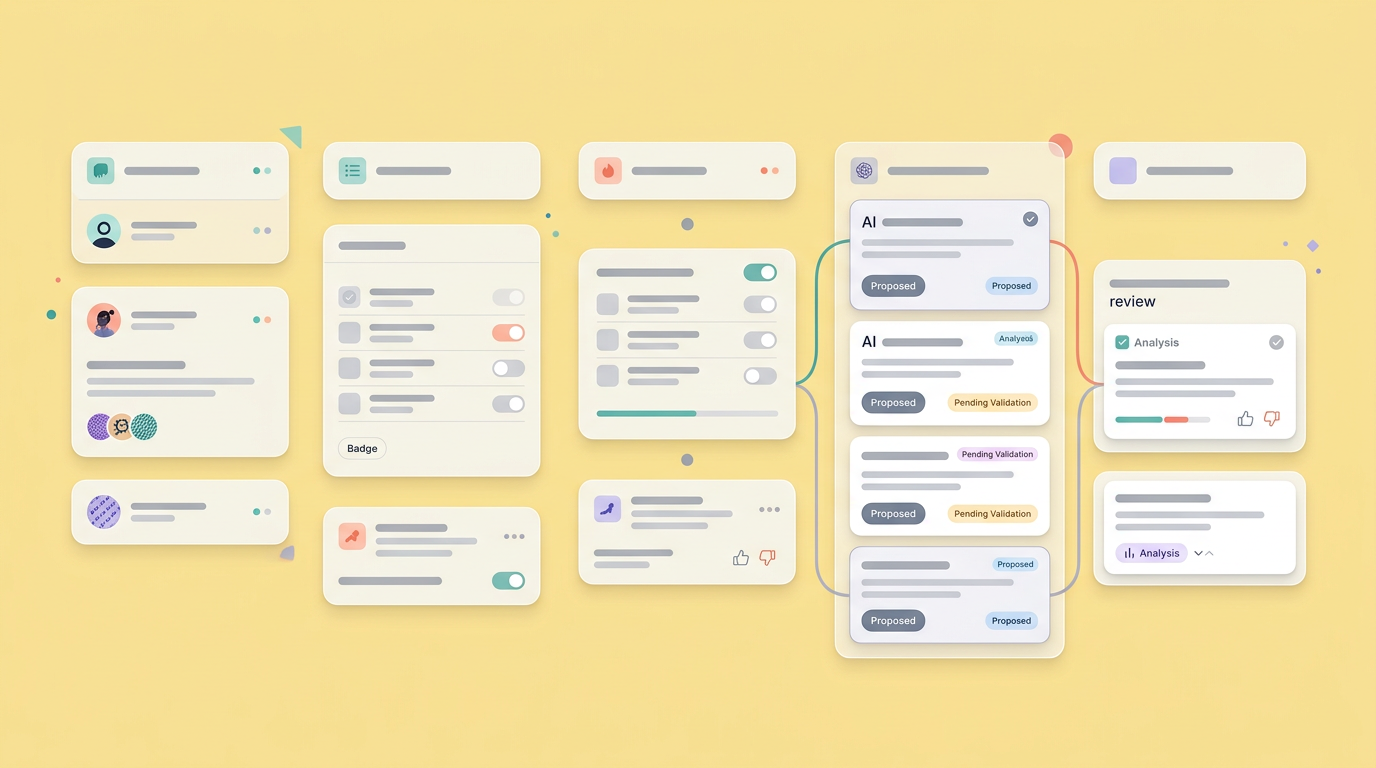
Instead of prolonged coding cycles, the bottleneck shifts to product validation. Christopher Nguyen, a notable UX educator, advocates a strict workflow for this environment: bring the product context in, explore ideas rapidly, refine visual interactions, and share immediately for reactions.
AI Literacy as a Baseline Expectation
The roles across the product triad are evolving simultaneously.
This literacy extends beyond programming. Product managers must understand context window limits, while designers must learn how to design for non deterministic outputs. These shifting expectations require updated frameworks, which we cover extensively in Product Manager Roles and Responsibilities: The 2026 Workflow Guide.
Turning Roadmaps into Validated Prototypes
Translating a strategic roadmap into a validated prototype requires moving beyond static documents toward interactive workspaces that align data scientists, engineers, and product managers.
An AI strategy is only as effective as the team's ability to execute it visually. Relying on isolated text documents to describe dynamic intelligence risks severe organizational misalignment - technical teams might build a robust engine while design builds an interface that ignores backend limitations entirely.
Bridging this gap requires environments where ideas transition fluidly from text to interactive visuals. As product growth analyst Aakash Gupta noted, bringing functional prototyping into intelligent workspaces fundamentally changes how product managers operate. Visualizing the final user experience early drastically reduces deployment friction, ensuring the strategic roadmap successfully transitions into a shipped, high-impact product.
Your team can navigate every stage of this 2026 roadmap by using Dazl to streamline your AI application development process.
Get Started