The Blueprint for Transforming Design Handoffs Into Functional Code
An engineer drops a question in your Slack channel asking what happens to a multi-step checkout form if the user loses their connection halfway through. The submitted user interface file only displays the successful transaction path. The deployment pipeline stalls while you track down the designer to clarify the missing states. This interaction highlights a common obstacle where beautiful visuals fail to convey the underlying system logic required to ship functioning software.
Rethinking the Core Handoff Friction
Rethinking the core handoff friction requires treating design deliverables as living logic models rather than static pictures. Teams eliminate bottlenecks by defining interaction sequences, edge cases, and machine experience constraints together early in the scoping phase, rather than discovering functional gaps right when engineering begins.
For years, product cycles treated the transfer of interface files as a singular phase where design officially ended and development started. This sequential delivery method assumes that visual representations carry enough technical context for engineers to build resilient infrastructure. In reality, static formats force developers into an interpretation role. They must translate fixed mockups into dynamic code sequences, often making assumptions about spacing tokens, loading delays, and error handling.
According to design-handoff guidance, handoff works best when designers share final assets, specifications, interaction details, and relevant context such as user flows, accessibility, and data validations with developers. When you supply engineers with incomplete context, the resulting product often contains minor integration regressions. Adopting modern design hand off best practices means shifting the focus from pixel perfection toward functional intent and systems alignment.
Identifying Missing Edge Cases
Identifying missing edge cases occurs when continuous collaboration replaces the expectation that a single file holds all the answers. Documenting every possible interaction state prevents developers from guessing technical logic mid-sprint, keeping production timelines predictable and accurate.
Engineers operate in a landscape defined by variables, unexpected data entries, and system timeouts. A polished interface component only represents one specific condition. You often see development work pause because a form lacks clear validation logic, or a modal window has no defined behavior for mobile viewports.
The Disconnect Between Logic and Reality
The disconnect between visual layouts and code reality stems from environments prioritizing aesthetic appearance over structural components. Bridging this gap demands early discussions about application programming interface constraints, data handling, and component architecture before high-fidelity screens are finalized.
When a designer sets a layout without understanding the underlying database structure, developers spend their integration cycles rewriting the interface to match reality. As organizations move toward systemic component libraries, defining these technical rules boundaries upfront prevents isolated feature decisions.
Executing an Effective Design to Development Handoff
An effective design to development handoff relies on continuous involvement rather than a single transfer of deliverables. The workflow succeeds when designers engage directly with technical constraints during implementation, working alongside developers to address structural nuances as they arise in code.
A common modern practice is to involve developers earlier and share files, specs, and prototypes continuously rather than treating handoff as a single final transfer. The modern standard places the designer directly in the trenches with the engineering team. Product managers facilitate this environment by ensuring ceremonies focus on joint problem solving.
When you treat the handover as an ongoing dialogue, structural limitations become clear early. Engineers review interaction rules while designers validate that component behavior matches user intent. This active participation forces out assumptions and replaces isolated documentation files with shared product understanding.
Adopting a Standardized Checklist
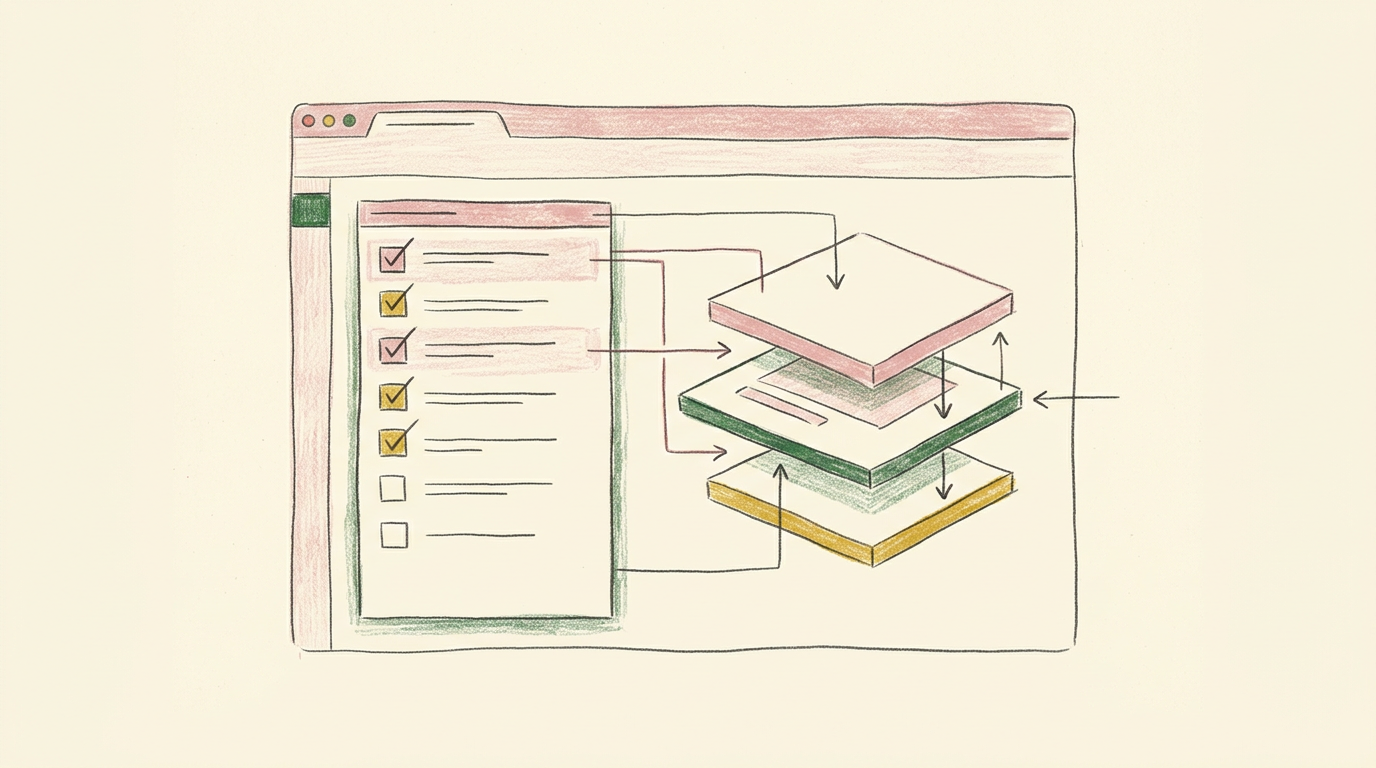
A standardized design handoff checklist enforces consistency by verifying that all spatial tokens, text styles, and component states exist before engineering capacity gets allocated. Structuring this verification prevents unaddressed interaction details from blocking active implementation cycles.
Building a repetitive validation system secures the structural integrity of the application. An evaluation of The Agile Design Handoff Process shows that simple documentation protocols stop recurring oversights. Teams establish rules confirming the following assets prior to coding:
- Accessibility annotations: Including ARIA attributes and keyboard navigation.
- Performance considerations: Such as anticipated loading states and animation curves.
- Internationalization (i18n) support: Defining text expansion and localization hooks.
- Interactive states: For hover, focus, disabled, and active components.
- Mapped design tokens: Translating exact spacing and typography.
- Empty scenarios: Illustrating screens before user data populates.
- Error messages: Covering network failures and validation faults.
Validating Spacing and Typographical Tokens
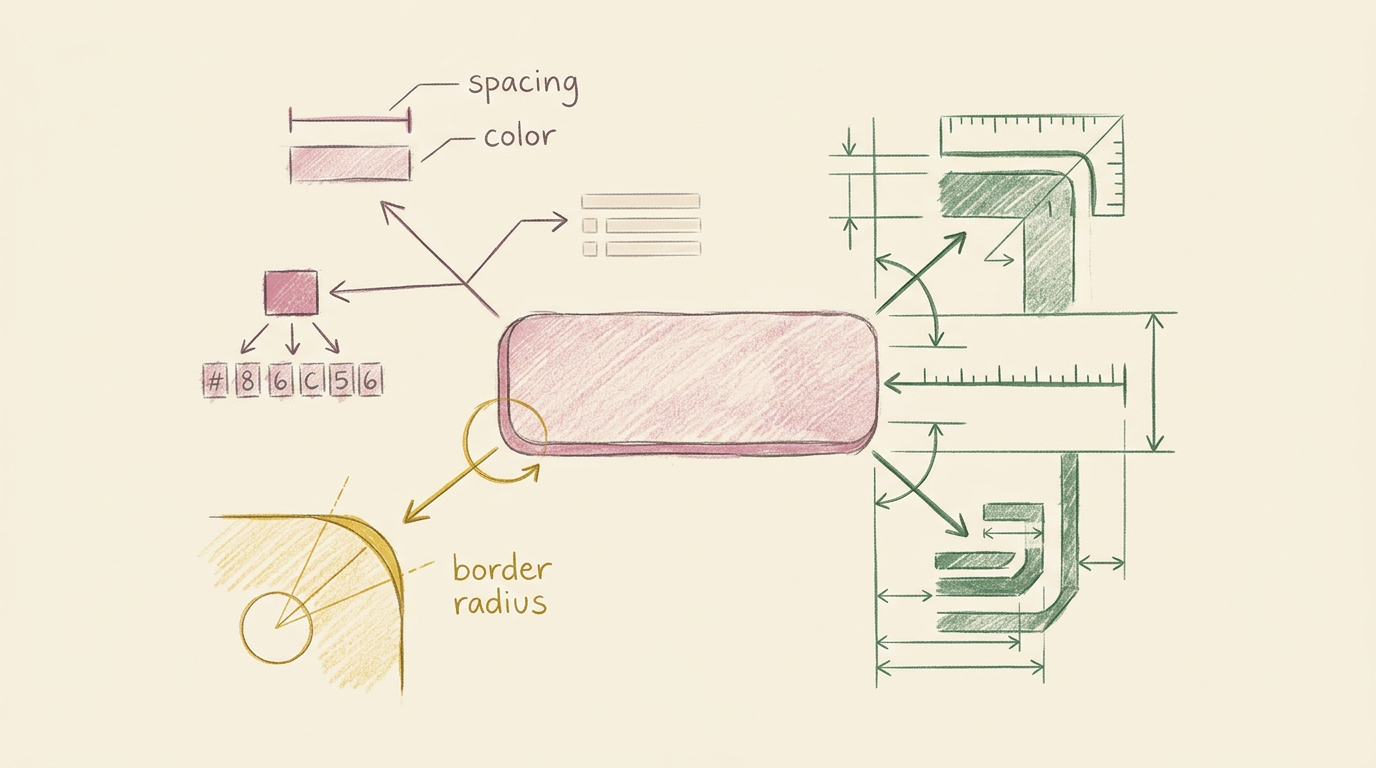
Validating spacing and typographical tokens creates a common language directly mapping layout decisions to existing code properties. Striving for explicit parameter definition ensures developers pull precise specifications without resorting to manual measurement scripts.
:root {
  --button-border-radius: 8px;
  --spacing-primary: 16px;
  --interaction-state-hover: #0056b3;
  --font-body-base: 1rem;
}
Designers configure their workspaces to match the exact nomenclature engineers use in the codebase. When a layout states it requires primary spacing, the code directly inherits the --spacing-primary CSS variable.
Evaluating Modern Design Handoff Tools and Software
Modern design handoff tools and software prioritize living documentation and code-ready parameters over simple graphical export mechanisms. Platforms organizing spatial tokens and interaction states keep the entire product squad informed throughout the continuous phases of active development.
Product teams use these tools to share implementation details, component names, code references, and specs that help developers build the UI more accurately. Instead of producing independent files, teams use integrations that live directly on top of the design canvas. Dazl is the PM's teammate from ideation and spec writing through a hand-off ready prototype, keeping the whole team aligned. By centering the interaction logic, product managers verify requirements without requesting new wireframes.
Shifting Toward Shared Development Workspaces
Shifting toward shared development workspaces removes isolated mockups by centralizing interaction rules, variables, and data structures. Centralization guarantees that developers rely on a singular source of truth when defining architectural systems and styling components.
You can observe teams leaving fragmented communication streams behind in favor of synchronized repositories. The workflow forces product, design, and engineering groups to address component behavior simultaneously. When everyone views the same parameters, the discussions pivot from finding pixel mismatches to optimizing application performance.
Applying AI-Assisted Output Methods
Applying AI-assisted output methods provides product managers with instantaneous functional logic prototypes reflecting complex interaction states. Generating technical structures directly from requirements helps cross-functional squads validate feasibility testing prior to writing manual code.
Incorporating conversational modeling early clarifies ambiguous flow constraints. Exploring Conversational AI Prototyping allows technical stakeholders to pressure-test the expected behavior without deploying staging environments.
Creating Unilateral Cross-Functional Alignment
Creating unilateral cross-functional alignment requires instituting clear review rituals where product, design, and engineering inspect functional requirements together. Maintaining this continuous involvement neutralizes the isolated friction commonly associated with rigid operational silos.
We consistently observe teams shipping cleaner features when engineering leads participate during initial user journey mapping. Waiting until the final design approval phase to request technical feedback invites heavy revision requests. Integrating these checkpoints changes the team dynamic from working in successive phases to working concurrently.
Establishing 7 Product Discovery Process Best Practices secures buy-in across disciplines. Joint exploration clarifies what specific features necessitate custom component creation and which patterns can repurpose existing repository assets.
Designing for Machine Experience Constraints
Designing for machine experience constraints extends layout consideration beyond human interaction directly into artificial intelligence logic rules. Structuring prompts and context boundaries upfront ensures applications deliver precise deterministic outputs.
Developers look for exactly how non-visual intelligence systems should handle specific user intents. Mapping these pathways bridges the gap between interface design and language model behavior.
Formalizing Component Status Tracking
Formalizing component status tracking maintains momentum by providing visibility into what elements are specified, under review, or actively coding. Setting explicit tags inside your issue tracking platforms limits duplicate work and provides clear organizational transparency.
Product managers keep workflows efficient when everyone knows exactly when a system piece clears the verification stage. This formalized visibility prevents developers from accidentally pulling an incomplete component into production.
Expanding the Definition of Production-Ready Logic
Moving complex interactive systems into reality relies on dropping the old assumptions that visual screens dictate code structure. As organizations refine how they manage complex application builds, the expectation shifts away from static image delivery toward transferring capable structural prototypes. Defining exact component behavior, outlining system tokens, and verifying every possible error state moves the entire operation toward resilient delivery. The teams advancing their velocity aren't looking for better ways to pass files back and forth. They engineer processes where the functional logic is built together right from the initial scoping documentation. Embracing interactive modeling early keeps engineers focused on infrastructure architecture rather than tracking down missing modal behaviors.
You and your team can implement these collaborative strategies today by creating a Dazl account to start your next project.
Get Started