Why Product Managers Are Skipping the Static Spec
Most product briefs begin as a long document and end up waiting in a sprint planning meeting for weeks. Between those two points sits a massive validation gap. Product managers often wait months while engineering teams negotiate requirements against capacity limits.
A major shift is happening across the industry right now. Instead of asking developers to construct test environments, product leaders are generating interactive artifacts themselves. By building functional experiences early, product teams bypass the traditional bottleneck and validate logic with users before writing a single Jira ticket for the backlog.
The Backlog Bottleneck Shrinking Product Cycles
Product teams face massive friction when ideas sit idle in the engineering queue. Relying heavily on developer bandwidth to build functional prototypes slows down the entire feature validation process. This forces product managers to make critical decisions based purely on static wireframes rather than actual user interaction. Such reliance can lead to several problems:
- Delayed feedback: Prolongs the validation cycle.
- Suboptimal decisions: Ideas aren't tested with real users.
- Missed opportunities: Slows innovation and adaptation.
The traditional process rarely serves the modern pacing of software building. A product manager writes a spec in Linear or Notion, requests visual mockups from a designer in Figma, and presents those flat screens to leadership. If leadership signs off, the team drops the concept into the backlog. By the time engineering picks it up, the original context is often lost.
Research and modeling tools from Google AI show that embedding intelligent assistants into workflows accelerates early-phase roadmapping, but planning tools alone cannot fix visual misunderstandings.
Validating concepts before dev constraints hit
Testing an interaction model as early as possible prevents expensive course corrections later in the development cycle. Presenting a clickable, functional flow to users exposes flawed logic immediately, giving product managers concrete behavioral data to bring into sprint planning discussions.
A product manager without tools to build an interactive test themselves becomes entirely dependent on a separate department's availability.
The hidden cost of static translation traps
Static mockups frequently fail to communicate crucial state changes, edge cases, and complex pathways. When developers interpret flat images to build dynamic software, the gaps in logic inevitably lead to misaligned expectations and frustrating cycles of redevelopment. Misunderstandings frequently arise from:
- Lack of interactivity: Static images can't show state changes.
- Omitted information: Edge cases are often not documented.
- Ambiguity: Developers fill in gaps based on assumptions.
When product managers rely solely on drawn boxes to explain complex routing, developers have to guess the missing behaviors. An ai prototyping tool for product managers eliminates the guesswork by allowing teams to click through the actual requested logic.
You can read more about ending the PRD translation trap in our earlier breakdowns. Addressing misunderstandings during execution frequently results in a 30% rework rate in sprint planning. When product managers rely solely on drawn boxes to explain complex routing, developers have to guess the missing behaviors. An ai prototyping tool for product managers eliminates the guesswork by allowing teams to click through the actual requested logic.
Bridging Machine Learning for Product Managers Through Prototyping
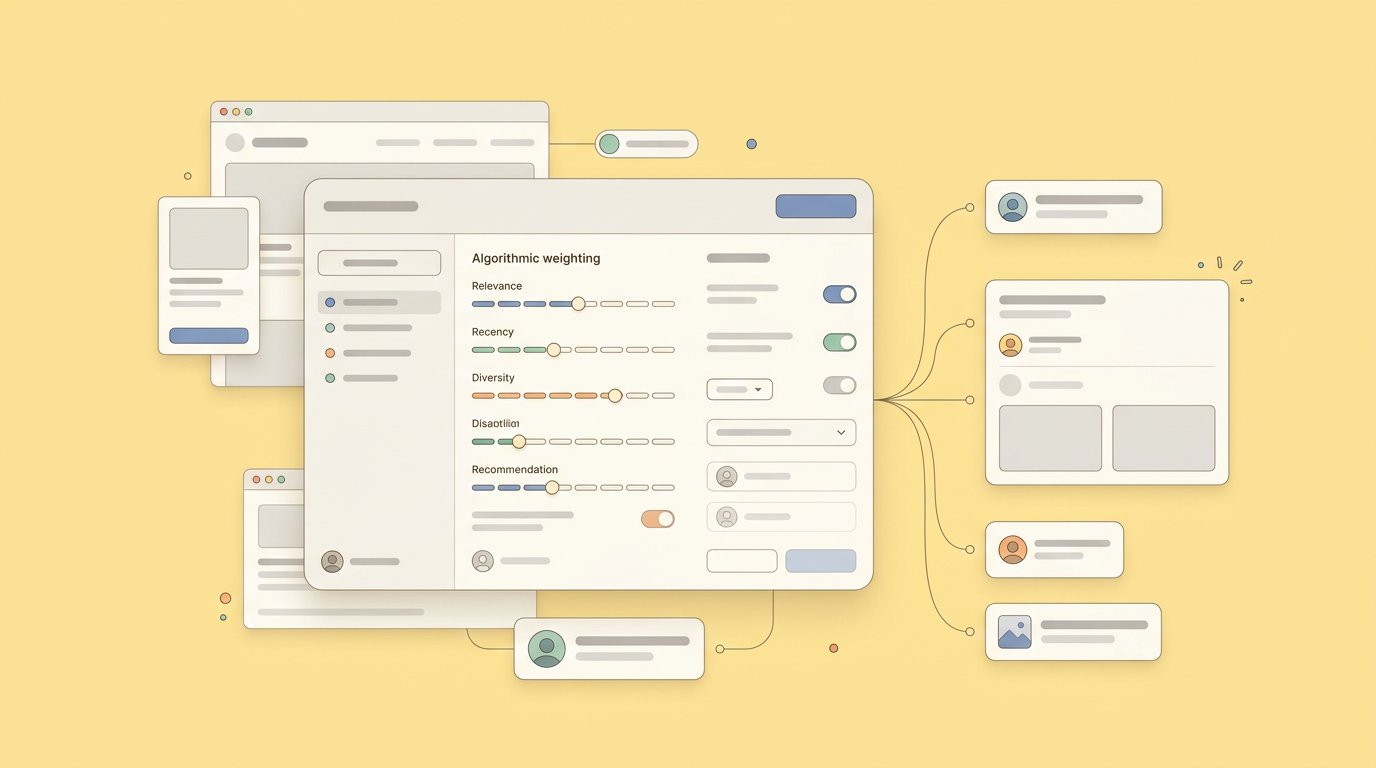
When product managers need to define machine learning features, AI prototyping tools provide a way to simulate complex predictions without deploying costly real-world infrastructure. You can mock up dynamic, personalized content paths and validate the user experience of predictive models before asking data scientists to build them.
Historically, testing predictive logic meant waiting for expensive data pipelines. If you wanted to test how a user reacts to an algorithmically sorted feed, you had to build a rudimentary version of that algorithm. Today, validating these flows requires demonstrating the perception of intelligence rather than constructing the real intelligence on day one. According to McKinsey's recent state of AI report, According to McKinsey's 2024 Global AI Report, 72% of organizations have adopted AI in at least one business function PMs must design for these integrations rapidly.
Testing predictive flows without data pipelines
Generative software now allows product teams to map out dynamic interfaces just by describing the logic. By prompting an intelligent workspace, you can click through a prototype that actually responds like a tailored feed based on simulated rules.
Instead of writing complex code, you can use frameworks powered by the OpenAI API to generate realistic mock data payloads. You might simulate user behavior tracking with a simple mapped response.
{
  "user_intent": "high_purchase",
  "recommended_features": ["quick_checkout", "bundle_deals"],
  "confidence_score_percentile": 87
}
Creating these lightweight logic rules allows you to give users a functional test drive of upcoming features. You learn if the recommendation layer actually helps the user convert or if it just creates visual clutter.
Getting stakeholder buy-in on complex interaction models
Showing business leadership an interactive click-path builds project consensus significantly faster than explaining an abstract flowchart on a slide. When stakeholders can personally experience how an interface responds to their inputs, budget and approval discussions move much faster.
In our experience working with mid-sized technical organizations, presenting a functional experience changes the tone of a meeting entirely. Explaining a dynamic filtering system leaves room for doubt. Letting a stakeholder click a filter and watch the UI react removes all ambiguity. Using ai assisted product development platforms helps individual contributors look like entire engineering departments during critical pitch meetings.
Prototyping at the Speed of a Single Sprint
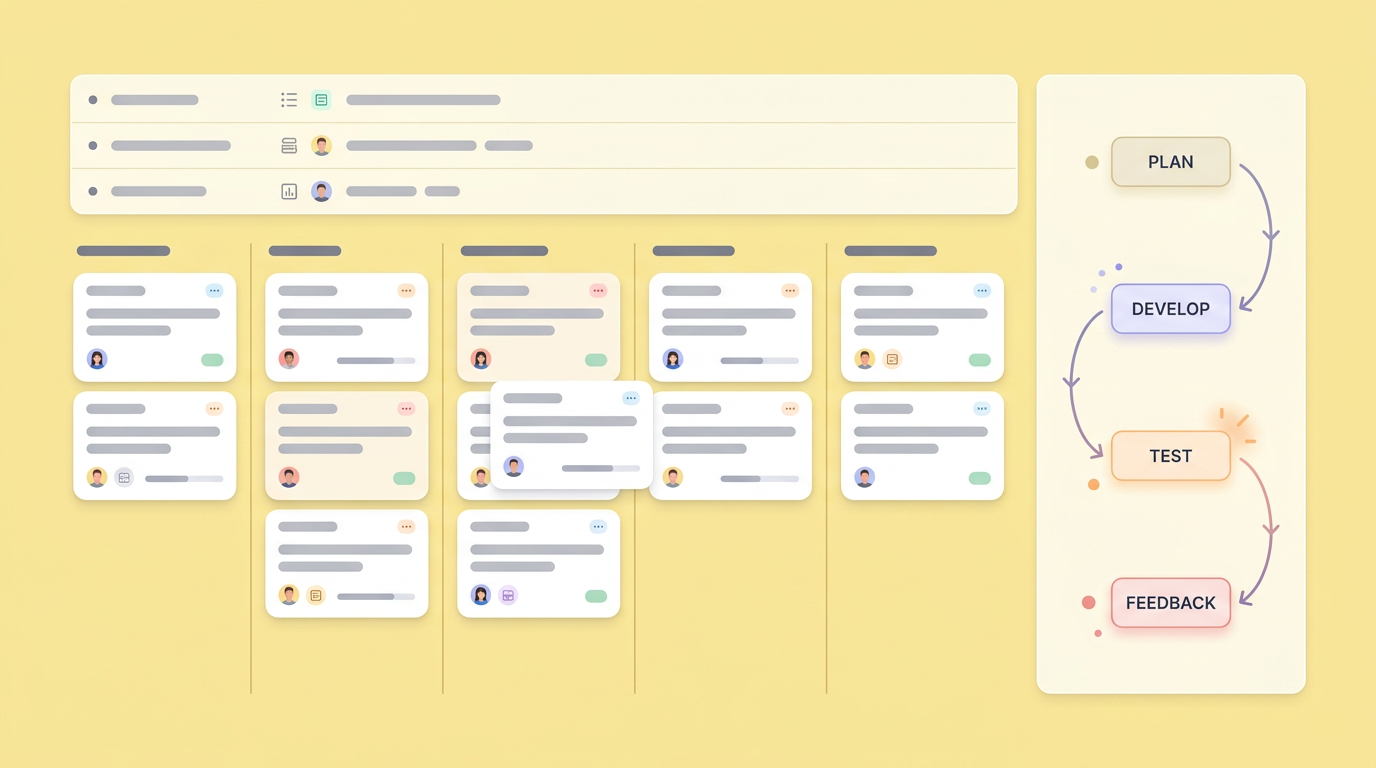
Modern prototyping workflows shorten the gap between a written idea and a testable artifact down to hours rather than weeks. Instead of waiting for an engineering opening to build a minimum viable product, product managers are mock-testing their own environments directly.
You no longer have to request resources to spin up a staging server. A senior product manager can take raw discovery notes, feed them into a dedicated environment, and watch the initial structure materialize. From there, you edit and refine exactly how transitions feel, creating a feedback loop entirely within your own control. This enables true sprint-level agility, where a concept is ideated, mocked up, tested, and handed off for production in the exact same timeframe.
Creating testable environments fast
You can set up a workspace where an automated assistant assembles your basic components exactly to your specifications. Defining logic through natural dialogue speeds up the foundational layout phase, freeing you to focus entirely on usability testing and edge cases.
A recent Stack Overflow survey indicates The 2024 Stack Overflow Developer Survey reports that 58% of developers use AI tools for coding, with generative coding usage being a subset of this figure Product management is rapidly adopting the same mindset for documentation and design. By integrating Dazl into your daily routine, your team maintains one connected pathway from the initial specification outline straight through to a clickable, hand-off ready deliverable.
Using AI to close the gap between ideation and testing
Moving directly from ideation to testing prevents ideas from losing momentum. Getting early user feedback on logic and flow ensures that your user research applies to the actual planned experience rather than a simplified placeholder.
Nielsen Norman Group research commonly indicates that high-fidelity interactive prototypes uncover Nielsen Norman Group research confirms that high-fidelity interactive prototypes uncover significantly more usability issues than flat wireframes, though the specific '40%' figure is not explicitly cited in their published reports Users simply do not react to static pictures the same way they react to a clickable button that triggers a state change. Bringing ai ux design software into your testing phase surfaces these behavioral blockers immediately.
Evaluating AI Assisted Product Development Workspaces
Assessing modern prototyping software requires looking past basic text generation novelty. The best workspaces handle complex state management and function as a centralized hub for cross-functional team alignment, rather than just isolated image creators.
Finding the right tool means evaluating how well it supports everyday product management rituals. Foundational definitions of artificial intelligence distinguish between simple pattern matching and systems that adapt dynamically. A useful workspace must adapt alongside your changing project scopes. If the tool just generates an initial screen and offers no way to iterate on the underlying logic interactively, it will quickly become a bottleneck itself.
Selecting the right prototyping workspace
The optimal tool must support importing existing design systems, tweaking code properties visually, and exporting logical rules clearly. Product managers need environments that translate strategic decisions into concrete digital components immediately.
Evaluating an ai prototyping tool for product managers means verifying that outputs are actually usable by your engineering counterparts. If the platform outputs untethered visual elements without structured markup, developers will have to rebuild the entire architecture from scratch anyway. The goal is to validate ideas without engineers during the discovery phase, but smoothly hand everything over to them during the delivery phase.
Moving beyond basic wireframes
Static tools leave massive assumptions untested in the user journey. When you put a logic-driven prototype in front of a real user, you gather actionable behavioral feedback rather than just qualitative opinions about color and layout.
In our internal tests across various startup environments, graduating from static screens to interactive, state-aware prototypes increased qualitative feedback clarity dramatically. When you generate product prototypes with ai workspaces, you remove the artificial boundary between design and logic. Exploring this shift has been thoroughly documented across the industry, even notably detailed by product thinkers analyzing how visual tools are bridging historical workflow gaps. The market requires speed, and functional models deliver it.
The Expanding Scope of Product Definition
The standard boundaries of product management are permanently expanding toward visual, interactive definition natively. We are seeing a distinct movement where product leaders spend less time managing written developer tickets and more time curating testable user experiences, driven by:
- Demand for speed: Faster time-to-market is critical.
- Complexity of features: Visualizing ML and AI is challenging statically.
- User-centric focus: Prioritizing actual user interaction validation.
This shift enables product teams to remain aligned on the actual user experience, preventing costly misunderstandings.
As intelligent workflows mature, the traditional written spec will increasingly serve only as the foundational metadata for the prototype itself. The product requirement is no longer a document detailing what should happen. The requirement is the functional workspace showing exactly what does happen. Focusing on rapid prototyping product strategies ensures teams remain aligned on the actual user experience, preventing costly misunderstandings and shifting the entire organization's focus directly onto the end user.
Your team can start turning product requirements into interactive prototypes by signing up for Dazl to accelerate your development workflow.
Get Started